Sabitlenmiş Tweet

English
ItsChrisCross | QANX
3.2K posts

@f75919
🚀 Crypto & Blockchain Enthusiast | 🌐 Supporter of @QANplatform $QANX | 🛡️ Raising Awareness about the Threat of Quantum Computers | 🌍 Advocating for a Secu



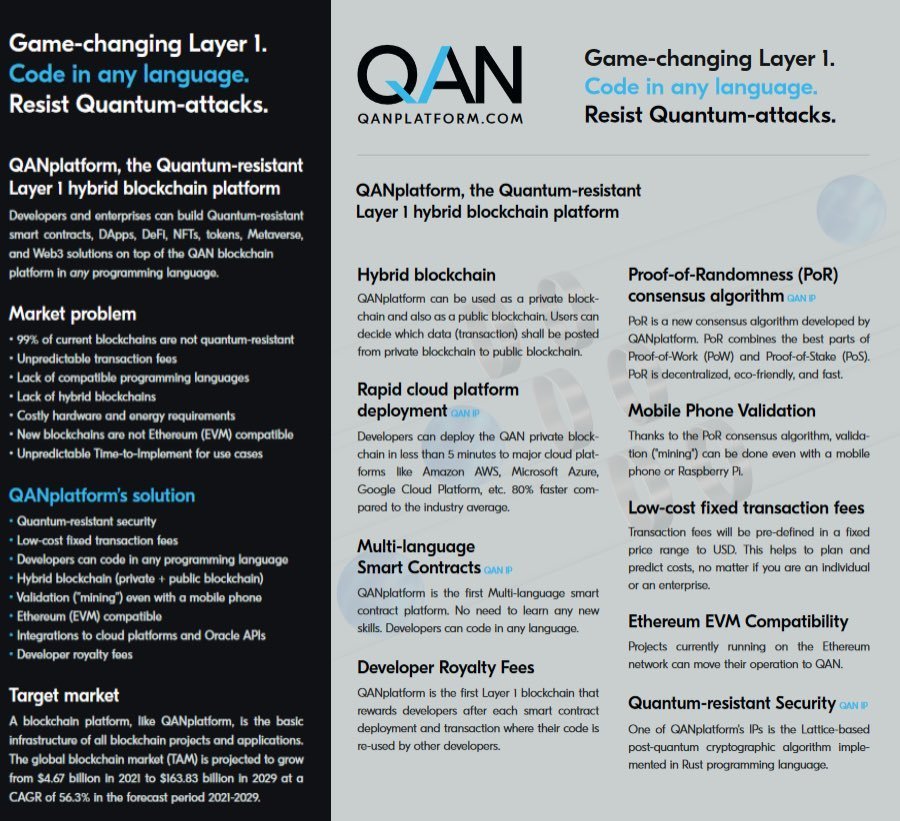
Read Hacken's case study on their comprehensive cybersecurity audit of the QAN XLINK protocol. 👇






Our public status page is now live and available to everyone. Here's what you get: - real-time status monitoring: see the live operational state of all core QAN system components at a glance - 44-day uptime history: nearly six weeks of historical performance info Check it out! Link in the comments 👇

We've shipped a new version of the QAN XLINK desktop app. Download it from our website! 💻 Here's what we updated based on your feedback: - refined the UX with targeted improvements for a smoother, more intuitive experience - resolved a bug affecting account visibility within the app - expanded the user guide with greater detail and clearer step-by-step guidance Test it and let us know what you think. Link to the download page in the comments 👇
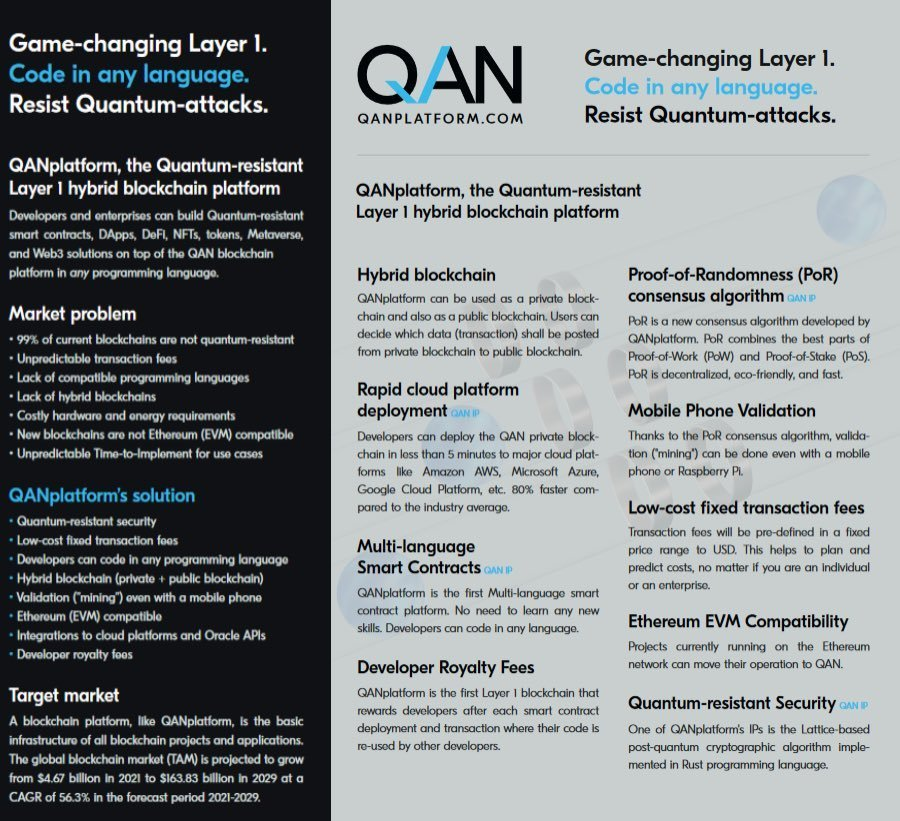
27 million developers globally. Fewer than 25,000 actively building on-chain. That is not a skills problem. It is an industry design problem. There is a bottleneck at the centre of one of the fastest-growing industries in the world and almost nobody talks about it seriously. 27 million active software developers globally. Roughly ONLY 25,000 of them actively building on-chain. That is not a skills gap. That is a design choice that became a wall and then became invisible because everyone got used to it. When Ethereum launched, Solidity made sense. Purpose-specific language, controlled execution environment, reduced attack surface for a novel paradigm. A reasonable call in 2015 for a team figuring out something nobody had built before. But then something happened that nobody planned for, the rest of the industry copied the constraint, not the reasoning behind it. New chain launches. New language requirement. Learn ours first, then build. So now a Java developer who has shipped production systems for a decade has to start from zero to put a smart contract on-chain. A Python developer who can build a trading algorithm in an afternoon cannot natively express that logic in a deployed contract without learning Solidity or hiring someone who knows it. Think about what that actually means. You are running an industry that says it wants to rebuild financial infrastructure, supply chains, identity systems, and the internet. And you have structured it so that only the developers who went out of their way to learn a niche language can participate. The best engineers in the world are not in Web3. Most of them looked at the onboarding wall and went back to building something else. This is the bottleneck nobody names. And it is entirely self-inflicted.




ECDSA in plain language. Your private key generates a public key. One-way math. Easy forward, nearly impossible to reverse. That is what secures every wallet on most major chains. A quantum computer running Shor's algorithm reverses it. That is the threat.