

Fabius Maximus
3.6K posts


Buongiorno.
Se è possibile, possiamo avere Pio Esposito nella formazione oggi? 🇮🇹
Italiano



@austinoakes It's been around since the 1800's bro. Two teams three-peating isn't that much.
English

The fact that 2 franchises have already 3 peated is why baseball can be 😴🥱
ESPN@espn
The wait is over! Opening Day is here 🙌 Will the Dodgers be the third franchise ever to three-peat? Or will someone knock them off? 🍿
English
@dangambardello Terrible for crypto. Bill should be DOA. Crypto is better off without it IMO.
English

The revised market structure bill won't allow yield on stablecoins (non-active).
Looks like a massive win for banks.
On the flip side, kind of bullish for crypto because capital will have more reason to move into yield-bearing alternatives like Ethereum Defi or Cardano liquid staking.
English
@EleanorTerrett Banks win again. This is not good. Bill should be DOA. Crypto industry is better off without this.
English

🚨NEW: New details are emerging about the latest legislative text outlining a compromise on stablecoin yield and rewards, along with early reactions from crypto industry leaders who reviewed it today.
According to an internal stakeholder email shared with me, the proposal would prohibit platforms from offering yield “directly or indirectly” for holding a stablecoin or in a manner that resembles a bank deposit. The restriction would apply broadly to digital asset service providers (exchanges, brokers, etc.) and their affiliates to limit workarounds, and would bar anything “economically or functionally equivalent” to interest.
The proposal would also permit activity-based rewards tied to user activity, including loyalty, promotional, or subscription programs, provided they are not deemed economically or functionally equivalent to interest. It would also direct the @SECGov, @CFTC, and @USTreasury to jointly define permissible rewards and establish anti-evasion rules within one year.
One industry leader who reviewed the text today tells me the draft is a “departure” from what had been previously discussed with the White House, warning the “economic equivalence” standard is vague and could be interpreted more restrictively by future regulators. They also point to limits on tying rewards to balances or transaction amounts, which could make incentives difficult to structure.
“Overall, this is a more narrow and restrictive approach toward crypto,” they said.
Another says the text is “largely in line with expectations” and reflects a balanced outcome, preserving transaction-based incentives while making clear stablecoins cannot function like interest-bearing deposit accounts.
“This is the best possible result,” they said, noting that the text is broader than the initial Tillis-Alsobrooks proposal, which would have been more restrictive on crypto.
Up next: Bank reps are set to review the text tomorrow.
Eleanor Terrett@EleanorTerrett
🚨🗞️NEW: Crypto and Bank Reps Head to Capitol Hill to Review Stablecoin Deal as Details Remain Under Wraps Some crypto industry leaders will meet with @BankingGOP today, with banks set for tomorrow, to review the product of a long-awaited compromise. cryptoinamerica.com/p/crypto-and-b…
English
@SenatorHassan You’re just scared of losing a large chunk of your voter base. Stop lying.
English
Let's be clear: the so-called "SAVE America Act" will disenfranchise American citizens.
The right to vote is a bedrock principle of any democracy. We cannot let this bill pass.
English

Chuck Norris Was a Great Action Star -- but Politics May Overshadow His Legacy variety.com/2026/film/opin…
English
Fabius Maximus retweetledi


Fabius Maximus retweetledi

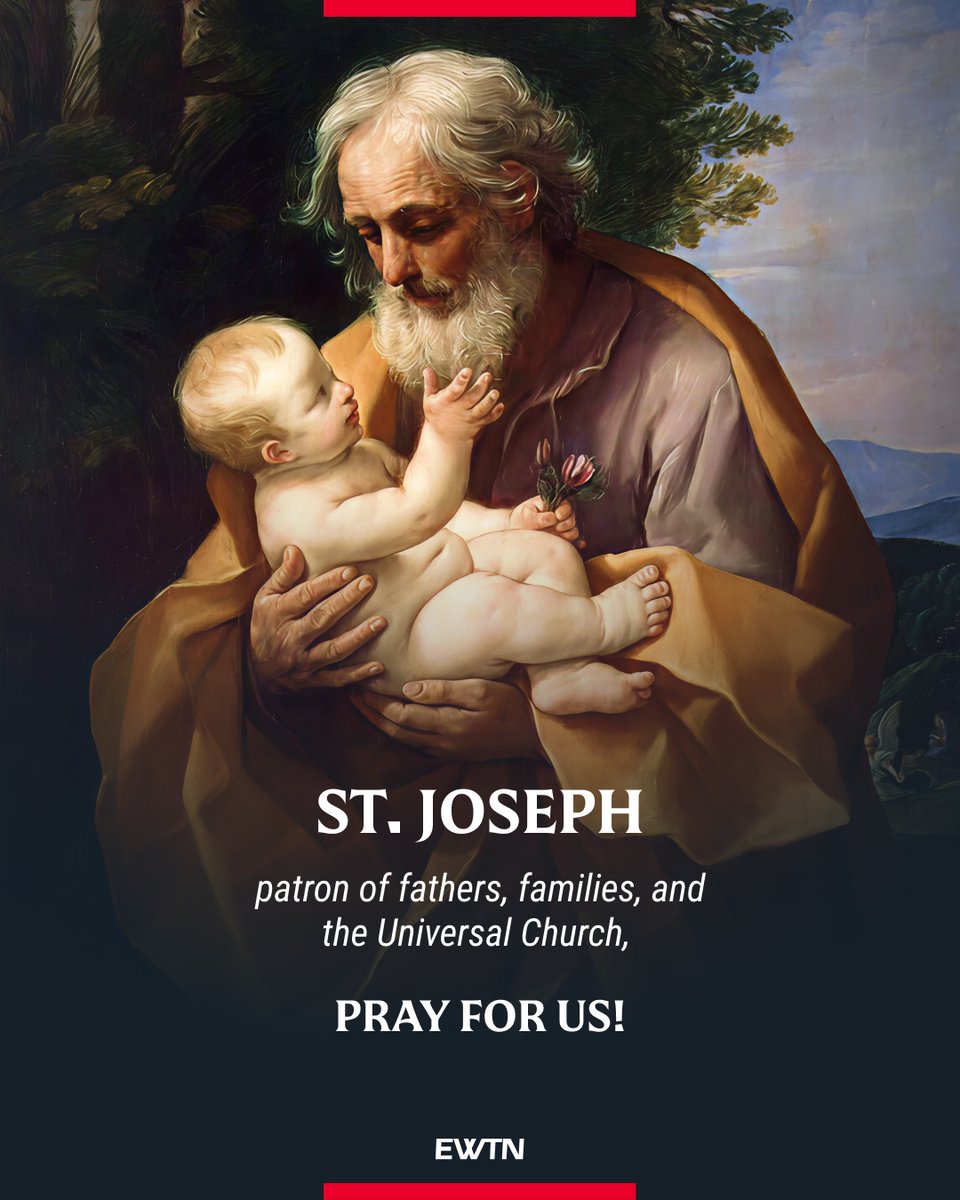
March 19 is the Solemnity of St. Joseph! Go, celebrate the great gift of our spiritual father. O Joseph, Most Chaste Spouse of the Blessed Virgin Mary, pray for us!
ow.ly/aZoA50YlbMZ
English
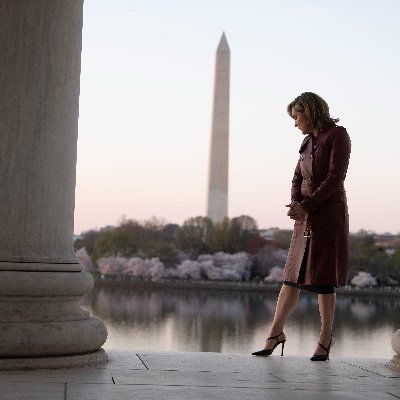
The Secretary of Defense tells the American public to pray for our troops on bended knee and invoke Jesus' name....
English
@Peoples_Pundit Saying Iran posed no threat is a lie. They've already killed countless American's.
English

Take your tantrums today. You're on borrowed time.
10 years from now when we look back at this war, Joe Kent will be completely vindicated and will go down as a hero.
Israel and its lobby will be political pariahs.
Nothing can stop that train now.
English

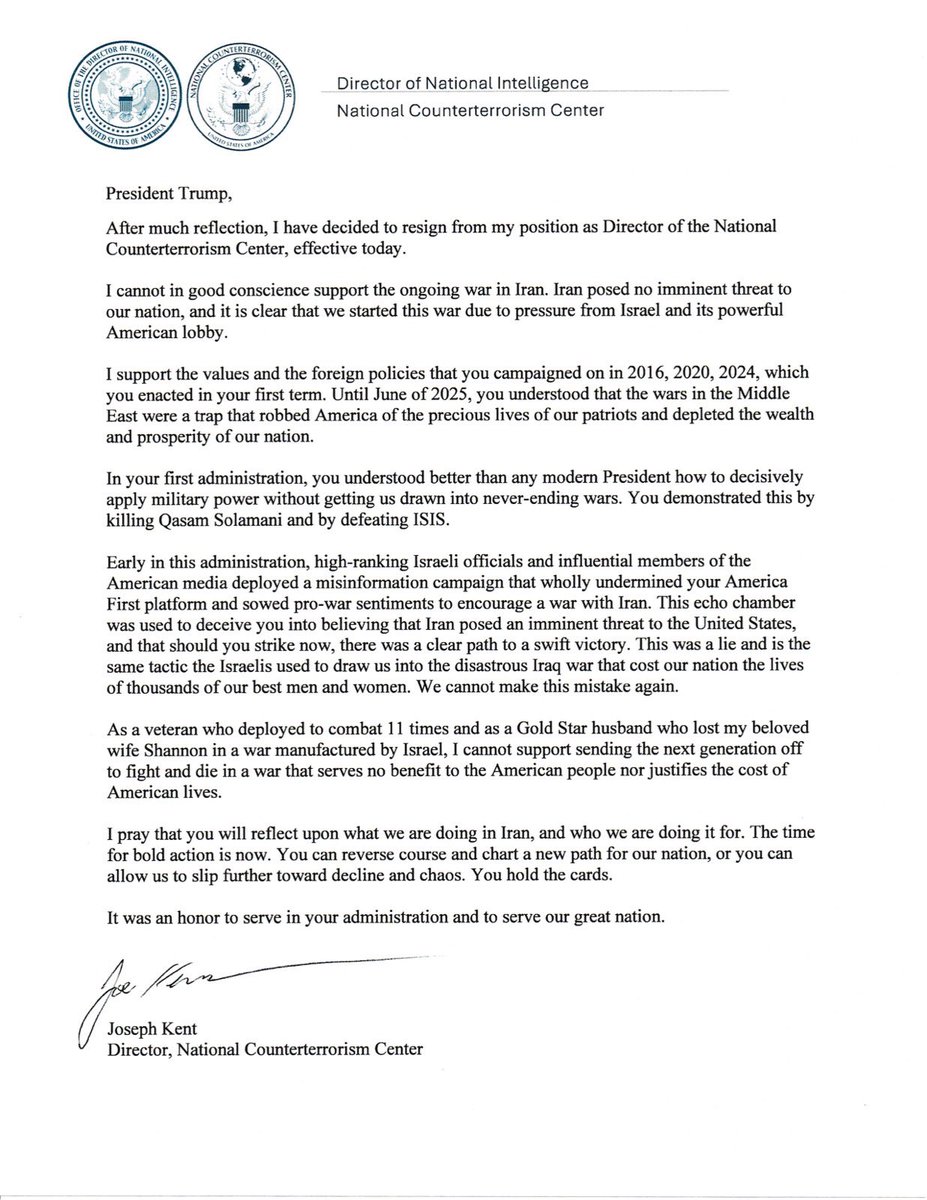
After much reflection, I have decided to resign from my position as Director of the National Counterterrorism Center, effective today.
I cannot in good conscience support the ongoing war in Iran. Iran posed no imminent threat to our nation, and it is clear that we started this war due to pressure from Israel and its powerful American lobby.
It has been an honor serving under @POTUS and @DNIGabbard and leading the professionals at NCTC.
May God bless America.
English
@stevenfiorillo @guypbenson New Yorkers will get what they deserve for voting for Mamdani. They literally voted for these type of policies.
English

As a lifelong, taxpaying New Yorker, I am extremely worried about the ramifications of the estate tax proposal on New Yorkers if it gets signed into law. I want to be clear up front; this isn't about politics for me. I'm not fighting for the billionaire class, and I'm certainly not one of them. What I am is someone who understands basic math, economics, and business, who has watched what happens when states push tax policy past the breaking point.
Here's what's on the table right now: a proposal to reduce New York’s estate tax exemption from $7.1 million down to $750,000, an 89% cut while increasing the top rate from 16% all the way to 50%. This is embedded within a batch of revenue ideas sent up to Albany to try and plug a $5.4 billion hole in the city budget.
I want to discuss who this estate tax actually hits, because it’s certainly not the ultra-rich. The ultra-rich weren’t exempt as only the first $7.1 million avoided estate taxes. A $750,000 threshold in the New York metro area is not reasonable. The median home price in New York City hit roughly $809,000. In Nassau County you're looking at $820,000. Suffolk County sits around $675,000. Westchester is $754,000. If you bought a house in the city, Nassau, or Westchester and you spent 30 years paying off that mortgage like a responsible adult, congratulations, you're now above the estate tax threshold. What’s even better is that you hit the threshold before even factoring in your 401k, life insurance, savings, a family business, or other investments.
This isn't a tax on the wealthy it’s a tax on a retired couple in Bayside who paid off their split-level. It's a tax on the family that runs a deli in Astoria and owns the building. When you force those families to come up with 50% of the value above $750,000 after someone dies, what do you think happens? They sell. They liquidate. The house goes, the business goes, and the generational wealth that took a lifetime to build disappears in a single tax event. Family businesses which are the backbone of employment in neighborhoods all over this city get gutted.
According to the State Department of Taxation and Finance's own numbers New York's tax structure is incredibly top heavy as millionaires paid 44.6% of all personal income tax collected in 2024. The top 200,000 filers covered 51.9%. The bottom half of all earners paid 0.2%. Think about how fragile that makes us. You don't need a mass exodus. You need a few thousand people to change their mailing address to Palm Beach or Austin and the budget math falls apart.
Here's the part that really gets me though. The biggest victims of "tax the rich" policies aren't the rich. The rich utilize their resources and leave once they have had enough because their resources make them mobile. The people who get crushed are the ones who stay such as teachers, firefighters, nurses, and the small business owner. They can’t simply pick up and go. The harsh reality is that when the wealthy leave and the tax base shrinks, the city still needs the same amount of money to run the subways, pay the cops and keep the lights on. So where does it come from? It comes from everyone left behind as they are forced to pay higher taxes, and higher fees.
What may bother me more is the double taxation piece. The money in someone's estate didn't just appear from thin air. They earned it and paid income tax. They invested it and paid capital gains. They bought property with it and paid property taxes every single year. They bought things and paid sales tax. Every dollar in that estate has already been taxed multiple times over the course of a lifetime. Now when they die the state wants to take half of everything above $750,000? At what point does it stop being a tax and start being confiscation? That's a genuine question I have because if you work your whole life, play by every rule, pay every tax along the way, and the government still takes half when you die what exactly was the point of saving any of it?
A $750,000 threshold doesn't catch billionaires it catches the middle class. It catches people who were never wealthy, they were just disciplined. They bought a house, they didn't sell it, they put money away for retirement, and they wanted to leave something for their kids. Punishing that with a 50% tax rate sends a very specific message: the state believes your assets belong to it first and your family second. I don't care where you fall politically that should bother you.
I'll say this very simply. When you tax people to the point where they feel targeted, they leave. When they leave the burden falls on everyone who can't. When that burden gets heavy enough, more people figure out a way to go. That's not theory, that's exactly what IRS data and Census numbers have been showing us for half a decade straight.
New York is standing at a fork in the road right now. One direction is more punitive taxation with an increasing dependence on a shrinking pool of high earners who increasingly have one foot out the door. The other direction is putting forward competitive tax policy, fiscal discipline, and creating an environment where building wealth and creating jobs isn't treated like something the government needs to punish. I know which path leads somewhere good. I just hope the people making the decisions figure it out before there's nobody left to tax.
@amitisinvesting @BillAckman @chamath @patrickbetdavid @PBDsPodcast
English
@SusannaMcCoy19 @CatholicArena Because there has been a big movement of young (and some older) conservatives converting to Catholicism.
x.com/i/grok/share/4…
English

@fabius_maxi @CatholicArena how fuck do you know that ??? oh, you don't you're just being a typical uptight dick.
English

🇻🇦
The Vatican has been shocked by the 'amazing' increases in adult baptisms once again this year in Western nations
A cardinal close to the last three popes is quoted in Aleteia as saying:
'Something amazing is happening in France, with all these young people asking to be baptized. Perhaps this is a sign of a new springtime for the Church!'

English


@The7Line I think when Gary retires Wayne comes back and takes over.
English

Gelbs has been in the SNY booth a good amount over the past 2 or 3 years. Mainly Spring Training and some select reg season games. Do you see him getting a more consistent role as a PBP guy with the Mets one day? Or maybe gets picked up by another team that needs a voice?
English