
Sabitlenmiş Tweet
Felix Beccar
973 posts


Felix Beccar
@felixbeccar
🇦🇷 + 🇬🇧 + 🇺🇸 + 🇪🇸. Building Lio, the AI agent helping consultants spend less time on tasks and more time thinking
Madrid, Spain Katılım Ağustos 2010
648 Takip Edilen238 Takipçiler
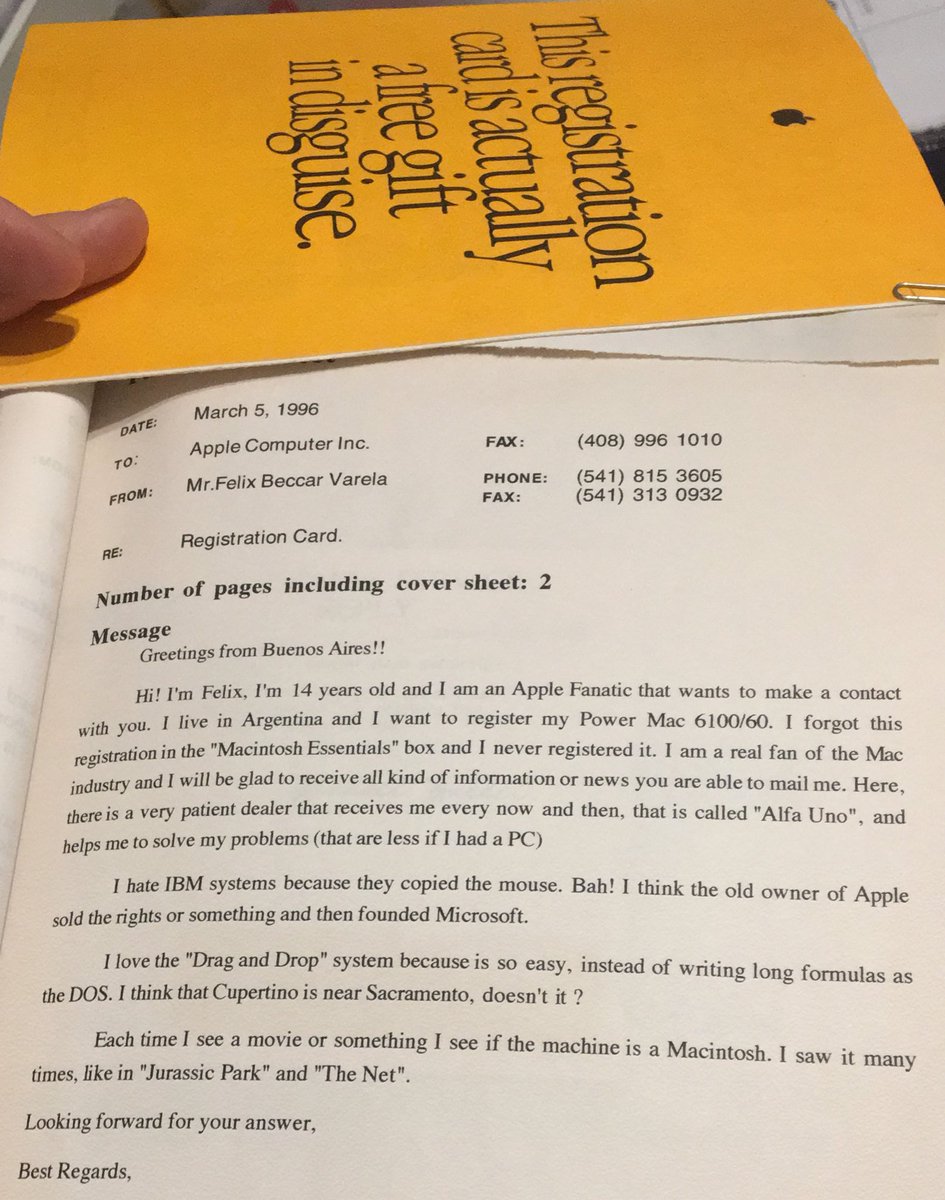
@AnthropicAI I know you guys are kind of busy but any chance you can fix this little thing? it's killing me everyday...
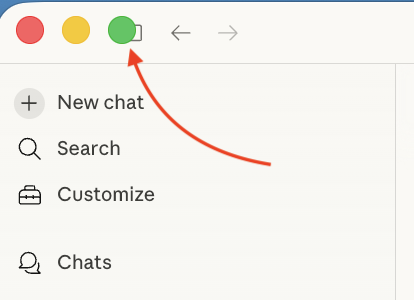
English
@Microsoft @Azure to make things easier, you have 3 different admin portals: azure, powerplatform and M365
English
someone at @Microsoft @Azure ever tried the flow of buying Copilot Studio PAYG licenses ... like ... ever?!? Its literally impossible
English
These days using @ChatGPTapp feels like using a Windows PC vs using @claudeai feels like being on a Mac 😍
English
@martinvars @abhijitwt there is still a lot of opportunity in many verticals… Aaron explains it well imho
x.com/levie/status/2…
Aaron Levie@levie
This chart is a good reminder of how much opportunity there is in AI agents right now. There will be plenty of horizontal opportunities for agents, but equally many workflows that need deep domain expertise to actually make the user successful at automating the unique processes in their vertical. The template is to build agentic software that taps into proprietary data, handles the workflow in a way that bridges the user and the agent collaboration effectively, and has a deep domain-specific context engineering, and the ability to drive change management for customers. There still are huge openings in many categories.
English

@abhijitwt This is the 'platform risk' era of AI. If your startup is just a thin wrapper or basic workflow automation, you are essentially doing free product research for Anthropic and OpenAI. The only moats left are proprietary data and deep physical integrations.
English

Felix Beccar retweetledi

This chart is a good reminder of how much opportunity there is in AI agents right now.
There will be plenty of horizontal opportunities for agents, but equally many workflows that need deep domain expertise to actually make the user successful at automating the unique processes in their vertical.
The template is to build agentic software that taps into proprietary data, handles the workflow in a way that bridges the user and the agent collaboration effectively, and has a deep domain-specific context engineering, and the ability to drive change management for customers.
There still are huge openings in many categories.

Han Wang@handotdev
what I would be working on if I started another company today
English
@Lovable small feature request: can you automatically email invoices/receipts every month? I dont want to build a mini app to go and fetch lovable invoices *in* lovable... that would be kind of weird/meta right? 🙏
English
@SoundCloud if you send me a ‘rewind email’ (wtv that is) dont tell me my account is suspended… give me a pass or something so that I can ‘hit play’ as you want


English
Felix Beccar retweetledi

Robin Williams explaining how golf was invented remains one of the greatest stand-up bits ever recorded.
English
Felix Beccar retweetledi

Don't think of LLMs as entities but as simulators. For example, when exploring a topic, don't ask:
"What do you think about xyz"?
There is no "you". Next time try:
"What would be a good group of people to explore xyz? What would they say?"
The LLM can channel/simulate many perspectives but it hasn't "thought about" xyz for a while and over time and formed its own opinions in the way we're used to. If you force it via the use of "you", it will give you something by adopting a personality embedding vector implied by the statistics of its finetuning data and then simulate that. It's fine to do, but there is a lot less mystique to it than I find people naively attribute to "asking an AI".
English
Excel doesn't allow you to name a tab 'History'...makes total sense to have it as a forbidden 'character'
support.microsoft.com/en-us/office/r…

English
Felix Beccar retweetledi

.@RickyGervais explains why he absolutely loves Dogs. 🐶
‘It's the closest I get to
spirituality, just watching a Dog." ❤️
English

Funny how my ex-employers show up in my Gmail....
Imagine when Lio is there too – bringing the insights I’ve already built straight into my emails 😍 @aqmen_ai

English
@AlexandrePesant Backend debugging for non-coders to make the ‘last 20%’ work. Always.
Tried to show an example here in Anton’s question but lmk if you need more details! 🙏
linkedin.com/feed/update/ur…
English

If there was one thing you could fix/change ASAP in Lovable. what would it be?
("The AI didn't do what I asked for" isn't super helpful, be super concrete please 🙏)
English
For my million followers I’ve gathered over the last 15 (!) years: Do you remember when you joined X? I do! #MyXAnniversary
More millions to follow

English
Felix Beccar retweetledi

This is how I feel about vibe coding.
Any project I try that has any kind of complication has this immediate burst of progress. Things are amazing and it feels like a superpower. Then... as I add more complexity, things crash to a halt.
The only projects that I think I can create are ones that fall in this "vibe zone". Prototypes, UIs, products—anything that's simple and has low complexity fits right in that zone. Proof of concepts, interactions, stuff like that. The tools are able to make things that fit in that slot.
But.
Everything falls to pieces as that complexity curve increases. And the problem is that any good product design process has increasing complexity. A basic prototype turns into a good prototype as soon as it has layered interactions, transitions, good affordances, hover states, 1000 tiny little details that make something feel correct and real.
The benefit of vibe coding is supposed to be that you move fast and you can whip things out—letting AI do all the work for you. The problem is it loses steam as soon as the necessary complexity is added. It keeps redoing itself, rewriting code, affecting things that are unrelated and then causing other issues.
But if you add that complexity, every vibe coding session quickly turns into a whack-a-mole bug-bashing session.
I'm not sure the solution to this. With traditional prototyping the solution is to duplicate, add more complexity, create more frames/scenes, tweak, fork, etc.
However with vibe coding, one little prompt can destroy literally everything. There's a stage where I end up walking on prompt eggshells-- trying not to give it too much or too little context so that it doesn't go rogue and break everything.
There's only a few exceptions to this. @cursor and @framer.
I can make great progress with Cursor, give it narrow context, and I have to approve the edits that it makes. This feels like a correct workflow. The problem is, I can't see the thing that it's making because it's an IDE, not a visual environment. Yes, I can create local builds and refresh my browser and all that kind of stuff. But the visual aspect is totally lost from the coding experience. It's a developer tool.
Framer gets this right because it only allows narrow updates within a single component on the page. Yes, it's limiting because it can only do a single thing at once, but at least it's not trying to create the entire page from scratch and manage it all through a prompt interface.
These seem like the right approach.
@Cursor: Allow the AI to edit anything but allow the user to approve those edits and see them in context.
@Framer: Allow the AI to only narrowly edit a single file or component to keep the complexity down to a minimum and reduce catastrophic edits.
I'm optimistic that tools like @Figma, @Lovable, @Bolt, and @V0 can make cool prototypes, but I just keep running into walls when it comes to doing anything more than just a basic interaction prototype. They need to do less IMO.
Hopeful that those tools add more controls that are in the same line as Cursor and Framer. I'll also add that this is similar to how we do it with @Basedash chart generation as well. But we're not a vibe tool in the normal sense so the parallels are a little bit harder to draw.

English
💯 agree. This is what we are building at aqmen.ai for consultants doing private equity with Lio 🐶
Aaron Levie@levie
Context engineering is increasingly the most critical component for building effective AI Agents in the enterprise right now. This will ultimately be the long pole in the tent for AI Agents adoption in most organizations. We need AI Agents that can deeply understand the context of the business process that they’re tied to. This means accessing the most important data for that workflow, using the appropriate tools at the right moment, having proper objectives and instructions, and understanding the domain that they’re in. Some of the big open items for anyone building enterprise agents are: * Narrow vs. General agents. The smaller the task, the easier it is to give the AI Agents the right context to be successful. But the smaller the task, the less value there will be. Finding the optimal task size for value generation will be an important factor for the next few years. * Getting data into an agent-ready system. Enterprise data is often fragmented between dozens or hundreds of systems, many of which are not prepared for a world of AI. Most companies will still need to modernize their data environments to get the full benefit of AI Agents. * Accessing the *right* data for the task is paramount. Even when you have data in a modern environment, getting access controls perfectly aligned to what the AI Agent is going to need access to is critical. Further, deciding what to do RAG on vs. just a general search vs. what to put fully into the context window will matter a ton per task. * Choosing what should be deterministic vs. non-deterministic. If you demand too much from the models, you’re likely to see some drop off in quality. Yet, if you have the model do too little, then you’re dramatically underutilizing what’s possible with AI. This of course is a moving target because the models themselves are improving at an accelerating rate. * The right user interface to get the AI Agents context deeply matters. Half of the problem for getting context to agents doesn’t look like an AI problem at all. It’s all about where the agents show up in the workflow and how the user interacts with them to provide them the context necessary to do the task. The race for the next few years in AI in the enterprise is to see who best to deliver the right context for any given workflow. This will determine the winners and losers in the AI race.
English
Felix Beccar retweetledi

long life to generalists 🤓
I've always considered myself a generalist PM, but the current job market keep pushing us to specialise more and more.
in the era of AI, it's always good to hear that some people are optimistic about the generalist's path.
I loved how @danshipper shared how he's building @every and how his team is set up.
so many interesting insights, but those were my favourite ones:
- with a team of 15 people, he's kept the operation lean, using AI to get more done, instead of that narrative of using AI to "fire people" (which I also hate).
- the skill to manage will be super important. we'll soon manage no only other people, but agents. being clear and delegating well will be useful as hell (hello, micromanagers, time to improve here ASAP).
- he's a writer, he knows how to code, and he's now a business owner. it reminds me of the learnings from the book Range: his different skills just stack up and make him a more unique professional.
- knowing how to code is (for now) an advantage skill. but with time, this might fade as the AI coding tools evolve.
just one of my favourite @lennysan episodes of the year so far 👏
English