H

1.8K posts

H

H

@fintwit_hj

Katılım Ekim 2011
645 Takip Edilen211 Takipçiler
H
H@fintwit_hj·
@Mill_Moron Lol whoever that was. Needless to say, though, there was ample time to steer the ship in the last 10 years. I agree on the housing part but the liberals insistence on housing not being tied to immigration was insane. Marc Miller and team did a real job with that one.
English
1
0
4
289
Millennial Moron
Millennial Moron@Mill_Moron·
@fintwit_hj My over-arching theory on our current struggles is that we have way too much household debt, mostly tied to housing, and the groundwork for the crisis was first laid by Harper and whoever was the governor of the Bank of Canada at the time.
English
8
0
5
2.8K
Millennial Moron
Millennial Moron@Mill_Moron·
Under Trudeau and Carney, the youth unemployment rate has been equal to or greater than 13% in a whopping 39 months. Under the Harper conservatives, this happened a mere 71 times.
Pierre Poilievre@PierrePoilievre

Youth unemployment is more than double the national average. Carney's costly illusions are shutting young Canadians out of jobs and the chance to start their adult lives. Fix immigration, lower taxes, and cut red-tape to give our young people an affordable Canada.

English
24
23
534
64.6K
H
H@fintwit_hj·
@pxue One of the biggest points you’re missing is that optimizing for 100m or beyond exit is precisely why we get FAR FAR more innovation in the US and has a knock-on effect of creating more competition. That is what is sorely missing in Canada. Competition and innovation
English
0
0
0
25
Paul Xue
Paul Xue@pxue·
I'm very bullish on Canada. It's no more or less difficult to start a million dollar internet business in Canada than in the US. Honestly, it’s a lot easier when you’re not stressing about $10K a month for health insurance, especially if you’re young and healthy. You don’t have to put life on hold, worry about a $100K childbirth bill, or carry as much financial pressure for aging parents. Truthfully, millennials in Canada is doing just fine. I’m bullish on the next generation staying. People in their 20s are ambitious, have that IDGAF energy, and are building in public, bootstrapping, and learning fast. It’s a sharp contrast to millennial founders who leaned toward the perceived safety of the US startup ecosystem. Taxes aren’t the issue for builders. I’m a second-generation founder and this comes up all the time. In Ontario, the first $500K of small business profit is taxed at roughly 12% combined. You also get a $1.5M life-time capital gain exception. Small businesses win in Canada. The conversation always swings back to optimizing for a hypothetical $100M exit. For most founders, that’s unrealistic and premature, so it’s largely irrelevant. Like I’ve said before, you can’t optimize Canada for an American outcome. The systems are different, and most people online just repeat US-centric takes without understanding that. Where you build your first business doesn’t matter much. I’m five startups in, and Canada hasn’t been a handicap. Just build.
Adam Hassan@adamislucky

If you can't tell, I'm bearish on Canada, not because I don't love Canada, but because it's hard to see a path forward to prosperity, especially with our prime minister working as hard as he can to alienate our largest trading partner. Anybody who's all in on Carney and the Liberals, I invite you to tell me why I should be bullish when facing the following reality: We keep less than half of every extra dollar. Ontario's top rate is 53%. Earn another $100k and you take home about $47k. We pay the most but wait in the same healthcare line. The median wait from specialist to treatment is 28.6 weeks. There is no paid fast lane. Canada has fewer doctors, beds, and scanners than peer countries. We pay top-tier taxes for bottom-tier resources. New drugs arrive 65+ weeks after Europe and 90+ weeks after the US. Real GDP per person has grown just 0.4% a year for a decade. Canada is now at 67% of US output per person, down from 94% in 1981. Canada dropped from 9th to 27th re quality of life on Numbeo. That is the biggest fall of any major country. About 40% of the top 1% have moved to the US. Canada loses more millionaires each year than it gains. Debt is climbing fast, our combined net debt is 75% of GDP. Federal interest alone hits $53.7B in 2026-27. That means more taxes, not fewer. Business growth is weak. GDP is forecast to grow just 1.1-1.2% in 2025-26. That caps upside for owners and investors. Switzerland and the Nordics give you more for the same tax. The US gives you lower taxes and faster care. Canada does neither well. Housing eats what is left. Toronto and Vancouver are among the priciest cities in the G7. You pay for them with the most taxed dollars in the G7. Our foreign aid buys zero influence. Canada spent $12.3B on aid-related files last year. It ranks 14th of 32 donor countries and has no permanent Security Council seat. The last two UN bids, in 2010 and 2020, both failed. Aid is funded by your 53-cent dollar. You pay top-bracket rates so Ottawa can write checks that don't move the needle at the G7 or in the Indo-Pacific. The immigration system is backwards. Canada imports record numbers through the TFW program, student permits, and gig work pipelines. Many fill jobs in fast food, ride share, and retail. The skilled workers it selects on merit are the most likely to leave. The skilled leak fastest. One in five immigrants leaves within 25 years. Those with doctorates are nearly twice as likely to leave as bachelor's grads. The hardest-hit fields are engineering, ICT, and architecture. 66% of software engineering grads and 30% of computer science grads from U of T, Waterloo, and UBC work in the US. One in four STEM grads from those schools works abroad. Net emigration reached 65,372 in 2024-25. Q3 2025 departures were 34% higher than six years earlier. 67% of those leaving are ages 20 to 44. Credentials don't transfer. More than 25% of immigrants with foreign degrees work jobs that only need a high school diploma. Doctors drive cabs. Engineers stock shelves. They leave for the US, UAE, or Australia where licensing takes months, not years. Elbows up!

English
260
85
1.1K
194.7K
H
H@fintwit_hj·
@CitImmCanada You don’t count TFW and Asylum seekers in this. While I agree that those would inflate numbers, for transparency, you should include those numbers as separate breakouts. Regardless of status, people still need housing, healthcare, etc. the total demands for services includes all!
English
0
0
3
1.1K
IRCC
IRCC@CitImmCanada·
Latest data now available: The number of new workers and students arriving in Canada has continued to decline in 2026. In January and February, there were 72% fewer arrivals of new students and temporary workers compared to the same period in 2024. See the updated temporary resident arrivals data: bit.ly/4lHRG4M
IRCC tweet media
English
66
31
193
57.5K
H
H@fintwit_hj·
@BenRabidoux Is there a prediction market on this? If not, we should make one…
English
0
0
0
175
Ben Rabidoux
Ben Rabidoux@BenRabidoux·
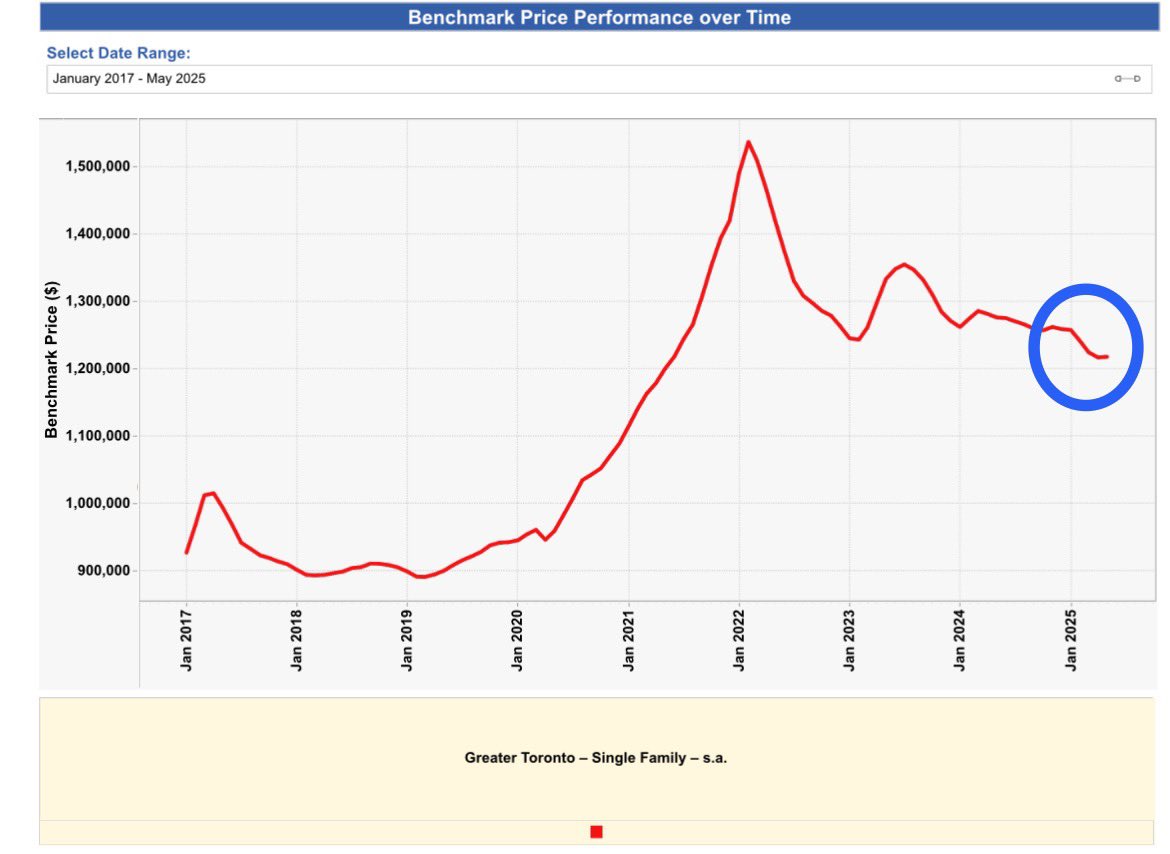
House prices in Toronto were down another 0.6% in March. Now down 26% from peak, round-tripped 5 years of gains and just 10% above the 2017 peak
Ben Rabidoux tweet media
English
21
28
215
22K
H
H@fintwit_hj·
@danielfoch @BenRabidoux @JohnPasalis Random idea: we should start a market on benchmark home prices. We can really put $$. Behind our forecasts. Maybe I’m missing it already existing but it would put to bed all the arguments folks have on twitter!
English
0
0
0
50
Daniel Foch
Daniel Foch@danielfoch·
905 detached still has some downside from new build market dropping 13% overnight But once that’s priced in I think the bottom is in. IMO it’ll keep pricing in til the HST holiday expires. And they could extend it tbh 416 there’s not enough economical new build to make a material impact yet
English
1
0
0
393
Ben Rabidoux
Ben Rabidoux@BenRabidoux·
Sales up and inventory down y/y is probably the bigger story in Toronto real estate. No one seems to be talking about shrinking inventory...
English
22
4
119
18.2K
H
H@fintwit_hj·
@BenRabidoux @JohnPasalis Market segments are not unrelated, though. Different segments bleed into one another. SFH has very little investor appetite, and, end-user affordability is awful, still. Outside of very small, demand inelastic areas, vast vast majority of GTA should pull back further.
English
0
0
1
113
Ben Rabidoux
Ben Rabidoux@BenRabidoux·
@JohnPasalis yeah i dont have a strong view on condos. that market may well be a disaster for years. single-family is a dif story. getting harder to be really bearish on that segment
English
4
0
9
1.2K
H
H@fintwit_hj·
@danielfoch Lol come on man, at least inflation adjust the numbers. And Foreign investment in govt bonds vs equity markets have a big difference.
English
0
0
2
58
Daniel Foch
Daniel Foch@danielfoch·
Foreign investment surges to Canada’s strongest level since 2007 In 2025, net investment into Canada exceeded net outflows by $17.4 billion, the surplus showing a reversal from 2022 financialpost.com/news/economy/f…
English
25
3
54
5.6K
H
H@fintwit_hj·
@danielfoch Genuine question - has it gotten better or worse since this time?
English
0
0
0
29
Daniel Foch
Daniel Foch@danielfoch·
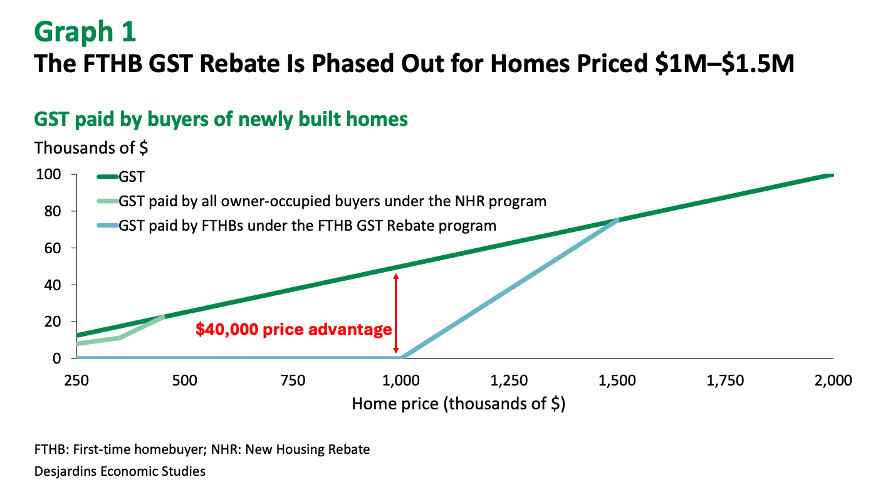
$40,000 discount on a brand new home? If $1M first time home is bought from a builder, it is $40,000 less than anyone else in the market. First time homebuyers have a massive subsidy in Canadian real estate right now. Builders have never been more negotiable. GO GET IT.
Daniel Foch tweet media
English
56
14
105
23K
H
H@fintwit_hj·
@nasmadotali Yeah, what did we expect letting mom/pop investors lever themselves into thinking that doing the riskiest thing possible was prudent. Never heard a peep on the way up but when things are coming down, it’s a war zone. No sympathy here.
English
0
0
7
522
Nasma Ali
Nasma Ali@nasmadotali·
Litigation lawyer describing flood of lawsuits due to the market declining: “It’s a war zone.” Wow…
English
5
5
50
8.1K
H
H@fintwit_hj·
@nasmadotali A lot of folks I know in the industry are saying similar things but mostly, it shows in the numbers. RE became way too overvalued for its own good and now it’s on a slow grind down. My expectation is that it’ll be slow for a couple of years.
English
0
1
3
227
Nasma Ali
Nasma Ali@nasmadotali·
Our last two years were almost equal in number of deals so I thought maybe that was the bottom, & this year would be the same or slightly more active. I was wrong. This year is shaping up to be slower than last year.
English
9
4
53
6.1K
H retweetledi
Rhys
Rhys@RhysSullivan·
Been using this line on Facebook marketplace while lowballing people and it’s a game changer
Rhys tweet media
English
249
6.5K
194.4K
5.7M
H
H@fintwit_hj·
@danielfoch @AttackMooose This is anecdotal so feel free to discount but I genuinely believe FTHB have been priced out so badly that the traditional view of immediate homeownership doesn’t apply. A lot of people I know are fine with not ever owning and have changed their lifestyle!
English
1
0
6
487
Daniel Foch
Daniel Foch@danielfoch·
Maybe for 2-3 more years yeah But as a thought experiment, let's assume there's another 10% downside in the market, and that new homes for sale today are priced at fair market value. You tell the builder you're fearful prices will fall and capture 10% in builder incentives (easily achievable today) + 4% with the tax rebate. 14% discount against the market. You get to own that home 2-3 years sooner - which is, frankly, the goal of most first-time buyers, because they want to use their home as a savings vehicle.
English
5
0
7
1.7K
H
H@fintwit_hj·
@danielfoch Or, wait another 6months to a year and get it for less? The short-term economics just don’t make sense for people to make a buying decision now. And, additionally, resale can afford to get even cheaper. Why buy new when resale will surely come down? Bad advice
English
0
0
4
382
H
H@fintwit_hj·
@SteveSaretsky In other words, relative to the historical average, we are still WAY more unaffordable.
English
0
0
2
248
Steve Saretsky
Steve Saretsky@SteveSaretsky·
Falling home prices has improved housing affordability. Buying a home in Canada is the easiest it's been in the last three years.
Steve Saretsky tweet media
English
118
17
271
29.3K
H
H@fintwit_hj·
@ShaziGoalie If you consider life-support = drawdown from the top, then, yes. But, there was an incredible run up in prices from 2015 onwards to 2022 that probably won’t happen again. When incomes become too detached from housing prices, you know something is wrong.
English
0
0
0
178
Shazi
Shazi@ShaziGoalie·
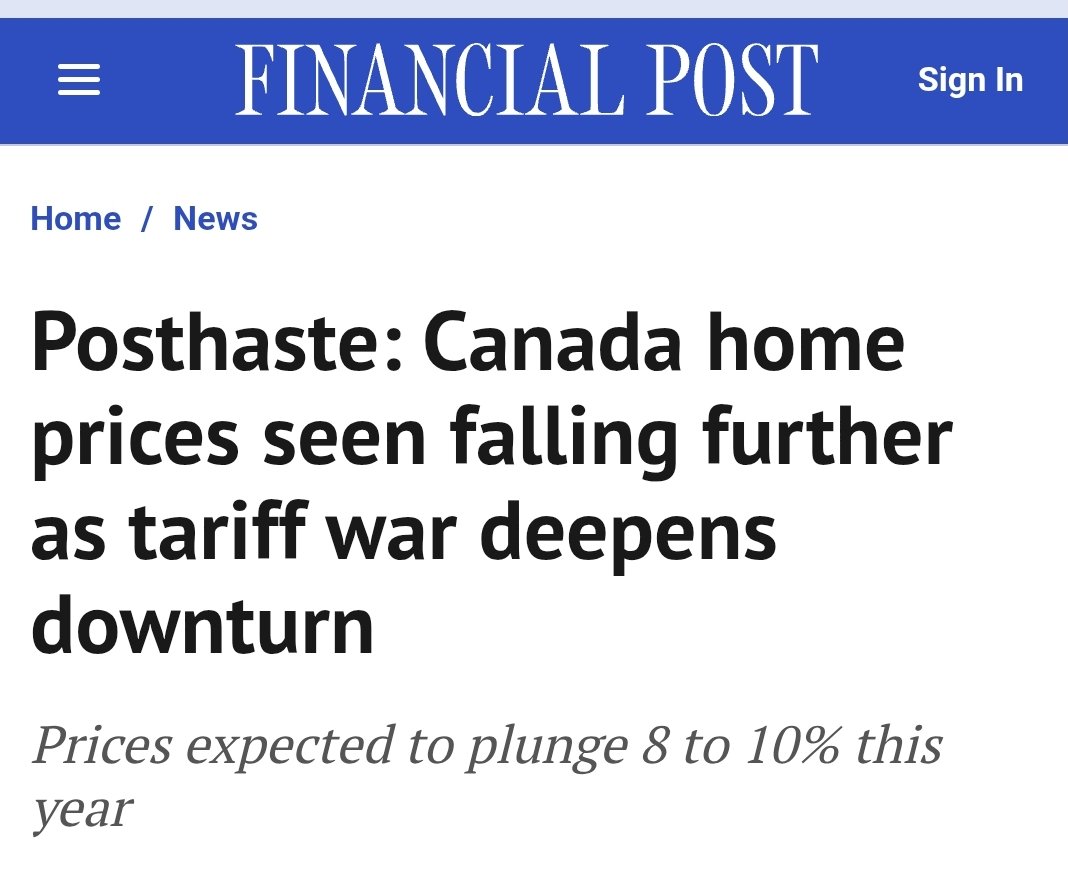
🇨🇦 housing market is already on life support. Now Oxford Economics says prices will plunge another 8–10% — not because of rates, but because of Trump’s tariffs. ✅ Shrinking population ✅ Job losses ✅ Buyer paralysis ✅ Distress sales rising 🏚️ GTA listings up 35% YoY 🏚️ Calgary inventory up 83% And the Bank of Canada? Done cutting. Fixed rates rising again. This isn’t a soft landing. It’s a slow, quiet collapse.
Shazi tweet media
English
41
37
216
15K
H
H@fintwit_hj·
@nasmadotali Honestly, the only forward-looking metric is SLNR. That shows you whether there is excess demand or supply and that is what drives future prices. Rate changes/shocks are ofc there but the fundamental channel for price movements is SLNR based
English
0
0
0
458
Nasma Ali
Nasma Ali@nasmadotali·
Little known fact: Toronto real estate average selling price has increased every month consecutively since December.
Nasma Ali tweet media
English
44
13
129
27.6K
H
H@fintwit_hj·
@nasmadotali Two things can both be true: average prices are up and, the composition of homes selling in the last 4 months has changed. Eg, condos not selling is skewing the averages higher. SFH could be selling for lower than before. You have a panel issue in the data when you look at avg
English
0
1
23
593
H
H@fintwit_hj·
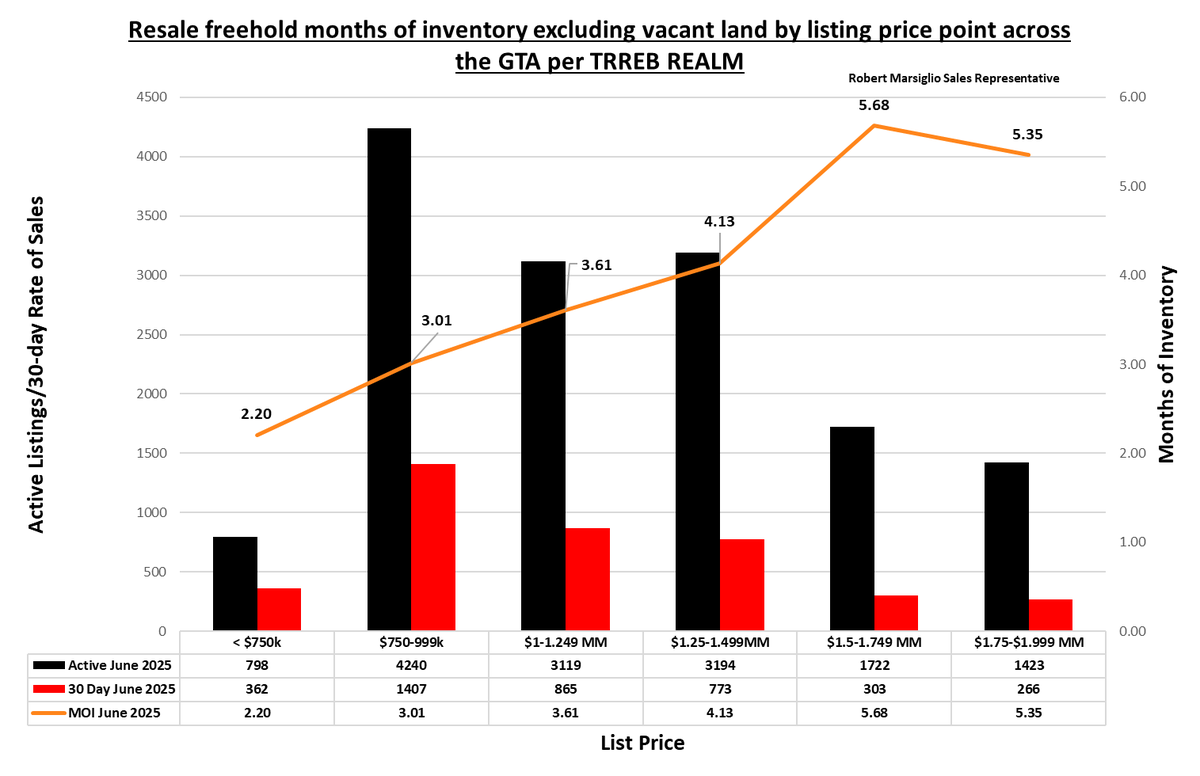
@rob_siglio Good chart. Anyway to compare vs pre-covid or have vintages? Like same time last year what was the MOI by price point bucket? Or even better, how far off are we relative to like a stable 10-20 year avg?
English
1
0
0
122
Robert Marsiglio
Robert Marsiglio@rob_siglio·
What does months of inventory look like across the price spectrum heading into the summer? I'm glad you asked! Here are freehold properties under $2 million. 1/4
Robert Marsiglio tweet media
English
3
4
22
2K
H
H@fintwit_hj·
@danielfoch @igetredpilled In the short-medium term, I’m bearish. Long term, I’m neutral. It ultimately depends on where CAD productivity goes. If up, then, it’s a bullish signal. If it stagnates and immigration dries up (which, it will), I don’t see housing reaching highs again.
English
0
0
2
148
Daniel Foch
Daniel Foch@danielfoch·
@igetredpilled Many bears call for a crash, but we already saw a steep crash - the second part of a bear market, the slow grind through a recession - is far more painful than the crash, because even new entrants lose their equity
English
7
0
22
1.4K
red pill rick
red pill rick@igetredpilled·
This was the spring market for GTA single family homes. It’s the third worst spring market in the last 20 years, only behind GFC and 2022. We’re firmly in bear market territory.
red pill rick tweet media
English
17
12
160
8.4K