Systemplays retweetledi
Systemplays
7.8K posts

Systemplays
@fitz_doug
https://t.co/GKR4nz9at6 is a sports handicapping site offering free picks and quality information designed to make you a wiser, more informed sports bettor.
Las Vegas Katılım Temmuz 2011
883 Takip Edilen1.2K Takipçiler

5/18/26:
MLB:
Mia -108/Atl
NYM -123/Was
Bos -107/KC
Col +132/Tex
LAA +116/A's
Sea RL +135/CWS
systemplays.com
English

@BigBlueGator80 @RetroMoviesDB Rachel Portman made a lot of great movie music
English
Systemplays retweetledi
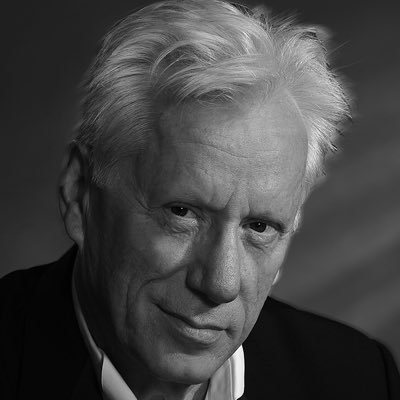
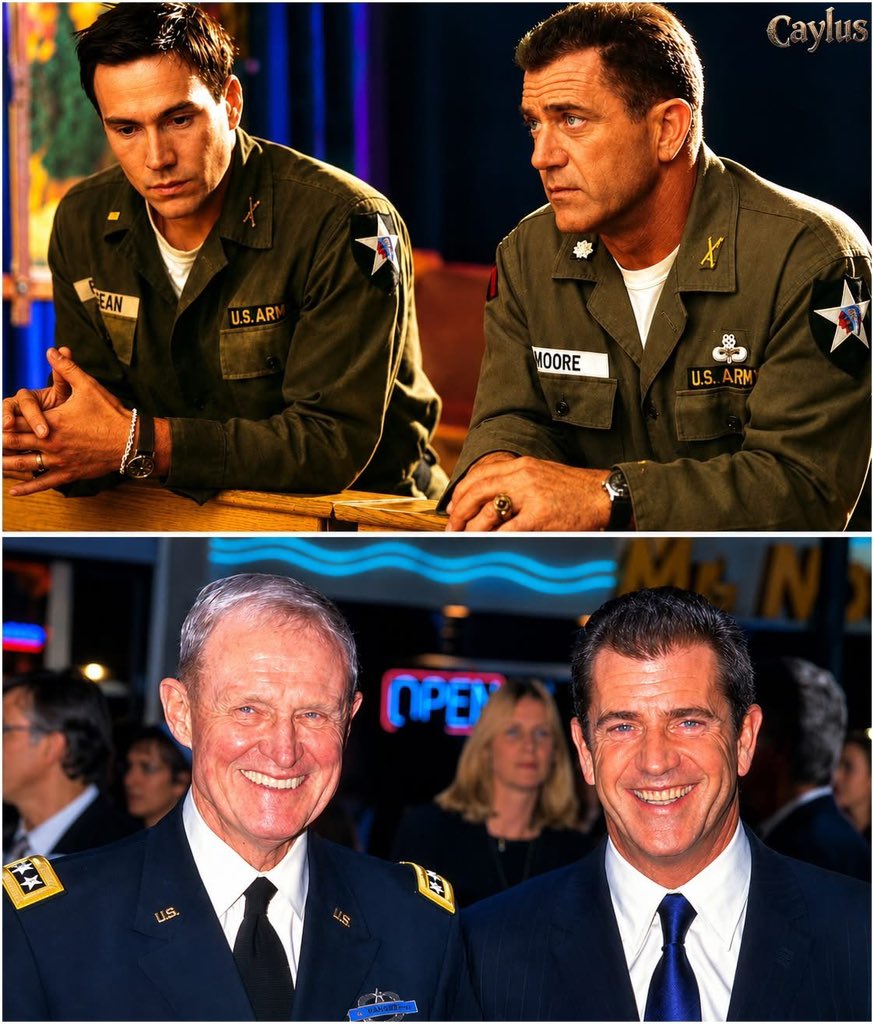
In the weeks after the release of "We Were Soldiers" in 2002, Mel Gibson received a quiet message, off the press circuit and away from the polished interviews.
The message wasn’t about box office numbers or reviews. It was about Sgt. Charles T. Fitts, a real Vietnam veteran who had fought under Lt. Col. Hal Moore during the Battle of Ia Drang in 1965 — the same battle Gibson had spent months recreating on-screen.
Fitts had recently been hospitalized in Texas after a serious injury.
He had watched We Were Soldiers from his hospital bed and, according to people close to him, the film brought everything rushing back. The helicopters. The jungle. The fear. The faces of men who never came home.
Something about that stayed with Gibson.
No cameras were called. No announcement was made. He quietly boarded a flight to Texas without media attention and asked his team to keep the visit private. When he arrived at the VA hospital, nurses were stunned to see him walk through the hallway alone wearing jeans, a flannel shirt, and carrying only a DVD copy of the film and a small black notebook.
No entourage.
No publicity team.
Just Mel Gibson asking if he could sit with a soldier.
Fitts was in his early sixties and recovering from multiple surgeries. When Gibson entered the room, the veteran instinctively tried to salute him, momentarily confusing him with someone from the past.
Then he realized who it was and laughed softly.
“You looked more tired in the movie than I ever saw Hal Moore,” he joked.
Gibson smiled and answered quietly:
“That’s probably because you actually lived it.”
The conversation lasted more than an hour.
A nurse who occasionally stepped inside later said the atmosphere in the room never felt like celebrity meeting fan. It felt like two men trying to bridge the distance between cinema and reality.
Gibson asked him about everything.
Not dramatic questions. Real ones.
What did the gear actually feel like after hours in the jungle? How heavy were the boots when they got wet? What sound did the M16 make when dirt jammed the chamber? What happened emotionally after the helicopters disappeared and silence settled over the battlefield?
Fitts slowly opened up in ways people around him hadn’t seen in years.
At one point, he reached into his wallet and pulled out an old worn photograph of his platoon. Young faces staring back at the camera. Most of them never made it home.
He handed it to Gibson carefully.
“You showed their faces,” he said. “That’s what mattered.”
According to hospital staff, Gibson became visibly emotional holding the photograph. For several seconds, he reportedly said nothing at all.
Just stared at it quietly.
Later, Gibson privately admitted to his team that the hour he spent with Fitts became the most honest moment of the entire press tour surrounding the film. Red carpets suddenly felt meaningless compared to sitting across from someone who had actually survived the war he had only pretended to fight.
He refused to talk publicly about the visit afterward.
The only thing he eventually said was that films like We Were Soldiers could introduce people to history, but veterans like Charles Fitts were the ones who truly educated him.
When the visit ended, Gibson didn’t sign autographs. He didn’t pose for photos. He simply shook Fitts’ hand, thanked him quietly, and walked back down the hospital corridor alone.
One VA staff member later summed the entire moment up perfectly.
“He didn’t come here to be seen,” she said. “He came here to listen.”
And maybe that’s why the memory of that visit still feels so real.
Because for once, Hollywood stopped performing.

English

5/17/26:
MLB:
NYM -117/NYY
Min +120/Mil
CWS +117/CHC
LAA +125/LAD
Sea RL +135/SD
systemplays.com
Suomi
Systemplays retweetledi

Do you know what happened in the last 24 hours?
1. Late on Thursday night @FBI agents landed at New York Stewart International Airport with Mohammad al Saadi in handcuffs. Al Saadi, the leader of an Iran-backed Iraqi terror group is allegedly responsible for more than 20 attacks across Europe and Canada and for planning attacks in the U.S..
2. Jose Enrique Martinez Flores, who goes by “Chuqui," the highest ranking Tren de Aragua leader to be extradited to the U.S., also just landed in the U.S. in shackles. Flores allegedly oversaw TdA’s drug trafficking, extortion rackets, prostitution rings and murder operations.
Then, last night, in an operation that makes any fictional representation look amateurish, American operators, working with local Nigerian forces, killed Abu-Bilal-al-Minuki, the second in command for ISIS global operations, a man with the blood of countless innocents on his hands, including many Christians.
This is just one day in the Counterterrorism operations of President @realDonaldTrump.
We salute the intelligence professionals, Law Enforcement Officers, Diplomats, Military operators and support personnel who make these operations possible 24/7.
@WhiteHouse
@DeptofWar
@TheJusticeDept
@StateDept

English

5/16/26:
MLB:
Bal -105/Was
Cle RL +140/Cin
Bos +113/Atl
LAA +123/LAD
systemplays.com
English
Systemplays retweetledi

Larry Ellison acaba de hacer la única pregunta que ningún periodista en la Tierra puede responder.
Un periodista del Wall Street Journal le dijo a la cara a Larry Ellison que Elon Musk no sabe lo que hace.
Ellison no discutió. No se alteró. Solo hizo una pregunta.
Ellison:
“Este tipo aterriza cohetes sobre plataformas robóticas en medio del océano… ¿y tú dices que no sabe lo que hace? ¿Alguna vez has aterrizado un cohete?”
Una sola pregunta. Sin posibilidad de recuperación.
Ellison:
“¿Quién eres tú? ¿Por qué debería creerte a ti antes que a mi amigo Elon?”
Esta es la pregunta que toda la clase mediática lleva una década esquivando:
¿Quién eres tú para juzgar?
¿Qué has construido?
¿Qué has lanzado?
¿Qué problema has resuelto que no implique un teclado y una fecha límite?
Ellison:
“Ahí estás tú, delante de tu Apple Macintosh, escribiendo un artículo diciendo que Elon es un idiota.”
Se sientan detrás de un portátil que no diseñaron.
Usan una red que no construyeron.
Funcionando sobre chips de silicio que ni siquiera pueden explicar.
Para decirle al mundo que el hombre que envía humanos al espacio no sabe lo que hace.
Nunca han construido nada más pesado que un documento de Word.
Y aun así lo publican con absoluta certeza.
Eso es lo que debería inquietarte.
No la crítica.
Sino la confianza con la que la hacen.
La ausencia total de autoconciencia necesaria para juzgar disciplinas en las que no durarían ni un semestre.
Musk no opera en opiniones.
Opera en la capa física del universo, donde las matemáticas funcionan… o el cohete no regresa.
Sus críticos operan en un editor de texto.
Construyó el vehículo que transporta astronautas de la NASA a la Estación Espacial Internacional.
La constelación de satélites que lleva internet a zonas de guerra activas.
El coche eléctrico que obligó a todos los fabricantes del planeta a abandonar sus planes basados en motores de combustión.
Sus críticos más ruidosos construyeron una firma al final de un artículo.
Entonces… ¿por qué tanto odio coordinado?
Porque perdieron la correa.
Los ataques no aumentaron porque Musk empeorara como ingeniero.
Aumentaron porque compró X.
Abrió el algoritmo.
Le devolvió la plaza pública a la gente.
Y destruyó su capacidad de controlar lo que puedes pensar.
No odian al ingeniero.
Odian que el ingeniero les quitó el monopolio.
No puedes cancelar un cohete.
No puedes publicar un artículo contra la gravedad.
No puedes editar las leyes de la física.
Ellos controlan la narrativa.
Él controla la física.
Y uno de los dos va camino a Marte.
Español

5/15/26:
MLB:
Bal -134/Was
NYY -148/NYM
KC -102/STL
Arz -120/Col
systemplays.com
English
Systemplays retweetledi

Only Donald Trump.
No other human being on Earth could pick up the phone, summon the top 30 most powerful CEOs alive ... Tesla, Apple, Nvidia, Wall Street, AI, aerospace, the whole damn roster ... and have every single one clear their schedule to fly into Beijing with him.
Only Trump could land in China after a decade of manufactured hate and get handed the ultra-rare “State-Visit-Plus” treatment that Beijing created specifically for him and has never given anyone else. Cheering students. Temple of Heaven. Great Hall of the People. Beef trade reopened as a welcome gift.
While career politicians and globalist benchwarmers spent years turning U.S.-China relations into a slow-motion dumpster fire, only Trump walks in like he owns the room and turns it into a high-stakes power move for America First.
This isn’t Biden’s pathetic weakness. This isn’t the War Party’s fever-dream confrontation. This is Trump doing what only Trump does: showing up with overwhelming strength, elite leverage, and zero fear.
The rest of them talk. Trump assembles legends and rewrites the script in real time.
Nobody else even comes close. Not now. Not ever.
This is why they hate him. This is why the world watches him. This is why history keeps bending in his direction.
The Trump era is back, bigger and bolder than before.
(article below)
English

5/14/26:
MLB:
Cin RL +135/Was
Mil -134/SD
KC -130/CWS
Bos -105/Phi
systemplays.com
English
Systemplays retweetledi

Elon Musk just defended America better than every politician in Washington combined.
Musk: “After World War 2, the US could have basically taken over the world and any country. Like we got nukes, nobody else got nukes. We don’t even have to lose soldiers. Which country do you want?”
One nation on earth held a weapon nobody else had.
Total dominance. Zero competition. No risk of retaliation.
Every empire in history that held that kind of advantage used it.
Rome. The Mongols. The British. The Ottomans.
They conquered until they collapsed.
America had a bigger advantage than all of them combined.
And it rebuilt the countries it just defeated.
Musk: “The United States actually helped rebuild countries. So it helped rebuild Europe, it helped rebuild Japan. This is very unusual behavior, almost unprecedented.”
Almost unprecedented?
It had never happened before. Not once in 5,000 years of recorded history.
The Marshall Plan wasn’t foreign aid.
It was the most radical act of restraint any superpower ever committed.
America turned its enemies into allies. Turned rubble into economies. Turned surrender into partnership.
Germany went from ashes to the economic engine of Europe in a generation.
Japan went from unconditional surrender to the third largest economy on earth.
Three years after the war, America was flying food into Berlin.
A city in the heart of the nation that just tried to destroy it.
That’s not policy.
That’s a civilization deciding what it is at the exact moment it has the power to be anything.
You’re being told a story right now.
That America is the villain of history.
You hear it everywhere. Media. Universities. Social platforms.
Musk: “There’s always like, well America’s done bad things. Well of course America’s done bad things, but one needs to look at the whole track record.”
Every nation on earth has dark chapters. Every single one.
The difference is what a country does when nobody can stop it.
And when nobody could stop America, it fed its enemies and rebuilt their cities.
Musk: “The history of China suggests that China is not acquisitive. Meaning they’re not going to go out and invade a whole bunch of countries.”
Probably right.
China has historically built walls, not fleets.
But the real question isn’t about borders anymore.
We’re approaching a moment that mirrors 1945 in ways nobody has fully processed yet.
AI is going to give a handful of people a power advantage that makes nuclear monopoly look quaint.
If someone is going to hold that kind of power, who do you want it to be?
The country that conquered when it could? Or the one that rebuilt when it didn’t have to?
Every alliance. Every trade route. Every economy.
Billions lifted out of poverty.
All of it traces back to one act of restraint that had never been done before.
And carries no guarantee of being repeated.
The most powerful thing America ever did wasn’t building the bomb.
It was what it didn’t do after.
English

5/13/26:
MLB:
NYY RL EV/Bal
Cle RL +145/LAA
Bos -126/Phi
KC -107/CWS
Mia -120/Min
Hou +112/Sea
A's -141/STL
systemplays.com
English
Systemplays retweetledi

The ending of Blade Runner (1982) is one of those scenes where an actor just completely hijacks a movie. Rutger Hauer turns Roy Batty from a sci-fi villain into something weirdly tragic and beautiful. That monologue lingers forever.
cinesthetic.@TheCinesthetic
Name a scene where the acting was operating on another level.
English

5/12/26:
MLB:
KC -120/CWS
Tex -124/Arz
A's -148/STL
systemplays.com
English

5/11/26:
MLB:
Tor -122/TB
Tex -123/Arz
Hou +124/Sea
systemplays.com
English
Systemplays retweetledi

For 8 years, employees mocked the security chief who forced them to practice evacuating the World Trade Center every 3 months.
On September 11, 2001, those “annoying drills” saved nearly 2,700 lives.
His name was Rick Rescorla.
In 1990, while inspecting the World Trade Center, Rescorla warned that terrorists could park a truck bomb in the garage and bring the towers down.
Executives dismissed him.
Three years later, the 1993 WTC bombing proved he was right.
Rick watched the chaos during the evacuation and realized something terrifying:
If a bigger attack ever came, thousands would die unless people were trained to escape quickly.
So he prepared.
Every 3 months, he made Morgan Stanley employees evacuate the tower by stairwell.
People complained constantly.
“It’s a waste of time.”
“It’ll never happen.”
But Rick didn’t care.
He timed evacuations, fixed bottlenecks, and taught people how to stay calm under pressure. During drills, he would sing military songs and Welsh hymns to keep everyone moving.
Then came September 11.
At 8:46 AM, the North Tower was hit.
Officials in the South Tower told workers to stay at their desks because the building was supposedly secure.
Rick ignored the announcement.
He grabbed a bullhorn and ordered all 2,700 Morgan Stanley employees to evacuate immediately.
“This is not a drill.”
As people descended the stairwells, Rick stood directing traffic and calming terrified workers by singing:
“Men of Harlech, march to glory…”
Then the second plane hit the South Tower.
Even after impact, Rick stayed behind helping people escape floor by floor.
When coworkers begged him to leave, he refused.
“Soon as everyone’s out.”
By 9:59 AM, almost all Morgan Stanley employees had escaped.
Rick Rescorla never did.
He died after going back up the tower searching for anyone left behind.
Nearly 2,700 people survived that morning because one man spent 8 years preparing for a disaster everyone else thought was impossible.
People called him paranoid.
History called him right.

English