@tobiastornros @productlane Great, let me know when you create a workspace, then I can give you access to the feature flag!
English
Raphael Fleckenstein
780 posts
@fleckensteyn
CEO of @productlane, customer support tool built on Linear.

New: Support Copilot. Move through conversations faster with AI-drafted replies based on your help center, past conversations, Changelogs, and Linear issues.
Our roadmap is now public: see hundreds of upcoming product ships. We’ll be adding to this list regularly. What’s missing? @jeff_weinstein @jrfarr @kevinyien @hazelcough @backseatVC and others will be answering your questions today. 🧵



This is really neat but it’s not a design tool as much as it’s a design _production_ tool. The practice of design is mostly about what comes before production. There’s no doubt in my mind that all parts of software production will become automated very soon. Writing code, making web pages, putting pieces of a design system together etc. And that’s fine. I think few people actually enjoy this kind of production work. Wouldn’t it be better if we spent our precious time in life on what is more meaningful?! At the core, the practice of design is methodical; like architecture, not like art. In a nutshell: We find constraints, form comprehension of the whole and propose solutions that honor those constraints. First after that do we enter some form of production phase, usually prototypes first, learn about some constraints that were hidden before, loop back, prototype and then build the production-grade “final” artifact. These last few tasks are quickly losing value because AI tools can do it much faster (not yet better though) than humans. It’s simply just what has the best RoI for a business. Some companies and individuals will continue to spend human time on certain parts of the “production line” as a market differentiator, but it will cost them a relatively high price compared to competitors. Anyhow, I still haven’t seen a tool better than Figma that supports the actually-interesting part of the design process. I wouldn’t be surprised if Figma focused their products on that, maybe separating “products for production” of “products for ideation & exploration.” The latter would obviously still leverage AI, but not to do the work for me but rather to support my efforts the way a therapist helps me live a better life (not living my life for me.)

Prediction: The next 12-24 months, "UX-pilled" builders will be in massive demand. Who can create intuitive interfaces, web+mobile+desktop apps that "feel good," natural, fast, and far better than the competition. THIS will be the difference vs those building "just" with AI.
Today we're launching a rebuilt version of Claude Code on desktop. The app has been redesigned for the ground up to make it easier than ever to parallelize work with Claude. I haven't opened an IDE or terminal in weeks. Excited for you all to give it a shot!

The biggest quality of life, development, and UX improvement has come from betting on @zero__ms and @aboodman early. Last week they onboarded me to their new zero cloud early access, and the switch from self-hosting to ZC was so seamless - 15 min No more tedious AWS setup!


Who's built Linear for support? We're on Plain. It's the best we've tried, but not there yet. Requirements: - Slack+Discord+GitHub - Native mobile app - Local-first web app - Stable (P is so buggy) - Linear integration (P has their own weird ticket system)
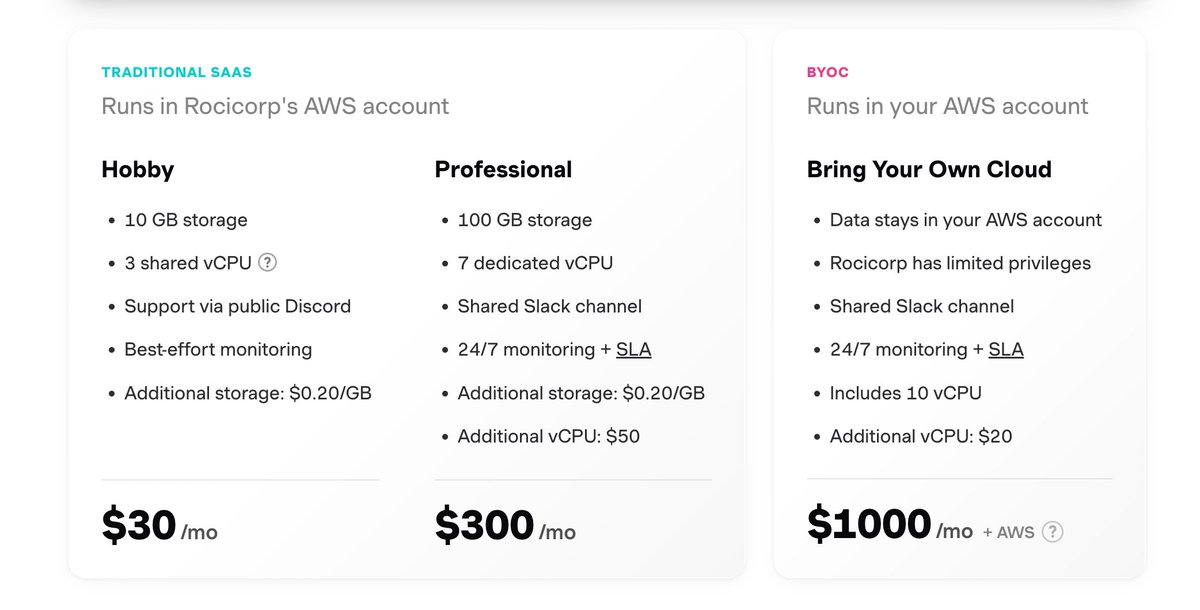
you do these hops until you finally land in aws it's not as pretty, but it doesn't keep you up at night you learn the lesson: the next project starts on aws
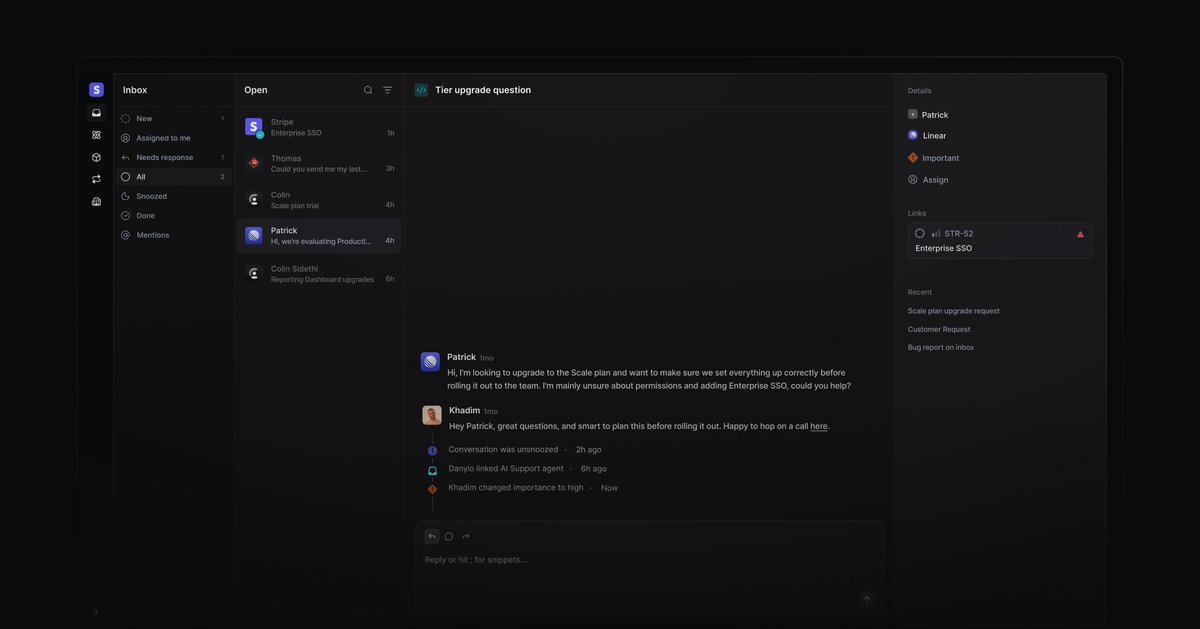
New: Conversation timeline. Every customer interaction now has a unified timeline showing emails, Slack threads, pull requests, and Linear issue updates in one place.
Introducing Live Chat. Coming with unique capabilities: Customers not only see their past chats but all associated Linear requests, so they can track and change their priority directly in the chat.