Tad Dippel retweetledi

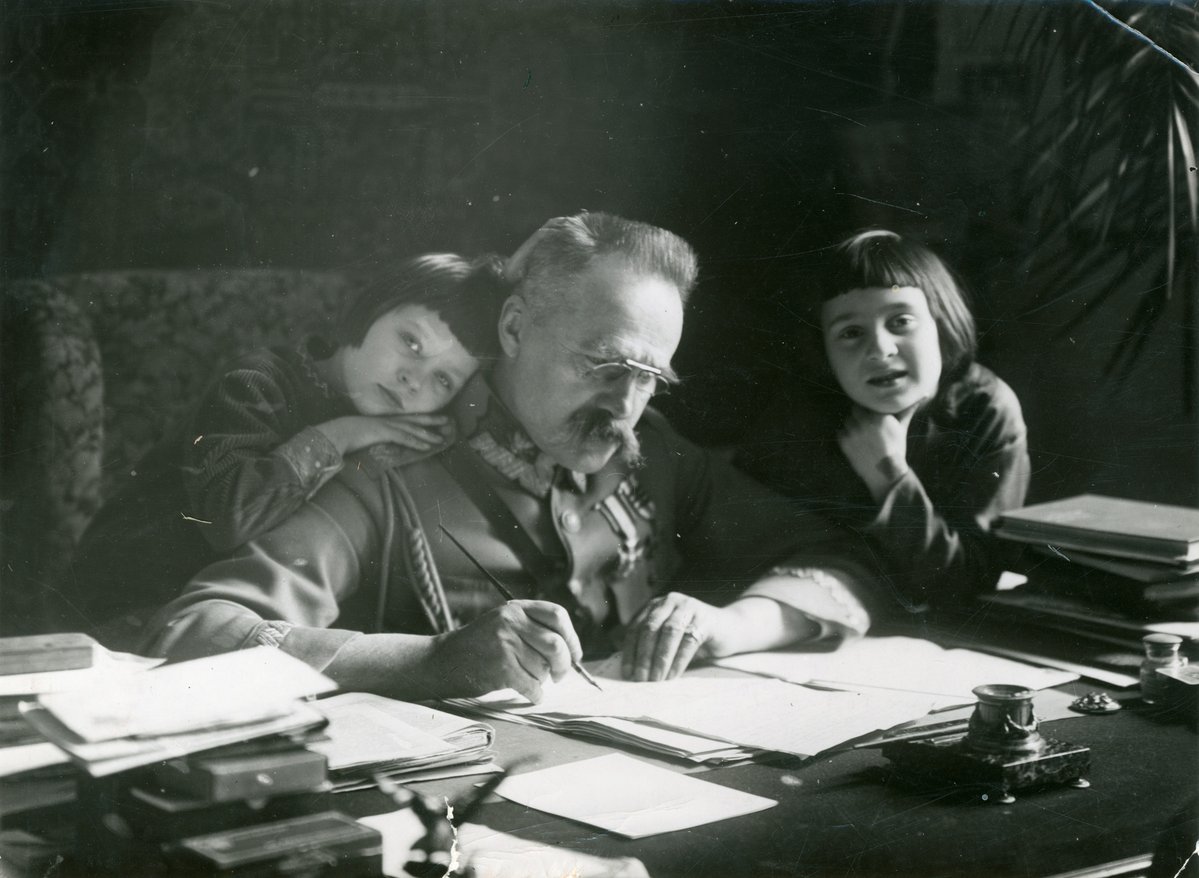
19 marca - dzień imienin Pierwszego Marszałka Polski 𝐉𝐨́𝐳𝐞𝐟𝐚 𝐏𝐢ł𝐬𝐮𝐝𝐬𝐤𝐢𝐞𝐠𝐨.
Marszałek Józef Piłsudski z córkami Wandą i Jadwigą w gabinecie przy pracy, 1926 r.
WBH, Kolekcja nr 66 - Józef Piłsudski, foto. sygn. K 66-44
Polski
Tad Dippel
8.2K posts


@flyer_2001
British Pole. Photographer, husband, Polish military historian. Writing my father's journey in WW2 #2korpus #1PolishArmouredDivision #avphoto #warbirdphoto



Elżbieta Zawacka, one of only two Polish women to hold a rank of a general, the only woman among the Cichociemni and a legendary courier of the Home Army Headquarters, was born #OTD 117 years ago. She carried secret messages across occupied Europe, crossing borders over 100 times and becoming a legend among couriers. She took part in Poland’s 1939 defensive war and the Warsaw Uprising, and in 1943 parachuted into occupied Poland. After the war, Elżbieta Zawacka was arrested and imprisoned for four years by the communist authorities. In the 1980s, she was involved in the Solidarity movement. She also became a professor. Decorated with Poland’s highest honours, including the Virtuti Militari, In 2002, she received the IPN Custodian of National Memory award. Elżbieta remained active throughout her life in preserving the memory of those who fought for independence. Died in 2009. Learn more about Elżbieta Zawacka in our video.


🗓🕯As the 86th anniversary of the Katyń Massacre approaches, the Institute of National Remembrance, together with the National Centre for Culture, the Pilecki Institute, and the Katyń Museum, are joining forces in the nationwide social and educational campaign “I Remember. Katyn 1940.” ➡The symbol of remembrance in this campaign is a replica of a button from a Polish military uniform, discovered in the mass graves. It is the very object that Zbigniew Herbert evoked in his poem “Buttons”: 📜“Only the buttons, unyielding, survived death—witnesses to the crime. From the depths they rise to the surface, the only monument on their grave.” ➡Today, this button is not only a tribute to the victims, but also a clear sign of our opposition to attempts to falsify history. Edward Herbert - to whom the poet dedicated this poem was a captain in the armored forces of the Polish Army and a cousin of Zbigniew Herbert. After the Soviet invasion of Poland in 1939, he was taken prisoner and held in the Kozelsk POW camp. In the spring of 1940, he was murdered by the Soviet secret police during the Katyn Massacre. 📍 How can you take part? 🔘 Pin the Katyn Memorial Button From April 10–13, commemorative pins will be distributed in Warsaw at the Katyń Museum and the Kordegarda Gallery, as well as in regional branches of the Institute of National Remembrance across Poland and at the Pilecki Institute’s locations, including the Dom Bez Kantów Gallery in Warsaw, and in Augustów, Berlin, and New York, as well as at partner institutions in Warsaw, Ostrów Mazowiecka, and Raszyn. 🏛 For institutions and organisations: 🗓📌Until March 27, institutions may request free pin packages by contacting: sekretariat@muzeumkatynskie.pl ➡The campaign “I Remember. Katyn 1940” has been carried out by the National Centre for Culture continuously since 2007. The Katyn button replica is more than a symbol; it is evidence that survived decades of silence. Together, we ensure that the history of the murdered Poles remains alive and continues to reach future generations. 🔎Learn more about the Katyń Massacre: tiny.pl/8wzg4rdb @InstPileckiego @PileckiInstitut @NCK_PL