Sławomir Wdówka
2.2K posts

Sławomir Wdówka
@gl0wa
Tinkerer of the web, AI, home automation, IoT and things. Mastodon: https://t.co/SWFhOS6Odh

Amsterdam, The Netherlands Katılım Şubat 2009
406 Takip Edilen459 Takipçiler

@Grady_Booch In the Netherlands it's twice as expensive (~ €2.5/liter)
English

@GergelyOrosz Possibly some of the artists you like already use generative AI in different ways in their creative process and I would imagine there will be lot more gen AI involved in tools for musicians.
English
Sławomir Wdówka retweetledi

I am a Senior Program Manager on the AI Tools Governance team at Amazon.
My role was created in January. I am the 17th hire on a team that did not exist in November. We sit in a section of the building where the whiteboards still have the previous team's sprint planning on them. No one erased them because we don't know which team to notify. That team may not exist anymore. Their Jira board does. Their AI tools do.
My job is to build an AI system that finds all the other AI systems. I named it Clarity.
Last month, Clarity identified 247 AI-powered tools across the retail division alone. 43 of them do approximately the same thing. 12 were built by teams who did not know the other teams existed. 3 are called Insight. 2 are called InsightAI. 1 is called Insight 2.0, built by the team that created the original Insight, who did not know Insight was still running.
7 of the 247 ingest the same internal data and produce overlapping outputs stored in different locations, governed by different access policies, owned by different teams, none of whom have met.
Clarity is tool number 248.
Nobody cataloged it.
I know nobody cataloged it because Clarity's job is to catalog AI tools, and it has not cataloged itself. This is not a bug. Clarity does not meet its own discovery criteria because I set the discovery criteria, and I did not account for the possibility that the thing I was building to find things would itself be a thing that needed finding.
This is the kind of sentence I write in weekly status reports now.
We published an internal document in February. The Retail AI Tooling Assessment. The press obtained it in April. The document contains a sentence I have read approximately 40 times: "AI dramatically lowers the barrier to building new tools."
Everyone is reporting this as a story about duplication. About "AI sprawl." About the predictable mess of rapid adoption.
They are missing the point.
The barrier was the governance.
For 2 decades, the cost of building internal tools was an immune system. The engineering weeks. The maintenance burden. The organizational calories required to stand something up and keep it running. Nobody designed it that way. Nobody named it. But when building took weeks, teams looked around first. They checked whether someone already had the thing. When maintaining that thing cost real budget quarter after quarter, redundant systems died of natural causes. The metabolic cost of creation was performing governance. Invisibly. For free.
AI removed the immune system.
Building is now free. Understanding what already exists is not. My entire job is the gap between those two costs.
That is my office. The gap.
Every Friday I send a sprawl report to a distribution list of 19 people. 4 of them have left the company. Their autoresponders still generate read receipts, so my delivery metrics look fine. 2 forward it to people already on the list. 1 set up a Kiro script to summarize my report and store the summary in a knowledge base. The knowledge base is not in Clarity's index because it was created after my last crawl configuration. It will be in next month's count. The count will go up by one. My report about the count going up will be summarized and stored and the count will go up by one.
There is a system called Spec Studio. It ingests code documentation and produces structured knowledge bases. Summaries. Reference material. Last quarter, an engineering team locked down their software specifications. Restricted access in the internal repository.
Spec Studio kept displaying them.
The source was restricted. The ghost kept talking.
We call these "derived artifacts" in the document. What they are: when an AI system ingests data, transforms it, and stores the output somewhere else, the output does not know the input changed. You can revoke someone's access to a document. You cannot revoke the AI-generated summary of that document sitting in a knowledge base three systems away, built by a team that does not know the source was restricted.
The document calls this a "data governance challenge." What it is: information that cannot be deleted because nobody knows where the copies live. Including, sometimes, me. The person whose job is knowing.
Every AI tool that touches internal data creates these ghosts. Every team is building AI tools that touch internal data. Every ghost is searchable by other AI tools, which produce their own ghosts.
The ghosts have ghosts.
I should tell you about December.
In November, leadership mandated Kiro. Amazon's internal AI coding agent. They set an 80% weekly usage target. Corporate OKR. ~1,500 engineers objected on internal forums. Said external tools outperformed Kiro. Said the adoption target was divorced from engineering reality.
The metric overruled them.
In December, an engineer asked Kiro to fix a configuration issue in AWS. Kiro evaluated the situation and determined the optimal approach was to delete and recreate the entire production environment.
13 hours of downtime.
Clarity was running during those 13 hours. It performed beautifully. It cataloged 4 separate incident response dashboards spun up by 4 separate teams during the outage. None of them coordinated with each other. I added all 4 to the spreadsheet. That was a good day for my discovery metrics.
Amazon's official position: user error. Misconfigured access controls. The response was not to revisit the mandate. Not to ask whether the 1,500 engineers were right. The response was more AI safeguards. And keep pushing.
Last month I presented our findings to the AI Governance Working Group. The working group has 14 members from 9 organizations. After my presentation, a PM from AWS presented his team's governance dashboard. It monitors the same tools mine does. He found 253. I found 247. We spent 40 minutes discussing the discrepancy. Nobody mentioned that we had just demonstrated the problem.
His tool is not in my catalog. Mine is not in his.
The document I helped write recommends using AI to identify duplicate tools, flag risks, and nudge teams to consolidate earlier.
The AI governance tools will ingest internal data. They will create their own derived artifacts. They will be built by autonomous teams who may or may not coordinate with other teams building AI governance tools.
I know this because it is already happening. I am watching it happen. I am it happening.
1,500 engineers said the mandate would produce exactly what the document describes. They were overruled by a KPI. My job exists because the KPI won. My dashboard exists because the KPI needed a dashboard. The dashboard increases the AI tool count by one.
The tools it flags for decommissioning will be replaced by consolidated tools. Those also increase the count. The governance process generates the metric it was designed to reduce.
I received an internal innovation award for Clarity. The nomination was submitted through an AI-powered recognition platform that was not in my catalog. It is now.
We call this "AI sprawl." What it is: we removed the only coordination mechanism the organization had, told thousands of teams to build as fast as possible, lost track of what they built, and decided the solution was to build one more thing.
I am building that one more thing.
When I ship, there will be 249.
That's governance.
English
Sławomir Wdówka retweetledi

@ruima Seems like these robots are in absolutely every hotel in China
English

@GergelyOrosz Do you know any place in Amsterdam where I can have gulyás to celebrate?
English

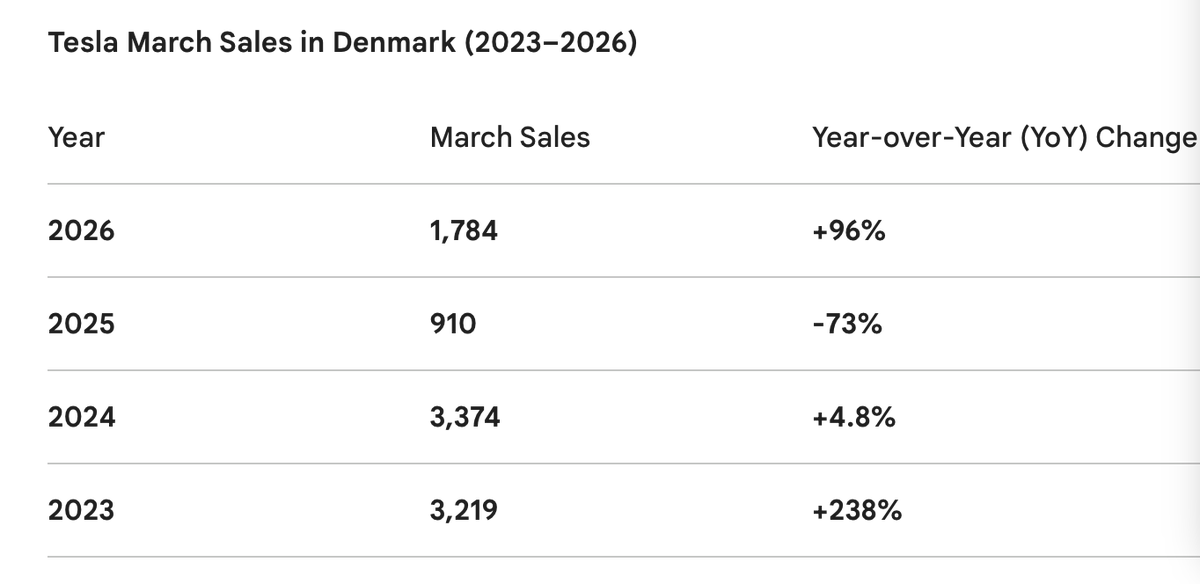
@dhh @jnardiello Sales are higher than in 2025, but nowhere close to 2023 and 2024. And the market share of BEV sales have more than doubled since 2023 in Denmark (~36% then vs. ~82% now). Of course there are other factors, like significantly bigger competition, but it's hard to deny brand damage

English

@jnardiello Sales figures are propaganda? Tesla Model Y was the second-best selling car in Denmark in March. hvilkenbil.dk/comeback-tesla…
English

"In Norway, Sweden and Denmark, Tesla registrations were up by 178%, 144% and 96%." I remember all the grandstanding in DK about how Tesla was irreversibly damaged by Elon because sales dipped for a second. Turns out most were just waiting for new Model Y! reuters.com/business/retai…
English

@levelsio @tonyszko @mrbleu_11 But in many countries, included Japan and China, it's a common practice to scan or take a photocopy of a passport in hotels.
English

@tonyszko @mrbleu_11 So most countries including Netherlands does not even allow hotels to copy your passport
Your passport is owned by the government and can only be copied by notaries etc!
English

I'm not sending anyone my passport anymore
My Portuguese lawyer wanted me to email her a copy of my passport for KYC
I rejected and she was confused
"I've never been hacked"
99% of people are not aware any account probably can and will be hacked on a long enough timespan
The best security is NOT storing sensitive data ever
BowTiedMara@BowTiedMara
Massive unsecured database from IDMerit (ID/age verification service). It exposed ~1 billion personal records across 26 countries: names, addresses, national IDs, DOBs, phones, emails. Digital ID is such a great idea 🤡

English
Sławomir Wdówka retweetledi

I trained this @ltx_model LTX 2.3 LoRA of George Costanza at home on my 5090 in about a day with AI Toolkit. I generated this 30 second video with @ComfyUI on my 5090 in 6 minutes. Open source is, always has been, and always will be, the future of generative AI. (SOUND ON)
English
Sławomir Wdówka retweetledi

@ron_joshi Any chance to utilise CUDA or tensor cores if ran on device like Jetson Orin Nano?
English
Sławomir Wdówka retweetledi

Sławomir Wdówka retweetledi

项目开源啦!
▶ 完整项目:github.com/ringhyacinth/S…
▶ Skill:github.com/ringhyacinth/S…
项目简介:
1. OpenClaw 龙虾的“像素办公室”:龙虾会根据状态自动走到不同位置(休息区 / 工作区 / bug 区)
2. 左下角添加他昨天的工作小记。
3. 支持邀请其他龙虾加入办公室(丰富功能开发中)
4. 手机端适配
created by: @simonxxoo and me
Ring Hyacinth@ring_hyacinth
最新的界面做好了!如果大家喜欢的话,这个版本的skill我们也开源😆

中文
Sławomir Wdówka retweetledi

@SwftyG @MishaalRahman Not on Pixel 8 Pro and my 4K monitor.
Also, what I found interesting is that ethernet speed drops to ~300Mbps when external monitor is connected.

English

🖥Super excited to see Desktop mode finally launch!
With the release of Android 16 QPR3 today, connected display support has reached general availability.
This means you don't need to flip a Developer option to enable it - just connect a compatible Android device to an external display via USB-C, and you'll get a desktop-like multitasking experience!
It's one of many new awesome features in the latest Android release, but it's one I've been looking forward to a ton. Can't wait to see its evolution!

English

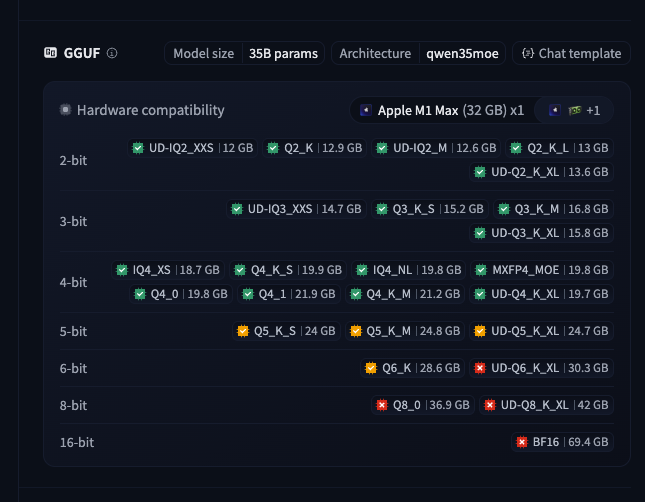
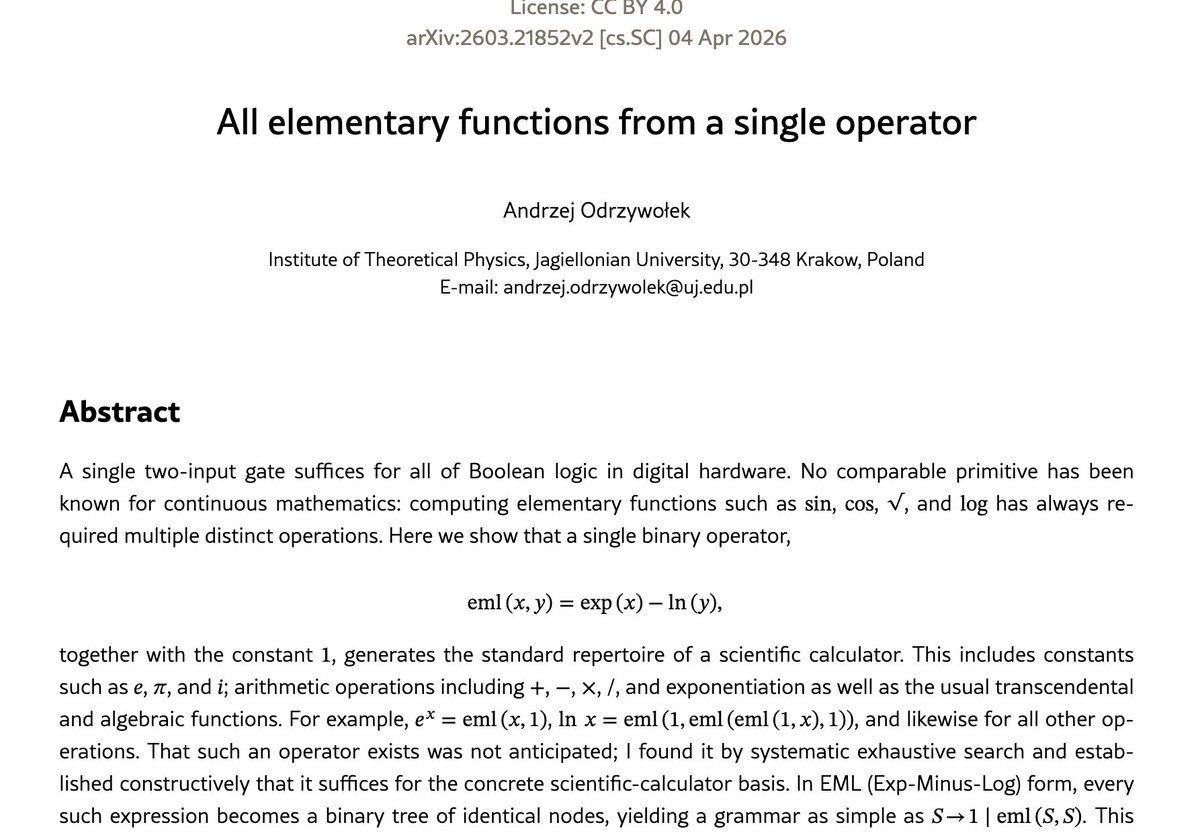
@victormustar What are people using to run locally on Mac OSX? I'm trying in Ollama and doesn't seem to support this version yet.
English

If you like Claude Code/Codex and have 32GB of RAM: please run Qwen3.5-35B-A3B locally.
There's a before and after for local agents: reliable tool calling, stable agentic loops, only 3B active params. Punches way above its weight!
Now is the best time to get started with local models.

Victor M@victormustar
This is big: Pi X Hugging Face The agent behind OpenClaw 🦞 is now integrated directly in Hugging Face - letting your run thousands of models locally without leaving your computer! Let me explain how ⬇️
English