

Michael Joseph
688 posts
Michael Joseph
@goharism
Finance @beautynova prev @Olaplex @PWC in val/financial modeling & serving salads @SaladJoonNYC. Angel investing with @hustlefundvc Angel Squad and beyond!
Katılım Mart 2011
3.8K Takip Edilen245 Takipçiler


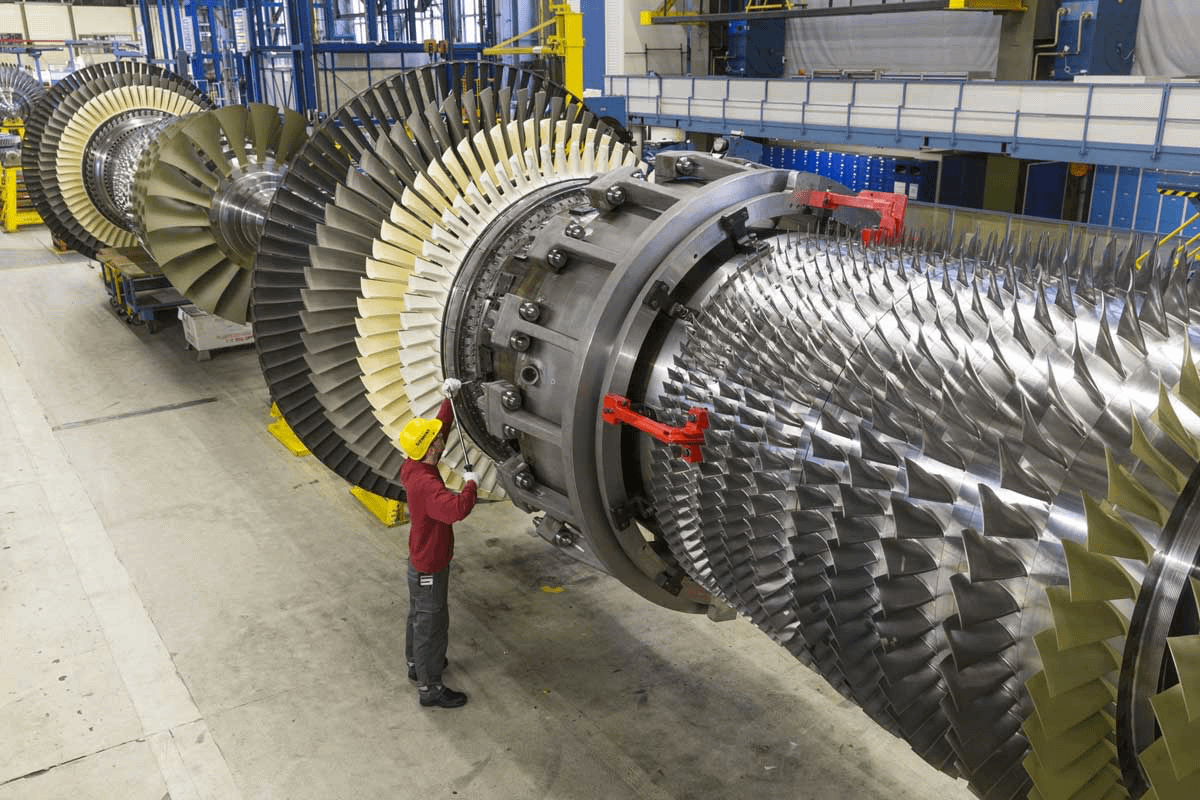
You cannot buy a new gas turbine until 2030. Order books at GE, Siemens, and Mitsubishi stretch to 2029. Turbine prices have nearly tripled since 2019. Every AI data center needs power and every gas plant needs a turbine. And every turbine has one part that bottlenecks the entire industry: The blade. It has to survive in gas 500°C above the melting point of the metal it's made from and spin at up to 20,000 RPM under 10,000 g of centrifugal force. Each blade is grown as a single crystal of nickel superalloy, pulled through a vacuum furnace at 3 mm per minute. A set of blades costs $600,000 and takes 90 weeks to grow. The same metallurgy powers modern jet engines. Only 3 companies on Earth can build one. China spent $42 billion trying to catch up. They bought a Russian fighter engine, took it apart, and copied every part. Their copy ran 30 hours between overhauls versus 400 for the original. Modern Western engines run 4,000. You can reverse engineer the shape of a turbine blade. You cannot reverse engineer 60 years of metallurgy.
English
@VirtualElena They actually recently ruined a shirt of mine - funny you should mention
English

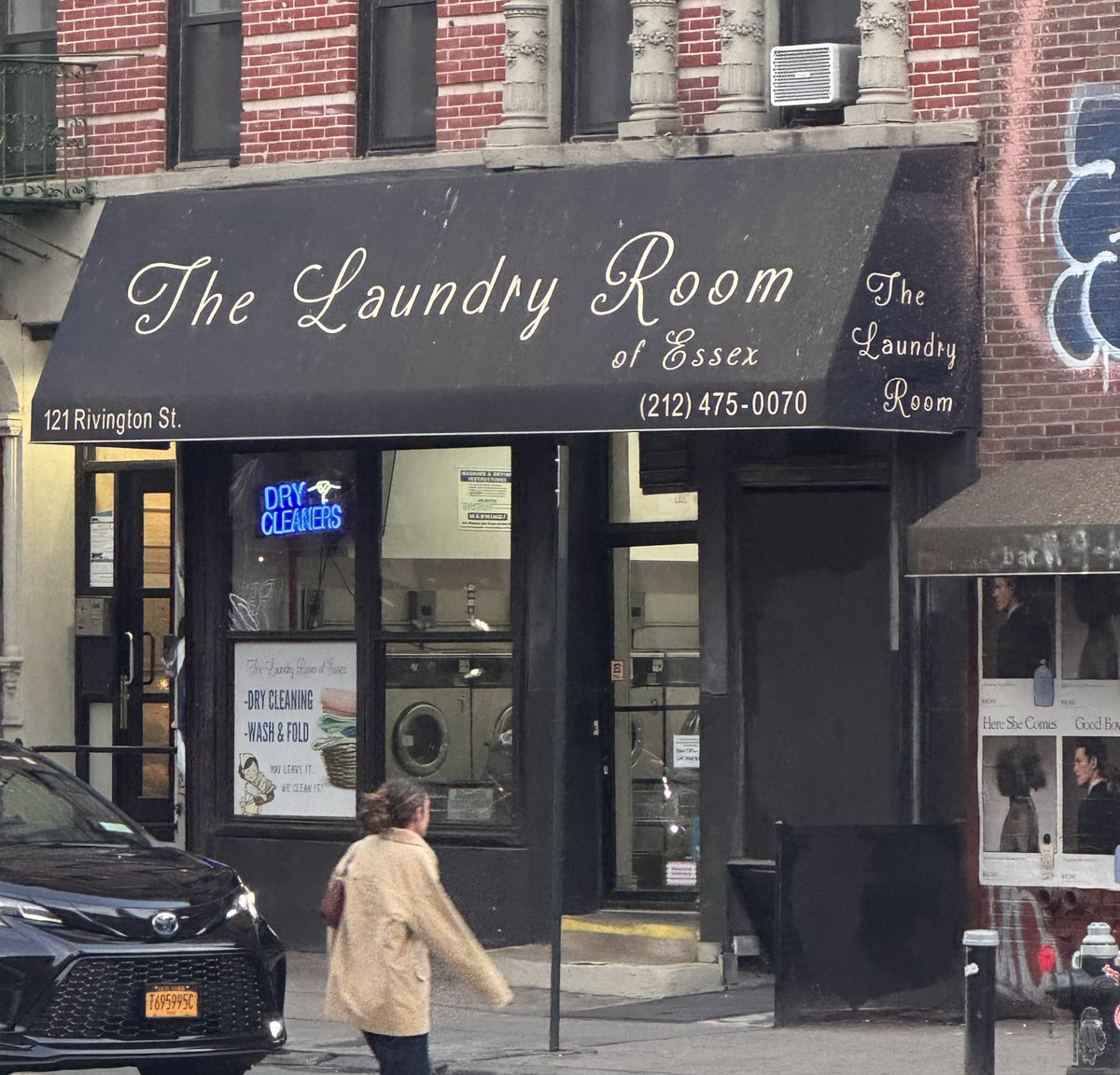
the idea of LES gentrification is of course hilarious, but under-discussed is the exact opposite of this phenomenon: the fact that “the laundry room of essex” is in fact a humble laundromat and not some twee laundromat x speakeasy à la the back room, fig 19, the garret, etc
Principal Mahler Appreciator 🇺🇦@BigBreakfastLob
LES Gentrification is so severe that you can now visit a wine bar tucked between laundromats and meatpackers with a menu that has three full pages of curated grower Champagnes. Never stop, NYC!
English

Buck Mason is undeniably the one store I can walk into and find customers just hanging out, sitting and talking — on top of those shopping
(At least in NY)
English

A SpaceX IPO at $1.75 trillion likely forces the market to look beyond rockets and start repricing the full supply chain beneath the space economy.
Here's the map, sector by sector:
English


I'm lucky enough to have a great doctor and access to excellent Bay Area medical care. I've taken lots of standard screening tests over the years and have tried lots of "health tech" devices and tools.
With all this said, by far the most useful preventative medical advice that I've ever received has come from unleashing coding agents on my genome, having them investigate my specific mutations, and having them recommend specific follow-on tests and treatments.
Population averages are population averages, but we ourselves are not averages. For example, it turns out that I probably have a 30x(!) higher-than-average predisposition to melanoma. Fortunately, there are both specific supplements that help counteract the particular mutations I have, and of course I can significantly dial up my screening frequency. So, this is very useful to know.
I don't know exactly how much the analysis cost, but probably less than $100. Sequencing my genome cost a few hundred dollars.
(One often sees papers and articles claiming that models aren't very good at medical reasoning. These analyses are usually based on employing several-year-old models, which is a kind of ludicrous malpractice. It is true that you still have to carefully monitor the agents' reasoning, and they do on occasion jump to conclusions or skip steps, requiring some nudging and re-steering. But, overall, they are almost literally infinitely better for this kind of work than what one can otherwise obtain today.)
There are still lots of questions about how this will diffuse and get adopted, but it seems very clear that medical practice is about to improve enormously. Exciting times!
English

Millionaires will be built on top of HQ.
If you implement Al for businesses, I want to make you as successful as possible.
We're starting with a first cohort. We will train you, enable you and bring you business.
If you want to be apart of this, please reach out.
Jacob Posel@jacob_posel
We've created Glass for every business. It's called HQ. Every business struggles to get their team using AI together. We solved it. Launching this week.
English
@robinsonmeyer Obviously not at scale but didn’t Equinox try to do this?
English

I still can’t believe no Marriott/Hilton/Hyatt-tier hotel chain has tried to own the “best gyms” category yet.
English
@TheShortlistNYC @betaworks I think Heka global would be a good fit for this
English

we're hosting our next founder showcase on April 27 at @betaworks
we're looking for ONE more founder (Series A+) to pitch on stage to a room full of top 1% talent
so far, we have five founders confirmed:
– healthtech co w/ 4x revenue growth last year, cofounded by two brothers (raised $100m in 4 years)
– AI startup coming out of stealth by former founder of $1B+ public company
– AI infra startup founded by early Venmo/Stripe engineers (raised $10m+) that is taking over the internet
– AI loyalty & community platform that works with co's like Olipop, Culture Pop, Rarethy, Vita Coco
– a startup building an AI cofounder for you… raised $9M and backed by USV & other Tier 1 investors
the rest of the room will be 100 of the top engineers and GTM talent in New York
our goal: make this the number one startup hiring event in NYC
dm us if interested!!


English

English

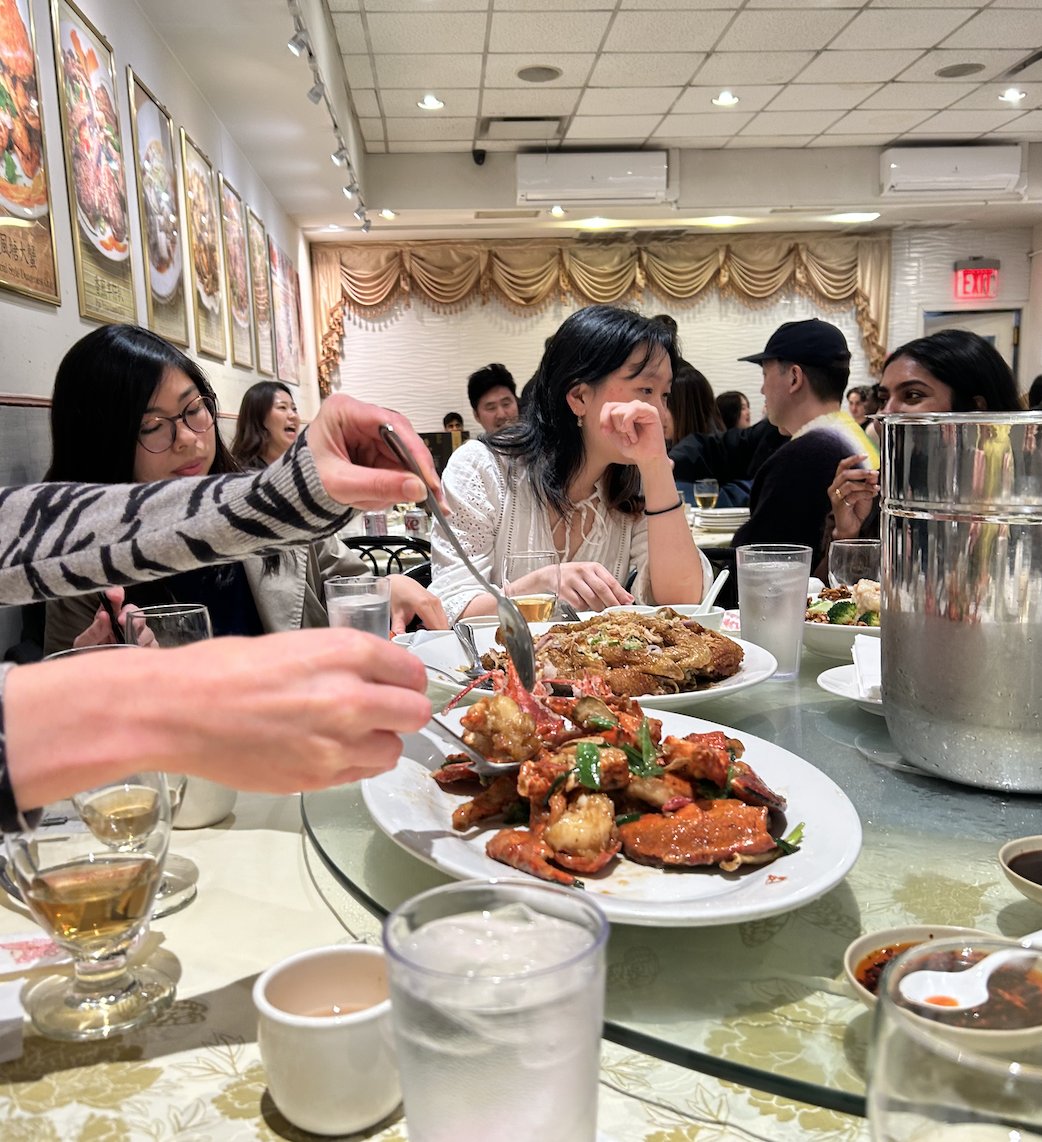
we filled an 14-person table in NYC with design-engineers.
times are changing, roles are changing, cc: @designerfund, @collabfund

Manhattan, NY 🇺🇸 English
@chamath x.com/karpathy/statu… check out Karpathy solution
Andrej Karpathy@karpathy
LLM Knowledge Bases Something I'm finding very useful recently: using LLMs to build personal knowledge bases for various topics of research interest. In this way, a large fraction of my recent token throughput is going less into manipulating code, and more into manipulating knowledge (stored as markdown and images). The latest LLMs are quite good at it. So: Data ingest: I index source documents (articles, papers, repos, datasets, images, etc.) into a raw/ directory, then I use an LLM to incrementally "compile" a wiki, which is just a collection of .md files in a directory structure. The wiki includes summaries of all the data in raw/, backlinks, and then it categorizes data into concepts, writes articles for them, and links them all. To convert web articles into .md files I like to use the Obsidian Web Clipper extension, and then I also use a hotkey to download all the related images to local so that my LLM can easily reference them. IDE: I use Obsidian as the IDE "frontend" where I can view the raw data, the the compiled wiki, and the derived visualizations. Important to note that the LLM writes and maintains all of the data of the wiki, I rarely touch it directly. I've played with a few Obsidian plugins to render and view data in other ways (e.g. Marp for slides). Q&A: Where things get interesting is that once your wiki is big enough (e.g. mine on some recent research is ~100 articles and ~400K words), you can ask your LLM agent all kinds of complex questions against the wiki, and it will go off, research the answers, etc. I thought I had to reach for fancy RAG, but the LLM has been pretty good about auto-maintaining index files and brief summaries of all the documents and it reads all the important related data fairly easily at this ~small scale. Output: Instead of getting answers in text/terminal, I like to have it render markdown files for me, or slide shows (Marp format), or matplotlib images, all of which I then view again in Obsidian. You can imagine many other visual output formats depending on the query. Often, I end up "filing" the outputs back into the wiki to enhance it for further queries. So my own explorations and queries always "add up" in the knowledge base. Linting: I've run some LLM "health checks" over the wiki to e.g. find inconsistent data, impute missing data (with web searchers), find interesting connections for new article candidates, etc., to incrementally clean up the wiki and enhance its overall data integrity. The LLMs are quite good at suggesting further questions to ask and look into. Extra tools: I find myself developing additional tools to process the data, e.g. I vibe coded a small and naive search engine over the wiki, which I both use directly (in a web ui), but more often I want to hand it off to an LLM via CLI as a tool for larger queries. Further explorations: As the repo grows, the natural desire is to also think about synthetic data generation + finetuning to have your LLM "know" the data in its weights instead of just context windows. TLDR: raw data from a given number of sources is collected, then compiled by an LLM into a .md wiki, then operated on by various CLIs by the LLM to do Q&A and to incrementally enhance the wiki, and all of it viewable in Obsidian. You rarely ever write or edit the wiki manually, it's the domain of the LLM. I think there is room here for an incredible new product instead of a hacky collection of scripts.
English

This may be a dumb question but I’ll ask it here anyways:
I can’t find a good way for my various AI chats to automatically sync its conversation history into a structured knowledge base. So that as I update various chats from time to time and refine context, my knowledge base automatically grows with this new info.
English


I’m hanging with an orthodox rabbi rn anyone have any questions?
English
@sri_batchu Agree - Harvey needs to create a proprietary model / data set before Claude decides it wants to own the legal vertical.
English

This is true. Until a vertical is big enough. And then there’s separate Claude Law branded software product. See Cursor vs Claude Code.
Brett Dashevsky@brettdash_
Firms use Harvey over just Claude because it’s a specialized tool and brand focused on domain expertise. That brand carry’s trust. Simply put: Serious companies want to use specialized tools with domain expertise. This is why I’m so anti software is doomed narrative. Serious companies still go for the domain expert trusted tools vs the all-in-one or worse building it themselves
English
@srcasm Would love to discuss this - hoping to build stronger relationships in the Middle East / Israel.
English

In venture, you don’t need to know everyone. You just need to know the ten people that know everyone.
It’s like nodes in a network, and it’s why we built the Flybridge Scout Program (Next Wave) differently.
Most scout programs are simply marketing budgets. Firms give people small checks to "angel invest" on the side.
Next Wave is more like a distributed partnership:
• Our scouts write checks right alongside us and have full control over their decisions. That means they have real skin in the game.
• We "tax" ourselves as GPs so the Next Wave partners participate in the carry. If they find a winner, they get paid like a VC.
• They invest as a cohort, write real memos, and debate deals with us.
It’s a distributed network of sharp, well-aligned humans embedded in the communities that matter.
If you’d like to learn more, I’d love to chat.
HMU ;)
English

thats 15k per account. robinhood is a brokerage for children.
Vlad Tenev@vladtenev
Big milestone — Robinhood Banking just crossed $1.5B in deposits from nearly 100K funded customers, and deposits are up ~50% in the past three weeks. The team is cooking 🔥 Robinhood is a financial technology company, not a bank. Banking services are provided by Coastal Community Bank, Member FDIC.
English

@MichaelDBrandt He likes soda and wanted a healthier alternative to high sugar drinks that wasn’t a pre or pro biotic, just a classic taste that you can also give your kids and feel better about. Also, it’s fun!
English

@PaulSkallas Why do you keep tweeting this same thing said in slightly different words ?
English