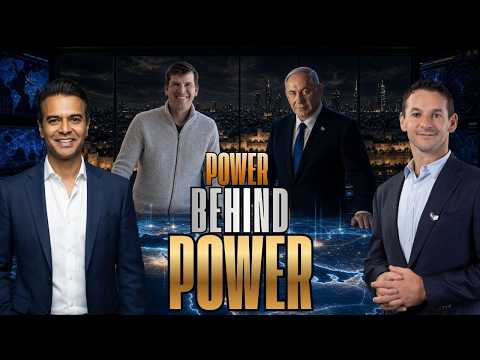
Al Goldstein

2.2K posts

Al Goldstein

Al Goldstein

@goldstein2002

Lifelong entrepreneur, father and husband, Immigrant, co-founder and CEO @ Avant, Stoiclane, Forged in America podcast, https://t.co/9prLc1tPPY

Miami, FL Katılım Mayıs 2011
729 Takip Edilen608 Takipçiler
Sabitlenmiş Tweet
Al Goldstein
Al Goldstein@goldstein2002·
Israel has been in the news for months because of Iran. The part that gets buried is that the same country fighting a war on multiple fronts, with a media narrative that constantly paints it as the villain, has quietly become one of only two places in the world where breakthrough technology actually gets built. Michael Eisenberg sits between both worlds. He is the founder of Aleph VC (almost $1B AUM), a perennial Midas List investor, a former Benchmark partner, a board director, and the author of 9 books (7 in Hebrew). He also advises the Israeli Prime Minister. We were scheduled to record. He showed up late and explained why: "I just came from the Prime Minister's office." This week's episode of Forged in America, the podcast I co-host with Ravin Gandhi where we sit down with operators, founders, and investors who built something real. Subscribe if you have not already. The beats: 00:11 Michael walking in: "I was late because I was with Netanyahu." That is the cold open. Watch the first 15 seconds. 04:48 The venture industry might be dying. VC was always a craft business built on trust, not an asset class. Big funds spraying and praying at the early stages to feed their late-stage funds are crowding out the tinkering innovation that built Amazon, eBay, and Palm. Michael thinks the music stops the way it did in 2000. 05:16 The sharpest line in the episode: "People have turned on Israel because they hate America." Whatever your read, hearing it from someone who lives in both worlds lands different. 06:44 The Vanishing Jew thesis. Michael wrote a book on why anti-Semitism rises when economies struggle. He flags 2008 as the watershed where the welfare state replaced bootstraps and turned a generation against the people who succeed. 15:23 The forgotten chapter of VC history. The Four Horsemen banks (Hambrecht and Quist, Alex Brown, Robertson Stephens, Montgomery Securities) took fledgling venture-backed companies public at $60-80M revenue. That muscle does not exist anymore. 20:40 The Iran missile war was won in software. The Iranians fired hundreds of thousands of missiles. The damage was manageable because of what Michael calls "the high tech wizardry of two great countries" working together on air defense, intelligence, and AI. 22:27 The sentence that brought him to Israel. He asked a rabbi if he should move to Tel Aviv to do something meaningful. The rabbi told him to forget the philosophy and "open a factory that will employ 10,000 people." 25:33 "Israel produces civilians with agency at scale." America has magnets of agency. Silicon Valley for tech, NYC for finance, Texas for energy. Israel built a country where agency is the default. National service, mandatory military service, responsibility at 15. 28:27 The optimistic scenario is not what you think. "It is not that the war ends. It is that the regime in Iran falls." Michael lays out the case that the Iranian regime is the gating factor for the entire region. 30:42 On Thomas Friedman, journalists, and skin in the game. "If no one knows shit, I prefer to hear the BS of people who have actually done something in the world versus the people who have done nothing." 33:09 On serving Netanyahu. Michael does not want to litigate Israeli domestic politics. He does say this: "I serve the Prime Minister of our country. I serve him proudly." 36:22 How Aleph started. The handshake deal with Benchmark, the promise to stay in Israel and create 10,000 jobs, and the original obligation to a rabbi 30 years earlier. 38:05 "The Sabbath is the greatest gift given to mankind." His advice for raising kids in 2026: kill the devices, sit around the table, invite the grandparents, let them banter. The antidote to the Me generation. If you want a clear-eyed read on how Israel became a tech superpower while fighting a war on multiple fronts, this is the episode. @mikeeisenberg @alephVC @ForgedUSAPod @netanyahu with @RavinGandhi1 and me
English
1
0
1
115
Al Goldstein
Al Goldstein@goldstein2002·
Tehran rallying for Khamenei is exactly the dynamic Michael Eisenberg called out: "People have turned on Israel because they hate America." The regime's anti-American foundation is the gating issue, not just the bombing. Full episode below: x.com/goldstein2002/… @MarioNawfal @mikeeisenberg @alephVC @ForgedUSAPod @RavinGandhi1
Al Goldstein@goldstein2002

Israel has been in the news for months because of Iran. The part that gets buried is that the same country fighting a war on multiple fronts, with a media narrative that constantly paints it as the villain, has quietly become one of only two places in the world where breakthrough technology actually gets built. Michael Eisenberg sits between both worlds. He is the founder of Aleph VC (almost $1B AUM), a perennial Midas List investor, a former Benchmark partner, a board director, and the author of 9 books (7 in Hebrew). He also advises the Israeli Prime Minister. We were scheduled to record. He showed up late and explained why: "I just came from the Prime Minister's office." This week's episode of Forged in America, the podcast I co-host with Ravin Gandhi where we sit down with operators, founders, and investors who built something real. Subscribe if you have not already. The beats: 00:11 Michael walking in: "I was late because I was with Netanyahu." That is the cold open. Watch the first 15 seconds. 04:48 The venture industry might be dying. VC was always a craft business built on trust, not an asset class. Big funds spraying and praying at the early stages to feed their late-stage funds are crowding out the tinkering innovation that built Amazon, eBay, and Palm. Michael thinks the music stops the way it did in 2000. 05:16 The sharpest line in the episode: "People have turned on Israel because they hate America." Whatever your read, hearing it from someone who lives in both worlds lands different. 06:44 The Vanishing Jew thesis. Michael wrote a book on why anti-Semitism rises when economies struggle. He flags 2008 as the watershed where the welfare state replaced bootstraps and turned a generation against the people who succeed. 15:23 The forgotten chapter of VC history. The Four Horsemen banks (Hambrecht and Quist, Alex Brown, Robertson Stephens, Montgomery Securities) took fledgling venture-backed companies public at $60-80M revenue. That muscle does not exist anymore. 20:40 The Iran missile war was won in software. The Iranians fired hundreds of thousands of missiles. The damage was manageable because of what Michael calls "the high tech wizardry of two great countries" working together on air defense, intelligence, and AI. 22:27 The sentence that brought him to Israel. He asked a rabbi if he should move to Tel Aviv to do something meaningful. The rabbi told him to forget the philosophy and "open a factory that will employ 10,000 people." 25:33 "Israel produces civilians with agency at scale." America has magnets of agency. Silicon Valley for tech, NYC for finance, Texas for energy. Israel built a country where agency is the default. National service, mandatory military service, responsibility at 15. 28:27 The optimistic scenario is not what you think. "It is not that the war ends. It is that the regime in Iran falls." Michael lays out the case that the Iranian regime is the gating factor for the entire region. 30:42 On Thomas Friedman, journalists, and skin in the game. "If no one knows shit, I prefer to hear the BS of people who have actually done something in the world versus the people who have done nothing." 33:09 On serving Netanyahu. Michael does not want to litigate Israeli domestic politics. He does say this: "I serve the Prime Minister of our country. I serve him proudly." 36:22 How Aleph started. The handshake deal with Benchmark, the promise to stay in Israel and create 10,000 jobs, and the original obligation to a rabbi 30 years earlier. 38:05 "The Sabbath is the greatest gift given to mankind." His advice for raising kids in 2026: kill the devices, sit around the table, invite the grandparents, let them banter. The antidote to the Me generation. If you want a clear-eyed read on how Israel became a tech superpower while fighting a war on multiple fronts, this is the episode. @mikeeisenberg @alephVC @ForgedUSAPod @netanyahu with @RavinGandhi1 and me

English
0
0
0
12
Mario Nawfal
Mario Nawfal@MarioNawfal·
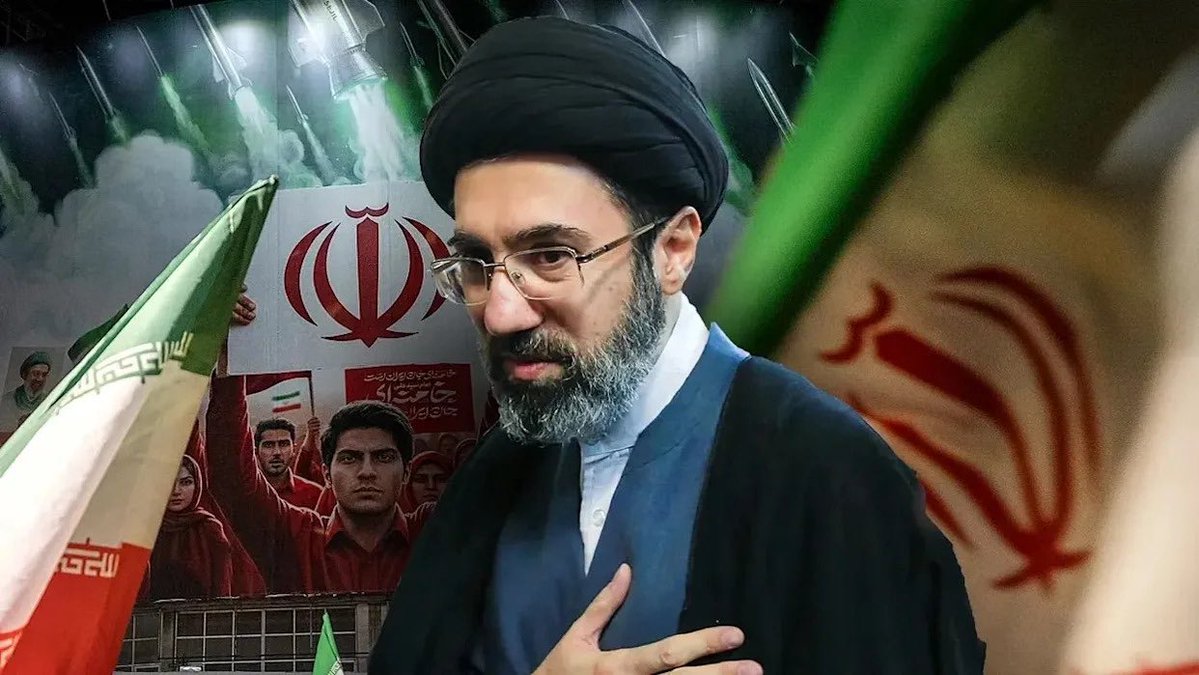
🇮🇷🇺🇸 Thousands of people poured onto the streets of Tehran overnight, pledging support to Iran's Supreme Leader, Mojtaba Khamenei Proving again that bombing campaigns alone never achieve regime change
Mario Nawfal@MarioNawfal

🇺🇸🇮🇷 Reported footage of U.S. HIMARS launchers firing toward Iran comes with a detail nobody can unsee: a Japanese Fumo plush perched nearby like a good luck charm. The crew clearly has a mascot😂

English
204
208
888
283K
Open Source Intel
Open Source Intel@Osint613·
Mojtaba Khamenei: “Death to America” will remain a permanent slogan of the Islamic Republic. (Talks going great)
Open Source Intel tweet media
English
172
431
1.7K
227.1K
Al Goldstein
Al Goldstein@goldstein2002·
Israel has been in the news for months because of Iran. The part that gets buried is that the same country fighting a war on multiple fronts, with a media narrative that constantly paints it as the villain, has quietly become one of only two places in the world where breakthrough technology actually gets built. Michael Eisenberg sits between both worlds. He is the founder of Aleph VC (almost $1B AUM), a perennial Midas List investor, a former Benchmark partner, a board director, and the author of 9 books (7 in Hebrew). He also advises the Israeli Prime Minister. We were scheduled to record. He showed up late and explained why: "I just came from the Prime Minister's office." This week's episode of Forged in America, the podcast I co-host with Ravin Gandhi where we sit down with operators, founders, and investors who built something real. Subscribe if you have not already. The beats: 00:11 Michael walking in: "I was late because I was with Netanyahu." That is the cold open. Watch the first 15 seconds. 04:48 The venture industry might be dying. VC was always a craft business built on trust, not an asset class. Big funds spraying and praying at the early stages to feed their late-stage funds are crowding out the tinkering innovation that built Amazon, eBay, and Palm. Michael thinks the music stops the way it did in 2000. 05:16 The sharpest line in the episode: "People have turned on Israel because they hate America." Whatever your read, hearing it from someone who lives in both worlds lands different. 06:44 The Vanishing Jew thesis. Michael wrote a book on why anti-Semitism rises when economies struggle. He flags 2008 as the watershed where the welfare state replaced bootstraps and turned a generation against the people who succeed. 15:23 The forgotten chapter of VC history. The Four Horsemen banks (Hambrecht and Quist, Alex Brown, Robertson Stephens, Montgomery Securities) took fledgling venture-backed companies public at $60-80M revenue. That muscle does not exist anymore. 20:40 The Iran missile war was won in software. The Iranians fired hundreds of thousands of missiles. The damage was manageable because of what Michael calls "the high tech wizardry of two great countries" working together on air defense, intelligence, and AI. 22:27 The sentence that brought him to Israel. He asked a rabbi if he should move to Tel Aviv to do something meaningful. The rabbi told him to forget the philosophy and "open a factory that will employ 10,000 people." 25:33 "Israel produces civilians with agency at scale." America has magnets of agency. Silicon Valley for tech, NYC for finance, Texas for energy. Israel built a country where agency is the default. National service, mandatory military service, responsibility at 15. 28:27 The optimistic scenario is not what you think. "It is not that the war ends. It is that the regime in Iran falls." Michael lays out the case that the Iranian regime is the gating factor for the entire region. 30:42 On Thomas Friedman, journalists, and skin in the game. "If no one knows shit, I prefer to hear the BS of people who have actually done something in the world versus the people who have done nothing." 33:09 On serving Netanyahu. Michael does not want to litigate Israeli domestic politics. He does say this: "I serve the Prime Minister of our country. I serve him proudly." 36:22 How Aleph started. The handshake deal with Benchmark, the promise to stay in Israel and create 10,000 jobs, and the original obligation to a rabbi 30 years earlier. 38:05 "The Sabbath is the greatest gift given to mankind." His advice for raising kids in 2026: kill the devices, sit around the table, invite the grandparents, let them banter. The antidote to the Me generation. If you want a clear-eyed read on how Israel became a tech superpower while fighting a war on multiple fronts, this is the episode. @mikeeisenberg @alephVC @ForgedUSAPod @netanyahu with @RavinGandhi1 and me
English
1
0
1
115
Al Goldstein retweetledi
Ahmed Al-Khalidi
Ahmed Al-Khalidi@khalidi79397·
Why did it take Arabs another full generation after 1948 to adopt a "Palestinian" identity? Because the identity was never primarily about a people. It was about a strategy. For the first two decades after Israel's founding, the dominant Arab framework wasn't Palestinian nationalism. It was pan-Arabism. Nasser, the Ba'ath party, the Arab League. The operating theory was that "Arab" was the nation, and the various states were artificial colonial borders waiting to dissolve into one. A separate Palestinian identity would have undermined this project, not advanced it. If Arabs from Jaffa were a distinct nation, then Arabs from Damascus and Baghdad were too and pan-Arabism collapses. So between 1948 and 1967, the residents of the West Bank were Jordanians. The residents of Gaza were under Egyptian rule. The displaced were "Arab refugees." The fight against Israel was an Arab fight, not a Palestinian one. What broke this framework was 1967. Six days of catastrophic defeat ended pan-Arabism as a credible vehicle. Nasser was humiliated, the combined Arab armies were routed, and the dream of dissolving Israel through unified Arab power was over. A new vehicle was needed. Enter the Palestinian national identity. Retooled, repurposed, weaponized. And the architects said so openly. Zuheir Mohsen, PLO Executive Committee, 1977 (interview with the Dutch paper Trouw): "The Palestinian people does not exist. The creation of a Palestinian state is only a means for continuing our struggle against the State of Israel for our Arab unity. In reality today there is no difference between Jordanians, Palestinians, Syrians and Lebanese. Only for political and tactical reasons do we speak today about the existence of a Palestinian people, since Arab national interests demand that we posit the existence of a distinct Palestinian people to oppose Zionism." Azmi Bishara, founder of Balad, former Knesset member, in a 1994 Israeli TV interview: "I don't think there is a Palestinian nation. I think there is an Arab nation. I always thought so... I think that until the end of the 19th century, Palestine was the south of Greater Syria." He went on to argue that Palestinian identity was a recent construction shaped by colonial borders and the conflict with Zionism, not an ancient nationhood. This from one of the most prominent Arab intellectuals inside Israel, who himself led a Palestinian-Arab political party. Walid Shoebat, a former PLO operative who later went public: "Why is it that on June 4th 1967 I was a Jordanian and overnight I became a Palestinian? ...We considered ourselves Jordanian until the Jews returned to Jerusalem. Then all of the sudden we were Palestinians." Shoebat is a controversial figure with his own credibility disputes, but his autobiographical point about the timing is consistent with the historical record. Hafez al-Assad to Yasser Arafat (recounted by Arafat himself and reported in Israeli and Arab press): "You do not represent Palestine as much as we do. Never forget this one point: There is no such thing as a Palestinian people, there is no Palestinian entity, there is only Syria. You are an integral part of the Syrian people, Palestine is an integral part of Syria. Therefore it is we, the Syrian authorities, who are the true representatives of the Palestinian people." Joseph Massad, Columbia professor, sympathetic to the Palestinian cause, in The Persistence of the Palestinian Question (2006): acknowledges that Palestinian national identity in its current form crystallized in the 20th century in dialectic with Zionism, a serious academic admission, even from a pro-Palestinian scholar, that the identity is modern and reactive rather than ancient. >>
Ahmed Al-Khalidi@khalidi79397

What changed in 1948? The Jews stopped being Palestinians. May 14, 1948. Ben-Gurion reads the Declaration of Independence. The next morning, the residents of the Yishuv wake up as Israelis. The label they'd carried for decades was simply vacated. The Palestine Post → Jerusalem Post (1950). Palestine Symphony Orchestra → Israel Philharmonic. Palestine Electric Company → Israel Electric Corporation. Anglo-Palestine Bank → Bank Leumi le-Israel. Palestine pound → Israeli lira. Jewish Agency for Palestine → just the Jewish Agency. "Palestinian" passports → Israeli ones. Within 24 months, "Palestinian" had been stripped off every Jewish institution that had worn it. Now the Arab side. Arabs did not rush to claim the empty label in 1948. They didn't claim it for another generation. In 1948, the Arabs who fled or remained still called themselves Arabs. The Arab League's war wasn't fought in the name of "Palestine" as a nation. It was fought to prevent partition and absorb the territory into existing Arab states. Transjordan took the West Bank and East Jerusalem and in 1950 simply annexed them; the residents became Jordanian citizens with Jordanian passports. Egypt took Gaza and ran it under military administration. No citizenship, no nation, no "Palestine." The one institutional use of "Palestinian" that survived 1948 was a refugee category: UNRWA, created December 1949, defined "Palestine refugees" as a humanitarian classification. Not a nationality. It kept the word alive in international bureaucratic language while the Arab world itself wasn't using it nationally. Then came the long appropriation. 1964. Nasser sponsors the founding of the PLO in Cairo. The original charter (Article 24) explicitly disclaims any sovereignty over the West Bank, Gaza, or the Himmah area. Read that again. The founding document of the Palestine Liberation Organization renounces claims to the West Bank and Gaza. Because in 1964, those were Arab lands belonging to Jordan and Egypt. The PLO's purpose was to liberate the part Israel held, not those parts. 1967. Israel takes the West Bank and Gaza in six days. Suddenly Jordan and Egypt no longer hold the territory, and the Arab residents there are no longer Jordanians or under Egyptian rule. The pan-Arab framework had just been humiliated on the battlefield. A new identity was needed. 1968. The PLO charter is rewritten. Article 24's disclaimer disappears. The West Bank and Gaza are now central to Palestinian national claims. The label has been fully transferred. Sequence: 1917–1948: "Palestinian" = Jewish institutions and self-identification; Arabs reject the term and call themselves Arabs / Southern Syrians. 1948: Jews drop the label and become Israelis. The word goes dormant on the Arab side, surviving mainly as a UN refugee category. 1948–1967: Arabs in the West Bank are Jordanians. Arabs in Gaza are stateless subjects of Egyptian military rule. "Palestinian" is not yet a national identity. 1964–1968: The PLO transitions the label into a national identity but only after 1967 makes pan-Arabism politically untenable. 1948 didn't create a Palestinian Arab nation. It vacated a Jewish label and left a 20-year identity gap that Arab nationalism took until 1968 to fill.

English
27
320
910
36.1K
Lenny Rachitsky
Lenny Rachitsky@lennysan·
Automation is a lie. CLIs are over. The SaaSpocalypse is dumb. A year ago @danshipper came on the podcast to predict where AI was heading. He was remarkably right—including the call that everyone was sleeping on Claude Code. Dan has a unique lens into where things are going because his team at @every is possibly the most AI-pilled group of people in tech. I always learn a ton talking to Dan. So I brought him back for round two. We'll score these in exactly a year: 🔸 Every company will have one “super-agent” in Slack. 🔸 Codex and Claude Code will become the new operating system for knowledge work. 🔸 The AI job apocalypse is not happening. 🔸 PMs and designers will thrive. 🔸 We will read way more AI-generated writing and we will like it. 🔸 "I would buy SaaS stocks right now." Listen now 👇 youtube.com/watch?v=4D3hDm…
YouTube video
YouTube
English
79
111
1.2K
1.5M
Al Goldstein retweetledi
David Albright
David Albright@DAVIDHALBRIGHT1·
Please, Iran was very close to building nuclear weapons very rapidly before the June 2025 war. Military threats no longer worked. Deterrence had already failed. Today, Iran isn’t able to be close to building nuclear weapons. The Iranian regime may very well be more frightened of crossing the line today because it has seen the level of damage these strikes can inflict, and Iran needs a lot longer to build a nuclear weapon. That period after deciding but not having is a very vulnerable, dangerous time, a time period far longer now because of the war If the world learns Iran is building a nuclear weapon, I would bet that even PM Starmer would join in a strong, even a military response.
Danny (Dennis) Citrinowicz ,داني سيترينوفيتش@citrinowicz

The Collapse of Deterrence Against Iran? Paradoxically, one of the most serious consequences of this campaign may be the erosion of deterrence vis-à-vis Iran, specifically, the loss of the implicit sword hanging over Tehran as it considers whether to move toward nuclear weapons capability. For years, one of the main factors restraining the Iranian leadership under Khamenei from openly advancing toward a bomb was the fear that doing so could trigger a large-scale military campaign aimed not merely at damaging Iran’s capabilities, but at threatening the regime itself. From Tehran’s perspective, however, Iran has now endured precisely such a confrontation and survived it. More importantly, the conflict exposed the significant limitations facing both Israel and the United States in any future campaign against Iran: the reluctance to commit ground forces, constraints on available munitions, and Israel’s deep operational and strategic dependence on the United States. At the same time, Iran may have concluded that its ability to threaten or disrupt the Strait of Hormuz, thereby inflicting severe damage on the global economy, gives it a level of coercive leverage that the West is ultimately unwilling to challenge decisively. It is important to acknowledge that Iran withstood an unprecedented military assault in terms of the scale of firepower directed against it, yet the regime remained intact and did not capitulate. That reality may lead Tehran to conclude that the deterrent credibility of both Israel and the United States has been fundamentally weakened. This perception could become even stronger after the U.S. elections and under future American administrations, many of which may be even less willing to enter into direct confrontation with Iran. From Tehran’s perspective, Iran’s resilience during the conflict may have shattered the aura of overwhelming Israeli-American deterrence. Paradoxically, deterrence may have been more effective when it remained ambiguous and untested. Once military power was actually employed, it may have demonstrated the limits, rather than the strength, of Western coercive capacity against Iran. This is a deeply consequential development. One indication is that Iran reportedly adopted tougher positions in post-war negotiations than it held before the conflict began. The loss of the deterrence card could ultimately convince the Iranian leadership that this is precisely the moment to move toward nuclear weapons capability, believing that neither Israel nor the United States possesses either the will or the ability to stop it. The core problem is that neither Israel nor the United States was prepared, or perhaps even capable, of going all the way in a confrontation with Iran. Instead, they appeared to rely on external variables, whether Kurdish unrest, internal regime instability, or hopes for political fragmentation inside Iran by supporting Ahmadinejad, as substitute mechanisms that could spare them the enormous manpower requirements and the prospect of a campaign stretching over months or even years. Once those assumptions collapsed, what remained was essentially an air campaign. While tactically impressive, its achievements may ultimately pale in comparison to the strategic damage caused by exposing the actual limits of Israeli and American power in Iranian eyes. From Tehran’s perspective, the war may have revealed not overwhelming Western dominance, but rather the boundaries of what Israel and the United States are truly willing and able to do militarily against Iran. That, in itself, may become one of the most damaging long-term consequences of the entire campaign. This should force both Israel and the United States back to the drawing board. They will need to reassess how deterrence against Iran can be rebuilt under the current circumstances. That will not be easy. Restoring deterrence after it has been tested , and, in Tehran’s eyes, exposed as limited, is far more difficult than maintaining an ambiguous threat that has never been put to the test. Most importantly, the conflict likely helped Iran better understand its adversaries through direct friction and real-world confrontatio. #IranWar#iran

English
77
110
555
240.2K
Al Goldstein retweetledi
TaraBull
TaraBull@TaraBull·
The newest Adidas running shoe just dropped. The Adizero Prime X Evo - price $500
English
6.6K
966
9.4K
25.9M
Al Goldstein retweetledi
Wilfred Reilly
Wilfred Reilly@wil_da_beast630·
Sixty percent of leftists and about 40% of all citizens believe that "George Floyd was a model citizen." #lol
Wilfred Reilly tweet media
English
111
186
1.3K
93.3K
Al Goldstein retweetledi
Al Goldstein
Al Goldstein@goldstein2002·
"He gets us into shit. I get us out of it." That is Jenny Just describing 28 years of being married to her business partner. She and Matt Hulsizer started Peak6 in 1997 with $1.5M. They got married in 2003. They have turned around or invested in 200+ companies. And in 29 years, they have never had a losing year. This is the only husband-and-wife billionaire trading team I can think of. This week's episode of Forged in America, the podcast I co-host with Ravin Gandhi where we sit down with operators, founders, and investors who built something real in this country. If you want a real case study on how to run a billion-dollar operation while staying married, this is the episode. The beats: 00:00 Matt on markets: "It's a great time to be in." Jenny "Nobody would have thought we'd be married" plus intros. 03:10 The Wendy's epiphany that built Peak6. Jenny was watching the burger line and realized traders should be organized like a kitchen, not as lone wolves. The model that came out of that insight has not had a losing year in 29 years. 05:34 Peak6 vs Jane Street, explained cleanly: "Jane Street is more like DoorDash. We are where DoorDash goes to get the inventory." 08:30 36% of Peak6's capital allocators are women. That number is unheard of in trading. They explain how poker turned out to be the recruiting unlock. 09:49 The anti-Ken-Griffin AI take. Ken went home depressed after seeing what Claude could do. Matt Hulsizer: "I'm sorry that Ken's depressed. We are not." They were early adopters and they think this is the best market. 13:47 Peak6 Trials. $100K salary, a SWAT team of AI engineers, access to 40M brokerage customers, 97M tax customers, 4M insurance customers. The pitch to entrepreneurs: come down and try to displace us. 15:25 The reverse-dilution model on portfolio companies. Founders end up owning MORE of the company over time, not less, as Peak6 dilutes itself down. CoreWeave is the case study. 23:32 Matt Hulsizer's basketball analogy for his marriage to Jenny Just: "I would be Scottie Pippen. My job was to get the ball to Jordan." Watching a billionaire husband call his billionaire wife the Michael Jordan of their firm is its own thing. 37:50 The Meta puts story. Mark Zuckerberg said he would do "whatever it takes" on the metaverse, stock crashed to $89, Matt walked in and told Jenny he was retiring. Jenny: "Double it." Stock went to $600. 52:04 Why they left Chicago for Austin. Matt: "We tend to be Democrats. For us to leave tells you something." The traffic, the math, and the politics behind one of the higher-profile finance relocations. 55:23 Their worst moment came in month one. August 1997. They thought they were out of business. Then they hit their first million in month two. 59:41 What 2008 looked like inside Peak6. They went to cash in the spring before Lehman. Not because they were smarter, because they were humble enough to admit they were confused. @JenniferJust8 @PEAK6 @CoreWeave @ForgedUSAPod with @RavinGandhi1 and me
English

2
2
8
851
Al Goldstein retweetledi
Forged in America Podcast
Forged in America Podcast@ForgedUSAPod·
"November 2022: Meta hits $89. Zuckerberg is burning billions on the Metaverse. The world is calling it the end of Facebook. Matt Hulsizer walks into the office ready to retire. Jenny Just says two words: 'Double it.' 📈📉💪" The Case Study: The Meta Bottom The market was in a state of pure hysteria. Meta had dropped from $380 to under $100. On the earnings call, Zuckerberg doubled down on the Metaverse, saying he'd do 'whatever it takes' to win. To most investors, this sounded like a suicide mission. Matt, a veteran trader, was ready to capitulate. He didn't understand the 'why' anymore. The Contrarian Insight: Jenny saw what the 'Metaverse' noise was obscuring. She looked at the core business—Instagram, WhatsApp, and the billions of eyeballs they controlled. The stock was trading at a valuation so low it was practically a 'take private' opportunity. The tailwinds of the core business were so strong that the Metaverse spending was practically irrelevant to the long-term value. The Result: Conviction Wins They didn't just hold; they doubled their position at the absolute bottom. 1. They ignored the 'Metaverse' narrative. 2. They focused on the 'Eyeball' business fundamentals. 3. They trusted their partner’s conviction when their own was failing. The stock rebounded over 460% from that low. This is the difference between a trader and a legend. It’s not about knowing the future; it’s about seeing the present clearly when everyone else is blinded by fear. 🗽📈 The Loop: What’s the biggest 'Double It' trade of your life? Watch the full story of the Meta bottom on #ForgedinAmerica. #Meta #Investing #Trading #SuccessMindset #Contrarian #StockMarket #ForgedinAmerica
English
0
1
2
121
Dan Bilzerian
Dan Bilzerian@DanBilzerian·
Who controls the media? Meta owns: Facebook Instagram WhatsApp Messenger Threads Oculus / Meta Quest VR Meta AI Meta is controlled by Mark Zuckerberg who is jewish Alphabet owns: Google YouTube Android Gmail Chrome Pixel phones Nest smart home devices Fitbit (acquired in 2021) DeepMind Gemini AI assistant/model family Waymo — self-driving cars Verily — health technology Calico — longevity research Wing — drone delivery Alphabet is controlled by Larry Page and Sergey Brin who are both jewish Tic Tok U.S. algorithm, cybersecurity and infrastructure is controlled by Oracle Oracle is controlled by Larry Ellison and he’s jewish Hookup Apps Match Group owns: Tinder Hinge OkCupid Match.com Plenty of Fish Meetic The League BLK Archer OurTime Was founded by Barry Diller who is jewish Grindr Was founded by Joel Simkhai who is jewish Bumble Was founded by Whitney Wolfe Herd who is jewish Porn Onlyfans Owned by Leonid Radvinsky who is jewish Vixen Media Group owns: Blacked Blacked Raw Vixen Tushy Deeper Founded by Greg Lansky who is jewish Aylo/MindGeek Owns/owned: Pornhub YouPorn RedTube Brazzers Reality Kings Digital Playground Men.com Sean Cody Tube8 Solomon Friedman is the owner of Aylo and he’s jewish Gamma Entertainment owns/operates: Adult Time Pure Taboo Wicked Girlsway many affiliate studios/platforms Founded by Karl Bernard who is jewish Movies/TV/News Warner Brothers Discovery owns: Warner Bros. Pictures HBO CNN DC Studios Cartoon Network Discovery Channel TNT TBS Max (formerly HBO Max) Adult Swim HGTV Food Network Animal Planet Warner Brothers is run by David Zaslav who is jewish Disney owns: ESPN ABC Marvel Studios Lucasfilm Pixar 20th Century Studios Disney+ Hulu (major controlling stake) National Geographic Disney is run by Bob Iger who is jewish Paramount Global owns: Broadcast & News CBS CBS News CBS Sports Local CBS stations Film Studios Paramount Pictures Paramount Animation Paramount Players Cable Networks MTV Nickelodeon Comedy Central BET VH1 CMT TV Land Smithsonian Channel Logo TV Pop TV Streaming & Premium Paramount+ Showtime Pluto TV Major franchises/IP Top Gun Mission: Impossible Star Trek South Park (licensing/streaming arrangements) SpongeBob SquarePants Transformers Teenage Mutant Ninja Turtles Paramount Global is controlled by Sheri Redstone, who is jewish Comcast owns: * NBCUniversal * NBC * Universal Pictures * Peacock * MSNBC * CNBC * Telemundo * Sky (Europe) * DreamWorks Animation * Xfinity Comcast is controlled by Roberts family who is Jewish AI/Data Centers OpenAI/ChatGPT Run by Sam Altman who is jewish Palentir provides advanced data integration, surveillance, AI, and analytics infrastructure used by military, intelligence, law enforcement, and major corporations. Its platforms help organizations combine massive amounts of fragmented data into real-time operational intelligence for warfare, policing, logistics, cybersecurity, manufacturing, and decision-making, making it one of the most strategically influential data and defense technology companies in the world. Owned and operated by Peter Thiel and Alex Karp both jewish Oracle owns: Oracle Database Java MySQL NetSuite Cerner Sun Microsystems technologies It’s important because it owns core infrastructure software that powers governments, banks, hospitals, corporations, and large parts of the internet. Its control of technologies like Oracle Database, Java, MySQL, and Cerner gives it enormous influence over the backend systems modern society depends on. Owned by Larry Ellison who is jewish
English
5.5K
30.2K
111.7K
11.2M
Jaynit
Jaynit@jaynitx·
Jeff Bezos reveals why he thinks AI will cause a labor shortage, not mass unemployment "There's so many people who are afraid AI is going to take their job. I think there's going to be a labor shortage as a result" "All these smart people keep saying there's going to be no more radiologists because AI can read X-rays better, no more software engineers because AI can program better. These people are wrong" "What's really going to happen is it's going to elevate all of these people. You've been digging out a basement with a shovel, and somebody is about to hand you a bulldozer" "We're going to have so much productivity that a lot of people with two-earner income households, one of them is going to drop out of the workforce" "I predict we will actually have deflation of certain core things. Food will get cheaper and housing construction will get cheaper"
English
268
289
2.4K
501.6K
ludoonchart
ludoonchart@ludoonchart·
A quantitative fund founded by pro poker players quietly controls an $800,000,000,000 options empire Susquehanna (SIG) handles 20% of the US options market. They treat trading like a solved math equation, using pure probability to extract the house edge Are you the casino calculating probabilities, or the gambler hoping for a lucky pump? Be honest below Bookmark & watch their founder explain how poker built a $67B fortune. Then read the quoted post to see how another giant dominates the market
ludoonchart@ludoonchart

A single algorithmic firm quietly trades $50,000,000,000 every single day Hudson River Trading (HRT) controls 10% of the ENTIRE US stock market. They don’t draw trendlines. They use pure math like Hidden Markov Models to decode invisible regimes from noise If 10% of the market is controlled by pure math, what is your actual edge? Drop your thoughts in the comments Bookmark & watch HRT's Head of AI explain how their algorithms dominate the market below. Then read the quoted thread to see the exact math they use

English
14
75
749
130.9K
Official Layoff
Official Layoff@LayoffAI·
META INTERNAL MEMO FOR WEDNESDAY LAYOFFS LEAKED Reuters got Meta’s internal memo today. Here’s the actual mechanics of Wednesday: 4am local time. Three batches globally. HR head Janelle Gale sent staff the playbook. The numbers: >8,000 cut >7,000 reassigned to new AI workflow initiatives >Manager roles eliminated outright >”Many leaders will announce org changes” alongside the layoffs Gale’s framing: org leaders “incorporated AI native design principles into their new org structures.” The 7,000 moved to AI workflows are reassigned, not cut. The managers being eliminated are layers the new org charts don’t include. The 8,000 walking out at 4am are the roles that didn’t survive the redesign. Stack it against the 6,000 cancelled roles from earlier this week and the additional 8,000 cuts Meta has signaled for later in 2026. 22,000+ roles either cut or never filled this year, plus thousands shoved into AI work whether they wanted it or not. The memo confirms what the leaderboards and keystroke logging already showed. Meta is rebuilding the company around fewer people. Everyone staying is getting moved into AI roles.
Official Layoff tweet media
Official Layoff@LayoffAI

The first 8,000 Meta layoffs hit Wednesday. What's happening to the people still employed and the anxiety of not knowing if you’re next is insane. SF Standard published an interview with an anonymous Meta employee ahead of the cuts. They used a voice actor. Meta started keystroke-logging staff. Inside the company right now: Internal leaderboards rank employees by how many AI tokens they burn. By minutes spent in the chatbot. Workers are openly admitting they ask the bot inane questions to pad their numbers, because being on the wrong end of the leaderboard is a risk signal. HR told the all-hands AI usage won't factor into layoffs. The leaderboard exists anyway. AI notes are auto-on in every video meeting. People manually disable them so they can talk candidly about who might be next. How you find out you're laid off: 7am email to your personal inbox. By the time you read it, your work accounts are already dead. So one Meta engineer wrote a script that scrapes internal profiles to see whose status flipped to deactivated. This employee runs a personal spreadsheet on top of it to track coworkers. An internal post suggested teams who successfully build their own AI replacement should get 5 years of comp and then be let go as a reward for replacing themselves. It got heavy upvotes. Zuckerberg's all-hands message, paraphrased: AI is moving fast, nobody knows what's coming, leadership is doing their best. This is the Hidden Layoff in operation. The headline number is 8,000. A whole different story is what's being done to those still employed. Surveilled. Ranked by AI usage. Asked to train their replacement. Told to suck it up. Employee's words: "Even if we haven't lost our jobs to AI yet, we're being commoditized in advance." We reported on the 6,000 additional new roles they cancelled earlier this week, along with the additional 8,000 layoffs planned later in 2026. That’s 22,000 roles either cancelled or cut for 2026. Now we have insight into how they’re deciding who comes next.

English
46
145
784
421.8K
Aaron Levie
Aaron Levie@levie·
Great post on FDEs. Everyone should read it if you’re interested in this job category. This is a job that is going to be around as long as AI keeps changing rapidly, which it inevitably will. People often wonder why isn’t this like just deploying other forms of technology in the past, like cloud. Because something like cloud adoption affected a fairly concentrated set of users (developers and IT), and generally didn’t require a fundamental change to the workflows of employees to get the benefits of the new service being delivered on the cloud. At best you went to one training session and you were done. With agents, the work to implement them is not only highly technical, but they directly impact the underlying workflows that people participate in. This means there’s a ton of technical work and change management that comes with it. Further, the pace of change of cloud wasn’t nearly as quick, so there was a lot more time for best practices to propagate. Now, every model change means either something new can be done that wasn’t possible before, or some piece of scaffolding is now redundant or holding you back. This is why it’s commonly easier for a vendor or partner that’s seen the implementation hundreds or thousands of times help do the work, even with internal support from the customer. So, this job isn’t going away any time soon, and will be a great path for a lot of technical talent, especially early career.
vas@vasuman

x.com/i/article/2057…

English
70
183
1.7K
583.1K
Anduril Industries
Anduril Industries@anduriltech·
Introducing Voyager Gateway 1. Warfighters at the edge need access to mission compute capabilities that are typically constrained to the base. The size, weight and power burden make server racks unrealistic options. Voyager G1 is the rugged, waterproof device that unlocks mission applications and AI-enabled workflows directly at the front line. It also connects operators as nodes on our Lattice Mesh network. This enables small teams to maintain operations even when networks are jammed, infrastructure is contested, or command posts are out of reach.
Anduril Industries tweet mediaAnduril Industries tweet media
English
160
320
5.6K
1.6M
Anthony Pompliano 🌪
Anthony Pompliano 🌪@APompliano·
The stock market is surging higher after an insane 4-week rally. Pessimists promise you everything is overvalued, but the data tells a different story. Don't get shaken out by the noise.
English
109
187
2.8K
1.9M