
Greg Bryant

207 posts

Greg Bryant banner
Greg Bryant

Greg Bryant

@greg_bryant

Computing and Communities Beautiful Software; Building Beauty; Rain Magazine; Urbanology; UOregon; Tango Center; Workspot; Christopher Alexander's programmer

Katılım Şubat 2009
2.8K Takip Edilen470 Takipçiler
Sabitlenmiş Tweet
Greg Bryant
Greg Bryant@greg_bryant·
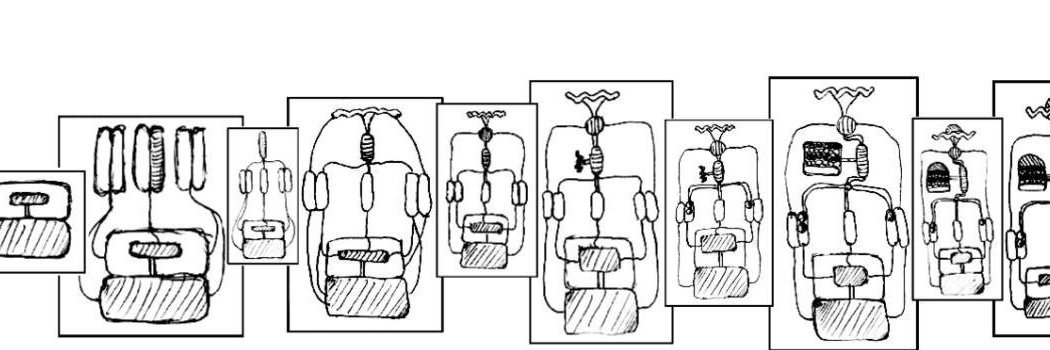
Here's an attempt to explain 'unfolding sequences', and include computer people in the audience. Unfolding sequences are natural, pervasive, and extremely powerful. But we don't notice them or use them enough. youtube.com/watch?v=m1IZql…

YouTube video
YouTube
English
4
6
19
0
Greg Bryant
Greg Bryant@greg_bryant·
@davidsirota High-density is usually bad for the environment and people; low-density can be ecological. It all depends on the situation. New abundance-style upzoning has destroyed small, green, affordable owner-occupied neighborhoods to build wall-street owned extractive rental hellholes.
English
0
0
0
27
David Sirota
David Sirota@davidsirota·
I've always said anti-density zoning laws are bad. I don't think theyre the *primary* driver of the housing crisis, but they're bad. Example of bad: "Zoning codes in Colorado overwhelmingly prohibit duplexes, townhouses, condominiums & apartment units." coloradosun.com/2025/07/01/nat…
English
6
7
23
4.5K
Greg Bryant
Greg Bryant@greg_bryant·
@davidsirota That's great! But ... it's a new, good regulation. It's not predatory deregulation. So it's not YIMBY, which, again, is a marketing slogan injected into our conversation by corporate landlords, investors, real estate brokers, and developers. Who want a world of trapped renters.
English
0
0
0
3
David Sirota
David Sirota@davidsirota·
And FYI I don't think we have to choose between housing & the environment. We can get more housing & not destroy the environment. I say that having recently participated in passing a pro-housing, pro-environment YIMBY law in my own city. denverite.com/2025/02/18/den…
English
2
0
11
3.6K
Greg Bryant
Greg Bryant@greg_bryant·
@davidsirota NIMBY and YIMBY are capitalist marketing terms. NIMBY was invented to tarnish people who didn't want to live near toxic industries. YIMBY was invented to deregulate corporate construction of rentals, because profit and monopoly demand the "creative destruction" of neighborhoods.
English
0
0
0
28
Greg Bryant
Greg Bryant@greg_bryant·
@LeeHepner @matthewswspence Market developers stop building when prices stop rising. Their erstwhile investors have opportunities to extract profits elsewhere. So, the supply-side cannot provide affordability, unless there's a market collapse. Only public housing can. But corporations made that tough.
English
0
0
1
77
Lee Hepner
Lee Hepner@LeeHepner·
@matthewswspence I said building supply into a rigged market is not going to bring down rents. I have never said building new housing into a fair, unrigged market wouldn’t do so.
English
1
0
7
139
Lee Hepner
Lee Hepner@LeeHepner·
Kentucky saw the third largest increase in multifamily housing construction in 2022 - a 97.7% increase in approvals. Still, the percentage of rent-burdened residents increased to 47%. Building into a rigged market will not deliver lower rents. This week, Kentucky sued RealPage.
Lee Hepner tweet media
English
6
77
222
20.9K
Ryan Singer
Ryan Singer@rjs·
@andy_matuschak @ReductVideo The fullest treatment of that is in Nature of Order Book 2. Key topics like latent centers, unfolding, structure-preserving transformation, and generative process. A shortcut to that would be to first look at how he describes “site diagnosis” (iirc) in The Oregon Experiment.
English
1
0
8
292
Andy Matuschak
Andy Matuschak@andy_matuschak·
I know many software designers are fond of Notes on the Synthesis of Form. Has anyone ever actually applied CA’s analytical hierarchical graph partition to a UI project? It strikes me as more useful in concept than in practice, but Appendix A implies he really used it. (though tbh those constructive diagrams don’t seem to specify nearly enough)
English
7
0
30
7.4K
Andy Matuschak
Andy Matuschak@andy_matuschak·
Hm. In the preface, he says that he sees his subsequent work on patterns as an elaboration of the diagrams, which can be used without the formal independence analysis. But that still requires reasoning about which patterns to use for each ensemble—ie something like misfit/requirement enumeration?
English
2
0
3
596
Greg Bryant
Greg Bryant@greg_bryant·
@Talor_A Your point's still valid, though. He didn't write that much about successful community battles, even though he fought continuously, and was keenly interested in it. He wrote instead about the essence of the thing the fighting was about ... which was hard enough.
English
0
0
1
70
Talor
Talor@Talor_A·
@greg_bryant thanks :) time for me to read this book
English
1
0
1
24
Talor
Talor@Talor_A·
I love christopher alexander, but the thing I can’t get past is that the premier implementation of his work, community-driven development at University of Oregon, seems to directly contradict his idea of “piecemeal process”, because
Talor tweet media
English
2
0
3
557
Lyman Stone 石來民 🦬🦬🦬
I'm actually curious about research on this. If you show people from various cultures 30 paintings, how clustered are their preferences?
English
8
2
64
31.1K
Greg Bryant
Greg Bryant@greg_bryant·
@Talor_A The Oregon Experiment was a report written after 5 years of fighting alongside the community to make it happen, to discover how to make it work. For only another decade, the administration went along, because of the good results. archive.org/details/oregon…
English
1
0
1
19
Talor
Talor@Talor_A·
@greg_bryant but over a short time they made sweeping changes that realized this vision right? That is sort of what I’m getting at. (I’ll caveat this with the fact that I don’t have a copy of Oregon Exp to read in full yet, but this is my understanding)
English
1
0
0
27
Greg Bryant
Greg Bryant@greg_bryant·
@Talor_A He knew that active, cooperative, organized communities were needed. He fought for community power in all of his projects. He focused on helping them to grow places that support life and work in their neighborhoods. Maybe his last book was the most political.
English
0
0
1
6
Talor
Talor@Talor_A·
I adore A Pattern Language, but I feel that there’s a gap in his work about the political side of community self-determination. Few places have the privilege of enacting change to the degree that UO did, and it’s not clear how to build that power in new places
English
2
0
1
91
Greg Bryant
Greg Bryant@greg_bryant·
@htmx_org Alexander was flattered that computer people listened more than architects. But in the late 90s he created software in a radically humane way, the way he approached building, unrelated to any tech movement inspired by his books. But, at the time, the software folks didn't listen.
English
0
0
3
61
htmx.org / CEO of FlatUI Delenda Est (same thing)
many of The Patterns™ lead to over-engineering i wish the (physical) architects had listened to christopher alexander (will never forgive berkeley for how they treated him) and the software folks had listened to niklaus wirth & john ousterhout instead
htmx.org / CEO of FlatUI Delenda Est (same thing) tweet media
English
27
17
278
24.9K
Greg Bryant
Greg Bryant@greg_bryant·
A new lecture by architect Christopher Alexander from 1995, shown for the first time. 90 minutes of philosophy in action, as he wrestles with complex issues on a real building site, and with questions from an audience of mostly students. youtube.com/watch?v=a8wPKs…
YouTube video
YouTube
English
4
13
57
3.3K
Greg Bryant retweetledi
Building Beauty
Building Beauty@_buildingbeauty·
The Christopher Alexander & Center for Environmental Structure Archive gives access to 50+ years of work by Alexander/CES, sharing ideas and projects to inspire all who wish to build and repair living environments in which people thrive. Visit at christopher-alexander-ces-archive.org.
Building Beauty tweet media
English
3
19
51
20.2K
Simon Sarris
Simon Sarris@simonsarris·
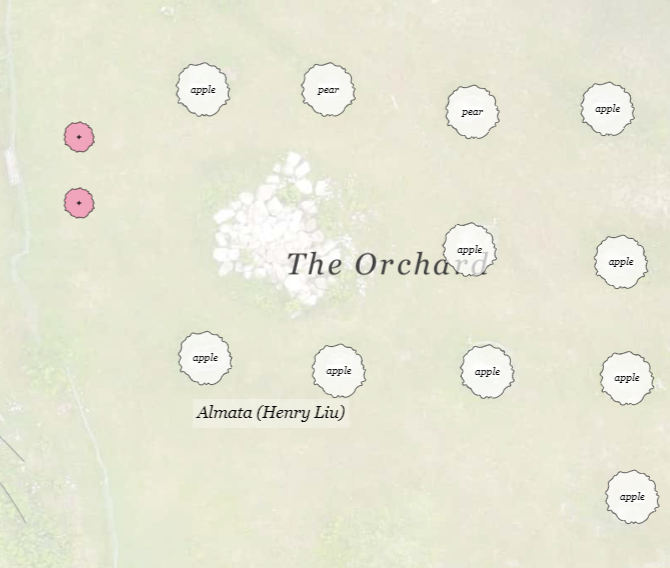
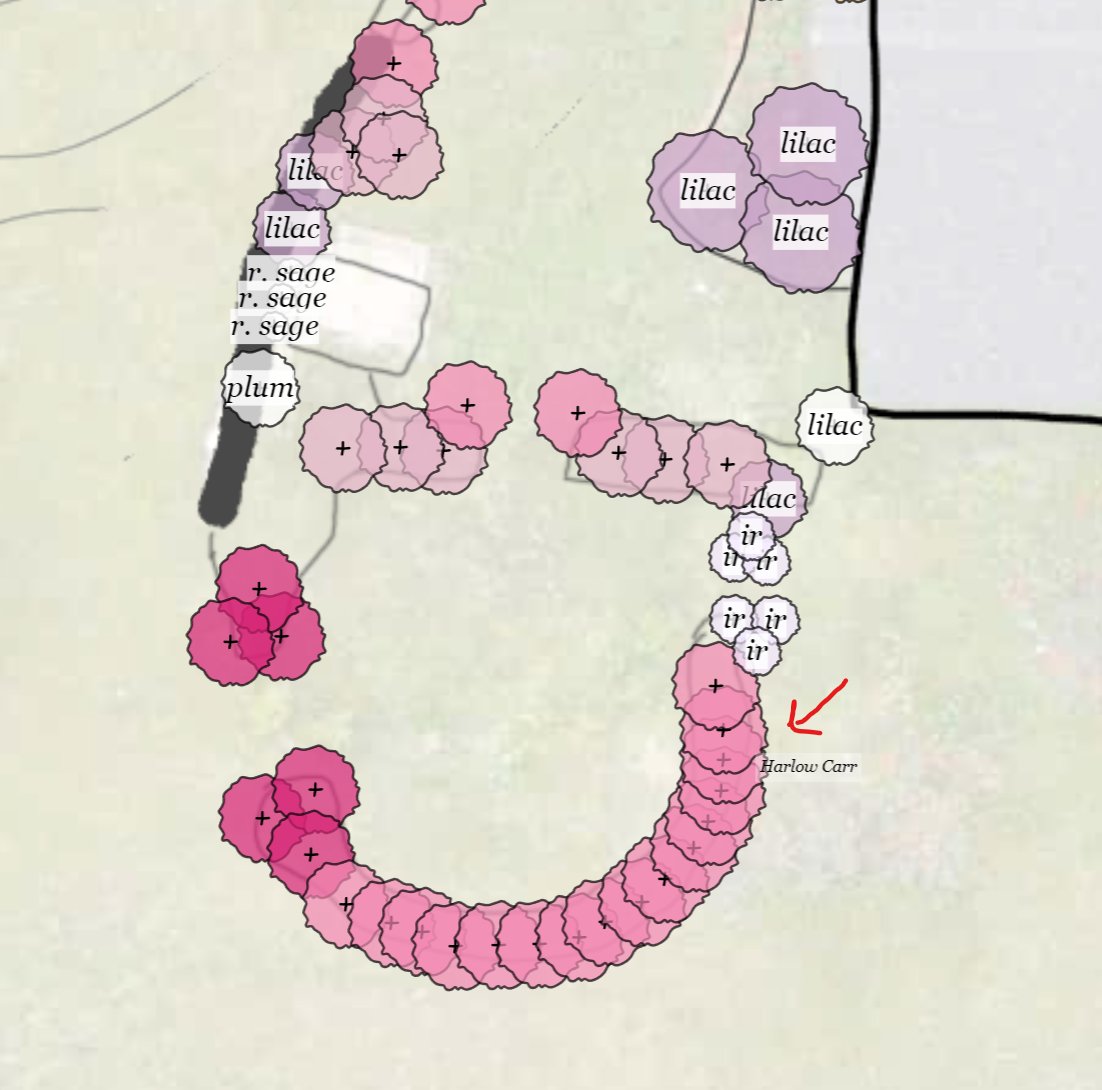
I wrote my own webapp for an interactive plan, but its still very rough around the edges, and missing lots of info and photos still garden.simonsarris.com if you hover over most plants you'll see the cultivar, and if someone sponsored a rose or tree, it will say their name
Simon Sarris tweet mediaSimon Sarris tweet media
John Serrao@serraotweets

@simonsarris What are you using to do the landscape drawings? I’ve been looking at different programs but haven’t found anything I like that much

English
4
0
39
12.2K
Greg Bryant
Greg Bryant@greg_bryant·
@RNG52 @designwithixdf I think Don Norman's questions would be mostly answered by reading Alexander's "The Nature of Order".
English
0
0
1
29
Greg Bryant
Greg Bryant@greg_bryant·
@csh01014 It's helpful to watch a living thing in nature: as it unfolds it gives us inspiration. A growing plant, for example, is beautiful, inventive, directed, and coherent. We call its development a 'sequence', but of course, we're referring to an amazing process, with great substance.
English
1
0
0
20
LinkAmos
LinkAmos@csh01014·
@greg_bryant Yes! I Agree 。 I just I want say , I never ever know that the feeling which drive us to work better , it can explain by other things, there maybe is you say `unfold sequence`. But I just think is a abstract concept , no entity
English
1
0
0
19
Greg Bryant
Greg Bryant@greg_bryant·
Here's an attempt to explain 'unfolding sequences', and include computer people in the audience. Unfolding sequences are natural, pervasive, and extremely powerful. But we don't notice them or use them enough. youtube.com/watch?v=m1IZql…
YouTube video
YouTube
English
4
6
19
0
Greg Bryant
Greg Bryant@greg_bryant·
@csh01014 You use your feeling to judge the quality of your work, with adjustments, at each step. Your feeling helps you to answer the question: "am I making the whole thing better?" The steps in a sequence should allow you to make these good decisions at the right time.
English
1
0
0
25