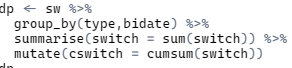
What tweetable #rstats function have you written recently to reduce duplication in your data analysis code? I'm looking for some inspiration as I re-write the functions chapter in R4DS.
@DavidJohnBaker I’m a GTDer too. I use @OmniFocus but don’t necessarily follow the GTD method religiously. It’s great for taking away the whole ‘I must remember to…’ cognitive load though, and ensuring that you never forget to do something, however small.
in ways that I only thought would be possible if I went back to a 9-5er. Just writing this to see if I can find any other #GTD ers out there (ideally also at the intersection of #emacs and #orgmode). TLDR I am really trying to lean into the whole "try and learn new things"
Cracked a beer here (never a good combo with Twitter) but before my pizza gets here, I do want to say that a few weeks ago I audio-read (listened lol) to David Allen's "Getting Things Done" and have been slowly incorporating #GTD in my routine and
There are also many improvements compared with the original FHRS/OSM comparison tool, including a better user interface, automatic parsing of FHRS addresses into addr:* tags, more suggested matches and efficient manual matching through JOSM. Info and code: #readme" target="_blank" rel="nofollow noopener">github.com/gregrs-uk/fhod…
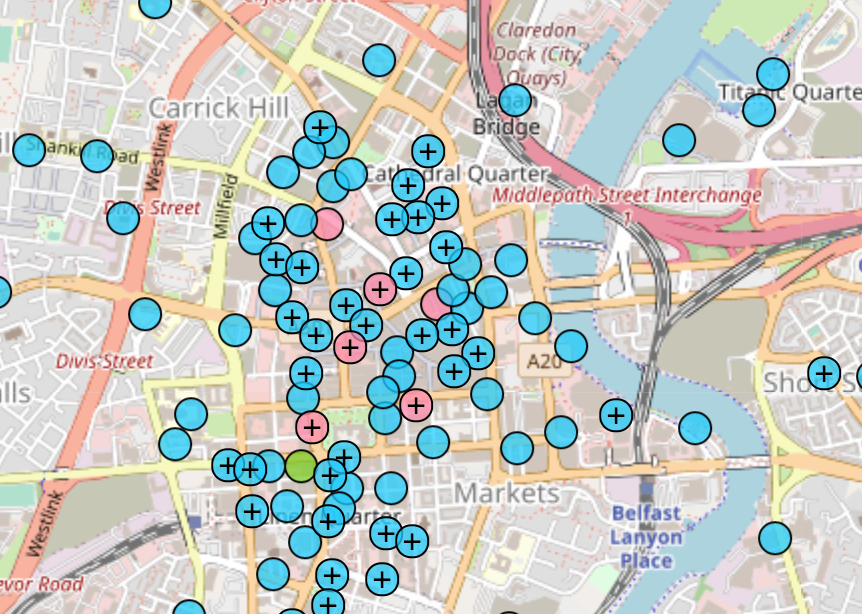
FHODOT gregrs.dev.openstreetmap.org/fhodot/ includes FHRS address/postcode data for Northern Ireland (unlike the original FHRS/OSM comparison tool, which used OS BoundaryLine rather than @ONS data for district boundaries). Suggested matches in Belfast pictured. @osm_ie#osmIRL
I've recently released FHODOT (food hygiene open data OpenStreetMap tool): an open source online tool for making efficient use of UK @foodgov FHRS address/postcode data in OpenStreetMap @osmuk, particularly through interaction with @josmeditorgregrs.dev.openstreetmap.org/fhodot/
@mebenitez85@hadleywickham I’ve had issues with R crashing when using readxl to read an Excel file downloaded from a web application, but found that opening the file in Excel and saving it (unmodified) fixed this. Maybe worth a try? (Unfortunately I couldn’t submit an issue on GitHub as it’s private data.)
Spent the last 5hr trying to figure out how to run readxl in R on my new MacBook. Getting all sorts errors regarding Java issues and finding few solutions online. Help! #RStats
@andrewheiss It’s a great tool. I’d used {drake} before but {targets} seems both easier to use and quicker at running pipelines. The {tarchetypes} package also has some useful addons e.g. tar_file and tar_files to define targets with format = file even more succinctly
@Tantacrul Thanks for your @doricoofficial video – really enjoyed it. In case it's useful, a tip for pasting part way through a rest (as discussed at 36'38")… You can double click to start note entry on any beat then paste directly (or adjust position with arrow keys first)
@ChrisBeeley I'm a teacher and academic data co-ordinator at a UK independent secondary school, and use #rstats a lot. Would be happy to connect with others using R in UK education. Agree that more teachers and schools could benefit from using it.
I've been doing some simple #rstats analysis for my wife this week. She's a primary teacher.
They're messing around with ugly spreadsheets and all that rubbish, same as us.
Is there a teach-R for UK education R 🤓s?
I think teachers would really benefit from more of this stuff
@bshor@rmkubinec@hadleywickham You could try adding %>% to the last line and then {.} on the line below. The {.} basically does nothing but you can pipe to it, allowing you to comment out the last line. I sometimes use this when building a long piped expression.
@rmkubinec@hadleywickham No, because the operator is at the end of every line. For example, if I wanted to comment out the last line I would have to comment out the operator at the end of the 2nd to last line too.
Why should you learn to code @hadleywickham tidy-style with R? It's not faster. It restricts you from using some base R tools. *But*, it allows you to code *way* faster and to *debug* way faster, so as a researcher/data scientist, you will save oodles of time. #rstats
@jimhester_ Might you have an @rstudio 1.3 version of your very helpful script to remap @rstudio Vim keybindings for use with Colemak? I use it every time I use RStudio but it doesn't seem to work with the new version. github.com/jimhester/dotf…
@jimhester_@rstudio In case it helps, I've now got my version of your script working with RStudio 1.3. Had to change the mapCommand calls to pass individual arguments rather than an object e.g.
vim.mapCommand("k", "motion", "moveByLines", {forward: true, linewise: true})
@gregrs_uk@rstudio Sorry I do not, I haven't tried to get it to work with 1.3.
Also I am amazed to find another R user who uses vim keybindings + Colemak!
@gregrs_uk Hey mate, just went through your gpg-agent/ssh key tutorial. Great stuff! Just one thing, which may not have affected you, I had to add the gpg-agent plugin in .zshrc.
@jimhester_@rstudio It probably is an unusual combination! No problem and thanks for responding. Perhaps there’s some documentation I can look at to see whether I’d be able to adapt your code. If you happen to discover anything that would be useful I’d really appreciate it. Thanks
@ivelasq3 Nice post. I sometimes have to work with similar formatted data in Excel and find @nacnudus’s tidyxl and unpivotr packages really handy. They’re described here if you’re interested: nacnudus.github.io/spreadsheet-mu…