gsroure retweetledi
gsroure
513 posts

gsroure
@gsroure
Assistant Professor at @VillanovaU Research interests include microhydrodynamics, complex fluids, particulate suspensions, and soft materials.
Katılım Eylül 2021
324 Takip Edilen179 Takipçiler
gsroure retweetledi

"Categorification", in spirit, is not about shoving higher morphisms into your model. Its about identifying parts of your theory that can be abstracted to recover meaningful ideas in other contexts. It need not even involve categories. Lurie explains:
youtube.com/watch?v=w3f8KE…

YouTube
English
gsroure retweetledi

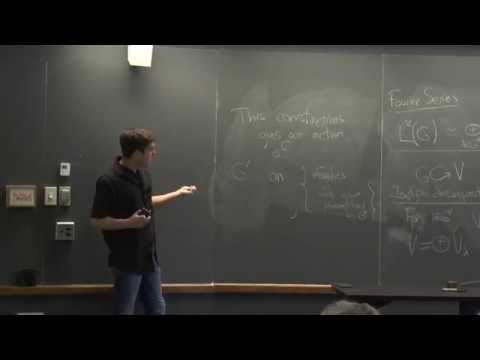
not gonna screen-shot & dump on those commenting on the depth of linear algebra... for i too was once a fool and did not appreciate its beauty (a long time ago)...
better to point out beauty than ridicule stupidity...
so here is something beautiful about linear algebra
(or, even, matrices, if you must)
== Fundamental Theorem of Linear Algebra ==
for any linear transformation T : V=> W
V = kernel T (+) coimage T
W = image T (+) cokernel T
and the image and coimage are naturally isomorphic
=====================
this is utterly beautiful, as it explains:
* what is done and what is left undone by T
* most of the properties of rank & nullity
* what the pseudoinverse means
* why least squares works (with inner products)
* & so much more....

English

gsroure retweetledi

Do ant colonies work like liquid brains? Check this great paper in @pnas, led by @ceabcsic Pol Fernandez-Lopez and @fredbartu, explaining foraging behaviour by modelling ants as mobile neural agents @JordiPinero
pnas.org/doi/10.1073/pn…

English
gsroure retweetledi

This paper is really elegant and beautiful.
Researchers took a vesicle, filled it with a single type of enzyme and some protein pores, and showed that this "minimal cell," made from just three components (!!), could "actively propel itself toward an enzyme substrate gradient."
Here are some more details on what they did and why this is so cool.
First, they encapsuled one enzyme (either urease or glucose oxidase) into the vesicle. They also included some pore proteins (α-hemolysin) to allow molecules to freely diffuse into, and out of, the vesicles.
Next, these loaded vesicles were put in a microfluidic chamber with a substrate gradient (either glucose or urea) and watched under a microscope. Vesicles without any pores drifted around aimlessly. But, oddly enough, the vesicles carrying a single enzyme and some pores were able to actively move up the substrate gradient. The vesicles loaded with urease, for example, moved 0.3 µm/s up the gradient. (They did not move whatsoever in the y-direction.)
This is really surprising to me because these vesicles have no flagellum or energy source. Indeed, they don't have any obvious mechanism to move whatsoever! All they have is this one enzyme and some pores poked in the vesicle's membrane.
The researchers, appropriately, tried to explain how these vesicles move in the paper. Here's what they think is going on.
When you drop a vesicle into a chemical gradient, there is a different concentration of molecules on each side. One side of the vesicle is "exposed" to a higher concentration of, say, urea than the other side. These molecules bump into the vesicle and tug on it, but generally the effects are random and small.
But now, if you add an enzyme and a pore to that vesicle, it isn't passive anymore. Substrates are diffusing into the vesicle, and then the enzyme inside is transforming them and spitting out new products. These new "products" build up inside the vesicle and need to escape through the pores. This gradually sets up a tiny imbalance in chemical concentrations around the vesicle, which is enough for the vesicle to basically recoil from its own "exhaust pipe."
Note that this effect is REALLY different for different enzymes. Urease triggered the fastest movements, whereas other enzymes led to much smaller effects. It all depends on how quickly the enzyme makes products, what those products are, how many pores are in the vesicle, and so on. There are a lot of variables.
But still, the researchers ran LOTS of control experiments for this paper just to be sure this wasn't a fluke. They watched and recorded "empty vesicles, empty vesicles with pores..." and other controls, too. None of them had any "appreciable difference in drift." The movements were "only observed when vesicles incorporate both an encapsulated enzyme and functional pores."
I really like this paper (and all its math equations), because it shows just how complicated it can be to understand even a super simple biochemical system; in this case, a system made of little more than a vesicle, an enzyme, and a pore.


English
gsroure retweetledi

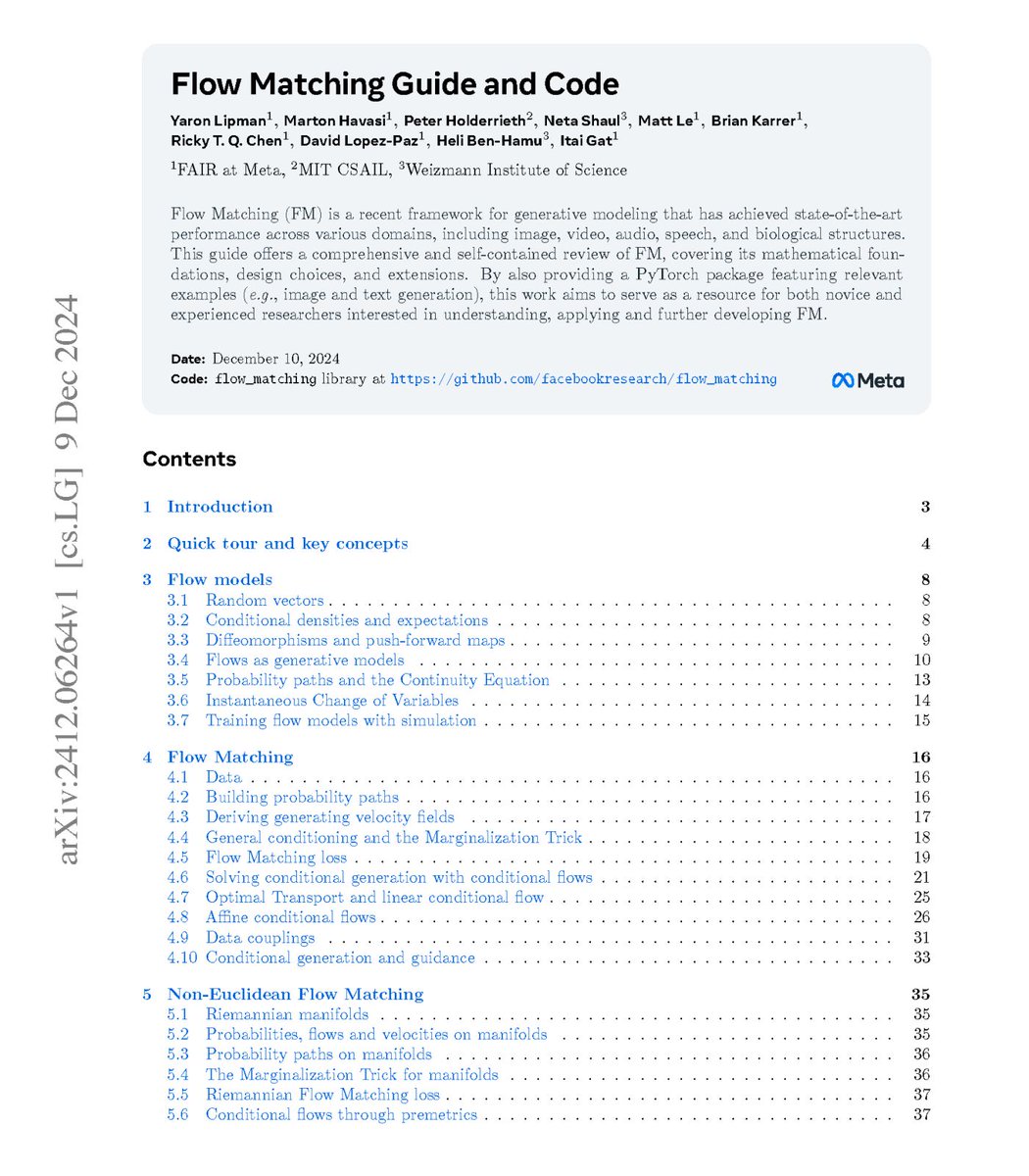
Finally published:
“Explosive neural networks via higher-order interactions in curved statistical manifolds”
nature.com/articles/s4146…
Enhancing the capabilities of recurrent neural networks by deforming their geometry!
English
gsroure retweetledi

In a single E. coli, about 25 percent of all proteins use metals (like zinc, iron, copper, magnesium, etc) to do their chemistries.
And yet, incredibly, fewer than ONE FREE METAL ION is present per cell on average. There are, in other words, basically no loose metal ions floating around a cell. As soon as metal comes in, it gets wrapped up in a protein.
This is presumably because even a small amount of free metals can be toxic. A single unbuffered copper ion, say, can generate hydroxyl radicals that damage DNA.
Bacteria have evolved all kinds of strategies to keep metal ion concentrations at a perfect level; enough for their proteins but not too much to be toxic. They have metal-sensing transcription factors like CueR, for example, that become active after binding to copper and then switch on genes that detoxify the copper ions in the cell. They also express efflux pumps that can dump loose ions from the cell.
Anyway, I heard about this recently from Markus Covert and just thought it was really interesting.

English

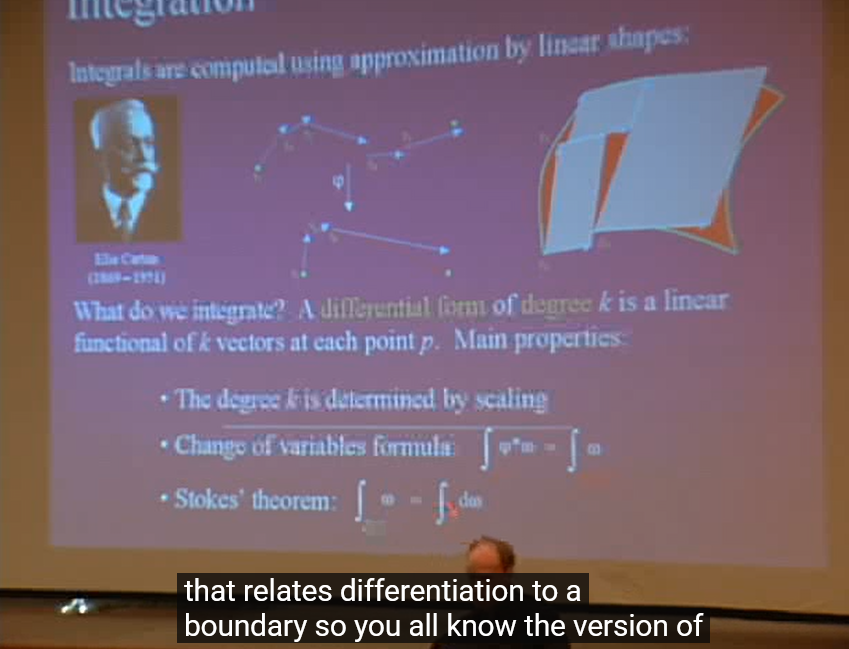
@ProfGoat @MathMatize Yes. But for it to work as a vector product, you would want the vector space and the second order (because products are taken between two vectors) anti-symmetric tensor space to have the same dimension. And this will only happen in dim 3. So it's even more restrictive.
English
gsroure retweetledi

☁️ How does turbulent mixing affect cloud entrainment?
Using the Lagrangian diffuselet model to study passive scalar mixing in a cloudy air filament, with and without phase change, shows good agreement with simulations in the early stages of the process.
go.aps.org/4nK8D0G

English
gsroure retweetledi

Excited to share new work now out in @NatureComms Biology! We use computational modeling to show how E. coli preloads its ribosomes to speed codon recognition testing & protein synthesis for faster growth. Check out the paper (open access) at doi.org/10.1038/s42003….

English
gsroure retweetledi

Our new review paper is out @ JMB! 🧬
@katsu_s_minami @semeigazin @a_mond_future discuss DNA accessibility in euchromatin and heterochromatin in living cells.
📘 Free access: authors.elsevier.com/a/1lHgb54HFZNbb
🔗 Also, check our previous paper on nucleosome motion: science.org/doi/10.1126/sc…

English
gsroure retweetledi
gsroure retweetledi

Many-body hydrodynamic interactions affect the dynamics of fluid suspensions, but measuring them experimentally is difficult. Kim, Nagella et al. present an optical tweezer-based method to quantify translation-rotation coupling between trapped colloids.
🔗 go.aps.org/3ZlDx58
English
gsroure retweetledi

New publication from our group @softbiocol led by Vivien Willems.
Check the group Twitter thread about it below👇
Very excited to get this work published! A step forward on active soft microsystems
Thanks to all the colleagues who made this happen!
@crpp
@univbordeaux
SoftBio Colloids Lab@softbiocol
Publication Alert!🎉 🚀🧪 New paper out! @softmatter We show that Janus lipid vesicles can self-propel under AC electric fields, exhibiting run-and-tumble dynamics—just like bacteria, but driven by membrane-phase behavior. 👉 Read here: pubs.rsc.org/en/content/art…

English
gsroure retweetledi
gsroure retweetledi

Kermit the Frog will delivery his first commencement address in nearly 30 years at the University of Maryland on Thursday. nbcnews.com/news/us-news/u…
English
gsroure retweetledi

We mathematicians have a 50 year head start on this issue!
"Why should I learn my times tables when my pocket calculator can do it for me?"
It's pretty simple: feel free not to; you'll pay dearly for it later. Same 20 years ago with Calc 1 ["Mathematica can compute this integral, so I can skip doing my homework."] Same now with learning to write (= think).
Practically speaking: yes, all meaningful evaluations must be in person and on paper. Welcome to our world! :)
Tim Urban@waitbutwhy
Yup. Assignments should be like “use AI to do ___ complex project” and then have an oral component where the student explains each step of the process they used and their thought process behind it. Schools should prepare kids to accomplish things with the tools of their world.

English
gsroure retweetledi