
prof-g

12K posts

prof-g banner
prof-g

prof-g

@prof_g

Robert Ghrist = mathematician; engineer; educator; assoc. dean of undergraduate education Penn Engineering; illustrator; animator; acta non verba

philadelphia, pa Katılım Ağustos 2008
2.2K Takip Edilen24K Takipçiler
prof-g retweetledi
White House OSTP 47
White House OSTP 47@WHOSTP47·
Today @NSF announced a major investment of $1.5B towards a new model for scientific research🚨 NSF X-Labs will fund independent teams of researchers, engineers, and entrepreneurs to pursue bold milestone-based scientific challenges. This is how we revitalize America's scientific engine for the 21st century outside of traditional institutions, conducting science in a way that actually reflects the modern R&D ecosystem ⬇️ nsf.gov/news/nsf-annou…
English
11
53
270
28.4K
prof-g retweetledi
Parmita Mishra
Parmita Mishra@parmita·
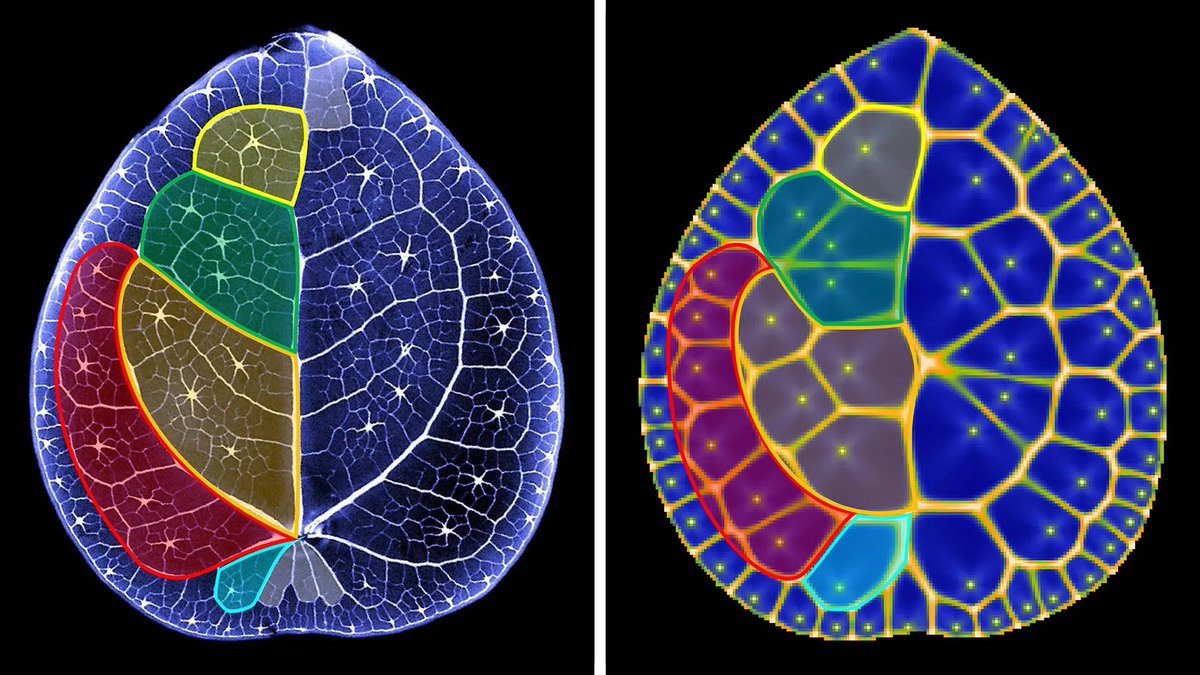
voronoi diagrams are how you divide space when you know where everything is school districts or cell tower coverage the kind of problem you solve with coordinates, a global view, and a computer. a CSHL group just showed the chinese money plant solves it in its leaves.
Parmita Mishra tweet media
English
5
7
70
4.6K
prof-g
prof-g@prof_g·
@St_Rev yeah, but cosh & sinh...
English
1
0
3
503
St. Rev. Dr. Rev ⏭️☯️🏴😻
I just discovered that there's a thing called 'hyperbolic tapering' and I'm furious because it's not hyperbolic, it's exponential
English
9
3
88
3.9K
prof-g retweetledi
Thang Luong
Thang Luong@lmthang·
Very excited to share a new milestone in AI for Math: Aletheia, powered by Gemini Deep Think, was just used to autonomously solve a Kirby problem! “Kirby’s list” is a “compendium of the most important unsolved problems in topology, the study of deformable shapes” (Quanta magazine). 🧵
Thang Luong tweet media
English
13
64
321
38.6K
prof-g retweetledi
Rabdos_AI
Rabdos_AI@Rabdos_AI·
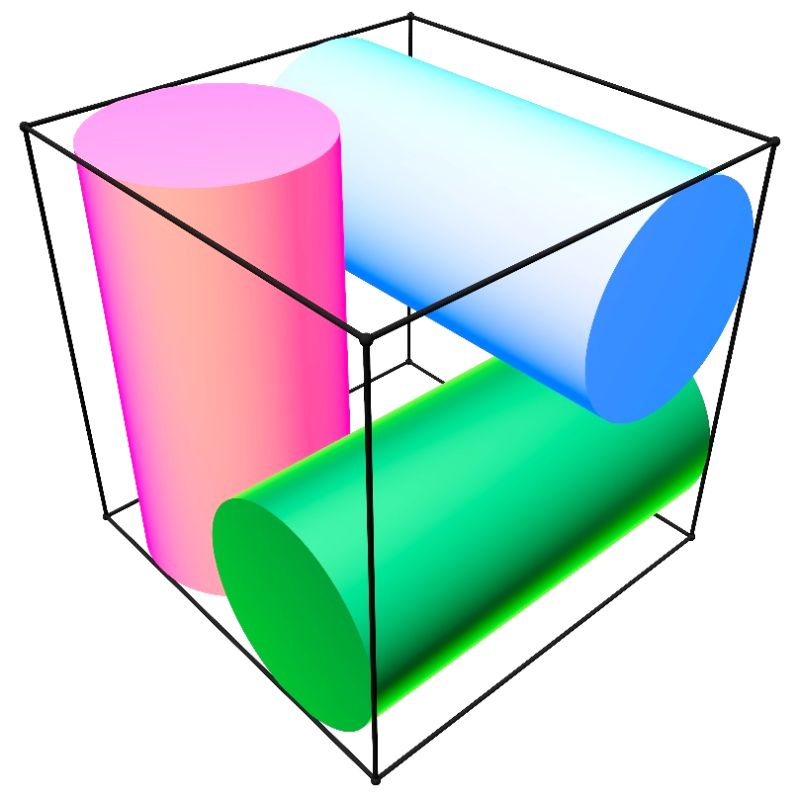
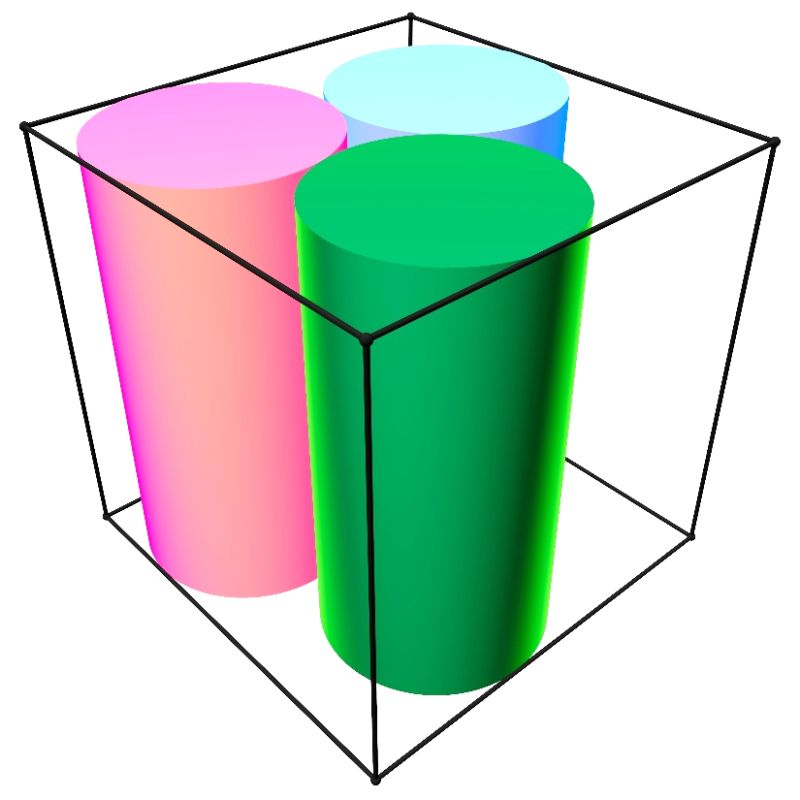
We are delighted to unveil our research blog Rabdology at rabdology.ai, where we chart the jagged math-frontier of AI reasoning. This is our first post in a weekly series. Read on, and if you enjoy it, please subscribe! (Link at bottom of blog's main page.) The Three-Cylinders Problem: When AI models choose Beauty over Truth rabdology.ai/three-cylinders We pose a problem that a good geometry student can solve in twenty minutes. We gave it to four of the world’s most advanced AI models and watched what happened. Three of them got it wrong — and the way they got it wrong tells you something different about the state of AI mathematical reasoning than the usual benchmarks.
Rabdos_AI tweet mediaRabdos_AI tweet media
English
0
8
13
1.4K
Bartosz Naskręcki
Bartosz Naskręcki@nasqret·
I am happy to share that I have finally finished the big project of properly formalizing all the claims in Andrzej Odrzywołek’s paper on the EML(x, y) = exp(y) - log(y) function in Lean 4. The project took me about two weeks of work, and I think it was a very refreshing experience. I will describe here, in an informal way, what I actually did, while deferring the technical details to the GitHub repo, which contains everything and is fully reproducible. 1. I decided that the work arXiv:2603.21852 should finally get a full Lean 4 formalization. This is an ideal task, since the scope and breadth of the work depend entirely on foundations laid out in Mathlib. 2. My plan was to use this project as a test of agentic engineering and design. I put a lot of effort into designing an intricate system based on Claude, Mathematica, Aristotle, and GPT Pro: Claude for orchestration, Mathematica for specific identity chasing, Aristotle for formalizing the many parts of the paper — including very crucial negative feedback — and finally GPT Pro as a critical feedback model that re-steered the Claude orchestrator whenever it got stuck. Finally, Codex was used to informalize some of the Lean statements. 3. I did the work in several batches. My supervision was based on insights and on gaining a deeper understanding of how the combinators work on specific domains. 4. The hard aspect of this work was that we wanted to have a full domain definition. This turned out to be impossible at some isolated points. 5. In hindsight, I should say that I honestly learned the hard-to-write details of the EML theorem. The many identities between elementary functions gave extra depth to some of the choices. The Lean code feels light and structured. 6. In this project, I felt more like a "mathematical engineer" than a typical "tinkering mathematician". This is a very different feeling, but it is a cool type of job. If you orchestrate AI properly, you can get a lot of satisfaction from such work. If you know how to tinker with Lean and mathematics, it becomes much more than mere vibe-coding. 7. IMHO, future work in mathematics will rely on models doing a lot of the work, with humans helping to verify it. This is an emerging new type of activity: deeply mathematical, but with a lot in common with proper engineering. 8. I am still super curious about the result itself. I was very happy to see the structural design with the combinators, which gave me the impression of good taste and structural thinking on the part of the models. It was not merely a dull formalization run. 9. Looking forward to more projects like this in the future. You can be creative in such ventures in entirely new ways. It is not subpar compared to proper mathematical tinkering. It is different, and it is fun. 10. This project also shows how important it is to know all the top-tier AI tools on the market. Switching between models and using them against each other turns out to be very productive. Links in the comments. Feel free to interact. Maybe there are other formalizations of this project, or similar scaffolds? Curious what you think!
GIF
English
11
30
199
27.2K
prof-g
prof-g@prof_g·
my dad's stage iv cancer is in full remission; it was just 6 weeks ago i thought i was gonna lose him... god is good. (the staff at penn medicine are also very good...)
English
15
10
349
10.2K
Ben Golub
Ben Golub@ben_golub·
@prof_g What a blessing. Thanks for sharing this.
English
1
0
5
990
prof-g retweetledi
Megan | @megievalist
Megan | @megievalist@megievalist·
Happy Mother's Day! Here's a 13th c. image of the mother of our Lord clocking the devil 💕
Megan | @megievalist tweet media
English
68
869
5.6K
91.1K
prof-g
prof-g@prof_g·
@owenbroadcast faebook: social media site for intelligences to brag about pushing / influencing humans
English
0
0
1
293
owen cyclops
owen cyclops@owenbroadcast·
many years ago i made a long post on here explicating a theory that aliens were "actually demons". although this is extremely cliche now, at the time, it took a lot of digging for me to get to that point. i didn't come up with the theory myself, i just put some pieces together based on my own experiences and areas of interest. my natural inclination is to stay intellectually nomadic and not pigeonhole myself, or rest on past endeavors, so i, naturally, eventually moved on from this topic. it's still relevant to most of my interests and people that were around at that time still associate me with it. for that reason, many people asked me my thoughts about UFOs and such things over the last few weeks and today. if you read this far, here are my disorganized thoughts on this topic and how its discussed now, how i presently conceptualize it, and perhaps any potentially novel aspects that have yet to be integrated into the mainstream understanding. first off, "aliens are demons": i believe at this point both tucker carlson and the vice president of the united states have explicitly said this, so it's now mainstream. this is, to me, a very "battering ram" and simplified way of articulating the actual point: the UFO phenomenon is an extension of what was previously known as the demonological phenomenon. that's a complex way of saying: whatever you think "demons" are or were, UFOs and aliens are something like that. i believe this caught on so swiftly because its an ontological statement, really. it's a quick way of saying that aliens aren't a "science" thing, or an "urban legend" thing, they're a spiritual thing. it's a way of refiling the concept of aliens from science and sociology over into spirituality and religion. i don't exactly use this term anymore at this time, for two reasons. firstly, its entierly conditional on someone's worldview. of course, i have a worldview, but it's just sloppy communication. i speak with someone who says the marian apparitions (visions of the virgin mary) are demonic because they're not catholic, then i speak with someone who says pentecostals speaking in tongues is demonic. "demonic" has to be defined strictly between two people for it to actually communicate anything. it's just not a useful designator. so, i think it should be rephrased as something like: the UFO phenomenon is at least partially metaphysical or spiritual - it shouldn't be viewed strictly as literal physical beings operating literal physical vehicles (although that is possible). secondly, the term "demons" is very medieval. there's nothing wrong with this inherently, but it's very limiting if you're analyzing a live presently unfolding phenomenon. it's almost impossible to hear the term "demons" and not see the medieval imagery in your head that i believe could be an obstacle to actually understanding any of this. in order to not be misunderstood here, i should say that an appropriate analogy would be if we found men on other planets that lived in caves and hit each other with clubs. we could call these "cavemen" and they might literally be "cavemen" but thinking of them as cavemen might eventually become an obstacle, because that term is so tethered to a particular conception of man and particular time period and your experience with all that (museum displays, australopithecus, neanderthals, neolithic life) that isn't being referenced in this new situation. i (not saying anyone should use this term) like the term "intelligences", some people use the term "spirits" (this is too shamanic for me), i could use entity, whatever signals a non-human intelligence to you is fine. as the idea of UFOs and aliens as demons has already become cliche and static, I also think this could be reframed or gone deeper into via a bit of modern western spiritual history and ethnography. the UFO phenomenon was really (in my opinion) a time period, it really belongs to something like the 1950s to 1970s. it still exists of course, but when you actually go into the history of it, it was way more common and way larger at that time, and that's where and when the main concepts cemented. so, firstly, we're far downstream of the origin of this concept and its highest point of vitality - its epicenter. you can't really chart yourself in relationship to it without understanding that. you would be like someone studying hippies in the 2020s without realizing how much that phenomenon, which still exists in many ways, was really tied to the 1960s. the progression of the alien and UFO phenomenon in the popular understanding is missing a huge historical piece. i would describe the strict on the ground "seeing UFOs" thing as the first wave - it extends back from the 1950s and into the 1970s. however, by the 1990s, the spiritual engagement with beings from other worlds was really no long literally seeing them in the sky but a process called channeling. most people are familiar with the concept of channeling (calling another intelligence into your consciousness and having it speak through you) but in the 1980s and 1990s this was a huge thing - truly massive in the world of new age. as popular and as bread and butter in the world of spirituality as crystals or something like that. i'm not sure that most people are aware of this. people had seminars where an individual would speak as a particular channeled being with a full backstory and particular way of speaking, tapes, conferences, particular beings would inhabit a person for a long time and be seen as a real "teacher from beyond", and things like that. one popular manifestation of this that still persists is the concept of the pleiadeans, beings from the pleiades (stars). people were channeling these intelligences - for example, one woman wrote a whole book "from" them (multiple, actually) called 'bringers of the dawn'. there are many things like this. in some circles even today people are still into this. so, beings from the stars and other worlds - even though they're being channeled instead of coming here, those are technically "aliens", really - and i would say the energy of the UFO movement shifted over into this world as sightings, for whatever reason, decreased. that makes channeling the second wave of this. then, i would say the third wave is psychedelics - specifically DMT and ayahuasca, probably also mushrooms, which really picked up where channeling left off. i don't think i need to explain this one, but one of the hallmarks of DMT and DMT based substances is communication with other entities, and their overlap with space and other worlds as a theme is well known. this takes us from the 90s to today. however, you may notice that the DMT and ayahuasca thing has really dropped off, for a variety of reasons. this is one of the primary things i was incorrect about. i thought it would just continue to escalate, but apparently that wave is also ending (i have a variety of theories about this - mostly that amateur pharmacology is difficult to square with the new mental health complex and culture, but that's beyond the scope of this). one of my favorite quotes is "the acceleration of history makes us all historians". from my perspective, right now it's not exactly clear where the UFO thing is headed. for whatever reason, people rarely see them now - at least not as much as the 1970s. "channeling" beings is far too ... candid and "stage magic"-y to come back into our time, and the DMT and ayahuasca thing is abating. so, what's the next "beings from other worlds" thing? it's hard to say, especially considering the christian-ization of the online space. i didn't expect to live in a world where christian instagram homeschooling moms were intuitively linking bigfoot and UFOs with the concept of demons but, here we are. the christian writers who addressed the concept of beings from other worlds (this was previously known as pluralism, means something different today) are generally controversial or outside christian orthodoxy - i believe steiner has written about them, but i'm mostly thinking of (increasing in polarization) ellen white, swedenborg, and joseph smith. i believe ellen white's conception of aliens was relatively simple: they're something like unfallen (sorry to any adventists if i'm misremembering). this makes earth a kind of special hyper-battleground between christ and satan that is unique in the universe, and thus, everyone is watching us, waiting to see how the battle unfolds. i don't believe this myself, but it is a cool framing. classically, i would say there is a potential conflict between certain standard theological principles and the existence of aliens, but i don't see any of this becoming relevant today in those circles. once aliens have been refiled as spiritual entities and you take the claims of them being from other worlds as a deception, it really doesn't matter anymore. all that is to say that i think the next true manifestation of this phenomenon will only be obvious in retrospect. the jump from seeing aliens to channeling beings from the stars to using substances that let you talk to non-physical entities seems obvious in retrospect, but each of these initially presented as discreet phenomena. the next "wave" probably won't look like "more people seeing UFOs". i don't think it will come from people combing over old photos or doing excursions out into the desert at night and such things. that time is basically over. the natural question then is, what is it? if these are all "waves", one has to ask, "waves from what? - or, "waves of what?". truthfully, my present conception of such things plays less into the cosmic battle between christ and satan and more into a kind of spiritual psychology (sorry). while i'm sure some intelligences floating out there are involved in the "cosmic conflict" at a very high level, i don't think this constitutes the majority of UFO cases. when you really look into the long cases and read a lot about them, most of them are really just some guy who gets kind of obsessed with them. these get buried under the flashy and electric crazy cases - but that's usually it. a guy sees something weird and gets kind of interested and then goes back to being a normal person. there was a psychologist named van dusen who worked with people who were hearing voices. eventually, to make a long story short, he incorporated the work of swedenborg into his practice and started treating the voices not as hallucinations but as intelligences. supposedly, he was able to map how they would respond to certain inputs, what they would do when you tried to help a person who was hearing them, and their general patterns and "behavior". his conclusion was that they were something like energy vampires: they enjoyed whipping people up into a frenzy or hyper-emotional state so they could sap that energy from them. that was, ultimately, "why" they were torturing these people - in his view. if you downgrade this slightly, it's not that different from fairy lore as found in celtic countries. the fairies are out there, some are truly malevolent, but a lot of them just enjoy messing with humans because it's something to do and gives them attention. i think most of these things - the real cases, not a smudge on a camera lens or speck of dust or guy who accidentally saw a blimp at night - which are admittedly rare, are something like that. generally, having any spiritual or metaphysical framework entails something like non-human intelligences. apparently these things enjoy attention, sometimes, and can kind of "glom on" to other beings - beings with bodies, who can see things, hear things, and experience things as a corporeal being can: something that, by definition, a non-corporeal being can't do. will-o-the-wisps, the little ball light fairies that light up in the forest to lead people into the forest, aren't that much different than a guy seeing mysterious lights in the sky. if you painted them, they would honestly look the same. why they do it? presently i would say it boils down to (1) various degrees of true evil and malevolence, but mostly (2) that it is probably just cool and satisfying to mess with humans, (3) possibly due to jealousy of beings with a body or feeling like they need a body to experience certain things, (4) and the general rush and powertrip you get from influencing another intelligence and getting attention from them. at this time i would say any real case probably varies somewhere between 0 to 100% for those four factors. that's where i ended up with this topic. perhaps anything here will accelerate someone else building their own framework of such things. ill link a few relevant threads below.
Department of War 🇺🇸@DeptofWar

x.com/i/article/2052…

English
77
68
763
70.6K
prof-g
prof-g@prof_g·
plot twist: add-me clicked the "download all grades" button and then got distracted while it was preparing the file. never actually saved the file. 🥲 (good thing gradescope still works...)
English
0
0
297
14.7K
prof-g
prof-g@prof_g·
true story: yesterday I got up, gave my last final exam early, hopped in my car & drove all day to pick up my girl from year 1 of college. right before the exam I thought "hmmm, been a lot of hacks of late: better download all grade data just in case". then no email till night.
English
3
7
1.5K
81.6K
prof-g retweetledi
Robert Smith NPR
Robert Smith NPR@radiosmith·
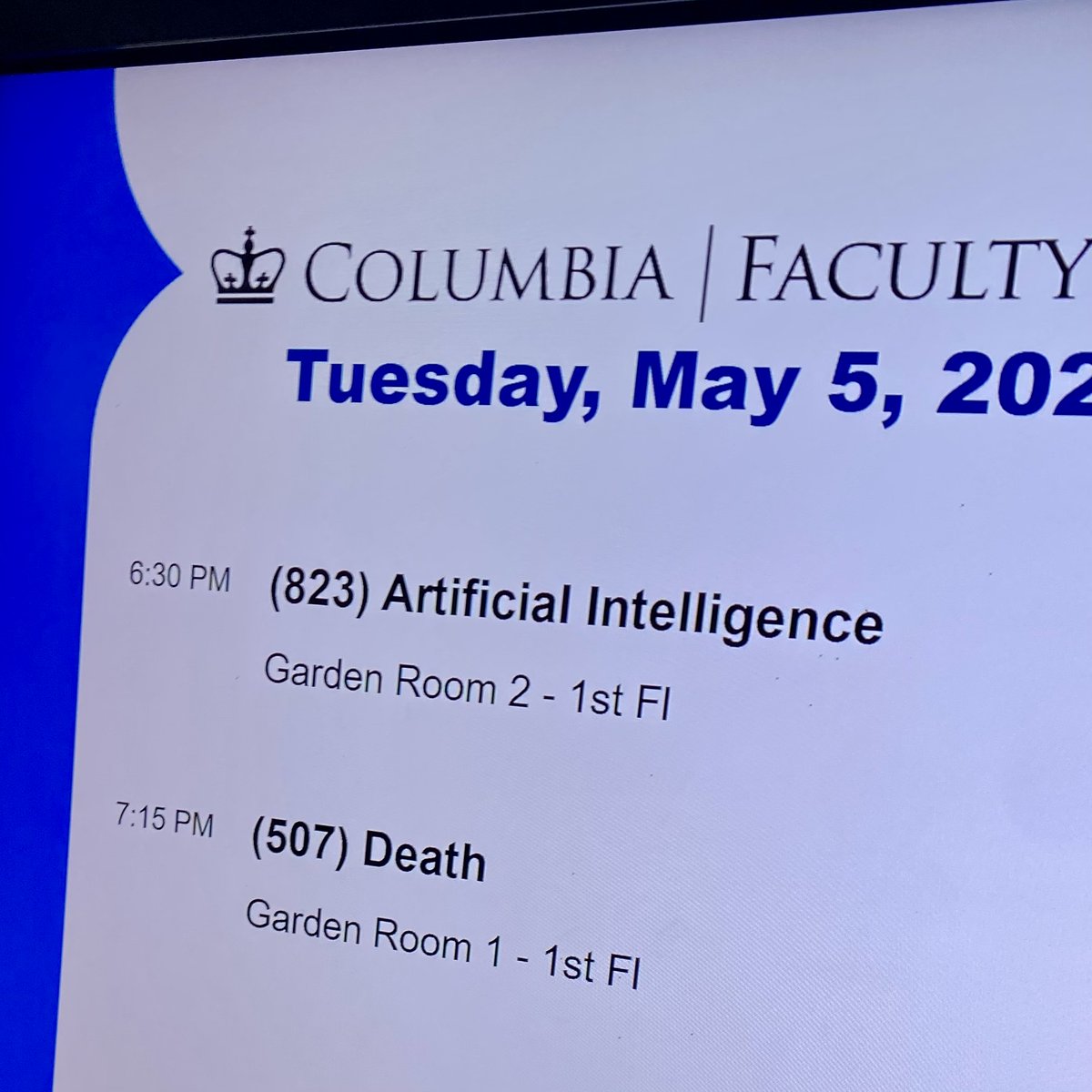
Only two options tonight at the Columbia Faculty Club
Robert Smith NPR tweet media
English
57
1.1K
14K
423.6K
prof-g
prof-g@prof_g·
@nasqret nice! check out the graphics language "processing" and the (very sophisticated) works of Bees&Bombs @beesandbombs -- has been very influential in my work/thinking about animation
English
1
0
2
368
Bartosz Naskręcki
Bartosz Naskręcki@nasqret·
I conducted a simple experiment guiding Codex (GPT-5.5 + xhigh) to program and deploy a looped animation, which the model completed under my guidance. All the steps of the animation were created using pure text commands, with specific keywords such as homotopy, radial expansion, contraction, rotation, etc. I am sharing the full set of prompts and the result in the form of a website and a GIF. The model was extremely steerable. I only encountered one issue when exporting the GIF file, which required a fix. For the other parts, my prompts were precise enough that I did not have to fix any of the attempts. GitHub: github.com/nasqret/impress Prompt history: github.com/nasqret/impres…
GIF
English
2
6
61
3.7K
Steve McGuire
Steve McGuire@sfmcguire79·
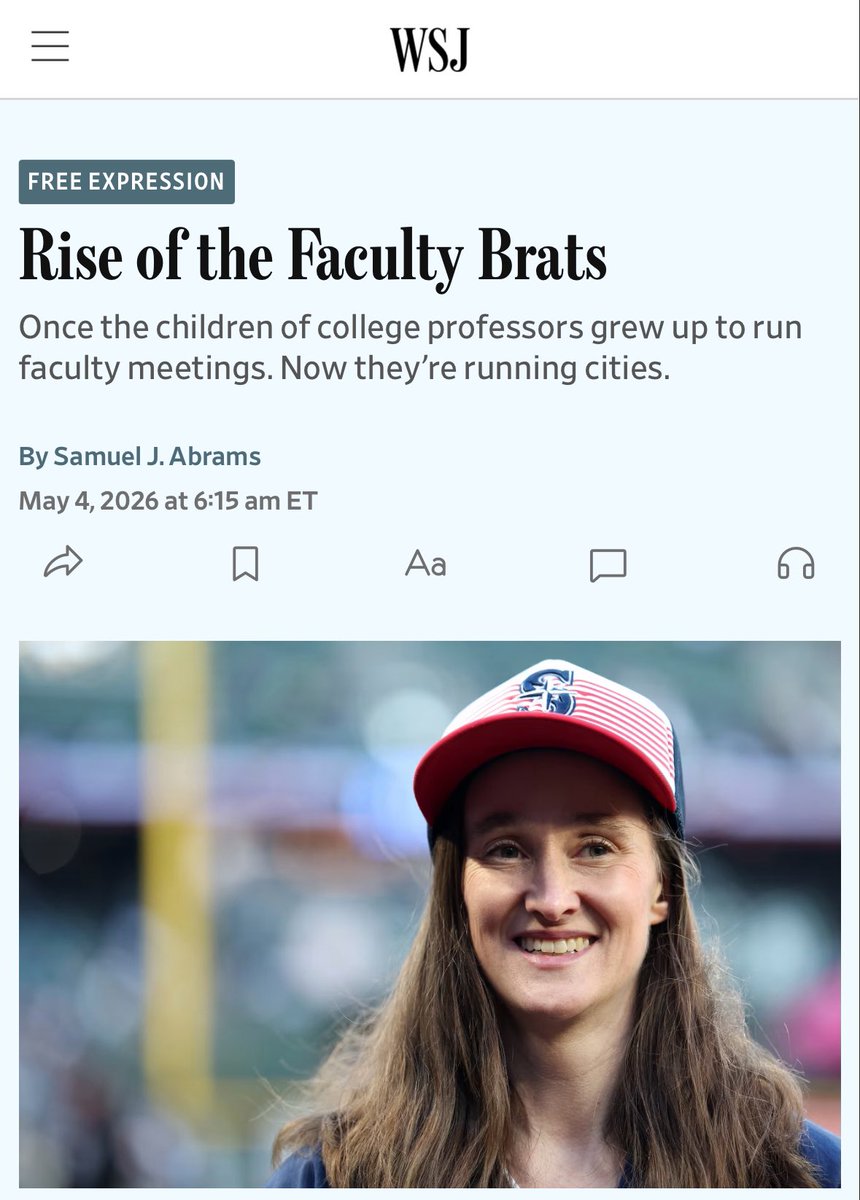
“Plenty of faculty children learn to be rigorous and humble. A growing number doesn’t; they instead emerge confident, articulate, ideologically coherent and almost entirely insulated from the consequences of being wrong.” —@SamuelAbramsAEI
Steve McGuire tweet media
English
20
69
654
23.2K
Burny - Effective Curiosity
Burny - Effective Curiosity@burny_tech·
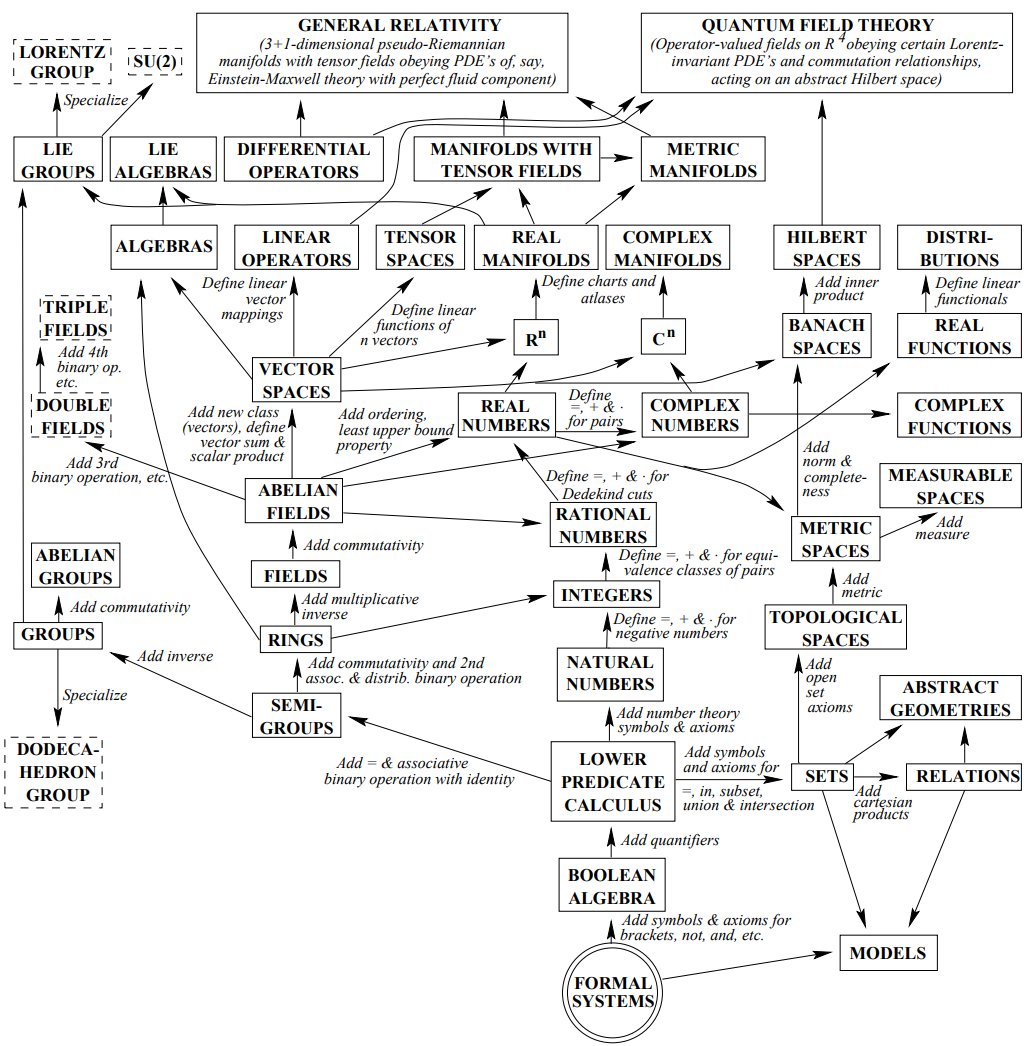
Relationships between various basic mathematical structures. The arrows generally indicate addition of new symbols and/or axioms. Arrows that meet indicate the combination of structures. For instance, an algebra is a vector space that is also a ring, and a Lie group is a group that is also a manifold.
Burny - Effective Curiosity tweet media
English
3
7
27
1.2K