
gu_ng 🇪🇺 retweetledi

Polling vs Long Polling vs Webhooks vs SSE
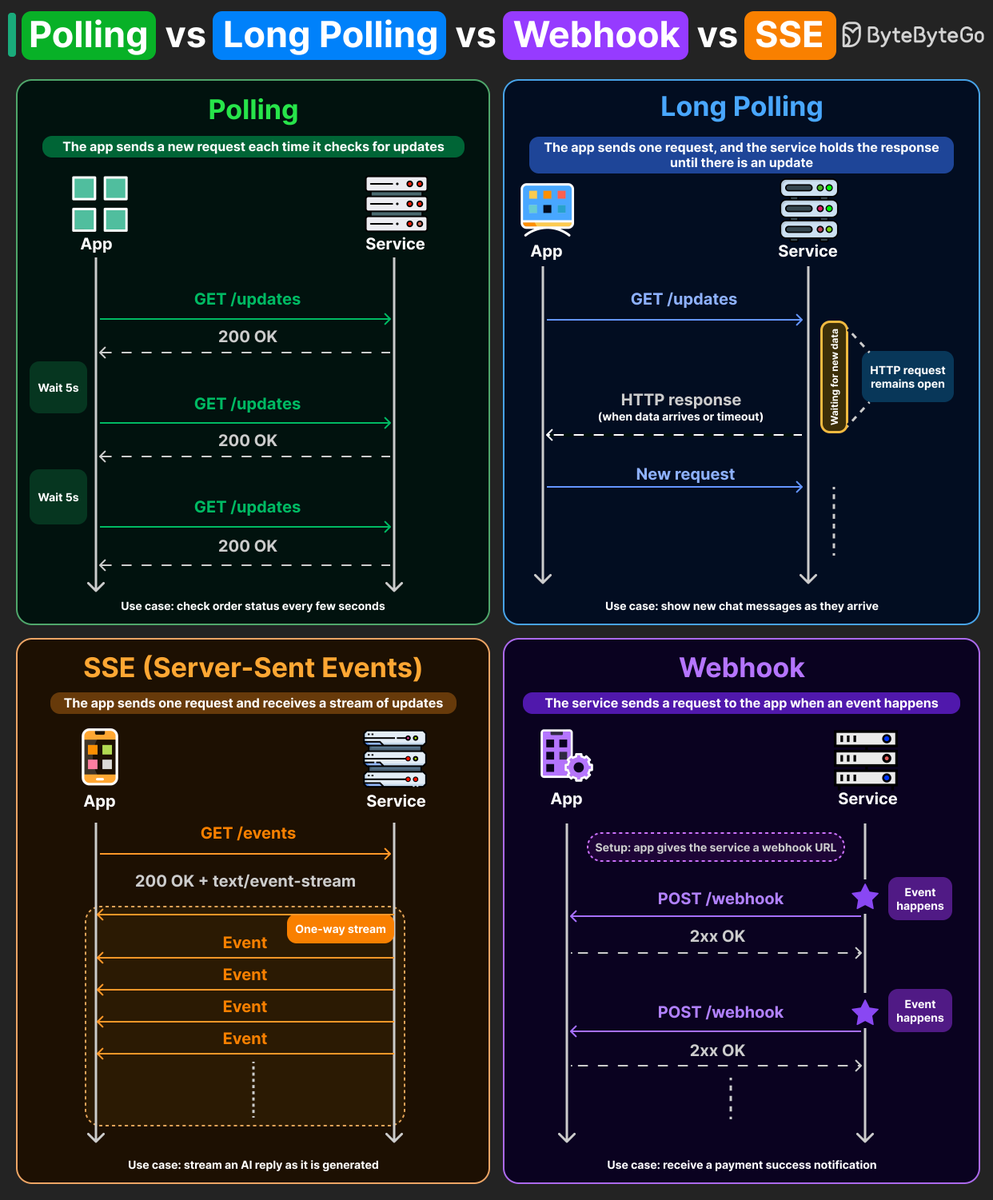
Four ways to get updates from a server. Each one makes a different tradeoff between simplicity, efficiency, and real-time delivery.
Here's how they compare:
- Polling: The client sends a request every few seconds asking "anything new?" The server responds immediately, whether or not there's new data. Most of those requests come back empty, wasting client and server resources. For use cases like an order status page where a small delay is acceptable, polling is the simplest option to implement.
- Long Polling: The client sends a request, and the server keeps the HTTP connection open until new data is available or a timeout occurs. This means fewer empty responses compared to regular polling. Some chat applications used this pattern to deliver messages closer to real-time communication.
- Server-Sent Events (SSE): The client opens a persistent HTTP connection, and the server streams events through it as they're generated. It is one-way, lightweight, and built on plain HTTP. Many AI responses that appear token by token are delivered through SSE, streaming each chunk over a single open connection.
- Webhooks: Instead of the client asking for updates, the service sends an HTTP POST to a pre-registered callback URL whenever a specific event occurs. Stripe uses this for payment confirmations. GitHub uses it for push events. The client never polls or holds a connection open, it just waits for the server to call.
Many systems don't rely on a single pattern. You may use polling for order status, SSE for streaming AI responses, and webhooks for payment confirmations.
English