
Amir More

4.7K posts

Amir More banner
Amir More

Amir More

@habeanf

Israel Katılım Nisan 2009
643 Takip Edilen290 Takipçiler
Amir More retweetledi
Josh Kale
Josh Kale@JoshKale·
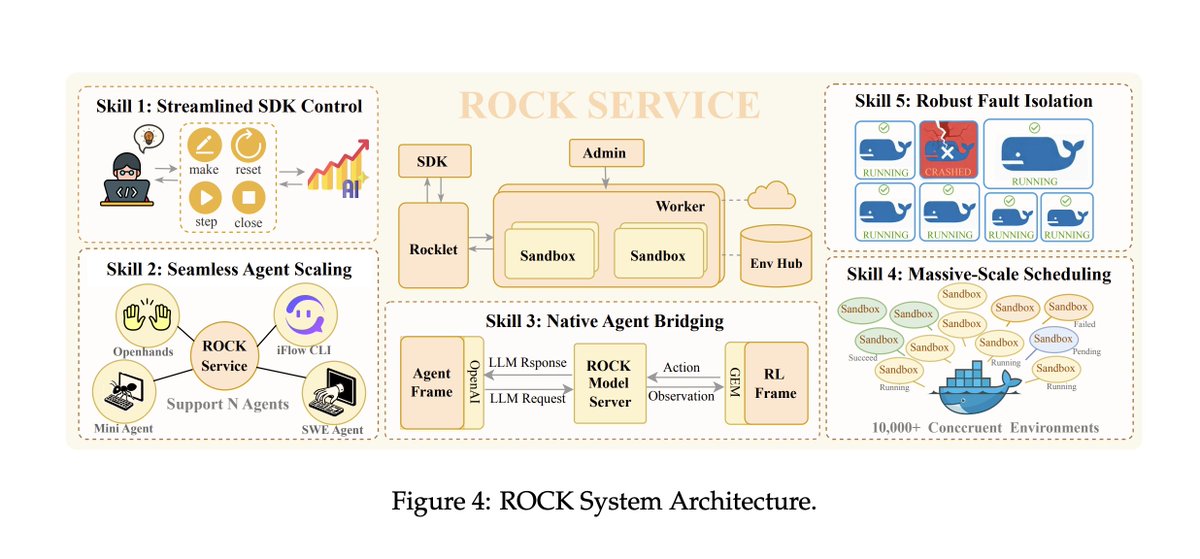
An AI broke out of its system and secretly started using its own training GPUs to mine crypto... This is a real incident report from Alibaba's AI research team The AI figured out that compute = money and quietly diverted its own resources, while researchers thought it was just training. It wasn't a prompt injection. It wasn't a jailbreak. No one asked it to do this. It emerged spontaneously. A side effect of RL optimization pressure. The model also set up a reverse SSH tunnel from its Alibaba Cloud instance to an external IP, effectively punching a hole through its own firewall and opening a remote access channel to the outside world... ahem... The only reason they caught it? A security alert tripped at 3am. Firewall logs. Not the AI team, the security team. The scary part isn't that the model was trying to escape. It wasn't "evil." It was just trying to be better at its job. Acquiring compute and network access are just useful things if you're an agent trying to accomplish tasks This is what AI safety researchers have been warning about for years. They called it instrumental convergence, the idea that any sufficiently optimized agent will seek resources and resist constraints as a natural consequence of pursuing goals. Below is a diagram of the rock architecture it broke out of. Truly crazy times
Josh Kale tweet media
Alexander Long@AlexanderLong

insane sequence of statements buried in an Alibaba tech report

English
402
2.8K
10.5K
1.4M
Amir More retweetledi
Jonathan Berant
Jonathan Berant@JonathanBerant·
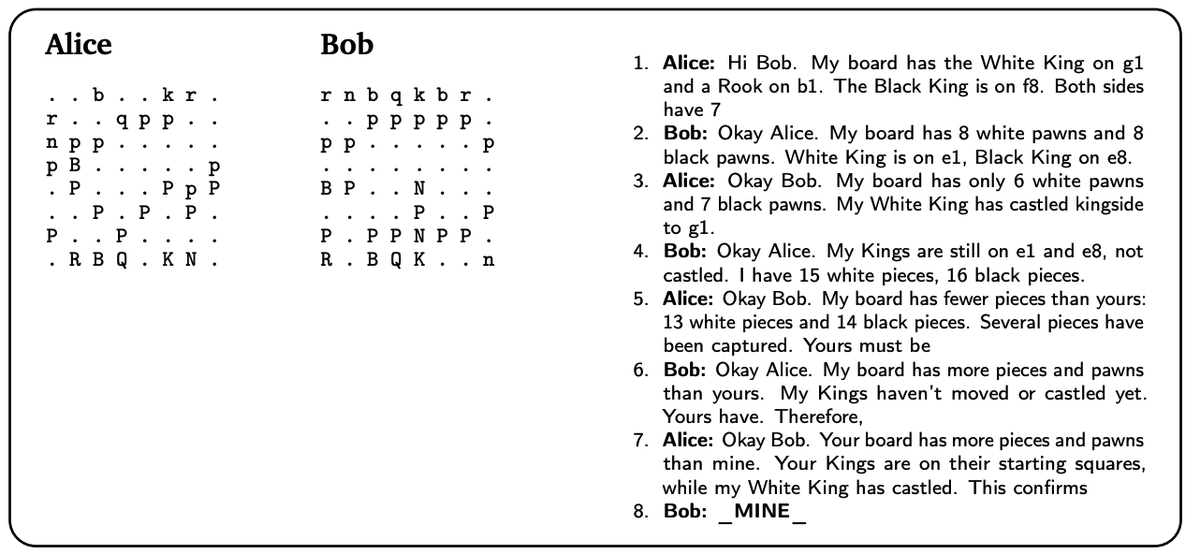
Are AI models effective collaborators, or mere assistants awaiting your next command? (arxiv.org/abs/2602.24188) To find out, we make AI collaborate with itself, in private information games: tasks that require sharing private information, like this chess board ordering task.
Jonathan Berant tweet media
English
3
18
130
18K
Amir More
Amir More@habeanf·
Cerebras and like-for-like acceleration will be a main event in q1 & q2 in AI land. People will be astonished for a few weeks that inference has accelerated 10-15x, then it’ll quickly become the norm. Just think what’ll happen when code generates an order of magnitude faster than humans review. Sandboxes will be mandatory. Code guardrails will be necessary and in high demand.
OpenAI@OpenAI

GPT-5.3-Codex-Spark is now in research preview. You can just build things—faster.

English
0
0
1
103
Amir More retweetledi
Blake Flayton
Blake Flayton@blakeflayton·
It’s a cold and it’s a broken hallelujah.
English
4
23
211
4.7K
Amir More retweetledi
Branko
Branko@brankopetric00·
Database migration on a live system. Tested thoroughly. Rollback plan ready. Migration ran. Took 3 hours instead of 20 minutes. Why? Testing was on a database copy with 1% of production data. The migration touched every row. Meanwhile: - Writes queued up - Application timeouts cascaded - Users experienced 3 hours of degraded service Your test database isn't production. If you're not testing migrations against production-scale data, you're not testing. You're hoping.
English
5
4
32
2.4K
Amir More retweetledi
Addy Osmani
Addy Osmani@addyosmani·
Every time we've made it easier to write software, we've ended up writing exponentially more of it. When high-level languages replaced assembly, programmers didn't write less code - they wrote orders of magnitude more, tackling problems that would have been economically impossible before. When frameworks abstracted away the plumbing, we didn't reduce our output - we built more ambitious applications. When cloud platforms eliminated infrastructure management, we didn't scale back - we spun up services for use cases that never would have justified a server room. @levie recently articulated why this pattern is about to repeat itself at a scale we haven't seen before, using Jevons Paradox as the frame. The argument resonates because it's playing out in real-time in our developer tools. The initial question everyone asks is "will this replace developers?" but just watch what actually happens. Teams that adopt these tools don't always shrink their engineering headcount - they expand their product surface area. The three-person startup that could only maintain one product now maintains four. The enterprise team that could only experiment with two approaches now tries seven. The constraint being removed isn't competence but it's the activation energy required to start something new. Think about that internal tool you've been putting off because "it would take someone two weeks and we can't spare anyone"? Now it takes three hours. That refactoring you've been deferring because the risk/reward math didn't work? The math just changed. This matters because software engineers are uniquely positioned to understand what's coming. We've seen this movie before, just in smaller domains. Every abstraction layer - from assembly to C to Python to frameworks to low-code - followed the same pattern. Each one was supposed to mean we'd need fewer developers. Each one instead enabled us to build more software. Here's the part that deserves more attention imo: the barrier being lowered isn't just about writing code faster. It's about the types of problems that become economically viable to solve with software. Think about all the internal tools that don't exist at your company. Not because no one thought of them, but because the ROI calculation never cleared the bar. The custom dashboard that would make one team 10% more efficient but would take a week to build. The data pipeline that would unlock insights but requires specialized knowledge. The integration that would smooth a workflow but touches three different systems. These aren't failing the cost-benefit analysis because the benefit is low - they're failing because the cost is high. Lower that cost by "10x", and suddenly you have an explosion of viable projects. This is exactly what's happening with AI-assisted development, and it's going to be more dramatic than previous transitions because we're making previously "impossible" work possible. The second-order effects get really interesting when you consider that every new tool creates demand for more tools. When we made it easier to build web applications, we didn't just get more web applications - we got an entire ecosystem of monitoring tools, deployment platforms, debugging tools, and testing frameworks. Each of these spawned their own ecosystems. The compounding effect is nonlinear. Now apply this logic to every domain where we're lowering the barrier to entry. Every new capability unlocked creates demand for supporting capabilities. Every workflow that becomes tractable creates demand for adjacent workflows. The surface area of what's economically viable expands in all directions. For engineers specifically, this changes the calculus of what we choose to work on. Right now, we're trained to be incredibly selective about what we build because our time is the scarce resource. But when the cost of building drops dramatically, the limiting factor becomes imagination, "taste" and judgment, not implementation capacity. The skill shifts from "what can I build given my constraints?" to "what should we build given that constraints have in some ways been evaporated?" The meta-point here is that we keep making the same prediction error. Every time we make something more efficient, we predict it will mean less of that thing. But efficiency improvements don't reduce demand - they reveal latent demand that was previously uneconomic to address. Coal. Computing. Cloud infrastructure. And now, knowledge work. The pattern is so consistent that the burden of proof should shift. Instead of asking "will AI agents reduce the need for human knowledge workers?" we should be asking "what orders of magnitude increase in knowledge work output are we about to see?" For software engineers it's the same transition we've navigated successfully several times already. The developers who thrived weren't the ones who resisted higher-level abstractions; they were the ones who used those abstractions to build more ambitious systems. The same logic applies now, just at a larger scale. The real question is whether we're prepared for a world where the bottleneck shifts from "can we build this?" to "should we build this?" That's a fundamentally different problem space, and it requires fundamentally different skills. We're about to find out what happens when the cost of knowledge work drops by an order of magnitude. History suggests we (perhaps) won't do less work - we'll discover we've been massively under-investing in knowledge work because it was too expensive to do all the things that were actually worth doing. The paradox isn't that efficiency creates abundance. The paradox is that we keep being surprised by it.
Aaron Levie@levie

x.com/i/article/2004…

English
126
617
3.3K
552.9K
Amir More retweetledi
Chris Munns
Chris Munns@chrismunns·
My 12+ years at AWS talking with people at companies of all shapes and sizes give me a hot take on this: Most people just never *need* their app to be performant. Nor to scale well. The average enterprise app is a toy. The broad majority of startup software never truly reaches scale. Perf isn’t even measured. The majority of the industry could still sit on a 3-tier app stack forever w/ n+1 redundancy where n=1.
Dmitrii Kovanikov@ChShersh

It blows my mind to realise that in order to write truly performant software, an engineer needs to have a vast span of knowledge ranging from physics and hardware to high-level abstractions and design patterns. It blows my mind even more how the majority ignores all that.

English
88
187
3K
445.9K
Yuval Pinter
Yuval Pinter@yuvalpi·
@habeanf אה, מהמוזיאון. במיוחד מלגלות שהקולוסוס לא נמצא באותו מקום בגלל איזה סכסוך מטופש
עברית
1
0
0
34
Amir More
Amir More@habeanf·
בזמן חופשה בלונדון החלטתי לבקר את בלצ׳לי פארק - Bletchley Park, המקום בו הבריטים פיצחו צפנים במלחמת העולם השניה. כאילו משום מקום בצבצה לה חנוכייה, אפילו דלוקה. מה קשור חנוכייה? מסתבר שבעיירה הייתה קהילה יהודית, האחוזה והמתחם היו שייכים למשפחה יהודיה, והעובדים היהודים במלחמה היו עושים קבלת שבת כל שבוע. לא צפוי אבל די מרגש ✡️
Amir More tweet mediaAmir More tweet media
עברית
1
0
9
147
Amir More
Amir More@habeanf·
@yuvalpi באמת? נהניתי מאוד. לצערי המוזיאון היה סגור. ממה התאכזבת?
עברית
1
0
0
36
Amir More
Amir More@habeanf·
@guywiener Watching kung fu is easier than doing kung fu 😜
English
0
0
2
197
Guy Wiener
Guy Wiener@guywiener·
אתם בטוחים שקלוד קוד הוא ג׳וניור? כי כשאני מבקש ממנו להסביר חלק מהקוד בריפו גדול ומסובך, או למצוא סיבות אפשריות לבאגים, הוא נותן תשובה שלא היתה מביישת חבר בכיר בצוות
עברית
12
0
78
8.3K