

Tim Disher, PhD
1.5K posts
Tim Disher, PhD
@halifaxtim
Registered Nurse, founding principal at Sandpiper Analytics. Opinions are my own.
Halifax Katılım Mart 2015
338 Takip Edilen376 Takipçiler
Endless debates in the cardio community on X about how much of an increase in C index is enough. Solved by statisticians nearly 20 years ago & is in standard guidelines, including AHA ahajournals.org/doi/10.1161/ & STRATOS pubmed.ncbi.nlm.nih.gov/41391983/
John Mandrola, MD@drjohnm
Appreciate the effort but in the clinic I’m not sure an AUC of 0.76 vs 0.70 translates to anything helpful for INDIVIDUAL decisions Not a criticism of the study; instead it’s yet another reminder that Yogi Berra was correct: Prediction is hard especially about the future
English
@5_utr @f2harrell @raj_mehta @RWJE_BA @doc_BLocke @PatientStormDoc Hadn't seen this before is it a well known phenomenon? I work in HTA and there is a pressure to fit big saturated interaction models in NMAs despite weak evidence of effect modification. Would love to have another arrow in the quiver to push back
English

@raj_mehta @RWJE_BA @f2harrell @doc_BLocke @PatientStormDoc Also a point lost on many “Personalized Medicine” proponents is if interaction effect is not large, personalizing treatment based on some covariate biomarker results in greater absolute loss than assuming ATE applies to everyone

English

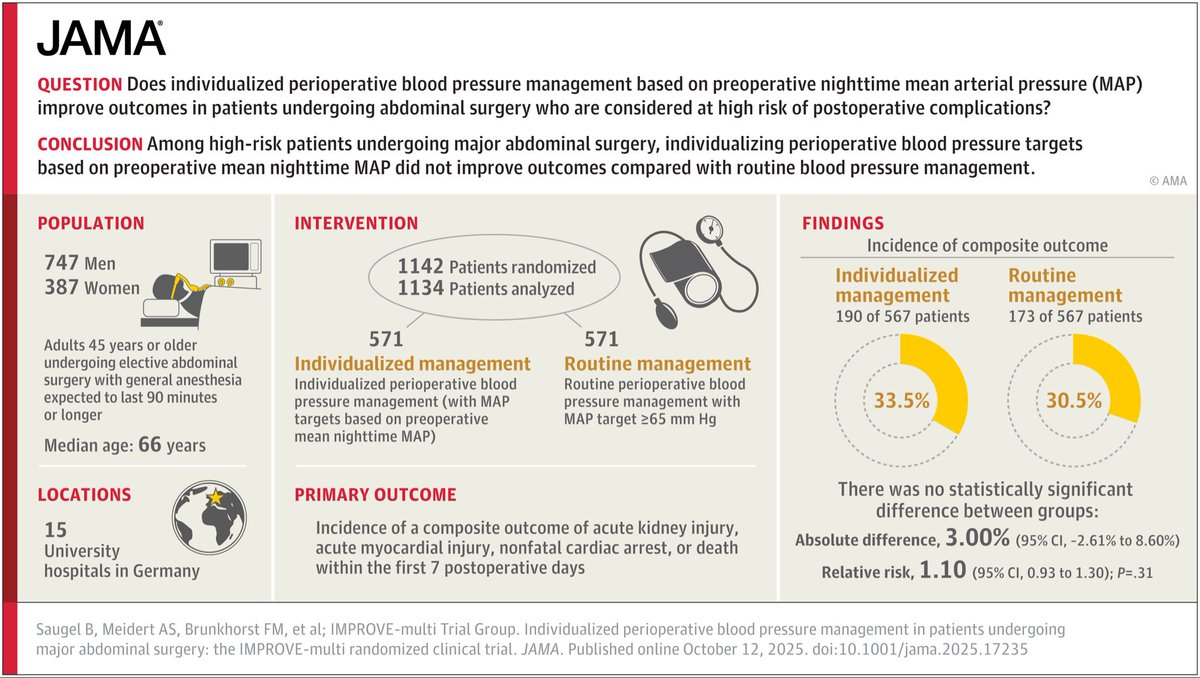
Prediction: we’re about to enter a period of many negative “individualized treatment strategy” RCTs, because:
1. The need for “individualized treatment” is an appealing idea, so we want to believe its true in excess of the evidence supporting that it actually is true
2. Existing evidence of HTE is generally weak, because it usually misattributes the sources of variation (see citation below)
3. Even when there is latent HTE, our theories that guide individualized strategies are rudimentary and unreliable. We choose a rule so simplistic - so as to be operationalizable - that it has little chance of actually selecting people with atypical responses.
English
@VickersBiostats Always love following your work and eager to learn about any specific pearls in urology that might apply elsewhere. Can you a share a non-paywalled version?
English
This is big! Worked with great statisticians on guidelines for meta-analysis & systematic review. We discuss rationales for systematic review, evaluation & interpretation of heterogeneity, & common errors in network meta-analysis, funnel plots etc. europeanurology.com/article/S0302-…
English
@PH_OSINT @nsgov @HikeNovaScotia Update here my NL trip to back country (long range) ended up going ahead despite fires here 3x size of anything in NS right, regional state of emergency, SAR strain etc... I think it adds some evidence that balance of risks is less certain than being presented in NS atm imo
English

@halifaxtim @nsgov @HikeNovaScotia Personally, I would guess that they don’t have the resources to do routine calls related to trail/back country injuries… that would be my higher probability concern.
The same people cover those services, often as volunteers who pay for their own training and equipment.
English
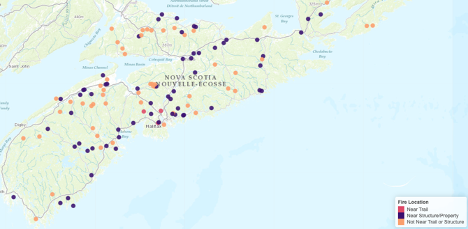
NS banned hiking & cycling in woods over wildfire risk, but only 2.4% of 2025 fires started on trails. I analyzed 124 fires to test this ban. The burn ban? Checks out. Closing the woods? Not so much. 🧵@nsgov @HikeNovaScotia
English
@PH_OSINT @nsgov @HikeNovaScotia That is a lot different than most of the active transportation corridors that happen to travel through a wooded section, salt marsh trail, etc. The blanket ban is what makes the least sense to me.
English
@PH_OSINT @nsgov @HikeNovaScotia I had a hike on LRT in Gros Morne planned for this week that is going to be cancelled but that seems reasonable to me because of activation of military and strained resources for doing truly remote rescues.
English
@PH_OSINT @nsgov @HikeNovaScotia Understand safest option is to remove all sources/strains on resources but I think they made a move on the lowest risk while keeping a lot of higher risk activities so it seems like they accept the need for some risk but didn't really follow the data as far as I can see
English
@PH_OSINT @nsgov @HikeNovaScotia Agree it's a shame they decided to roll the dice on limited new investment but hopefully they are getting the message that this is new normal. We might have to agree to disagree that banning hiking/cycling really do anything to help with this.
English
@PH_OSINT @nsgov @HikeNovaScotia I think there is a risk gov is taking an easy route to show they are taking conditions seriously, while avoiding more legitimate causes. Basically everywhere I drive in Nova Scotia is indistinguishable from a trail in the woods so it feels like "we has to do something"
English
@PH_OSINT @nsgov @HikeNovaScotia Also falls short imo since the emphasis from gov has been on fire risk initially with some minimal talk of potential need for rescue. Even then, I think they have to demonstrate that they've actually weighed options and determined its a legitimate restriction.
English
@PH_OSINT @CBCNS @CCF_CANADA They list human/NA but its unclear whether the NA means non human or just no info. Gov has been resistant re: causes in pressers (we will look into causes after the emergency is over).
English
@halifaxtim @CBCNS @CCF_CANADA These should all have a basic investigation to specific cause… can you put in for an info request..?
I’d be curious on how that would be categorized and differences in different regions… then triangulate - I could see this being more effective in specific areas..? 🤔
English
I think the most controversial decision on this map might be whether the ongoing Susies lake fire counts as on trail since there is a trail in the area. I have it marked it as structure/property for now since my understanding is that it's not related to the hiking trails
English
Check my map, see the data, check my decisions/math, share your take! ➡️timdisher.github.io/nsfires/ #NovaScotia
English