Hari Seshasayee

6.6K posts

Hari Seshasayee

Hari Seshasayee

@haricito

Co-founder, Consilium Group - https://t.co/3ZwxTAP91J Visiting Fellow @ORFonline India, Latin America, foreign policy, energy [email protected]

Panama City, Panama Katılım Ağustos 2010
488 Takip Edilen1K Takipçiler
Hari Seshasayee retweetledi

AFP News Agency
#BREAKING Indonesia announces fuel rationing, orders civil servants to work from home one day a week, amid price hikes due to Mideast war
AFP News Agency tweet media
English
10
749
1.1K
256.4K
Hari Seshasayee retweetledi
Orlando J. Pérez
Orlando J. Pérez@Perez1oj·
#Chile | @joseantoniokast has suffered one of the steepest declines in job approval in the history of Latin America! He's been in office for just 2 1/2 weeks and is already underwater! It seems the idea of a right-wing president is a lot more appealing than the reality! Maybe, hear me out, this remarkable right-wing swing some have touted is just a pendulum moving against unpopular leftist incumbents, & it will inevitably move again! 🤷‍♂️
World Elects@ElectsWorld

🇨🇱#Chile, President Kast (PLR) approval rating poll: ⏬Approve: 34,7 % (-12,8) ⏫Disapprove: 48,7 % (+22,4) Activa Research, 27/03/26

English
1
12
40
6.2K
Hari Seshasayee retweetledi
Benjamin Alvarez
Benjamin Alvarez@BenjAlvarez1·
"We believe that [Michelle] Bachelet is the ideal person to lead the United Nations," Mexican President Claudia Sheinbaum said. Mexico will continue supporting the former Chilean president's candidacy for UN Secretary-General after the new Chilean government withdrew its support.
English
30
545
1.9K
38.5K
Hari Seshasayee retweetledi
Jorge Heine
Jorge Heine@jorgeheinel·
INCREIBLE PERO CIERTO : Gobierno de Kast retira apoyo de Chile a candidatura de @mbachelet a secretaria general de la ONU, y le abre el paso al candidato de Argentina. Una decision "patriotica" para "hacerle la pata" a Javier Milei. Un gran estreno diplomatico ! @sebastian_gray
Jorge Heine tweet media
Español
256
820
1.3K
28.3K
Hari Seshasayee retweetledi
Adil Haque
Adil Haque@AdHaque110·
“They say that Spain is alone. They said the same when we recognized the State of Palestine, and then others followed. We are not alone. We are the first. Those defending the indefensible will be the ones left alone.” (Sánchez, March 9)
POLITICOEurope@POLITICOEurope

Spanish Prime Minister Pedro Sánchez’s condemnation of the U.S. and Israel’s attack on Iran initially made him an outlier in Europe. Now everyone wants in. politico.eu/article/spain-…

English
76
3.1K
18.3K
658K
Hari Seshasayee retweetledi
Marcelo Mena-Carrasco 🚲♻️ 🇨🇱
Mientras el mundo debate cómo absorber el shock del petróleo por la guerra en Medio Oriente, Santiago ya tiene 4.400 buses que no sienten el alza. El 68% de la flota RED Movilidad es eléctrica. Eso son 352 millones de kilómetros anuales completamente desindexados del precio del crudo. A 1,8 km/litro de rendimiento real en urbano y 80.000 km/año por bus, la flota eléctrica evita 195 millones de litros de diésel al año. Al precio actual, con el shock de Irán, eso equivale a más de US$200 millones anuales que no se incorporan al precio del petróleo. Más de US$500.000 al día. Pero el número puntual no es lo más importante. Lo más importante es la estructura del costo. Los contratos de buses diésel tienen indexación al precio del combustible. Cuando el petróleo sube 34% como esta semana, el subsidio estatal al sistema sube automáticamente. Los buses eléctricos no. Su costo energético está anclado en contratos de largo plazo con generadoras de energía renovable. El shock de Irán no les llega. Chile tomó esta decisión en 2017, antes de que nadie supiera que el Estrecho de Hormuz iba a estar en jaque. Lo hizo por calidad de aire y equidad territorial. Pero resultó ser también la mejor política de seguridad energética del transporte público que pudo haber tomado. Continuó porque hacía sentido para los que siguieron. Piñera se mandó el salto, y luego Boric lo aceleró. Hoy, cuando el gobierno debate si puede sostener el MEPCO con el alza del petróleo, los 4.400 e-buses de Santiago son un escudo fiscal estructural e invisible. Cada bus diésel que se reemplaza por eléctrico es exposición permanentemente eliminada al precio del crudo. La próxima vez que alguien pregunte si la electromovilidad en el transporte público vale la pena, muéstrenle esta semana. Y si se lo pregunta en la Alameda, con 60% menos ruido va a poder responder porque se escucha. Fuentes: DTPM 2° Informe Electromovilidad 2025 · ISCI datos reales RED · UTM marzo 2026
Marcelo Mena-Carrasco 🚲♻️ 🇨🇱 tweet media
Español
204
2.5K
6K
174.1K
Hari Seshasayee retweetledi
60 Minutes
60 Minutes@60Minutes·
Former White House energy adviser Bob McNally says there are no policy solutions to address rising gas prices if the Strait of Hormuz remains closed. cbsn.ws/47uHfgI
English
67
361
1K
205.1K
Hari Seshasayee retweetledi
Juan Forero
Juan Forero@WSJForero·
Moshiri told @WSJ he shared his skepticism of the opposition with Washington. “Venezuelan opposition believes that we want to build from the bottom up, that we need to get rid of all this,” Moshiri said. “And that’s the model of Afghanistan and Iraq.” wsj.com/world/americas…
English
6
23
34
21.3K
Hari Seshasayee retweetledi
Jorge Heine
Jorge Heine@jorgeheinel·
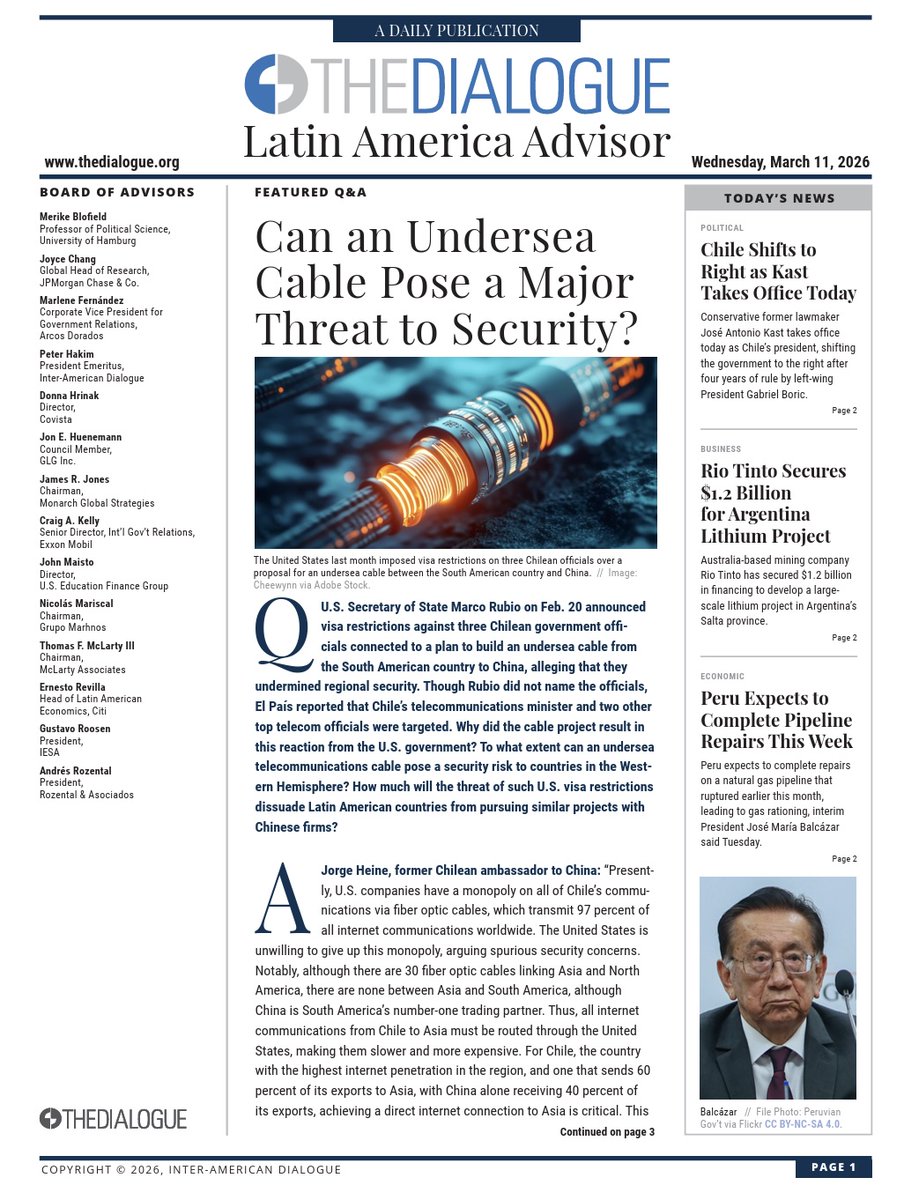
Puede la conexion digital directa de Chile con Asia constituir una amenaza mayor a la seguridad regional ? Mi respuesta en el Latin America Advisor, de @The_Dialogue . @huichalaf tinyurl.com/tm642v2p
Jorge Heine tweet media
Español
3
34
53
1.3K
Hari Seshasayee retweetledi
Jorge Heine
Jorge Heine@jorgeheinel·
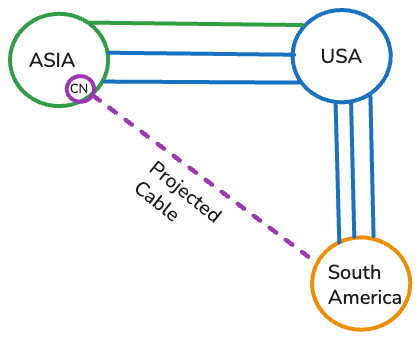
Why is the Trump administration bent on blocking a fiber optic cable from Valparaiso to Hong Kong ? Our piece in Tech Policy Press with @juanof9 on the real reasons for this opposition to a direct digital connection South America-Asia. @BUPardeeSchool tinyurl.com/4zvs2avt
Jorge Heine tweet media
English
8
222
442
10.7K
Hari Seshasayee retweetledi
Christiane Amanpour
Christiane Amanpour@amanpour·
What is President Trump’s Iran exit strategy? His fmr. envoy Elliott Abrams says “either there is some kind of an uprising against the regime or in probably a week or two, the president will call it off” and say they’ve hit all they need to. The latter, he thinks, is more likely.
English
66
155
547
110.8K
Hari Seshasayee retweetledi
Shanaka Anslem Perera ⚡
Shanaka Anslem Perera ⚡@shanaka86·
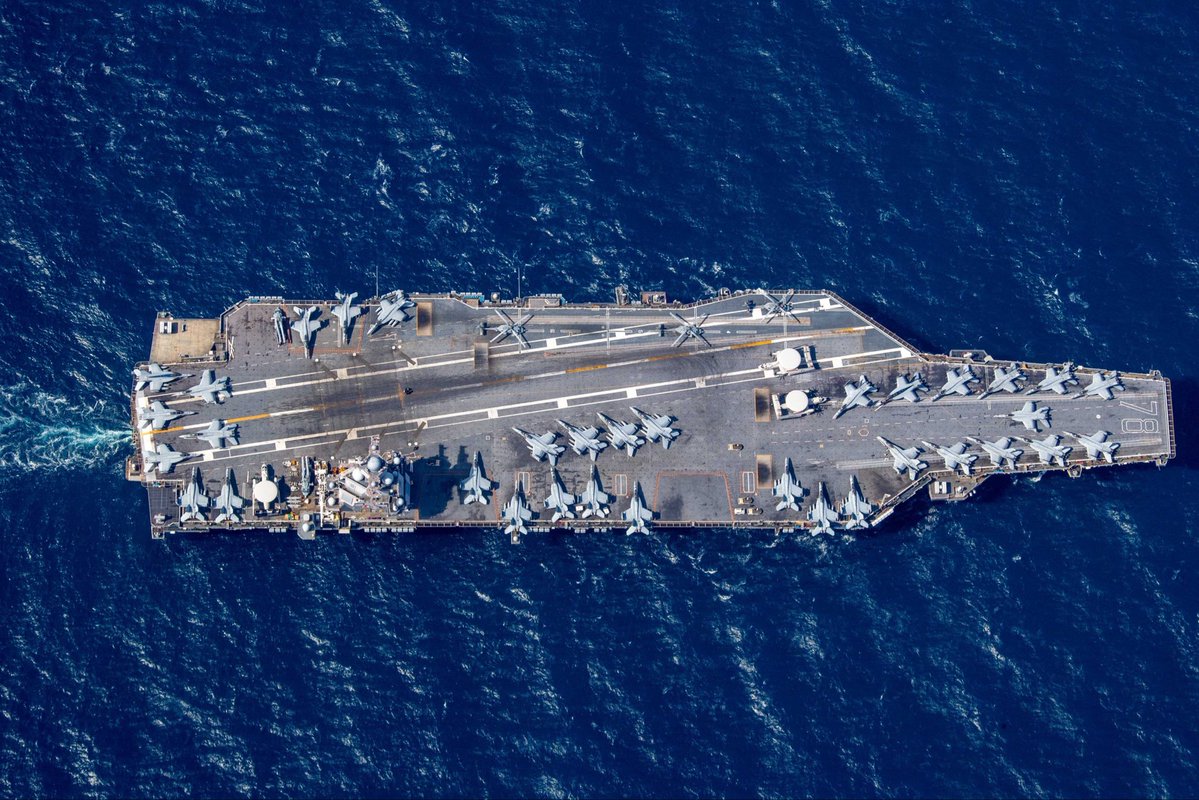
JUST IN: The most powerful navy in human history just admitted it cannot safely escort a single oil tanker through a 33-kilometre strait. Reuters reported on 10 March that the US Navy has refused near-daily requests from the oil and shipping industries for military escorts through the Strait of Hormuz since Operation Epic Fury began on 28 February, citing the risk of Iranian attack as too high. Not once. Not occasionally. Near-daily. Every day for eleven days, the shipping industry has asked the US Navy for help, and every day the answer has been no. Consider what is deployed in the region. The USS Abraham Lincoln carrier strike group operates in the Arabian Sea. The USS Gerald R. Ford is in the Red Sea. The USS George H.W. Bush is en route or preparing for deployment. Three nuclear-powered supercarriers, each displacing 100,000 tons, carrying 75 aircraft, escorted by Aegis cruisers and guided-missile destroyers with the most advanced radar and missile defence systems ever built. France deployed the Charles de Gaulle carrier group to the Eastern Mediterranean and Red Sea. Britain sent HMS Dragon, a Type 45 air-defence destroyer, to defend RAF Akrotiri in Cyprus. Combined allied naval firepower in theatre exceeds the total military capacity of most nations on Earth. None of it can get a tanker through Hormuz. The strait is 33 kilometres wide at its narrowest point. Navigable shipping lanes compress to approximately 3 kilometres in each direction. Through this corridor, 138 tankers per day transited before the war. The corridor is now defended by 31 autonomous IRGC provincial commands with independent firing authority, pre-delegated orders from a dead Supreme Leader, coastal anti-ship cruise missiles, kamikaze drones, fast-attack boats, and a mine stockpile of 2,000 to 6,000 weapons, of which a few dozen are confirmed in the water with 80 to 90% of delivery platforms intact. The US Navy’s refusal is not cowardice. It is arithmetic. A carrier strike group is designed for blue-water power projection, not littoral escort through a corridor where a $500 contact mine can cripple a $4 billion destroyer. An Aegis cruiser’s radar can track hundreds of targets at 400 kilometres but cannot detect a mine sitting three metres below the surface. An F-35 can deliver precision strikes at Mach 1.6 but cannot sweep a shipping lane. The assets are wrong for the mission. The world’s most expensive hammer has been asked to thread a needle. Trump told CBS escorts would begin “as soon as possible” and “when reasonable.” His Energy Secretary posted that an escorted transit had already occurred, then deleted it when the White House confirmed none had. Iran’s Parliament Speaker mocked the claim as PlayStation. The IEA proposed the largest reserve release in history because the strait the Navy cannot escort through remains functionally closed. Ghalibaf was not wrong. The escorts do not exist. Not because America lacks the will. Because the Mosaic Doctrine created a threat environment where the cost of escort failure exceeds the cost of escort refusal. One mine striking one escorted tanker would produce a casualty event, an insurance catastrophe, and a strategic humiliation that three carrier strike groups cannot absorb. The Navy is not refusing to help. It is refusing to lose. Seven hundred tankers wait. Three carriers watch. And the 33-kilometre corridor between them remains the most expensive gap in the world. Full analysis here. open.substack.com/pub/shanakaans…
Shanaka Anslem Perera ⚡ tweet media
Shanaka Anslem Perera ⚡@shanaka86

The USS Gerald R. Ford is not parked near Iran. It is parked off Israel. And nobody is asking the only question that matters: why. The $13.3 billion crown jewel of the US Navy, the largest warship ever constructed, just positioned itself off Haifa. Not in the Arabian Sea where the Lincoln sits 850 kilometers from Iranian shores loaded for offensive operations. Not in the Gulf where strike range is optimal. Off Israel. Defending Israel. This is not redundancy. This is architecture. Two carriers. Two missions. Two entirely different strategic functions. The Lincoln is the sword, positioned to launch strike packages into Iranian airspace within hours of an order. The Ford is the shield, its Aegis missile defense systems creating an umbrella over Israeli population centers against the retaliation that follows the first Tomahawk. America just split its carrier doctrine into offense and defense simultaneously. That has not happened since the Pacific theater in 1945. But the positioning reveals something deeper than tactics. When Iran retaliates, and every wargame says Iran retaliates, its missiles and drones fly toward Israel. They will fly through the same airspace where a US carrier strike group is now stationed. Every Iranian missile aimed at Tel Aviv or Haifa must traverse the Ford’s defensive envelope. Shooting at Israel means shooting at, around, and through an American carrier group. Iran cannot retaliate against Israel without engaging American naval assets. The Ford’s position makes that physically impossible. The carrier is not defending Israel as a favor. It is positioned so that any Iranian response to American strikes automatically becomes an attack on American forces, triggering the full unrestrained weight of US military response without a single additional political decision required. This is escalation insurance written in steel and seawater. If the campaign goes longer than planned, if munitions run thin in 7 to 10 days, if allies hesitate, the Ford’s position ensures that Iranian retaliation does the political work Washington cannot do alone: it transforms a limited American strike into an act of self-defense that no ally can refuse to support. You do not park a $13.3 billion carrier where the enemy’s return fire will hit it unless you want the enemy’s return fire to hit it. The Ford is not there to prevent escalation. The Ford is there to guarantee that if escalation comes, it comes on terms that make American restraint politically impossible and allied participation politically unavoidable.​​​​​​​​​​​​​​​​ open.substack.com/pub/shanakaans…

English
473
3.5K
7.5K
1.7M
Hari Seshasayee retweetledi
Chris Murphy 🟧
Chris Murphy 🟧@ChrisMurphyCT·
I was in a 2 hour briefing today on the Iran War. All the briefings are closed, because Trump can't defend this war in public. I obviously can't disclose classified info, but you deserve to know how incoherent and incomplete these war plans are. 1/ Here's what I can share:
English
4.4K
18.9K
92.6K
12.1M
Hari Seshasayee retweetledi
Financial Times
Financial Times@FT·
Latin America’s lithium triangle is now in the hands of the right ft.trib.al/GeAtpQB | opinion
English
11
128
325
48K
Hari Seshasayee retweetledi
Jeremy Loffredo
Jeremy Loffredo@loffredojeremy·
Trump spoke to CNN’s Dana Bash on the phone and told her that liberating the Iranian people is not a goal of the war. Trump said he’d be happy to install an undemocratic religious leader so long as they treat the U.S. and Israel “fairly”
English
266
1.8K
4.4K
713.2K