
Harsha Kumara
1.7K posts


Harsha Kumara
@harsz89
PhD Student at La Trobe University. Interested in Data Science, AI in Cybersecurity, Machine(Deep) Learning, APIs, Kubernetes, & Containers Ex-@WSO2 #APIManager
Melbourne, Australia Katılım Kasım 2011
1.1K Takip Edilen540 Takipçiler
Harsha Kumara retweetledi

Gemma 4 can run on phones without an internet connection! 🤯
It can perform local agentic tasks, such as logging and analyzing trends. When connected, it can also make API calls.
Want to try it yourself? Get the Google AI Edge App on iOS or Android. (🔊 Sound on for the demo!)
English
Harsha Kumara retweetledi

Introducing Critique, a new multi-model deep research system in M365 Copilot.
You can use multiple models together to generate optimal responses and reports.
English
Harsha Kumara retweetledi

"Do not learn to code" is the worst career advice of the decade.
People are telling college students to skip Computer Science because AI will just automate it all. Andrew Ng just killed this myth at Stanford with a brilliant analogy.
When he tried to generate images with Midjourney, he typed: "make pretty pictures of robots" and got garbage.
His collaborator, however, understood Art History. He knew the exact vocabulary of lighting, genre, and palette. He spoke the "language of art," and generated masterpieces.
Andrew Ng is seeing the exact same thing happen in software engineering right now.
AI didn't replace the need to understand Computer Science. It made Computer Science the required vocabulary to control the AI.
If you don't understand how computers actually work, you are just typing "make a pretty app" into Cursor and shipping fragile, unscalable logic.
Here is Andrew Ng's exact hiring hierarchy today:
Level 1: 10 years of experience, but codes by hand (He won't hire them).
Level 2: Fresh college grad, but highly fluent in AI-assisted coding (He hires them over the 10-year veteran).
Level 3 (God Tier): Deeply understands CS fundamentals AND uses AI-assisted coding.
When humanity went from punch cards to keyboards, coding got easier, and more people coded. We are at that exact inflection point again.
AI doesn't replace fundamentals. It multiplies them.

English
Harsha Kumara retweetledi

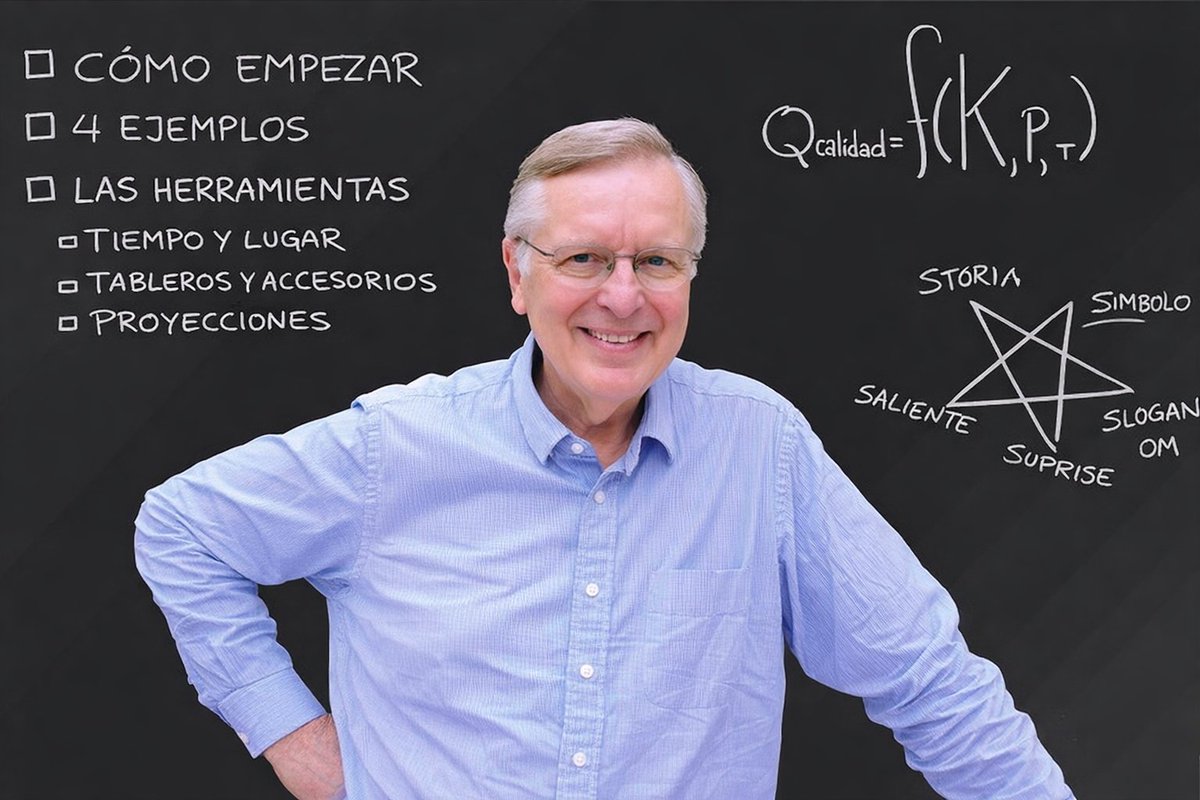
Un profesor del MIT dio la misma conferencia cada enero durante 40 años, y cada una de las veces no cabía ni un alma en el aula.
La vi a las 2 de la mañana y cambió por completo mi forma de entender la comunicación.
Su nombre era Patrick Winston. La conferencia se titula "Cómo hablar" (How to Speak).
Su frase de apertura te golpea como un camión: "Tu éxito en la vida vendrá determinado en gran medida por tu capacidad para hablar, tu capacidad para escribir y la calidad de tus ideas, en ese orden".
Ni tu nota media, ni tus títulos, ni tu coeficiente intelectual. Cómo hablas es lo que separa a las personas que son escuchadas de las que son ignoradas.
Este es el esquema que inculcó a los estudiantes del MIT durante cuatro décadas:
1) Nunca empieces con un chiste: Empieza diciendo a la gente exactamente qué es lo que va a aprender. "Prepara la bomba antes de verter nada". Él lo llamaba la "promesa de empoderamiento": dales una razón para no levantarse del asiento en los primeros 60 segundos.
2) La regla de las 5S: Para que una idea se quede grabada debe ser: Símbolo, Slogan, Sorpresa, Saliente (relevante) e Historia (Story). Cualquier idea que valga la pena recordar cumple al menos tres de estas.
3) La técnica del "casi acierto" (Near Miss): Esta parte me dejó alucinado. No te limites a mostrar lo que está bien; muestra lo que parece estar bien pero no lo está. Ese contraste es lo que hace que el cerebro registre algo de forma permanente.
4) Su regla final: Termina con una contribución, no con un resumen. No recapitules lo que ya dijiste. Dile a la gente qué les has dado que no tenían antes de entrar por la puerta.
He usado este esquema en ventas, entrevistas y presentaciones desde que lo vi, y los resultados no son sutiles.
Patrick Winston falleció en 2019, pero esta clase sigue siendo gratuita en el OpenCourseWare del MIT. Una hora, vista por millones de personas, y no cuesta absolutamente nada.
Video: "How to Speak", Patrick Winston, MIT OpenCourseWare, RES.TLL-005, January IAP 2018.
Fuente: MIT OpenCourseWare.
Licencia: CC BY-NC-SA.
Términos: ocw. mit. edu/ terms
Español
Harsha Kumara retweetledi

In 2019, MIT professor Patrick Winston gave a legendary 1-hour lecture called “How to Speak.”
It has 18M+ views for a reason.
His frameworks:
• Your ideas are like your children
• The 5-minute rule for job talks
• Why jokes fail at the start
15 lessons on communication:
English
Harsha Kumara retweetledi

Harsha Kumara retweetledi

Introducing the new @stitchbygoogle, Google’s vibe design platform that transforms natural language into high-fidelity designs in one seamless flow.
🎨Create with a smarter design agent: Describe a new business concept or app vision and see it take shape on an AI-native canvas.
⚡️ Iterate quickly: Stitch screens together into interactive prototypes and manage your brand with a portable design system.
🎤 Collaborate with voice: Use hands-free voice interactions to update layouts and explore new variations in real-time.
Try it now (Age 18+ only. Currently available in English and in countries where Gemini is supported.) → stitch.withgoogle.com
English
Harsha Kumara retweetledi

Meet the new Stitch, your vibe design partner.
Here are 5 major upgrades to help you create, iterate and collaborate:
🎨 AI-Native Canvas
🧠 Smarter Design Agent
🎙️ Voice
⚡️ Instant Prototypes
📐 Design Systems and DESIGN.md
Rolling out now. Details and product walkthrough video in 🧵
English
Harsha Kumara retweetledi


Harsha Kumara retweetledi

🚨 7 HOURS AGO ANDREJ KARPATHY just dropped something UNCOMFORTABLE TO WATCH.
He gave a score to every job in America on AI replacement risk.
Software developers: 8-9
Paralegals: 8-9
Medical transcriptionists: 10
Think about YOUR job for 3 seconds. Here's what you must know👇
English
Harsha Kumara retweetledi

We’re bringing new capabilities powered by Gemini models to @googlemaps.
With Ask Maps, get answers to complex questions about any place you want. For example it can help with complex requests like "Find me the best 3-hour family hikes in the Grand Tetons and a spot for a packed lunch”. Will try this next time I'm there:)
Rolling out now in the US and India.
English
Harsha Kumara retweetledi

Introducing Cinematic Video Overviews, the next evolution of the NotebookLM Studio. Unlike standard templates, these are powered by a novel combination of our most advanced models to create bespoke, immersive videos from your sources.
Rolling out now for Ultra users in English!
English
Harsha Kumara retweetledi
Custom styles for Infographics are rolling out TODAY!
With 10 (!) preset options and the ability to create your own, choose from editorial, clay, brick, fan favorite kawaii 😻, and more! Turn your complex source material into beautiful, easy-to-read visuals with a single click.
English