

Rob Kaminski
610 posts

Rob Kaminski
@heyrobk
Co-founder of FletchPMM | Positioning and messaging for early-stage B2B startups.
Austin, TX Katılım Eylül 2019
130 Takip Edilen339 Takipçiler


You wouldn’t believe how many startup founders REFUSE to position their product.
😵💫 And I’m running out of ways to explain this concept:
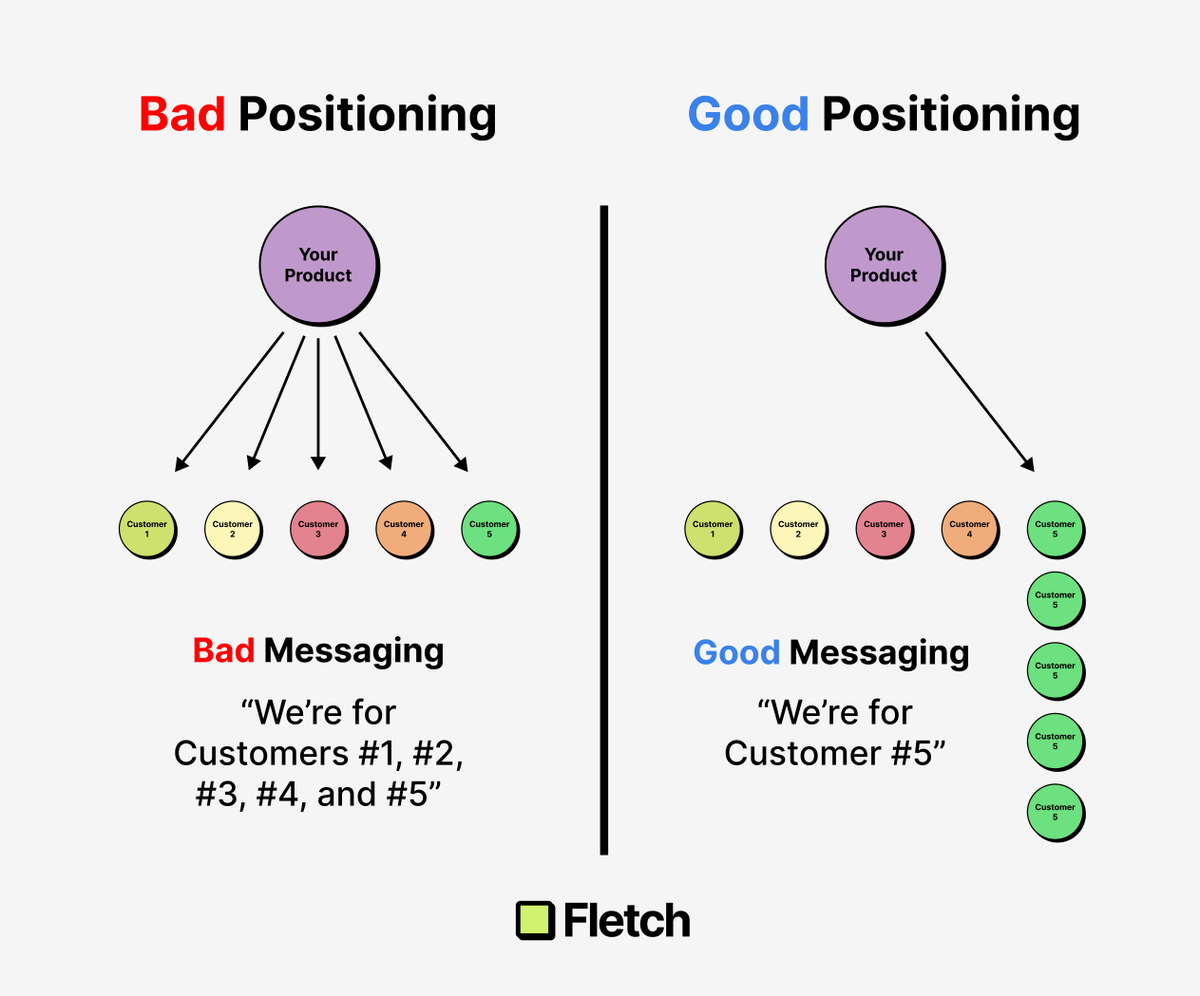
🎯 You must choose who you are for!
And “partially choosing” (ie. not being very specific)… is the same as not choosing.
The most common excuses I hear for this behavior:
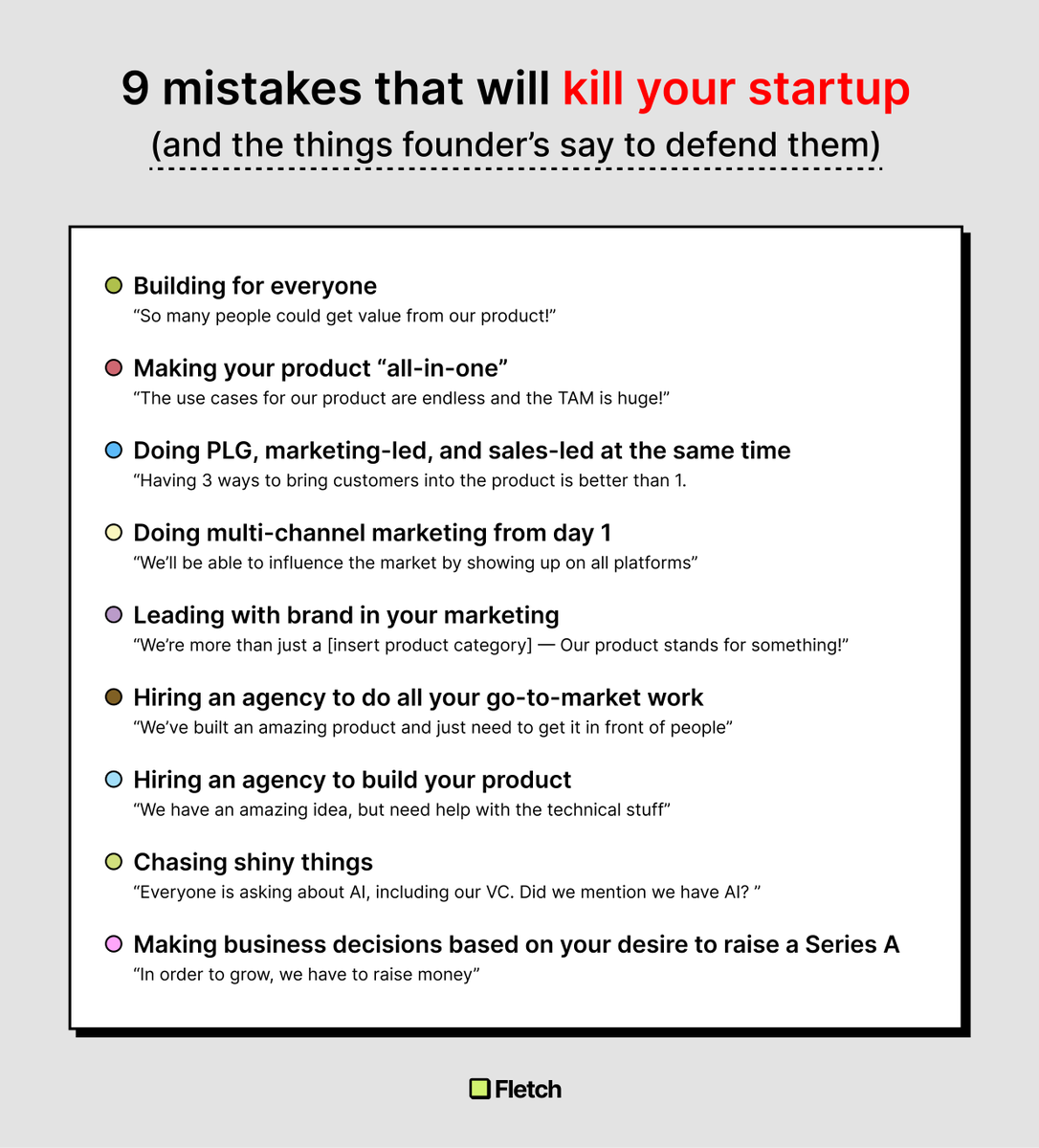
💢 “We’re trying to go after a bigger market”
💢 “Our product can actually be a good fit for a lot of markets.”
💢 “We’re worried that the market is too small to focus on just one group.”
When I hear these, I already know the startup is going to struggle to grow.
So for the love of growth, please please please…
🚀 Make a decision of who you’re for — and go build a name for yourself serving that group.
And after you do that, THEN you can talk about going after bigger markets.
English


What makes up a strong value proposition?
And how do you craft them?
These questions have driven @apierriPMM and I to spend the last two years building the FletchPMM value proposition framework — while testing it with 150+ B2B startups.
What we’ve uncovered is that good value propositions are clear arguments.
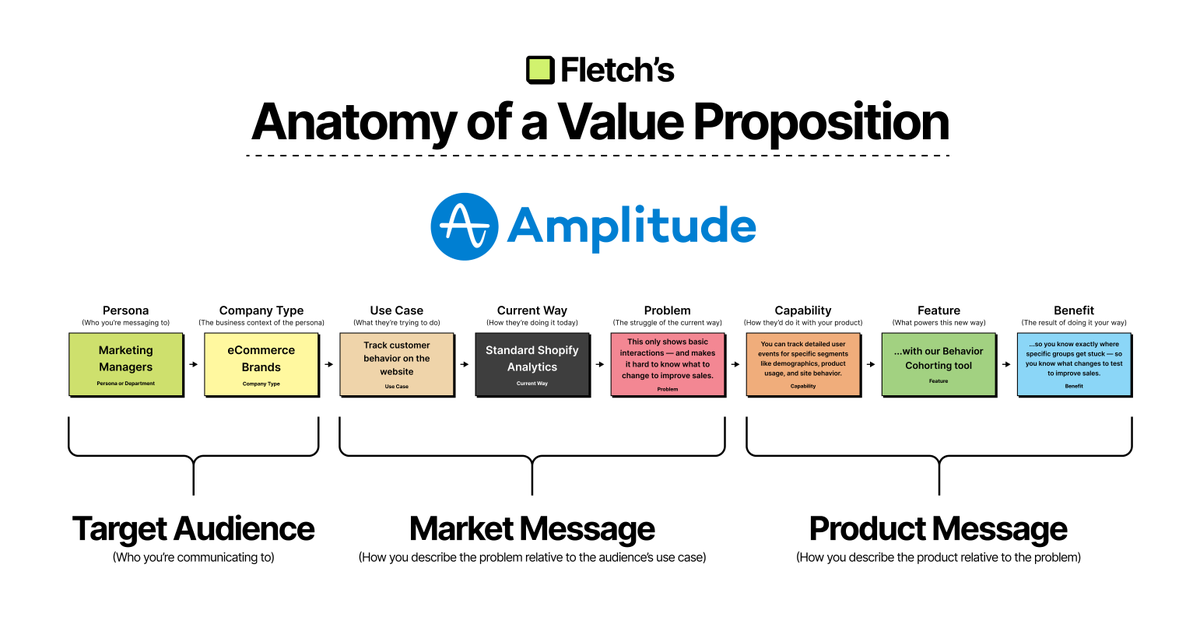
And to deliver a clear argument, you MUST align three things.
🟨 The Target Audience
(Who you’re trying to influence with the value prop)
🟥 The Market Message
(How you describe the problem the audience currently has — rooted in a use case they’re trying to address)
🟧 The Product Message
(How you explain your product relative to the use case and problem)
Getting these three things aligned connects what an audience currently understands to the new thing they don’t yet understand.
And it’s this connection that drives the clarity of the argument.
———
Check out the example for @Amplitude_HQ (see image).
It highlights a possible value proposition for a marketing manager at an eCommerce company.
*Take note of the alignment of all the elements.
Using the framework, you’ll find that when you change one element, the other elements change with it.
The key is to tune each element until you get a completely aligned message from end to end.
#valueproposition #productmarketing #messaging
English
You can’t differentiate on features alone.
Why?
🛑 Because every product category will eventually have the same features and functionality.
(And the time to feature parody is now shorter than ever thanks to widespread access to low-cost software development)
Take @Microsoft , @discord , and @SlackHQ as an example.
They all basically have the SAME product:
A communication tool with:
- Threads
- Channels
- Video Chat
- Reactions
There is no differentiation for these companies' marketing on these features alone.
Their true differentiation comes from WHO they target with these features.
And when you get specific on the target audience…
⚡️ Suddenly, the nuances of these generic features become differentiated.
Slack’s channels and threads suddenly have a specific purpose in B2B tech companies — a place for each team and project to get their own place to share information asynchronously.
Discord’s channels and threads suddenly have a specific purpose for gaming groups — a very engaging way to hang out with fellow gamers while they play.
Team’s channels and threads suddenly have a very specific purpose for Microsoft Office Users — a way to embed office365 files into their communication workflows.
———
The takeaway for marketing products with similar features as your competitors?
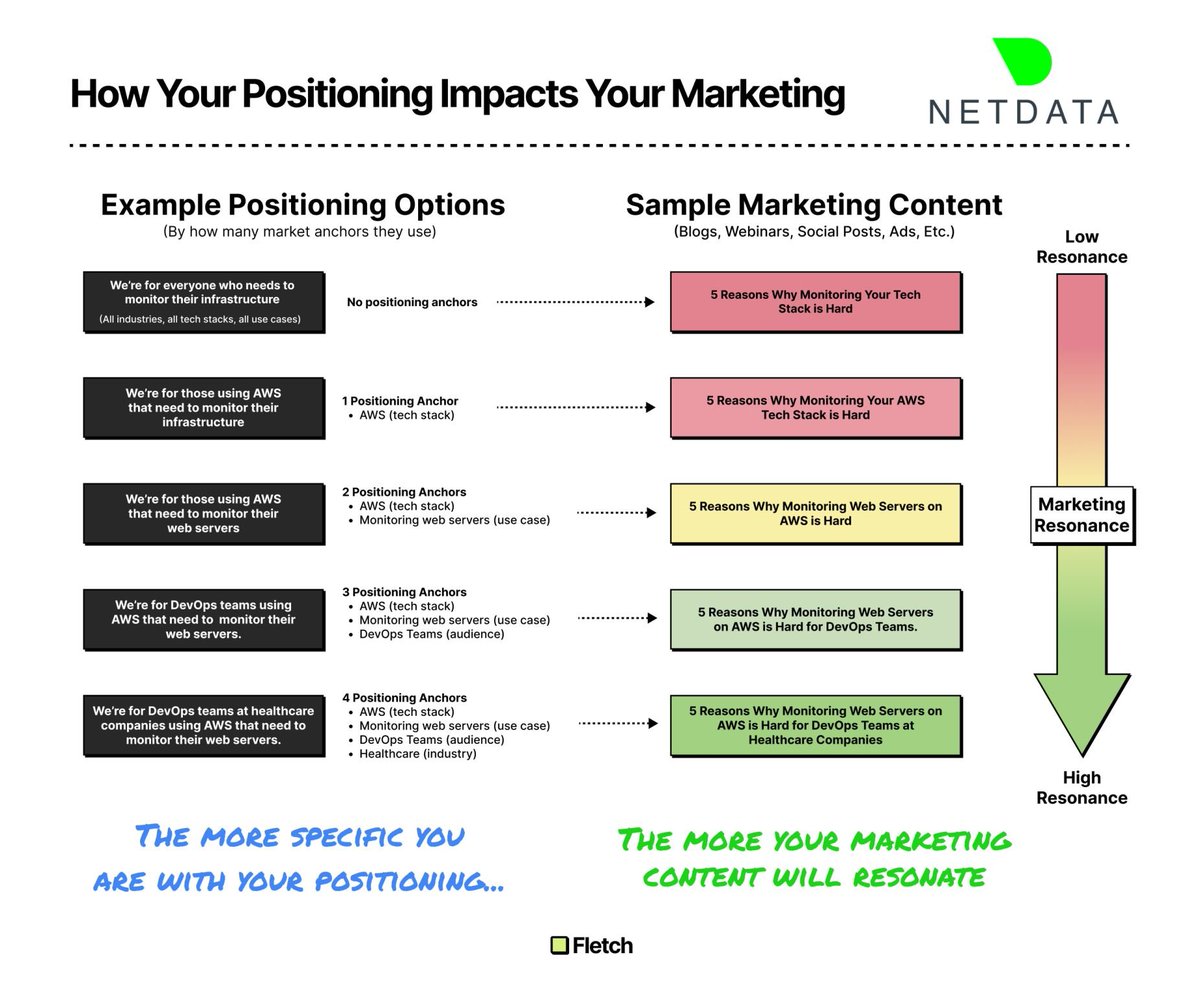
It doesn't matter how cool your features are if you don’t have a clear sense of the WHO.
You’ll never be able to make them seem cool to EVERYONE.
And when you’re facing incumbents with large customer bases and name recognition.
You MUST niche down to find a differentiated message.
#positioning #product #marketing #messaging

English
Good product positioning has two main objectives:
1️⃣ Get an ideal prospect to understand what they’d do with your product.
2️⃣ Get an ideal prospect to understand the unique value you provide.
Two things are standing in the way of startups hitting these objectives:
💢 Your true value and use case(s) might take 15 minutes to explain fully.
💢 Prospects usually won’t give you more than 60 seconds to explain it.
And therein lies the rub.
This attention gap is where early-stage founders and marketers struggle.
So, how do you solve this attention gap?
By using positioning anchors. ⚓️
These anchors act as reference points to articulating your use cases and value.
Think of them as shortcuts for explaining your product.
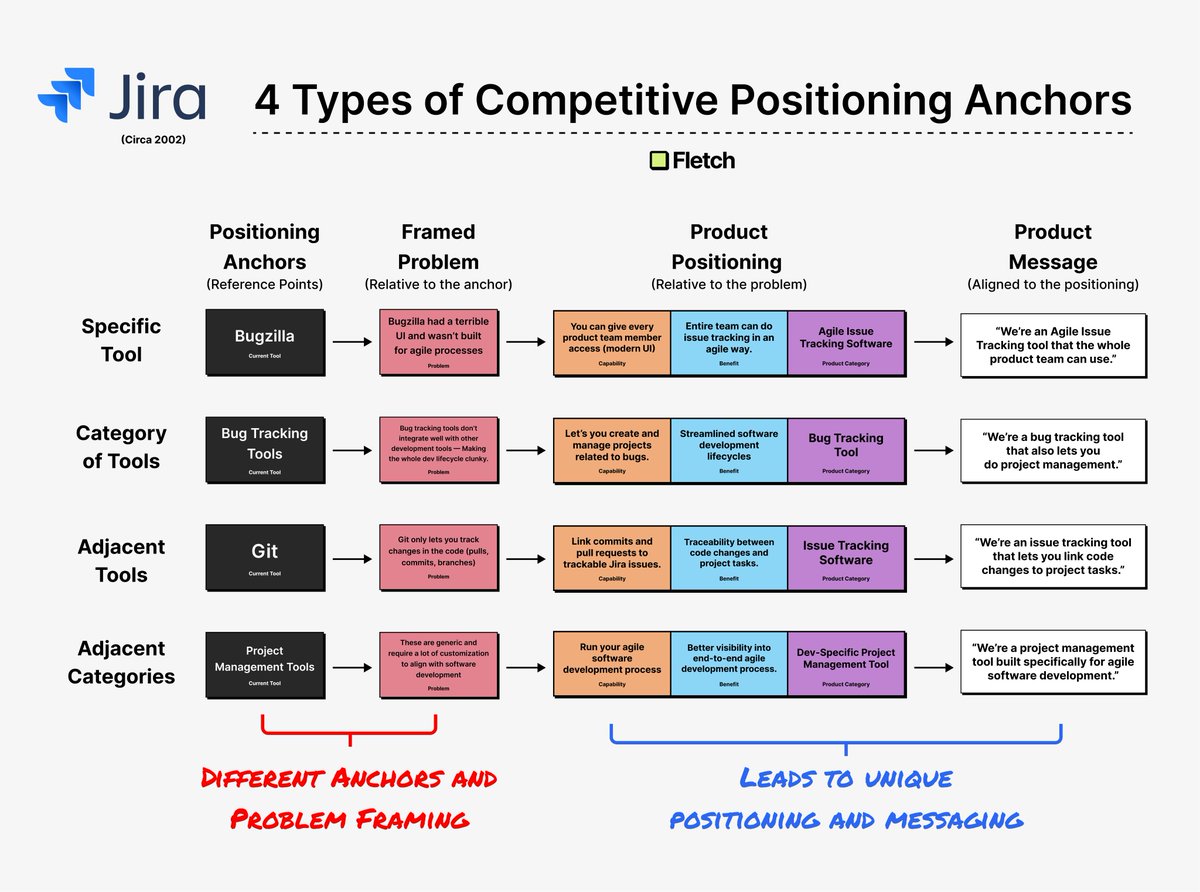
One type of positioning anchor is what we call a “Competitive Anchor”
Check out the example shown for @Atlassian's Jira (See image).
This shows how Jira could have used competitive anchors to explain their product clearly.
🔹 Take note of how each unique anchor has a cascading effect on the positioning.
Each anchor leads to a unique problem framing.
And each problem framing leads to a different positioning.
And each unique positioning leads to a different product message.
———
Remember, good positioning means getting a prospect to quickly understand your value and use case(s) to the point where they stick in the mind.
You won't have a lot of time to explain these things.
So consider using recognizable reference points like "competitive anchors" in your messaging to shorten the time for a prospect to understand your product.
#positioning #messaging #b2bmarketing
English

@carlvellotti Appreciate you sharing our stuff so often 🙏 — Do you think you can tag us when you do?
English

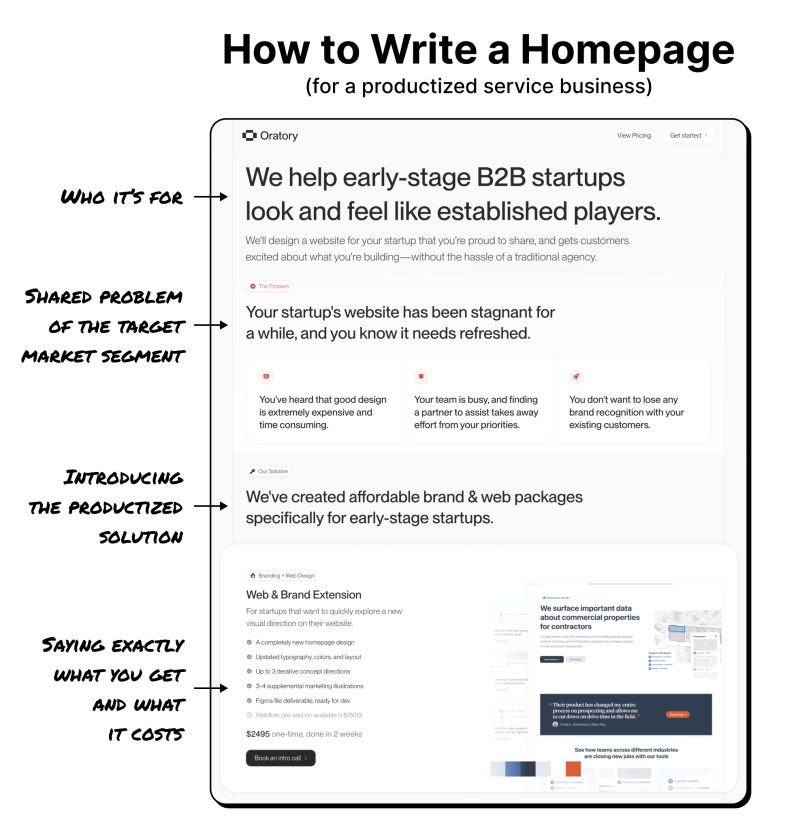
Really nice breakdown for writing a homepage
Before you start, crisply define:
• Who it's for
• What problem you solve
• What your solution is
• Exactly what users get and how much it costs
English

English
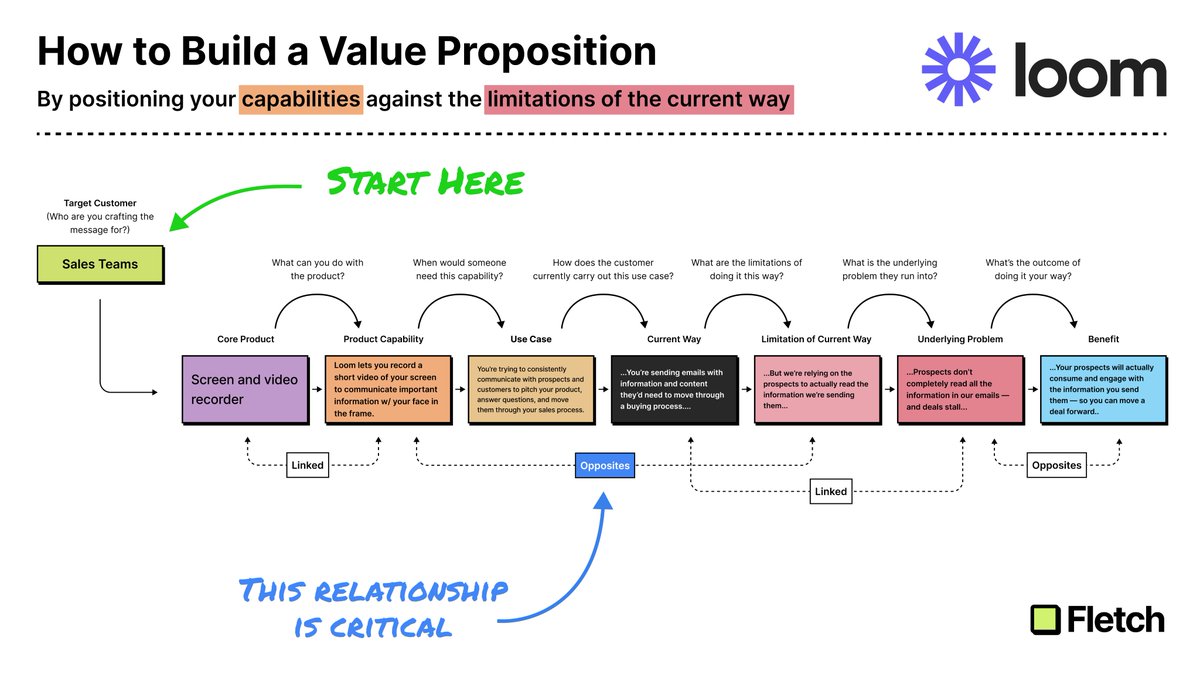
Remember, your core value propositions are your supporting arguments of your positioning.
❌ The goal isn't to make these "sound good".
✅ The goal is to highlight the contrast between your product's value...
↳ Against the current way your customers do things.
English
Every startup needs at least one primary argument to support their approach into a market.
Here's a 7 question framework
↳ and 4 "guiding links"…
💪 To help you build stronger value propositions that actually support your positioning.
English