
HolyAustin Devs : holyaustin.base.eth
696 posts

@holyaustin
infoprenuer, Web Solutions, Website Designer, Software developer, Blockchain Enthusiast, Smart Contract developer, Network Engineer


After almost four years, I decided to step away from @LiskHQ. Looking back, I'm incredibly proud of what we built together. We started with a simple belief: that emerging markets will play a major role in the future of Web3. Working alongside our local partners, we had the opportunity to support hundreds of founders across Africa, Southeast Asia, and Latin America as they brought products to market across the Ethereum ecosystem. The experience strengthened my conviction that some of the most interesting innovation is happening far beyond the industry's traditional centers of gravity. Some convictions change. Others get stronger. Thank you to everyone who was part of this journey over the past few years. Excited for what's next. I'll share more soon.


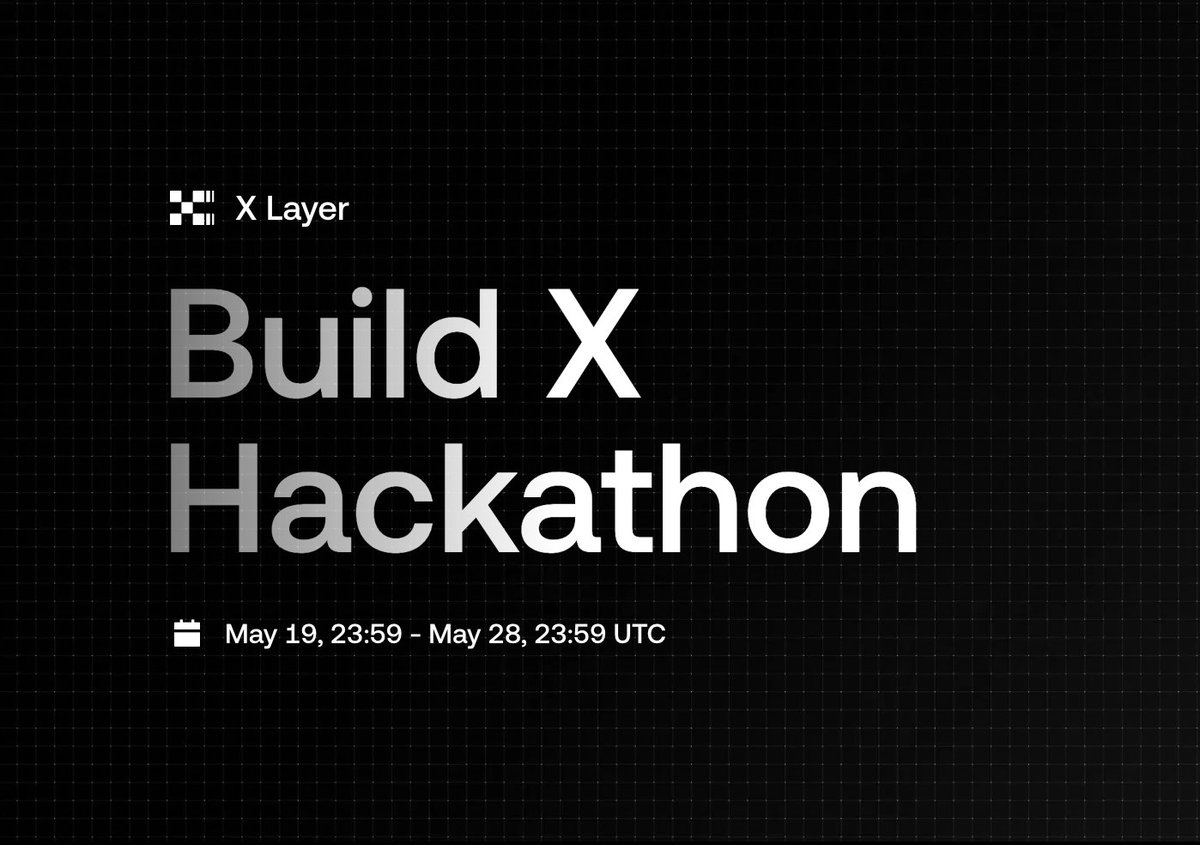
OKX Wants You to Build What's Next 🫵 Excited to co-host the OKX AI Genesis Hackathon with @OKX and @XLayerOfficial, where builders create Agentic Service Providers (ASPs) —autonomous AI services for the real world. ▫️ $100K prize pool 🏆 ▫️ Up to $10K for a single award 💵 ▫️ Open to both crypto and non-crypto ASPs ▫️ PR support from OKX AI ▫️ Multiple special award categories Applications close July 17, 23:59 UTC. Ready to build? Apply now 👇 hackquest.io/hackathons/OKX…


This is our @LidoFinance Community Staking Module HOME cluster protected by the @Obol_Collective DVT stack. Don't get fooled by the devices' fragile appearance. These are very powerful and rock-solid machines capable of running hundreds of validators flawlessly with a local #Ethereum node using just 10W of power. 3 different locations | 3 different ISPs | client diversity | HA | monitoring Decentralization at its best. ⚙️ Setup consists of: ✅ 3 Obol nodes (@RadxaComputer 3x Rock 5B+, 24GB RAM) ✅ 2 Control nodes (1 Rock 5B 32 GB RAM + 1 NanoPC T6 ) ✅ 3 different locations (ISPs) ✅ Tailscale VPN connection Obol nodes run different Consensus and Execution clients locally to provide client diversity: @go_ethereum + @lodestar_eth @Nethermind + @grandineio @ethrex_client + @ethnimbus The Obol cluster is monitored by an in-house solution installed on all nodes (including the 2 control nodes in active/passive mode). It reports to a Telegram channel in case any issue/event arises: 🔴 Missed attestations/blocks by each validator or a massive missed alert 🟢 A block is proposed by one of our validators 📊 Obol cluster status: Charon state, network latency, validator clients... 🖥️ Obol nodes status: Running services, CPU load, memory, disk usage... 🔄 Client updates availability Control nodes fulfill additional tasks to contribute to cluster health, HA, and monitoring: 🔁 Backup nodes: If the cluster goes down, a control node is ready to take over all validators through a synced local node, as it has all configs and keys available 🔗 Obol relay: Both control nodes run a local Obol relay that allows the nodes to get a direct connection between them and minimize latency 🚨 Charon beacon fallback: All Charon nodes are configured with the Control nodes' beacon as fallback in case a local Obol node goes down Performance We are hitting 98.5-99.5% on the beaconcha.in score with client diversity. Best results come with Nimbus and Grandine as Consensus Clients, with a consistent ≥99.5%. Total cost (estimation)🔲 Boards (5 × $270): $1,350 SSDs (5 × $270): $1,350 MicroSD (5 × $9): $45 Cases + cooling (5 × $38): $190 Ethernet cables (5 × $5): $25 Power supplies (5 × $16): $80 ➡️ Grand total: ~$3,040 Documentation We released all the code and documentation for anyone to replicate the cluster. If you are a home staker and want to try a reliable solution to harden your setup, this is your chance: 🔗 …m-on-arm-documentation.readthedocs.io/en/latest/stak… Source Code github.com/EOA-Blockchain…


1/ We’ve raised over $1B at a $26B valuation, led by @Lux_Capital, @generalcatalyst, and @8vc. Our enterprise usage has grown >10x since the start of this year, and our run-rate revenue grew to $492 M. We launched Devin two years ago as the first AI software engineer. Since then, cloud agents have gone from niche to mainstream, and today they are the fastest growing way to create software.