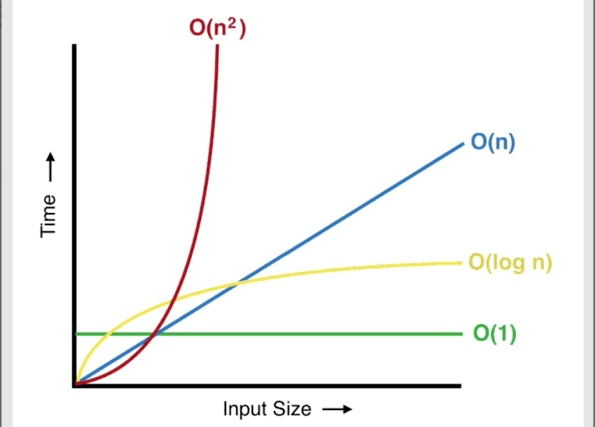
Just learning Time Complexity
Turns out writing code that works and writing code that works efficiently are two completely different skills.
English
Himanshu Sahoo
553 posts

@hsbuilds_
Tech nerd💻, writing✍️, Growing 1% every day. The evolving story of being human in a digital world.



@asaio87 Man, you are giving hope to me and thousands of CS students
Peter Thiel on who is most likely to lose jobs to AI: "It seems much worse for the math people than the word people" "Within 3-5 years AI will be able to solve all the US Math Olympiad problems. That would shift things quite a bit."


Sam Altman: “Most people don’t take enough risk” I think people have terrible risk calculus in general… almost always A) you’re wrong about what is risky and what is not risky, and B) most people don’t take enough risk—especially early in your career."
Mo sources mo problems? Not anymore: Rolling out now, NotebookLM can auto-label & categorize sources (when you have 5+), so you can spend less time scrolling and more time thinking/learning/philosophizing, etc. Rename, reorganize, & personalize (emojis!) to your ❤️'s content.
I was reading a recent research paper called "The AI Layoff Trap". And it made me think. Right now, everywhere you look… companies are laying off people and replacing roles with AI. On the surface, it feels simple. Less salary → more profit. But the paper says something interesting. When companies fire employees, they are also removing customers. Those same people were earning and spending money. If this keeps happening everywhere, less income → less spending → less demand. And that can actually hurt companies in the long run. The strange part is, even if companies understand this, they still can’t stop. Because if they don’t automate, someone else will. So everyone keeps moving in the same direction… even if it’s risky. The paper also talks about solutions. Some things sound good, but don’t really fix the core problem: Giving free money (UBI) Taxing company profits Upskilling alone These help people, but they don’t change the incentive for companies to automate. Some things help partially: Better re-employment of workers Giving employees equity These reduce the problem, but don’t remove it. According to the paper, the only thing that fully fixes this is: A tax on automation itself. So companies think twice before replacing humans. I found this perspective quite interesting. This is not just about “AI will take jobs”. It’s about how the whole system behaves. Curious what you think.