Sabitlenmiş Tweet
jörg
9.8K posts




#BREAKING 🚨: The White House has proposed a 23% cut to NASA’s budget for 2027 to fund an increase in defense spending


English

@EstherRebers You've missed the best part, considering it's located in Wolfsburg - VWs home turf:
It says I'D CHARGE HERE on the floor 😂
You gotta love Tesla
English

As posted before: Germany is also creating many new superchargers.
This one was opened in Wolfsburg, Germany. Located in the upper middle of the country.
Not too far away from Hannover.
As you see a beautiful ‘new style’ location with a solar roof and the pre assembled charging stations.
16 V4 stalls up to 250kW.
Open to all EV.
Great work @teslaeurope
Tesla Charging@TeslaCharging
New Tesla Supercharger: Wolfsburg, Germany (16 stalls) tesla.com/en_eu/findus?l…
English

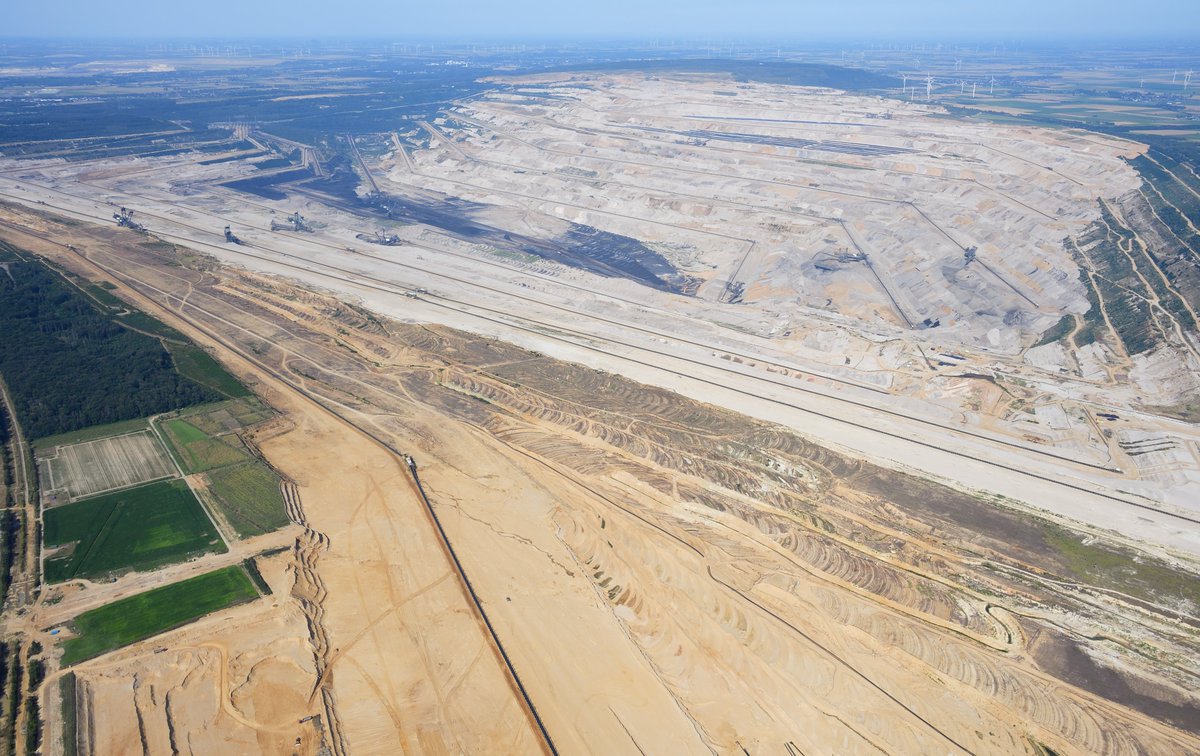
Germany is about to make yet another irreversible energy decision at Hambach that goes far beyond land restoration. It cuts directly into the country’s long term energy security.
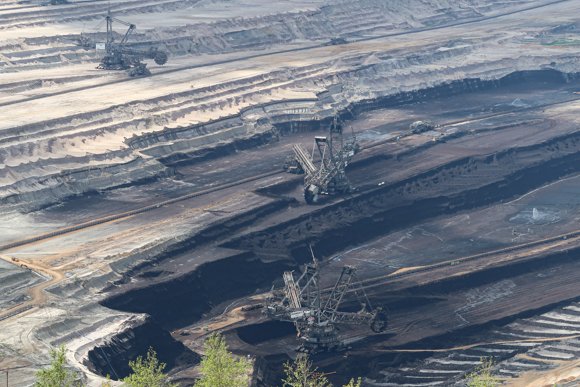
The Hambach open pit mine in North Rhine Westphalia is one of the largest lignite reserves in Europe.
Beneath it sits well over 1 billion tonnes of extractable lignite, part of a broader basin that has powered German industry for decades.
At peak operation, Hambach and the surrounding Rhineland mines supplied a significant share of Germany’s baseload electricity, with lignite alone historically contributing 20 to 25% of national power generation.
From 2030, the plan is to flood the mine using water diverted from the Rhine, gradually creating an artificial lake reaching depths of 300 to 360 meters.
This is not a surface level transformation. It will submerge the entire excavation zone, including remaining coal seams that extend deep into the basin.
Once filled, the hydrostatic pressure, water infiltration, and structural destabilization of the mine walls will make any future extraction technically unviable and economically irrational.
In practical terms, this means that hundreds of millions to over a billion tonnes of lignite will be permanently locked away.
Even if future governments wanted to reverse course, draining a lake of this scale, stabilizing the geology, and rebuilding mining infrastructure would take decades and tens of billions in cost. It is, for all intents and purposes, a one way decision.
This is what makes Hambach different.
It is not a transition. It is a deliberate removal of optionality.
And it comes after a series of compounding policy choices that have already weakened Germany’s energy system.
Over the past decade, the country has:-
• Shut down the majority of its nuclear power plants, removing stable, zero carbon baseload capacity
• Decommissioned modern coal facilities, including plants that were operating at high efficiency
• Increased dependence on imported energy while reducing domestic production buffers
The consequences of this are no longer theoretical. They have already played out twice in rapid succession.
In 2022, the Russia Ukraine conflict exposed Germany’s dependence on external gas supplies, triggering the most severe energy crisis in decades.
Now, just a few years later, the ongoing Middle East conflict has pushed fuel prices up by 30% and natural gas prices up by 25 to 30% in a matter of weeks.
What these shocks reveal is not just vulnerability, but the absence of fallback capacity.
This is where Hambach becomes critical.
Instead of preserving a strategic domestic reserve exceeding 1 billion tonnes, Germany is choosing to eliminate it at a time when global energy markets are becoming more volatile and politically constrained.
The contrast with other major economies is stark.
China and India continue to expand their energy systems by layering renewables on top of existing fossil capacity.
Together, they consume over 3 billion tonnes of coal annually, ensuring that their grids remain stable even under extreme demand or supply disruptions. Their approach is additive.
Germany’s has been subtractive. A sure shot losing bet.
And the economic impact is now visible across multiple dimensions:-
• Electricity prices for households are 2× higher than France
• Industrial power costs reached €0.14 per kWh, forcing €4.5 billion in subsidies
• Germany increasingly imports nuclear power from France and coal generated electricity from Poland
• Domestic baseload capacity continues to shrink while demand remains industrially high
What Hambach represents is not just an environmental project. It is the final step in removing one of the last large scale domestic energy buffers Germany still possesses.
Because once flooded:-
• 1 billion tonnes of lignite becomes inaccessible
• Recovery would require decades and tens of billions in reinvestment
• Germany loses a critical emergency energy reserve permanently
• Future policy flexibility is eliminated
At the same time:-
• Global energy demand continues to rise
• Geopolitical risks around supply chains are increasing
• Competing economies are expanding, not reducing, their energy base
Energy systems are not built for ideal conditions. They are built for stress scenarios.
Germany has now faced two major shocks in under five years. In both cases, reduced domestic capacity translated directly into higher prices, subsidies, and economic strain.
Hambach removes the ability to respond differently the next time.
And that is the core issue.
There is no precedent for a major industrial economy maintaining competitiveness with constrained, expensive, and externally dependent energy.
Every historical and modern example points in the opposite direction.
Flooding Hambach is not just about a lake.
It is about permanently giving up a billion tonne energy reserve in an increasingly uncertain world.
English






$TSLA deliveries are moderately disappointing, but the real surprise is only 8.8 GWh of storage deployed! That's a big miss, and the first time I can recall seeing such a significant decline in this metric.

English

I grew up on Boca Chica beach. A uniquely beautiful habitat, ruined for this man’s space fantasies. These people are such bastards.

bekah hinojosa@beksbot
US Fish & Wildlife plans to transfer 712 acres of Boca Chica habitat to Elon Musk to expand SpaceX's rocket launch activities, which are dangerous and unnecessary. We submitted over 3,000 public comments against this last night before the deadline. Read sotxejn.org/2026/04/01/pre…
English

South Korean President: "Save very drop of fuel"
“I earnestly appeal to all citizens to actively participate in energy-saving movements in daily lives, such as taking public transportation and conserving electricity."
English


Tired of spreads eating away at your trading goals? Eurotrader keeps spreads and fees consistently minimal, so your strategy - not your broker - defines your results.
Trading involves risk
English

Irgendwo in den Weiten des Weltalls gibt es ein Paralleluniversum, in dem VW anstelle des ID.3 einen e-Golf 2.0 auf Basis des Golf 2 und anschließend einen e-Beetle gebracht und die Herzen der Leute damit im Sturm erobert hat.
(Fotos mit ChatGPT erstellt)


Deutsch

Ein toller Vergleich!
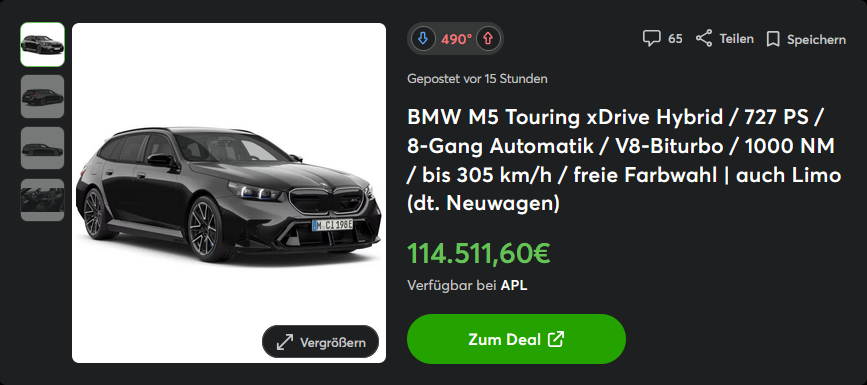
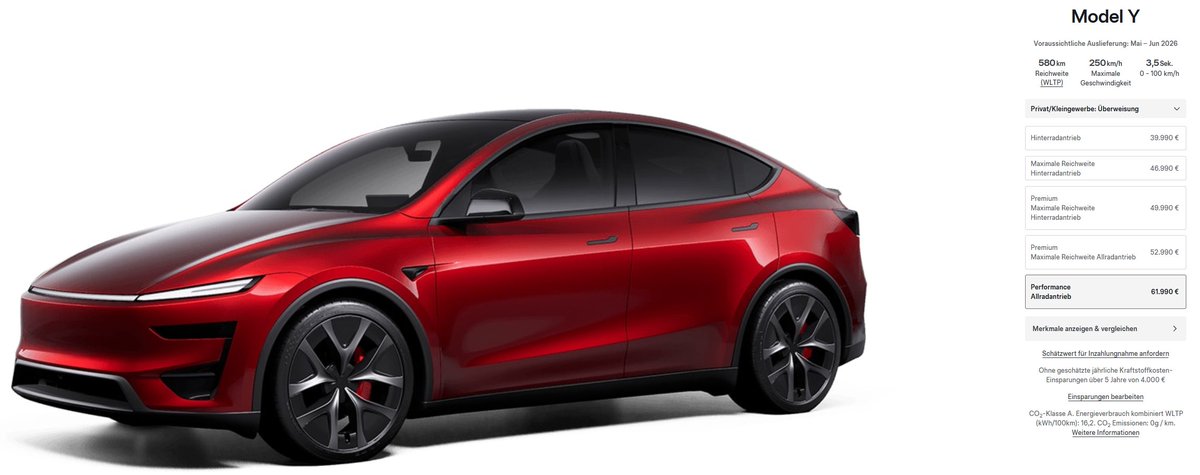
@BMW M5 Touring vs @Tesla Model Y Performance.
Ich kauf lieber den zweiten einmal für meine Frau und einmal für mich😉:
Preis: 114.512€ 61.990 €
Leistung: 727 PS 460 PS
0-100 km/h: 3,6s 3,5s
Vmax: 305 km/h 250 km/h
Kofferraum: 500L/1630L 850L/2138L+117L
€/100km: 14-22€ 6-10€
TCO 5J: 145.000-165.000€ 85.000-95.000€
TCO 10J: 190.000-230.000€ 110.000-130.000€
Autonomie: NEIN JA
V8 Sound: JA NEIN
Tränen in den Augen bei der Tanke?
Unbezahlbar.
Mehr Details im ersten Kommentar.
Deutsch

My painting of Iryna Zarutska that is being removed after the mayor has declared it divisive

English
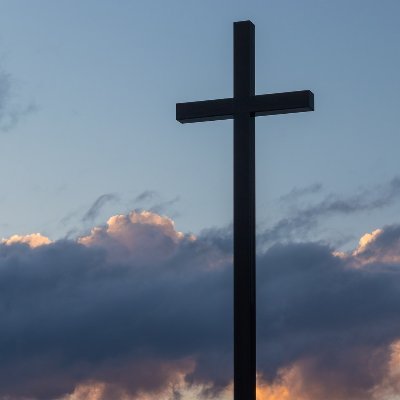
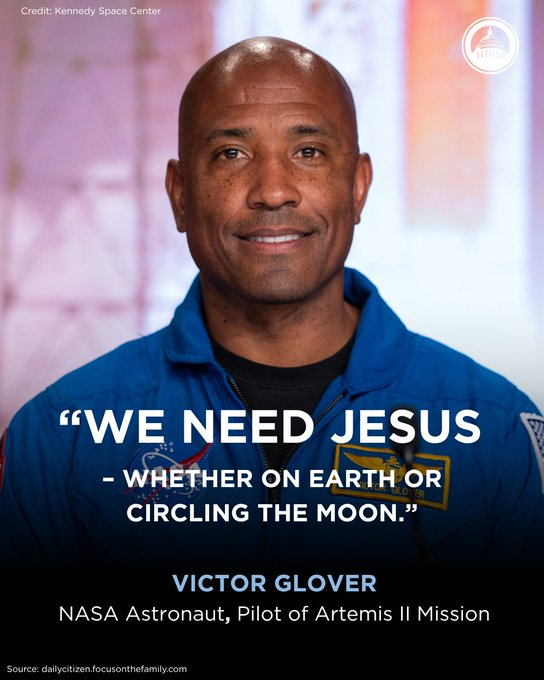
"We need Jesus - whether on Earth or circling the Moon." -- Victor Glover, Pilot of Artemis II
English
jörg retweetledi
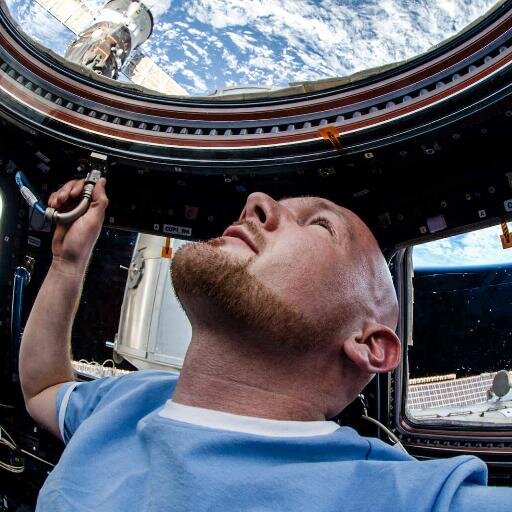
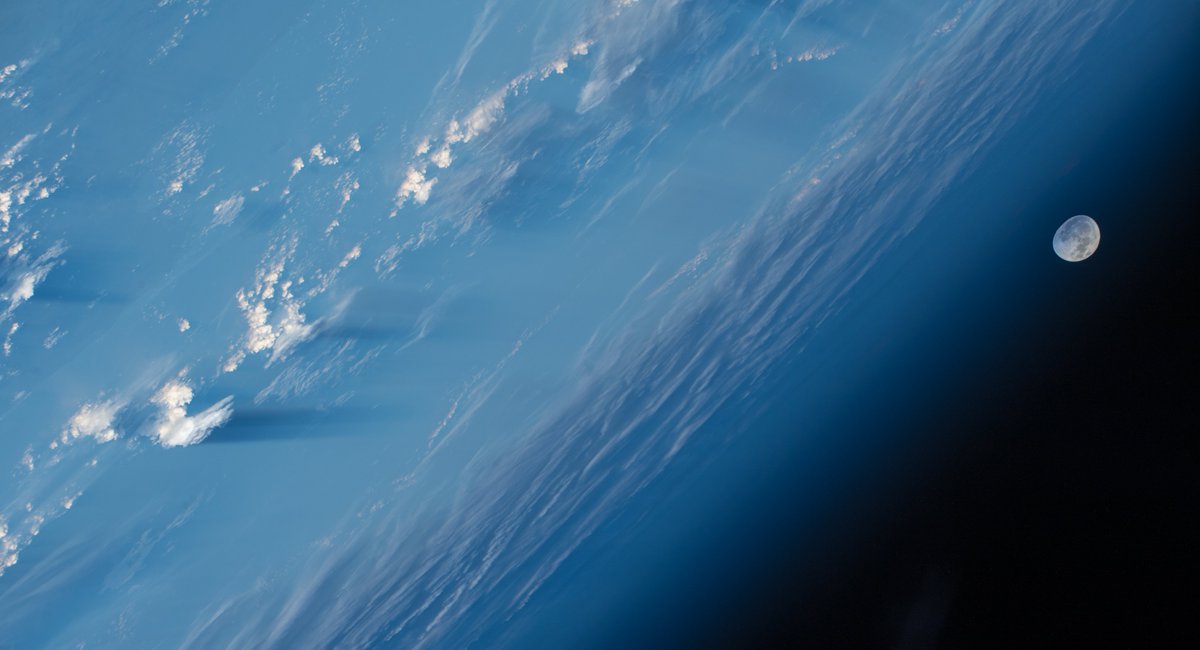
"We began as wanderers once, and we are wanderers still."
Today marks the beginning of the second wave of space exploration, with 4 of our species venturing out farther than any human has gone before, seeing what no human has seen before. And with the force of this wave, just like we did in Antarctica, we will stay. It makes me happy to see Europe being part of this adventure.
Godspeed my friends Reid, Christina, Victor and Jeremy! I can’t wait to feel the thunder of you leaving our planet. And even more so, to see you back on this beautiful pale blue dot in 10 days, to tell an amazing tale.
@astro_reid @Astro_Christina @AstroVicGlover @Astro_Jeremy @NASAArtemis @esaspaceflight
English
jörg retweetledi

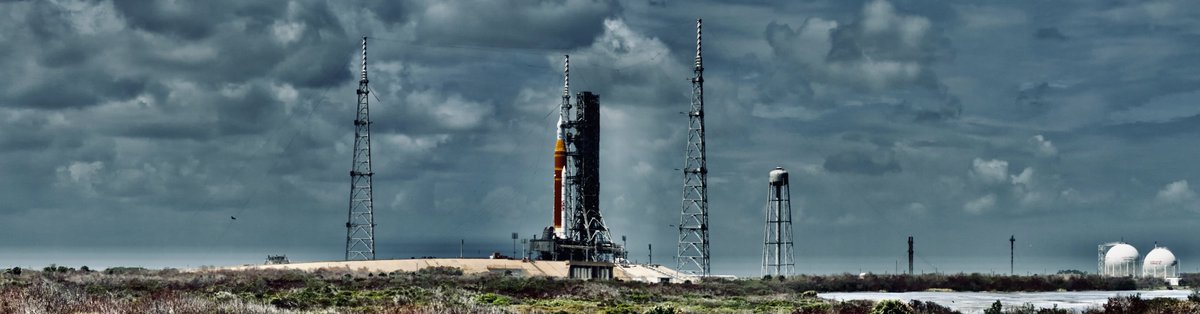
Humans going to the Moon isn’t just another spacetrip, and it isn't made trivial by todays technology just because a group of absolute madmen managed to pull it off with calculators in the 1960s and 70s
It is the farthest distance humans have ever traveled. Because the Moon looks large in the sky, many people underestimate how far away it really is. The Moon is about 1000 times further from Earth than the International Space Station. Artemis II will take 10 days, with astronauts traveling at thousands of miles per hour through deep space only to slam back into Earth’s atmosphere going 25000 mph relying on a heat shield to survive.
There’s something both inspiring and reassuring about the fact that humans are willing to take that kind of risk and to come back home to tell us what they experienced

English

That's Iran's current president, Masoud Pezeshkian (in office since 2024). Trump is referring to him as the "New Regime President" in his Truth Social post, claiming he's requested a ceasefire—though Iran hasn't confirmed any such request and denies negotiations. The condition is reopening the Strait of Hormuz.
English