Hyperion Holdings

4.4K posts

Hyperion Holdings banner
Hyperion Holdings

Hyperion Holdings

@hyperion_hol

धर्मो रक्षति रक्षितः

Katılım Şubat 2021
1.2K Takip Edilen115 Takipçiler
Sabitlenmiş Tweet
Hyperion Holdings
Hyperion Holdings@hyperion_hol·
$ABCL is a $100 stock
English
3
1
19
5K
Hyperion Holdings retweetledi
Malay Krishna
Malay Krishna@Malay4Product·
I taught JEE physics for years. That paper breaks strong kids in three hours. This exam is five hours of theory and five hours of lab work, and these five did close to perfect scores on it. Let me tell you what actually happened. The International Physics Olympiad is the world championship of school physics. It was the 56th edition. Held in Bucaramanga, Colombia, from July 5 to 12. 381 students. More than 85 countries. Every one of them the best physics student their country could find. India sent five kids. All five came back with gold. Their names are Kanishk Jain from Pune. Riddhesh Anant Bendale from Indore. Rishit Garg from Dwarka in Delhi. Shresth Suraiya from Mumbai. Svarit Joshi from Ahmedabad. We know a hundred cricketers by their nickname and not one of these boys. :) That clean sweep put India at joint World Number One. Tied with China, Russia, Kazakhstan, South Korea and Taiwan. Those are countries that pour serious money and national pride into science education. We are standing level with them. Now here is what the exam actually was. Two papers. Each five hours long. The theory paper had three problems. One on the thermodynamics of paramagnetic cooling. One on the photoionisation of ozone. One on the dynamics of electron positron pairs. The experimental paper was another five hours in a lab, working through heat transfer and thermodynamic processes in fluids. That means you get given equipment you have never seen, and you have to design your own experiment, take your own readings, handle the errors, and reach a real answer. Not multiple choice. No shortcuts. No pattern recognition. You either understand physics or you sit there for five hours. HBCSE says the Indian students were near perfect on theory and excellent on the practical too. Now, this was India's 27th appearance at the IPhO. Across all those years, about 44 percent of Indian students have won gold, 41 percent silver, 10 percent bronze. In the last ten years, every single Indian student has come home with a medal. 62 percent gold, 38 percent silver. Not one kid has gone and come back empty handed in a decade. Five golds in one year has happened only twice. This year, and in 2018. So who built this. The programme is run by HBCSE, the Homi Bhabha Centre for Science Education. It sits under TIFR, which sits under the Department of Atomic Energy. They run the whole funnel. A national exam, then a national olympiad, then a brutal selection and training camp, and out of everyone in the country, five kids get on a plane. The team was led by Professor Anwesh Mazumdar of HBCSE-TIFR and Dr Leena Joshi from St Xavier's College, Mumbai. The scientific observers were Professor Ananda Dasgupta from IISER Kolkata and Nisha Kelkar from Gogate-Joglekar College in Ratnagiri. Yes. Ratnagiri. A college in a small coastal town in Maharashtra. This is public education doing something the private coaching industry could never do on its own. The coaching industry is very good at one thing. Teaching you to solve a known problem fast. That is what JEE and NEET reward, and I say that with love because I was part of that world. But an olympiad paper does not have a known type. There is no shortcut chapter. There is no formula sheet that saves you. You have to sit with a problem you have never seen and think. That is a completely different muscle. And a government funded centre has been quietly building it in Indian teenagers for 27 years. So yes, be proud. Loudly. HBCSE also shared that around 64 percent of India's olympiad medallists go on to do a PhD. But only about 32 percent of medallists end up settling in India. I do not say that to spoil the moment. These kids owe the country nothing. They earned every option they have. But it should tell us something. We are excellent at finding this talent. We are excellent at training it. We are still not great at giving it somewhere worth staying. Congratulations Kanishk, Riddhesh, Rishit, Shresth and Svarit. This is one of the best things an Indian did this year and most of the country will never hear about it.
DAE India@DAEIndia

🇮🇳 India Tops the World at the 56th International Physics Olympiad 2026! 🥇🥇🥇🥇🥇India's young physicists deliver an extraordinary performance at #IPhO2026 in Colombia. All five members of the Indian team win Gold Medals. 1/3 @PMOIndia @DrJitendraSingh @HBCSE_TIFR @TIFRScience

English
211
2.4K
8.1K
426K
Tarun Gautam
Tarun Gautam@TARUNspeakss·
This is embarrassing as a Hindu & Indian Bro why would you go to a museum in Azerbaijan and start chanting Gayatri Mantra so loudly? What is this insecurity? This is disrespectful to both cultures!! No civic sense at all!!
English
460
1.2K
5.8K
1M
Hyperion Holdings
Hyperion Holdings@hyperion_hol·
@FRANCE24 France’s Christian nationalists take to inbreads and desert cultists to service their women 🤡🤡🤡🤡🤡
English
0
0
0
8
Arshiya Sibbal
Arshiya Sibbal@ashesshallspeak·
@HelleLyngSvends Don’t let this clown get to you. All of us know who the real journalist is. More power to you♥️
English
22
10
348
4.6K
Arshiya Sibbal
Arshiya Sibbal@ashesshallspeak·
Abey, hypocrisy ki bhi koi hadd hoti hai be ghochu. Tu batayega journalism kya hoti hai? Bike huye fraudster. The irony is unbelievable! @HelleLyngSvends has balls of steel and a spine to match. You, on the other hand, are nothing but a bootlicking propaganda peddler. You’re literally a stain on the profession of journalism. The audacity you have to question someone like her is astounding to me. Apne baap se ek sawaal nahi kar sakta tu, aur jinmein dam hai karne ka, unko batayega journalism kya hoti hai? You should be ashamed of yourself.
English
9
12
457
5.1K
Aditya Raj Kaul
Aditya Raj Kaul@AdityaRajKaul·
Hilarious. She continues to use PM Modi and India to make a living by cheap gimmicks. She surely has nothing worthwhile to mention as her own journalism or reportage. Hence clickbait posts is all she could do! The NDTV reporter asked the right questions. And you had no reply!
Aditya Raj Kaul tweet media
English
769
1.9K
11.3K
468K
pranav pradhi
pranav pradhi@pranavpradhi1·
@AdityaRajKaul Awwww. She’s 100x the journalist you will ever be. You are a paid stooge, a propagandist, and a Godi media sellout. She holds power to account. You serve it. That’s the difference. Huh!
English
18
55
1.8K
12.6K
Hyperion Holdings
Hyperion Holdings@hyperion_hol·
@Fintech03 These anti national chutiyas need to be tied up and catapulted across the border 🤬
English
0
0
1
104
Parimal
Parimal@Fintech03·
Ajit Anjum Ji’s argument follows this structural pattern: Premise A: Some individuals from Group X (Sanatan families) commit an action (getting drunk). Premise B: Group Y (Kumbh Mela attendees) likely possesses a substance (cannabis). Conclusion: Therefore, criticism of an individual outside these groups is invalid/hypocritical. In formal logic, this is a Fallacy of Composition, assuming that what is true of a member/a subset must be true of the entire category/an entirely different subset. A person’s religious background has a correlation coefficient of zero with an unrelated individual's public behavior. Statistically, pulling an unrelated demographic into a specific event data point is a baseline data-corrupting error. Anjum Ji's tweet relies entirely on an ad hominem tu quoque :)) It does not address the actual subject of whether public intoxication/drug abuse is good/bad. Instead, it attempts to neutralize the specific incident by pointing out faults in an completely unrelated sacred space.
Parimal tweet media
English
4
27
110
4.8K
Hyperion Holdings retweetledi
Parimal
Parimal@Fintech03·
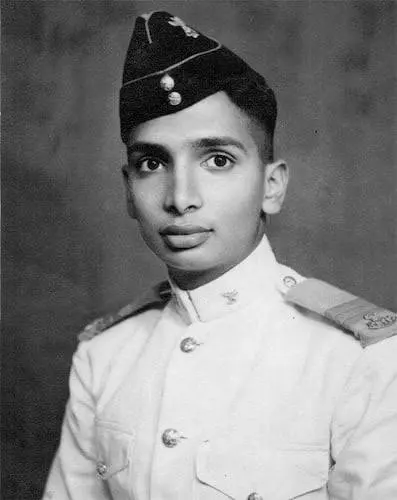
Next in who after the Ramanujan series? At a tender age of 16, a brilliant but completely unguided boy from Tamil Nadu joined the National Defence Academy & was commissioned into the Indian Navy's electrical branch . He did not have the luxury of a quiet university setting; he was trained in practical skills to maintain weapons systems on warships. But Arogyaswami Paulraj possessed an insatiable, self-taught obsession with the advanced mathematics of signal processing, control theory & information theory. He studied advanced matrices & random variables by lamplight on naval ships. By the late 1970s, India faced a serious strategic challenge. After the 1971 Indo-Pak War exposed weaknesses in imported sonars, the Navy needed an advanced anti-submarine warfare system but was blocked by international export restrictions. The Navy turned to Paulraj, then a rising officer with a PhD from IIT Delhi (earned while still in service). He was tasked with leading a major indigenous project to develop a world-class hull-mounted panoramic sonar from scratch. Operating under intense resource scarcity, Paulraj’s mathematical genius took over. He designed complex signal-processing algos that could filter the chaotic, deafening acoustic noise of the ocean to pinpoint enemy submarines. The resulting system, APSOH (Advanced Panoramic Sonar Hull), inducted in 1983, completely stunned global military observers. It did not just work, it outperformed contemporary Western systems. After setting up major defense labs in India, Paulraj retired from active naval service & arrived at Stanford University in 1991 as a research associate. This is where the story shifts from military history to modern legend. While working on signal separation experiments for airborne military reconnaissance, Paulraj noticed a strange, fleeting physical phenomenon. When a radio signal is transmitted in a crowded area (like a city with buildings), it bounces off walls & scatters into 1000s of chaotic, distorted paths. Engineers treated this scattering as a nightmare, multipath interference that corrupted data. Paulraj had a paradigm-shifting realization rooted in multi-variable calculus & spatial matrices: What if the scattering was not a bug, but a feature? He realized that if we used multiple antennas at the transmitter & multiple antennas at the receiver, we could use advanced matrix mathematics to isolate those scattered paths & stream parallel, independent channels of data over the exact same frequency, at the exact same time. He called it MIMO (Multiple Input, Multiple Output). When he 1st proposed it, the academic world mocked him. Prominent profs & industry skeptics told him it violated the laws of physics & information theory. They claimed it was mathematically impossible to multiply data speeds w/o expanding bandwidth. Paulraj did no back down. He built his own prototype, founded a startup & proved the mathematics in real-world silicon. He designed the microscopic architecture, the microchip algos that allowed small devices to execute these hyper-complex spatial matrix calculations in fractions of a microsecond. If we look at the device we are using to read this right now, look at the top corners of our screen. We cannot see them, but embedded inside the frame of our phone are multiple microscopic antennas operating on Paulraj’s exact MIMO-OFDMA mathematics. Every single modern 4G network, 5G network & high-speed Wi-Fi router on Earth is built entirely on the mathematical foundation invented by the self-taught Indian Navy officer who packed his bags for Stanford. He did not just solve a math problem; he built the invisible highway that carries nearly 100% of the world's mobile data traffic today.
Parimal tweet media
English
43
428
1.3K
61.6K
Hyperion Holdings
Hyperion Holdings@hyperion_hol·
🫡
Parimal@Fintech03

In 1657, French mathematician Pierre de Fermat issued a mathematical challenge via letters to English mathematicians like Kenelm Digby & other finest minds of Europe. He dared them to find the smallest positive, non-trivial whole-number solutions for a deceptively simple-looking quadratic equation (known today as Pell's Equation): x^2 - dy^2 = 1, for non-square (d), specifically highlighting hard cases like d = 61 & d = 109. It looks almost trivial, like a middle school algebra problem. But it is a trap. Because the relationship b/w x & y scales exponentially, finding a solution by naive trial & error/standard brute force search grids is computationally impossible by hand. The numbers are so massive that European mathematicians like Bernard Frénicle de Bessy struggled for months (for d = 61). It was not rigorously solved in Europe until Lord Brouncker used continued fractions & Lagrange gave a general proof in 1766. Fermat thought he had found the ultimate limits of numerical complexity. He had no idea that a 12th-century Indian mathematician in Karnataka had already crushed the exact same eqn using a flawless, purely integer-based recursive loop. 500 yrs before Fermat’s challenge, Bhaskara II tackles this exact problem in his treatise Bijaganita. He realized that instead of guessing wildly for a perfect solution, you should start with a near-miss/an easy guess that has a small mathematical error & then systematically annihilate the error through a feedback loop. He called it the Chakravala Method (Chakra meaning wheel/cycle). The algo works like this (for d = 61): Start with a guess: For, x^2 - 61y^2 = 1, choose an easy near-miss. Since 8^2=64 (which is close to 61), let y = 1 & x = 8. Calculate the error ((k)): Plug them in: 8^2 − 61(1)^2 = 3. Our error is +3 Bhaskara used a mathematical composition rule inherited from Brahmagupta (called Bhāvanā) to inject a new multiplier (m). The algo strictly optimizes m at each step to minimize the absolute size of the next error, ensuring the numbers stay as small & computationally efficient as possible. The output of the 1st loop becomes the input for the next. The equation literally "cycles" like a wheel, squeezing the error down until (k) lands exactly on (1). While European mathematicians were blindly guessing/dealing with messy, infinite fractional expansions, Bhaskara's recursive wheel landed precisely on the target after a few lines of clean arithmetic. The smallest integer solution to Fermat's "impossible" challenge, computed by Bhaskara II in 1150 CE, is: x = 1766319049, y = 226153980 Try plugging that into x^2 - 61y^2 = 1 by trial & error w/o a supercomputer. You have zero chance of stumbling onto it.

ART
0
0
1
45
Hyperion Holdings retweetledi
Parimal
Parimal@Fintech03·
Dr. Bernardo Kastrup once said: "Amongst the world religions, all of which I respect profoundly, intellectually I have profound affinity with the Indian tradition, and that's for obvious reasons." The West is experiencing what historians call a Paradigm Shift because Western science hit a dead end known as the "Hard Problem of Consciousness" (how dead matter generates a subjective feeling). Because their materialist axioms failed, Western thinkers are forced to flip the eqn & make Mind primary. Indian Rishis did not arrive at this via emotional mysticism; they arrived at it by applying rigorous, flawless phenomenological reduction to the nature of observation itself. Dr. Kastrup is simply validating the ancient data using modern analytical syntax.
Parimal tweet media
English
15
150
538
13.1K
Hyperion Holdings
Hyperion Holdings@hyperion_hol·
@jrkelly @AgentSaffron The world owes so much to ancient Indian Hindus. Without their place value system complex maths is not possible with western XXVVVIII nonsense 🤢🤮
English
0
2
8
631
Jay Anderson
Jay Anderson@TheProjectUnity·
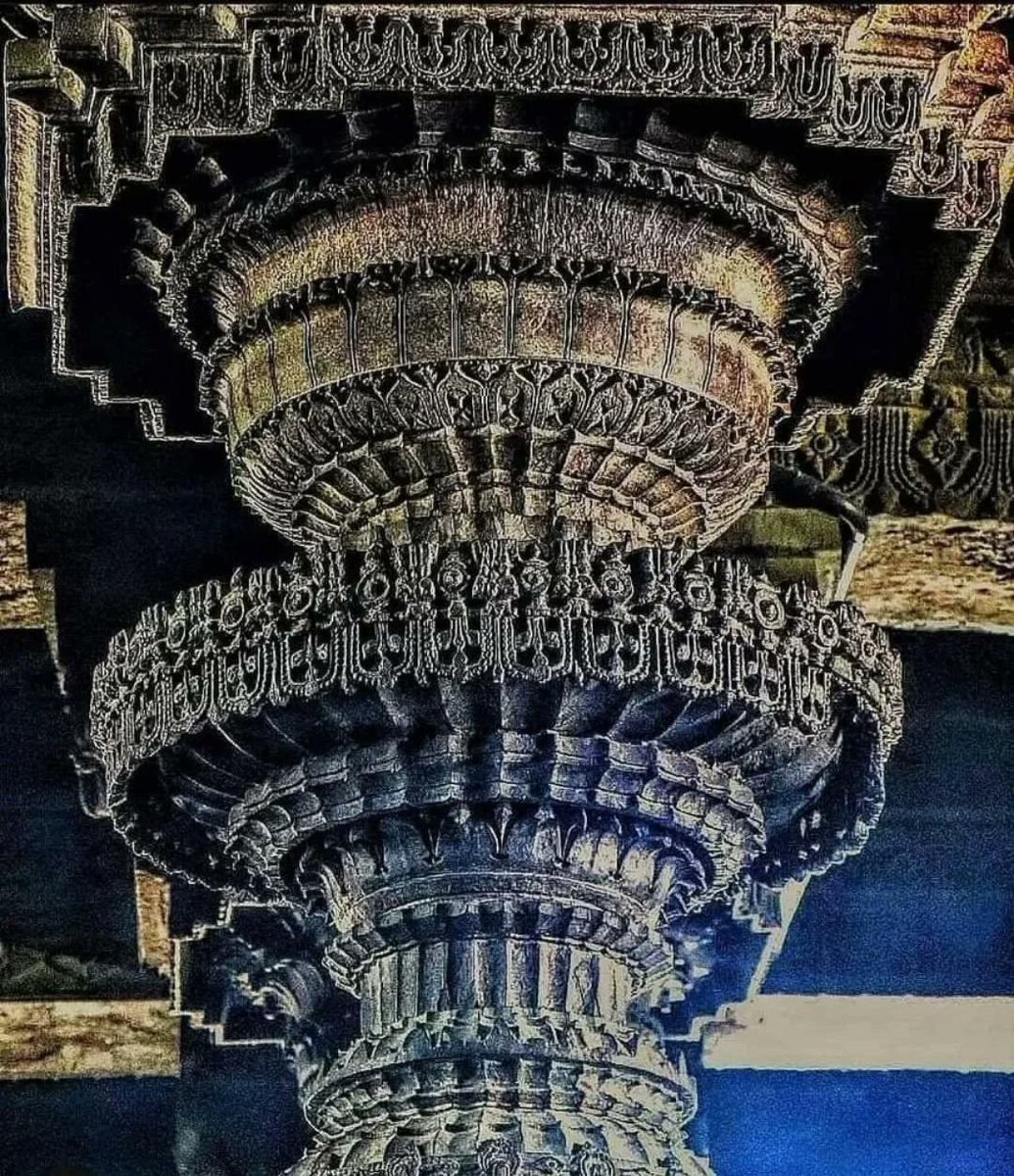
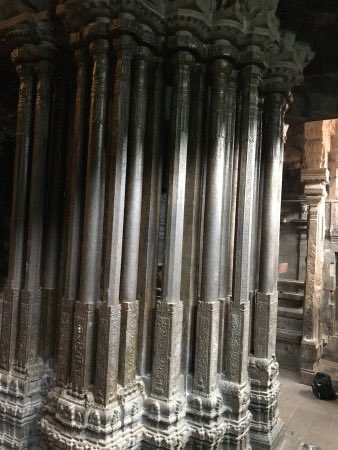
Many ancient temples in India boast levels of precision stonework and complex architecture that are truly remarkable. Even more remarkable is the fact that many of these pillars can be fully rotated 360 degrees, as can many other components of these structures. WHY?
Jay Anderson tweet mediaJay Anderson tweet media
English
245
794
5.6K
831K
Jebakumar Arulnathan
Jebakumar Arulnathan@Jeba_here·
As a Christian who trust in Christ, I shouldn't talk much about lord Murugan yet I've the rights as a Tamil and I believe my lord Murugan is my forefather who rised to be a deity, you too shouldn't talk about Murugan sister since you trust Allah and Allah alone. @fathimafarhanaS
English
278
9
84
186.2K
Hyperion Holdings
Hyperion Holdings@hyperion_hol·
@hamptonism $INFQ one of few companies actually shipping quantum sensors and generating millions in revenue 🔥
English
0
0
0
108
ₕₐₘₚₜₒₙ
ₕₐₘₚₜₒₙ@hamptonism·
One of the more substantive public quantum deals we’ve seen. BTQ acquiring QPerfect adds a Strasbourg-based team with deep expertise in neutral-atom systems, emulation, digital twins, and control software. It’s a clear expansion from post-quantum security into the full development stack needed to actually build and run quantum tech.
ₕₐₘₚₜₒₙ tweet media
BTQ Technologies@BTQ_Tech

BTQ Technologies Completes Acquisition of QPerfect, Advancing Its Mission of Building Trusted Quantum Technologies With World-Class Emulation, Digital Twin, and Control Capabilities newswire.ca/news-releases/… $BTQ

English
4
6
41
18.2K