Pat Grady

166 posts

Pat Grady banner
Pat Grady

Pat Grady

@iampatgrady

music + engineering is a happy way to live.

Austin, TX Katılım Nisan 2022
316 Takip Edilen31 Takipçiler
Pat Grady
Pat Grady@iampatgrady·
@NNRXMM @demishassabis past few months, lol. you're very dialed into ... something. not reality, but something
English
1
0
1
13
MÁXIMO
MÁXIMO@NNRXMM·
@demishassabis Google better deliver ASI tomorrow to compensate for the fumble of epic proportions these past months
English
1
0
7
982
Sundar Pichai
Sundar Pichai@sundarpichai·
Q1 earnings are in: 2026 is off to a terrific start. Our AI investments and full stack approach are lighting up every part of the business: Search queries are at an all-time high with AI continuing to drive usage. Google Cloud revenue grew 63%, Gemini models have incredible momentum, and it was our strongest quarter ever for consumer AI subs, driven by @GeminiApp. Thanks to our partners + employees around the world. Much more to share on our earnings call in 20 minutes… and at Google I/O in 20 days!
Sundar Pichai tweet media
English
380
949
9.8K
1M
Racerman
Racerman@964and911·
@aakashgupta I like your posts but this us sensationalist. She basically said we need revenue to keep up with compute, NOT we can't pay a $1.4 trillion bill.
English
2
0
0
1.7K
Aakash Gupta
Aakash Gupta@aakashgupta·
OpenAI's CFO just told her own executives the company might not be able to pay its $1.4 trillion in compute bills. OpenAI makes $20 billion a year. That's a 70-to-1 ratio between committed spend and current revenue. To clear those obligations, OpenAI has to grow an order of magnitude in five years and hold it for a decade. Sam said last week the target is "hundreds of billions" by 2030. Friar has said three versions of this admission in three weeks. At WSJ Tech Live, she pitched a federal "backstop" for the financing, then walked it back when the backlash hit. With Cathie Wood, she reframed it as a compute shortage, saying OpenAI is "making tough trades" and turning down projects. Now WSJ has the internal version: she's worried they can't pay the bill. Same statement, three audiences, urgency turned up each time. The internal version is always the real one. The math underneath. Oracle: $300 billion over five years, $60 billion annually starting 2027. Microsoft: $250 billion. Nvidia: $100 billion in chip purchases, with Nvidia simultaneously investing $100 billion back into OpenAI to fund those purchases. AMD: 6 gigawatts of capacity, up to $300 billion. Broadcom: $350 billion. AWS: $38 billion. CoreWeave: $22 billion. Annual compute spend ramps from $6 billion this year to $173 billion in 2029 to $295 billion in 2030. Tom Tunguz modeled it straight from the public contracts. Microsoft took a $360 billion stock wipeout last week when investors learned 45% of its $625 billion commercial backlog, roughly $250 billion, is tied to OpenAI. Oracle has already borrowed against its deal, already started building, already committed years ahead of cash flow. HSBC estimates OpenAI has a $207 billion funding gap to meet what's already signed. The "Nvidia invests in OpenAI to buy Nvidia chips" loop is the same trade five different ways. Capital flows from one balance sheet to another and books revenue at every stop. If OpenAI's revenue ramp stalls, the loop stops, and every company holding the contract marks it down at the same time. Friar is the only person in the building with every contract on her desk at once. When she tells the room she's worried, the other three statements were warm-ups.
Aakash Gupta tweet mediaAakash Gupta tweet media
English
52
105
420
67.2K
Pat Grady
Pat Grady@iampatgrady·
@hororchata @GoogleLabs @stitchbygoogle sounds like you'll be sitting, waiting for someone to invent the next vibe. I think the point was for you to start creating... instead of complaining
English
0
0
0
21
chata
chata@hororchata·
@GoogleLabs @stitchbygoogle We are just doing everything with vibes now. Vibe coding and now Vibe Designing, what's next?
English
21
1
31
17.5K
Google Labs
Google Labs@GoogleLabs·
Introducing the new @stitchbygoogle, Google’s vibe design platform that transforms natural language into high-fidelity designs in one seamless flow. 🎨Create with a smarter design agent: Describe a new business concept or app vision and see it take shape on an AI-native canvas. ⚡️ Iterate quickly: Stitch screens together into interactive prototypes and manage your brand with a portable design system. 🎤 Collaborate with voice: Use hands-free voice interactions to update layouts and explore new variations in real-time. Try it now (Age 18+ only. Currently available in English and in countries where Gemini is supported.) → stitch.withgoogle.com
English
401
2K
16.2K
6.5M
Munya Bwanya
Munya Bwanya@MunyaBwanya·
@daddyhope Of course Russia is justified in attacking Ukraine if Ukraine is being used by the EU and NATO to set up shop against Russia. What country would watch and do nothing?
English
6
0
11
652
Hopewell Chin’ono
Hopewell Chin’ono@daddyhope·
This is the problem with some of my African brothers, they take Donald Trump’s talking points and lies, turn them into facts, and then run with them. This is also why I encourage my social media followers to read first and then engage in debates that are centred on facts, not emotions, because repeating propaganda does not make it true. American oil companies did not “own Venezuela’s oil wells” in the Chávez era or just before. Venezuela nationalised its oil industry in 1976, more than 20 years before Hugo Chávez came to power. From that point onwards, the oil belonged to the Venezuelan state through Petróleos de Venezuela, S.A. (PDVSA). Foreign companies, including Americans, operated under service contracts and joint ventures, not ownership. Hugo Chávez did not hand oil to “mafias” as you have said, brother. He renegotiated contracts in the 2000s to give PDVSA majority control of 60 percent or more in joint ventures. Companies that refused those terms, such as ExxonMobil and ConocoPhillips, exited and later pursued international arbitration. Others, including Chevron, stayed and continue to operate in Venezuela to this day, even under US sanctions via special licences. Chevron is an American company. Russians, Chinese, and Iranians did not “take over American oil wells.” Companies from Russia and China entered Venezuela through state-to-state agreements and joint ventures with PDVSA, mostly after Western firms reduced exposure because of sanctions and financial risk. Examples of these partnerships include Rosneft and China National Petroleum Corporation (CNPC). These firms did not seize American assets, they stepped into gaps created by sanctions, capital flight, and the collapse of PDVSA, operating through state to state agreements and joint ventures rather than expropriation. What happened recently is limited re-entry and licence based cooperation by American companies, especially Chevron, as part of sanctions negotiations tied to political and electoral conditions. So calling Chávez simply “Communist” is MAGA political rally shorthand talk to excite the so called political base, not an economic description of what actually happened. His model was a state-controlled, oil-funded populist system, not classic communism, and Venezuela retained private property and private enterprise throughout his rule. I studied Venezuela and Chávez at film school in Britain, so I know a bit about what happened there, hence my intervention to your comment. Was Maduro a saint? The answer is no, but is this how you pursue oil interests in a rules based world? Have we not learnt enough from history about how this always ends from Patrice Lumumba to Muammar Gaddafi? It is not a binary debate, you can condemn Maduro’s dictatorship and also call for the upholding of international law without lacing arguments with lies and Trump's propaganda. The tragedy on these social media Apps is that people follow personalities, not ideas, not principles, not a set of values. They tragically follow political personalities like they are a religion. So if someone likes Donald Trump, regardless of how badly he has performed, they will still take his talking points and run with them as fact. You cannot have a sensible intellectual debate if you debate that way and choose that route. Be principled and understand that even if you support a specific person or grouping, when the facts do not support what they are saying, you must have the intellectual courage to stand up and say no, this is wrong. I support this person, but what they are saying or doing is wrong. If you go hook, line, and sinker, it means you are intellectually compromised. You have no principles, no values, and you do not follow ideas. I do not think we can learn anything from each other under those conditions and discourse circumstances. I have read many debates on Zimbabwean Twitter and African Twitter that centre on the argument that we also have dictators, so some people end up celebrating Donald Trump’s behaviour on the basis that we too live under authoritarian leaders. That framing is intellectually lazy. Understanding history matters before we make wild and misplaced declarations. Venezuela is not Africa. When surveys were conducted after Hugo Chávez came to power, many Venezuelans described what was happening as liberation. For decades they had lived under oligarchic rule aligned with the United States, dominated by a largely white elite that excluded and marginalised the black and poor majority. That historical context matters, whether one likes Chávez or not. This is why I cringe when I read some of what is posted on social media, arguments made without nuance, without history, and without facts. When we misplace our arguments and compare apples with oranges, we end up making ourselves an intellectual laughing stock. In that context, Chávez was closer to Morgan Tsvangirai than to an African dictator caricature, while the role of the United States in Venezuela mirrors, in some respects, what China is doing in parts of Africa with the help of crooked and corrupt African leaders and their elite compradors. If we are serious about debate, we must engage honestly with history rather than bending it to fit personalities we happen to like. The suffering of poor and Afro-descendant Venezuelans before Hugo Chávez came to power is well documented, and central to why he initially enjoyed mass support. Before 1999 whenChávez came to power, Venezuela was formally a "democracy", but in practice it was run by a small, racially and socially stratified elite concentrated in Caracas and linked to oil rents. Although Venezuela does not use rigid racial categories, poverty and exclusion overwhelmingly fell on darker-skinned and Afro-descendant Venezuelans, while political and economic power sat with lighter-skinned elites of European descent. About 18 to 20 percent of Venezuelans lived in poverty in the late 1970s. By 1998, before Hugo Chávez came to power, poverty had risen sharply to about 49 percent, with roughly 20 to 23 percent of the population living in extreme poverty. During the 1990s, Venezuela also had one of the highest levels of income inequality in Latin America. Oil wealth flowed upward through patronage networks rather than downward into public services, leaving poor, largely black and mixed race communities without adequate healthcare, clean water, or quality education. This extreme inequality existed alongside immense oil wealth, with sprawling slums, the barrios, surrounding wealthy urban centres. The breaking point came in 1989 with the Caracazo, a mass uprising and state massacre in Venezuela in February 1989, and it is one of the most important events for understanding why Hugo Chávez later rose to power. IMF style austerity measures triggered mass protests that were brutally crushed by the army, resulting in the deaths of thousands of poor Venezuelans. That massacre permanently delegitimised the old elite order in the eyes of the majority, the very elite that controlled oil revenues. Chávez was therefore seen by many inside Venezuela as a liberator. He was not just another politician. He was the first president who openly spoke like, looked like, and identified with the poor majority, including Afro Venezuelans. His political legitimacy came from redirecting oil income away from oligarchic capture and towards social spending aimed at the excluded majority. Between 1999 and 2012, measurable social indicators improved significantly, using UNDP, World Bank, and Venezuelan official data from the 2000s. Overall poverty fell from around 49 percent in 1998 to about 27 percent by 2011, while extreme poverty dropped from roughly 23 percent to under 8 percent. This represented one of the fastest poverty reductions in the hemisphere during the oil boom years. Income inequality also declined. Venezuela’s Gini coefficient fell from about 0.49 to around 0.39, and by the late 2000s the country was ranked among the least unequal in Latin America. The Gini coefficient is a statistical measure of income or wealth inequality within a country or society. There was a major expansion in health, education and social services. Free healthcare clinics were rolled out across poor barrios, illiteracy was declared eradicated under UNESCO standards, and school enrolment and university access increased sharply for poor and black Venezuelans. Political inclusion also changed. Afro Venezuelans became visible in politics, media, and state institutions for the first time, and the constitution explicitly recognised Afro descendant and indigenous rights. This is why international observers at the time acknowledged that Chávez achieved real social inclusion, even among critics of his broader politics. Chávez did not rise to protect a political elite. He rose against one. That is why poor Venezuelans initially defended him, just as many Africans supported liberation movements at independence, or opposition movements even when later outcomes disappointed. Ignoring that history flattens reality and turns serious political analysis into personality worship or cheap propaganda. Chávez genuinely improved the material lives of poor and black Venezuelans in his first decade, but he failed to build sustainable institutions, diversify oil production, or protect PDVSA from politicisation. When oil prices collapsed and sanctions later compounded mismanagement, many of those gains were reversed under Nicolás Maduro. However, this does not erase the historical reality of why Chávez rose to power, nor does it justify lazily comparing him to African dictators without context, which is intellectually dishonest. That is why Chávez was defended by the masses during the brief 2002 coup. When he was removed from office and a self appointed interim government was announced, poor and working class Venezuelans poured into the streets, surrounded the presidential palace, and refused to accept the return of the old elite order. Within about 48 hours, with the backing of popular mobilisation and loyal sections of the military, Hugo Chávez was brought back to power. That moment confirmed, more than any speech or election result, why large sections of Venezuelan society saw him as their own and were prepared to defend him. So facts matter my brother.
M-Jay@M_Jay94

@daddyhope There were American oil companies before the Communist Chavez took over. They took American investments and infrastructure and gave it to mafias. With the Russians, Chinese and Iranians running the oil wells once owned by Americans. Americans are taking back their investments.


English
42
57
164
38.1K
Press Trust of India
Press Trust of India@PTI_News·
VIDEO | On US President Donald Trump's H1-B policy, White House Press Secretary Karoline Leavitt says, "The President does not support American workers being replaced. You are mischaracterizing what the president said. The president wants to see our American manufacturing industry be revitalized better than ever before. That's part of what he's doing with his effective use of tariffs and cutting good trade deals around the world. That's why he's recruited trillions and trillions of dollars in investments into our country. Those are creating good paying American jobs right here at home. As for the H-1B visa issue, the president has a very nuanced and common sense opinion on this issue. He wants to see if foreign companies are investing trillions of dollars in the United States of America, and they're bringing foreign workers with them to create very niche things like batteries. He wants to see that at the beginning to get those manufacturing facilities and those factories up and running. But ultimately, the president always wants to see American workers in those jobs." (Source: Third Party) #H1Bpolicy #US
English
28
3
42
6.7K
Vedant Misra
Vedant Misra@vedantmisra·
Mom: how’s work going? Me: pretty good, we made all the numbers go way up in this table and shipped the best model in the world Mom: that's nice but what's happening with the "SWE Bench" row Me: mom can you not right now
Vedant Misra tweet media
English
72
67
2.8K
248.4K
TBPN
TBPN@tbpn·
Gemini 3 is *really good*, says @arcprize co-founder @mikeknoop. But he's been puzzling over one aspect of its performance. While Gemini 3 does much better on Arc's v2 benchmark, it only improved nominally on v1, which tests for less complex tasks than v2. What he said: "The big surprise to me personally is that Gemini 3 is still roughly along the Pareto frontier of v1..." "There's dozens of tasks where [Gemini 3] makes relatively obvious mistakes that humans don't make, or recognize really quickly. And I previously expected, if we had an AI system that was solving half of v2, v1 would be fully solved. That's not the case." "There's a lot of surprise here. I invite investigation from the community because I think there's still a lot to learn in terms of why exactly we see such a jagged intelligence emerging right now."
English
33
6
208
38.2K
Pat Grady
Pat Grady@iampatgrady·
@EmilSutovsky Pile of garbage. Emil. Leave. Your stench is repulsive
English
0
0
0
0
Emilchess
Emilchess@EmilSutovsky·
Dear friends, Reading your comments to my previous tweet, I realized that it should have been clearer and more responsible. It was obviously not aimed at Danya's close friends or God forbid family. I was referring to people who now refer to themselves as friends, but did very little to help. It did annoy me, and does annoy now. I never had a privilege to call Danya a friend, but I acknowledge that FIDE also could and should have done better. We need to look into our policies, and probably not to wait for a formal complaint, but to step in and protect the people in such a situations. Very difficult to balance it all, but we will do our utmost. On a personal level: the news of Danya's passing shocked me. It triggered a lot of feelings, and maybe I was too emotional writing about it. And emotions are rarely a good companion of wisdom.
English
1.3K
25
1K
470.8K
Emilchess
Emilchess@EmilSutovsky·
Amount of love given to Danya post-mortem is unprecedented. I can't recall anything of the kind. But here is the problem - where all of you were when Danya was alive and unwell? I am not talking now about stepping in when he was accused. Although it is a separate important matter. I know many people find it hard to express their opinion, as the problem is indeed huge, and striking a balance is nearly impossible. One thing is clear : the way Kramnik approaches it, simply can't be accepted. And his reaction on Danya's passing is appalling and outright shameful. FIDE is not a court of justice, but we will act within our jurisdiction. However, let's not oversimplify it. It is too simple to focus on Kramnik and forget everything else. Danya was clearly not at his best in recent months. He stopped appearing as a commentator for one reason or another, he was not his usual self. Now, all those who claim how dear Danya was to their heart, how good a friend they were, where have you been? What did you do? All these Kramnik attacks on Danya happened not this week or month. It was not like a shocking accusation, that killed Danya overnight. It kept haunting him for more than a year, even if there was not much of polemics of recent. So, I ask you, alleged Danya's friends, what did you do to help him for half a year or so? Did many of you write him to ask, whether he is OK? Why he, arguably the best online commentator disappeared from the screens? Did you text him to ask why did he stop streaming? Throughout 15 years I spoke to Danya many times, though we never were friends. He fascinated me long before he became a famous streamer. I met him when he just started being coached by my former trainer, Lev Psakhis. And we spoke rarely but in length many times since. I look at our correspondence from 2014, when he was thinking of a life path. And then later in 2017, and in 2019, and in 2021. Most recent online conversation was in 2024 when I invited him to comment on the Match in Singapore. And the last time I spoke to him in person was during the Grand Swiss in Samarkand, where he seconded a top player, hiding this fact for one reason or another. All the recent years I had a feeling Danya was not a happy person, although he made many people happy. Our last lengthy conversation took place in 2021, when he was already a famous online player and streamer, but still was considering a career of a real professional player. He was very much in doubt whether he is doing the right thing with all the blitz and streaming - he even considered moving to Europe to have more opportunities as a player, "but it is very difficult with all the online success I have". It came at a price. The boy with shining eyes had less and less shining left. And now, he is gone. Way too early. If he looks from above, he might be surprised to read about this or that person allegedly being his friend. Danya was kind to many, but it feels like most of the time he was lonely. Virtue signalling and like-grabbing is the worst way to pay respect to Danya. He was special on so many levels. He will be missed - or rather he is very much missed already. The Danya.
Emilchess tweet mediaEmilchess tweet media
English
1.8K
117
2K
3.6M
Google Gemini
Google Gemini@GeminiApp·
Gemini Advanced now connects with @github, making it a more powerful coding assistant. Directly connect to public or private GitHub repos to generate/modify functions, explain complex code, ask questions about your codebase, debug and more. Click the + button in the prompt bar, select "import code" and paste the GitHub URL to get started.
English
134
448
3.6K
299.2K
Pat Grady
Pat Grady@iampatgrady·
@n1d_all @GeminiApp @github Yeah, it's not on advanced either. Guess marketing and product engineering are out of step... As usual
English
0
0
2
39
Pat Grady
Pat Grady@iampatgrady·
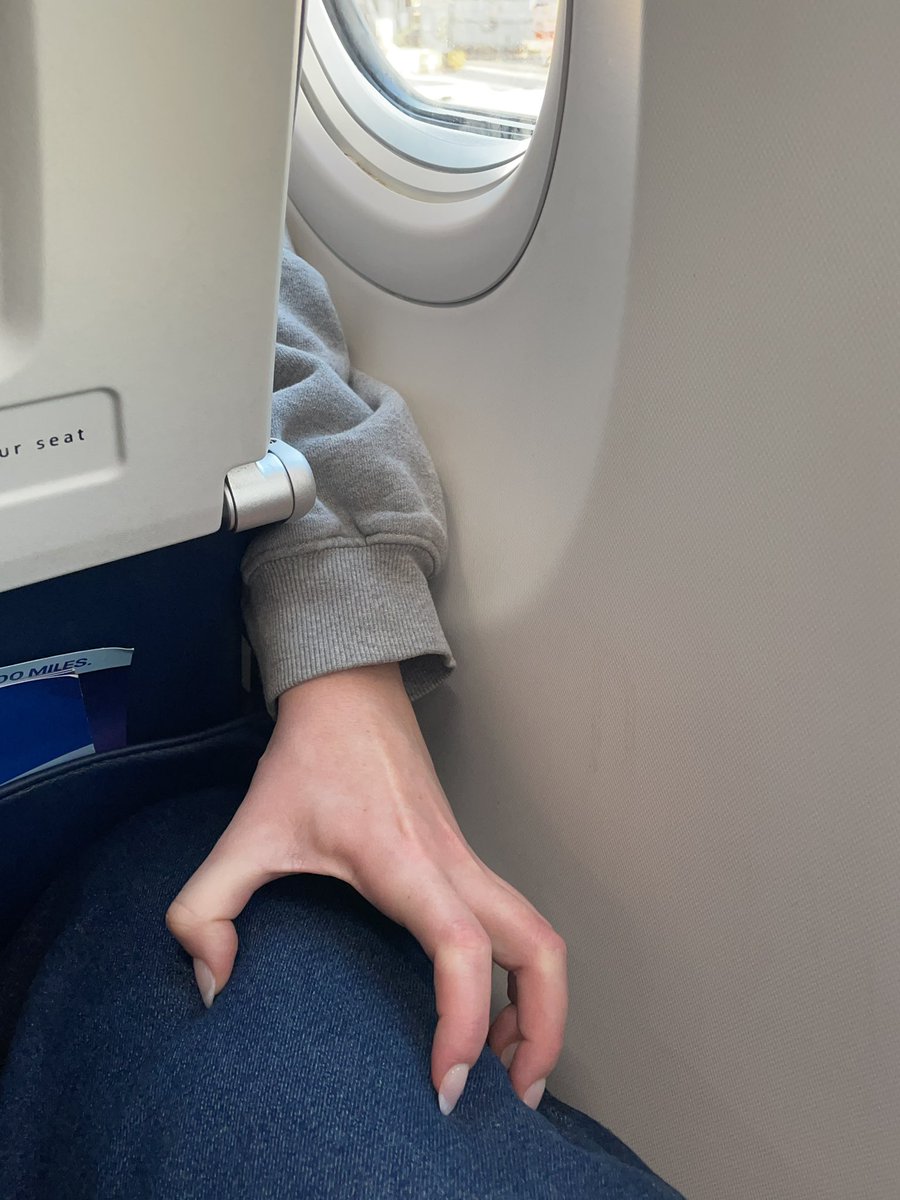
@lalalabrazi2014 @united Did you try talking to her? Or did you just tweet about it and sit disturbed for multiple hours
English
0
0
0
109
fia
fia@lalalabrazi2014·
UNITED AIRLINES I’m disturbed!! The passager in front of me couldn’t keep her claws off me! How do I report this? @united
fia tweet media
English
11
0
3
1.6K
Alexandria Ocasio-Cortez
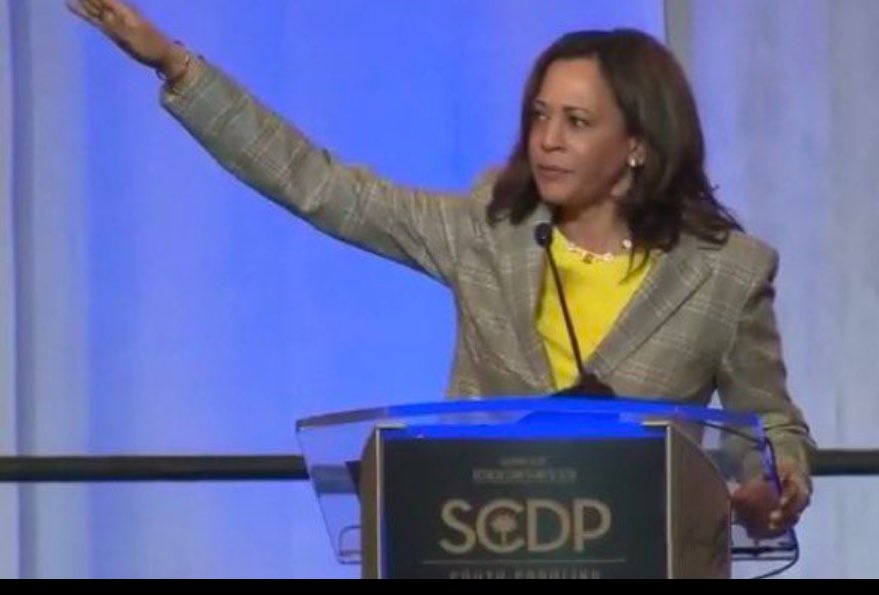
Just to be clear, you are defending a Heil Hitler salute that was performed and repeated for emphasis and clarity. People can officially stop listening to you as any sort of reputable source of information now. You work for them. Thank you for making that crystal clear to all.
ADL@ADL

This is a delicate moment. It’s a new day and yet so many are on edge. Our politics are inflamed, and social media only adds to the anxiety. It seems that @elonmusk made an awkward gesture in a moment of enthusiasm, not a Nazi salute, but again, we appreciate that people are on edge. In this moment, all sides should give one another a bit of grace, perhaps even the benefit of the doubt, and take a breath. This is a new beginning. Let’s hope for healing and work toward unity in the months and years ahead.

English
58.7K
37.7K
335.5K
40.8M
Pat Grady retweetledi
Jarryd Jäger
Jarryd Jäger@JarrydJaeger·
Elizabeth May responds to Donald Trump, suggesting that the west coast states and New England (and Bernie Sanders) should join Canada: "We do not aspire to be the 51st state ... If it was a joke, it was never funny, and it ends now." #cdnpoli
English
66
234
748
35.5K
Marty Baron
Marty Baron@PostBaron·
On political endorsement wapo.st/3YmeD3T This is cowardice, with democracy as its casualty. @realdonaldtrump will see this as an invitation to further intimidate owner @jeffbezos (and others). Disturbing spinelessness at an institution famed for courage.
English
1.9K
3.4K
9.5K
1.9M
Laura Loomer
Laura Loomer@LauraLoomer·
Once again, @mtgreenee who is extremely jealous and vindictive over the fact that she wasn’t successful in turning Donald Trump against me is now behaving like a leftist and accusing me of being “racist”. Kamala Harris is on video calling herself Indian and saying she Cooks with curry. She also refuses to speak to the media so there is a strong likelihood that she would set up a call center to avoid speaking to the press and being honest with the American people. Hey MTG, speaking of racism, one of your former staffers told me you have a favorite word that starts with N . What if the staffer has a video? It’s rather ironic that MTG wants to call me a racist when MTG is a full blown ANTI SEMITE who believes that Jewish people use Space lasers to control the world. Along with being an anti semite, MTG is also a poor excuse for a Christian. Her marriage failed because she couldn’t keep her legs closed while she was a new member of Congress and was too busy Screwing some guy from her CrossFit. She is not representative of the GOP or what it means to be America first. Nobody talks about her anymore because she’s annoying and irrelevant and a sellout. Hey @mtgreenee how come you weren’t at the debate? Guess you gave up on Trump when he gave up on your boyfriend @SpeakerMcCarthy. Don’t talk about representing Donald Trump when you paid for the Ye 2024 domain and used your campaign funds to orchestrate the dinner between Nick Fuentes and Kanye West. I exposed you months ago and I’ll do again you trailer trash harpy.
English
922
271
1.3K
374.2K
Pat Grady
Pat Grady@iampatgrady·
@VetsForRL Disgusting behavior, albeit, unsurprising, sadly.
English
0
0
2
9