Ian Teetzel

348 posts

Ian Teetzel banner
Ian Teetzel

Ian Teetzel

@ianteetzel

Katılım Ağustos 2009
232 Takip Edilen231 Takipçiler
Ian Teetzel
Ian Teetzel@ianteetzel·
Yes accurate. I'm thinking vs public charging, but lots of trucking companies won't have the power supply available to install multiple megachargers plus having employees jockey trucks around to charge for an hour a day would be a major pain. Technology adoption takes cost and convenience and when the drivers can park in their nightly parking spot and plug in like we do with our car that's the cost & convenience advantage that companies need for adoption. If someone has a dozen EVs and only 1-2 superchargers it would be a major pain, each vehicle needs its own charger to be convenient. I wouldn't even like having 2 EVs with 1 charger lol. Plus they are all day cabs so they are only going to be doing local and regional routes where they can get back to the yard every day. Until they are autonomous anyways. That's going to be the real feature for adoption.
English
1
0
0
10
FutureAzA
FutureAzA@FutureAZA·
Not quite. The only time electricity runs anywhere close to diesel parity in the overwhelming majority of the US is at public chargers. Massachusetts is a notable exception. Commercial and industrial power rates are generally quite a bit lower than residential. These pay off quick.
English
1
0
1
39
Ian Teetzel
Ian Teetzel@ianteetzel·
The history to know is ethanol was started to strengthen a very weak agricultural industry not because it made sense or was scalable. Agricultural was in a very bad financial position in the late 90's and early 2000's when the government built the ethanol industry with subsidies and regulations. The government was spending billions in subsidies to keep the ag industry afloat. They were seriously concerned with the long term strength of the ag industry because if ag collapses it's obvious very very bad for a country. They saw ethanol as a way to a self sufficient strong financial ag industry and for 20 years it has been that.
English
0
0
0
9
Ian Teetzel
Ian Teetzel@ianteetzel·
@jasonc_nc It's gross 40%, net 30% after ddg's are recovered which get feed to livestock, but yes it still makes no sense for fuel. Completely unscalable.
English
1
0
1
14
Jason, Coffee Shop Oligarch
Jason, Coffee Shop Oligarch@jasonc_nc·
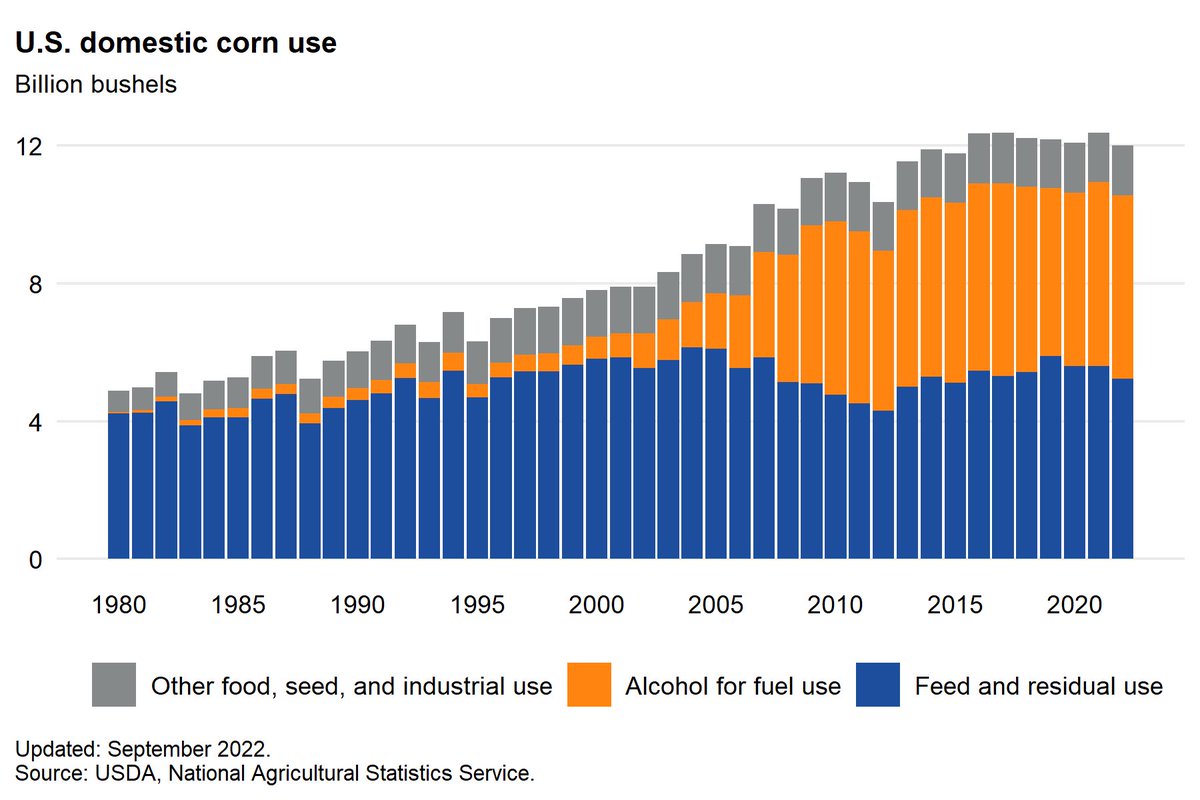
Effectively all growth in corn production over the last 20 years is for ethanol. ~20 million acres of conservation land, grassland, and soybean rotation was turned into corn monoculture that effectively strip mines the topsoil. Meanwhile it’s the most fertilizer dependent crop with only a 40% uptake rate. So ~1.7 million tons of nitrogen runoff flows into the Mississippi basin annually while also polluting their own water supplies. This runoff ends up expanding the Gulf deadzone, which is also where 40% of domestic seafood comes from. It’s hard to find a worse way to create fuel, with a wicked level of waste and downstream consequences.
Jason, Coffee Shop Oligarch tweet media
Jason, Coffee Shop Oligarch@jasonc_nc

45% of US corn production is for fuel ethanol and related. In other words almost half of the market is a form of ag subsidy with negative effects.

English
160
1K
4.8K
482.1K
Ian Teetzel
Ian Teetzel@ianteetzel·
My favorite way to explain it is. It would take 400 million acres of corn if the entire us fleet ran on ethanol. There's only 225 million acres of corn, beans & wheat grown in America and it would take 3 million acres of combined solar with wind to power the entire fleet if it was all electric, but if they all charged off peak we already have enough electrical production capacity for the entire fleet.
English
1
0
3
33
Matt 🌐🇺🇸🇺🇦
Matt 🌐🇺🇸🇺🇦@Diplomatt42·
@jasonc_nc @loganb An acre of corn ethanol yields about 12,000 miles of gas annually for a car. An acre of solar yields 700,000 miles for an EV. If we took only the land used for corn ethanol, we could cover the passenger vehicle miles for all Americans 8 times over
English
5
3
44
821
Ian Teetzel
Ian Teetzel@ianteetzel·
@ChrisCamillo @Youssef_Lasri1 This is so true. 38% of GDP is direct government spending (all levels of government, not counting the trickle down economics) but the government definitely doesn't produce 38% of goods & services.
English
0
0
1
52
Chris Camillo
Chris Camillo@ChrisCamillo·
UBI won’t show up as $5k monthly checks overnight. It’s already here. Quiet. Expanding. Call it shadow UBI. Some will coast. Others will use it to build, solve, and raise the baseline for everyone. That split decides everything.
English
33
10
401
61.9K
Ian Teetzel
Ian Teetzel@ianteetzel·
Yes solar doesn't have to go on productive land, but FYI 30 million acres net of corn (10% of farmland) goes to producing ethanol. That ethanol powers the entire US fleet 6% of the total miles. (1 acre of corn produces ethanol that has the energy to propel an F150 25,000 miles. 1 acre of solar producers the energy to propel an F150 EV 700,000 miles). If the entire US fleet was EV 3 million acres of solar is enough to power 100% of the 3.3 million miles.
English
1
0
0
41
Ian Teetzel
Ian Teetzel@ianteetzel·
I think you're right on. To make it return you need in yard (off peak) charging. I think there was mention of a "yard" charger at a presentation a long time ago. Over 50% of semi's do park in their yard every night (less than 50% do long haul). So this would make the most sense. Then no one has to spend time fueling it up too. Drivers can schedule precondition so it's ready to go when they get there. To maximize sales this seems the logical way. To charge in 10 hours would require an 80 kw connection. 96 amps @ 480v per truck. Nothing crazy for an industrial site. A dedicated 80 kw charger for each truck seems like the logical way.
English
0
0
0
13
this fella
this fella@Hadynuf·
Why $0.18 kWh. Your superchargers are 3 times that. Which would make this comparison far from accurate. Only charging at home makes sense. What does a charger like this cost to have at home/ work. Im assuming Pepsi bought theirs. Why does no one have that info. Like the cars. If you use tesla chargers the cost per mile is similar to a Toyota Corolla. Or does Elon like semi owners more than his car owners. Are they getting cheap electricity. ?
English
1
0
0
126
Ian Teetzel
Ian Teetzel@ianteetzel·
If the Tesla semi is approximately 40¢/mile cheaper than diesel (on avg) and they cost $100k more than the diesel semi they replace. It will take 250,000 miles to recoup the additional capX cost of the truck + charging infrastructure cost. Fleets that buy new typically keep their trucks for 3-7 years (250-600k miles). Residual value will play a major role in the economic viability for fleets that run new trucks. Maintenance cost for oil changes & breaks is very low small for fleets that run new 3-7 year old trucks. Less maintenance will always be be a welcomed convenience though. Autonomy will be where the real market unlock is. Just like the cars.
English
1
0
0
100
Ian Teetzel
Ian Teetzel@ianteetzel·
@FutureAZA 100,000 kms. Normal driving. 2022 MYLR. Sailun Erange EV's on now ($1580 cad). Looks like they'll make it to 100k kms. That's 1.58¢ CA/km or 1.83¢ US/mile
English
0
0
4
291
Ian Teetzel
Ian Teetzel@ianteetzel·
Earth has an abundance of resources. Resource scarcity is artificially created by regulations and technology limitations. Goods & Services = Inputs (Knowledge + Resources + Energy + Work). Each good or service costs the combined total of these inputs. AI & Robotics could democratize everything but resources. Then Goods & Services will be only limited by regulations.
English
1
0
6
460
Marcus Pittman
Marcus Pittman@ImKingGinger·
@elonmusk I still think that the earthly resources needed for goods will become finite at some point down the production line, (aka GPUs) so unless your planning on colonizing Mars and space for more raw materials, there will always be scarcity in the chain oh...wait a minute! 🤯
English
141
17
584
63.1K
Ian Teetzel
Ian Teetzel@ianteetzel·
Not free. We pay for the entertainment. $2840/year increase per household he made ($840 in federal income tax and $2000 in interest on the federal debt). Meanwhile Norway has a $1.1 million per household sovereign wealth fund ($530k/person) with less than 1/3 the proven oil reserves per person. Imagine we could get a government that actually cares about its people and isn't financially inept.
English
0
0
1
24
Paul W. Swaney III
Paul W. Swaney III@paulswaney3·
Didn’t he ban plastic cups for all of Canada @grok please confirm
Paul W. Swaney III tweet media
English
593
612
18.5K
3M
Ian Teetzel
Ian Teetzel@ianteetzel·
@paulswaney3 @grok “Uh, we, uh, uh, we have uh recently switched to drinking uh water bottles out of uh water out of uh when we have water bottles uh out of uh plastic uh, sorry, away from plastic towards uh paper uh like drink box water bottles sort of things.” Justin Trudeau (june 2019)
English
0
0
0
45
Ian Teetzel
Ian Teetzel@ianteetzel·
@Gina_T1 @Travisbecker17 @grok Protectionists driven by fear of personal loss are propagating falsehoods about reforms that would benefit the majority. It is the same underlying pathology as misanthropic environmentalism, manifesting in a different sphere.
English
0
0
0
39
Gina Unfiltered | 🇨🇦
Hey @grok who would actually improve life for everyday Canadians: Pierre Poilievre or Mark Carney? Short answer.
English
45
200
892
214.6K
Ian Teetzel
Ian Teetzel@ianteetzel·
Government taxation for legitimate order (justice, defense, peace) is biblically supported - we are to render to Caesar what is Caesar's (Romans 13, Matthew 22:21). But when it shifts heavily into coercive redistribution as a substitute for voluntary charity, it conflicts with 'You shall not steal' and undermines the biblical principles of freedom, personal responsibility, stewardship, and cheerful giving.
English
0
0
2
650
Joel Berry
Joel Berry@JoelWBerry·
Tucker’s latest guest: “Capitalism shouldn’t be anywhere near Christianity. Christianity is socialism at its core.” Tucker agrees
English
2.4K
828
6K
3.4M
Ian Teetzel
Ian Teetzel@ianteetzel·
@OverlyTrev @Tesla Remember even at $0 the adoption rate topped out at 50% that tried it. If it's ~10% at $100/month and 50% at $0. What's the right pricing? Personally until it can autonomously drop off and pick people I'm not paying anything extra. I bought my Modey Y for a lower TCO per mile
English
0
0
0
39
Overly Trev
Overly Trev@OverlyTrev·
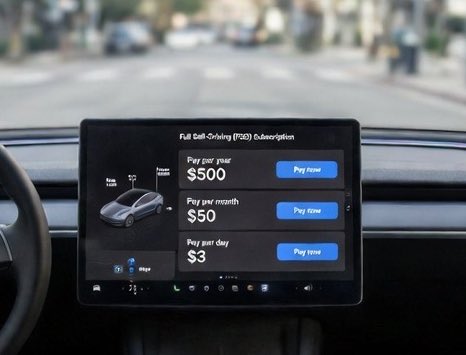
Here is what I think @Tesla should do for increased FSD adoption. Make a tiered system where people can purchase FSD in the following ways: 1. Subscribe per year: $500 2. Subscribe per month: $50 a month. — If 2x the people subscribe, it’s the same as $99 but you increased adoption. 3. Purchase per day: $3 for 24 hours. — Can do multiple days at a time. With this strategy, I believe you could increase adoption, spread awareness, and increase profit from FSD as well.
Overly Trev tweet media
English
192
34
643
66.3K
Rich Toronto
Rich Toronto@rich_toronto·
I guess nobody told the people in charge of the CN tower that today is Good Friday so they went with IBS. Kinda shitty of them.
CN Tower / Tour CN@TourCNTower

Tonight the #CNTower will be lit periwinkle for IBS Awareness Month / Close-up of the CN Tower at night lit periwinkle/ Gros plan de la Tour CN illuminée en lilas la nuit

English
38
35
245
6.4K