

Ionuț Leonte
83 posts


@ileonte @vgrechannik @coshi_dev Yes, that's what you should do to be able to use more specified protocols.
English
@HSVSphere @vgrechannik @coshi_dev Your first reply was literally "use the specific implementation".
English
@vgrechannik @ileonte @coshi_dev Wayland is a standard and so are the extensions. C++ is a standard too. And none of these dictate the implementations.
I am not the one making that argument here, @ileonte is.
English
@HSVSphere @coshi_dev So Wayland sucks until an undefined point in time when it will maybe, possibly not. Got it.
English
@ileonte @coshi_dev I know that the adoption of some protocols is lacking, but most don't matter because KDE implements them anyway. Still, it'll improve (unless you're on gnome)
English
@HSVSphere @coshi_dev What are you talking about? "Thing that is not Wayland, the subject of the discussion, is not Wayland! I am very smart and just use other thing that is not Wayland!" Just take your L and move along.
English
@ileonte @coshi_dev xdg-icon isn't Wayland either, it's xdg-icon, and neither is GNOME, as GNOME is GNOME
English
@HSVSphere @coshi_dev Yeah, I agree, I use KDE on all my systems. But KDE is not Wayland.
English
@ileonte @coshi_dev Not talking out my ass, KDE is the best DE out there.
English
@HSVSphere @coshi_dev You should also not talk out of your ass but here we are.
English
@ileonte @coshi_dev KDE supporting it is enough, because you should be using KDE.
English
@HSVSphere @coshi_dev That protocol was adopted last year and is supported by almost no compositor. I don't like the Wayland hate either but this is not a good example of Wayland not sucking.
English


Truth nuke. I use Linux full time for over a decade, and this is the truest take on package management. Infinite amount of human hours wasted on slightly different ways of copying and removing files in "correct" folders.
This is because in Linux, new thing is never just better than the old thing. It's always better in one way, and worse in other ways, so instead of switching to the new thing you just get more fragmentation.
In Linux, you design an incompetent half-assed new thing by committee. And then it takes 15 years to get to a state where a bit over half users of the old thing can comfortably switch to it, and you stop at that, in hopes that the other half of the users die of old age.
Q@qtnx_
my hottest take is the linux model of package managing is insane in the modern age projects like firefox should not be handled by random package maintainers for every distro, it makes sense to download from the mozilla website imo why linux will never take off on the desktop
English

is it just me or has Cloudflare seemingly been touching itself more often this year than in the past 10 years combined
English
@TheGingerBill Nah, DoS2 has one of the most flexible combat systems ever. You can finish the game as a full party or as a solo lone-wolf character. Not many games around that can do that, certainly not a DnD game
English

Tepid Take on Games:
Divinity Original Sin 2 has a good story but the mechanics need improving.
Baldur's Gate 3 has better gameplay mechanics but an awful story/lore, I guess because it's modern DnD and it's way too shallow.
English
@TrellixARC I'm sorry but who even writes `for f in * ; do eval "echo $f" ; done`? In 20+ years of using Bash I have never seen s script do that.
English

A new attack on Linux is challenging everything we thought we knew. We found malware hidden not in the content, but in the filename itself. Read the full analysis. bit.ly/45sxajN

English


@nikgeneburn Let other people host servers and customize the rules as they want. Or make multiple official versions and allocate resources/servers dynamically based on player numbers for each version.
English

@aramh You list a bunch of reasons that are "acceptable" for software changing ... why would "dependencies" not change due to the same reasons? Almost nobody programs the machine, we program the environment (OS, network, services).
English

Every time I explain to non-programmers that software needs maintenance they are perplexed—why would perfectly good software stop working? And it's a totally valid question to ask. We have these (almost) deterministic machines, running these (mostly) deterministic programs, and yet somehow they stop working with time (and not because of the lack of perfect determinism).
It's time to call bitrot what it is—sloppy engineering. Software is perennial, impervious—it doesn't rot—it's people's lack of care that breaks perfectly functioning software. It's a human problem, and it is a problem that is totally avoidable.
Mind you, there are good reasons to update (maintain) software even when it works—people's expectations around the software might have changed such that they expect a different experience. For example, I want my software to support high-PPI displays. Old software that doesn't support high definition displays might work, but I don't want to use it. That's a perfectly good reason to update it.
Furthermore the software might have a genuine defect, such as a security vulnerability. I'd want this fixed, but note that this scenario fails the "perfectly good software" requirement assumed in the first paragraph.
By and large, software doesn't require maintanance because of the above mentioned valid reasons, it needs maintanance because its compile time and run time dependencies break unexpectedly for no good reason whatsoever.
English

@dhh Apology? Termination? They delayed a shitty LLM personal assistant, get over yourself.
English

Remember when Apple fired Scott Forstall over his refusal to sign a public apology for the Apple Maps launch? Apple Intelligence is a much bigger debacle. And entire product generation sold with vaporware. Where's the apology? Where's the termination? archive.ph/NyCy8
English
@SebAaltonen Do you still have to specify the fields in declaration order or did they finally fix the language?
English

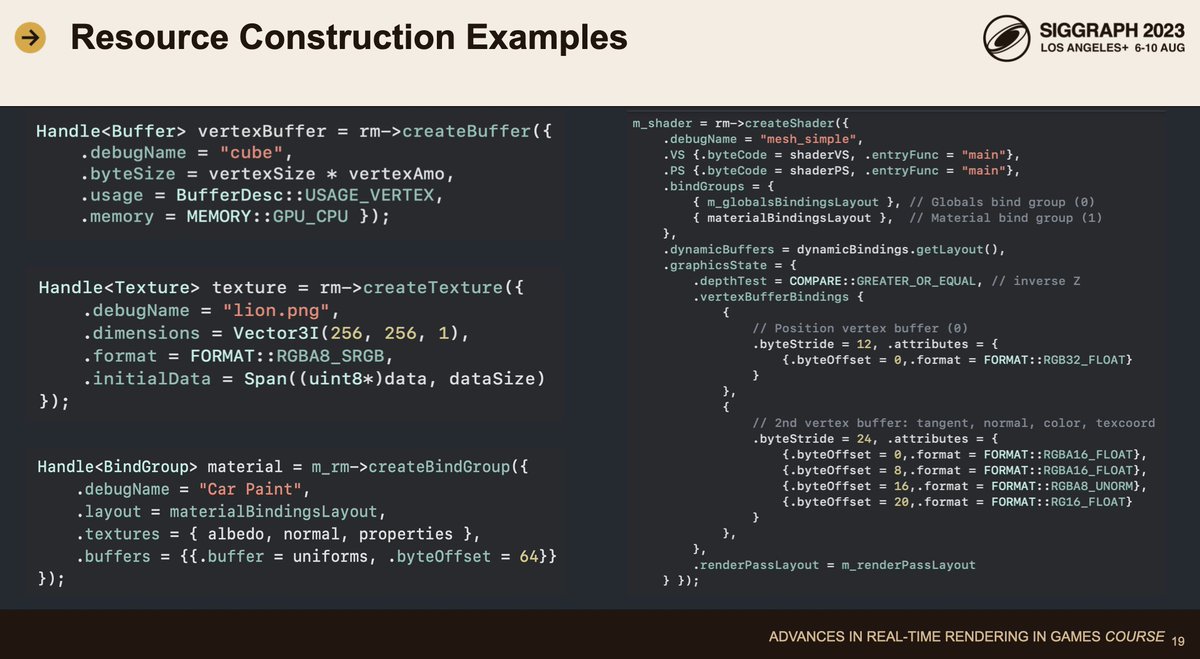
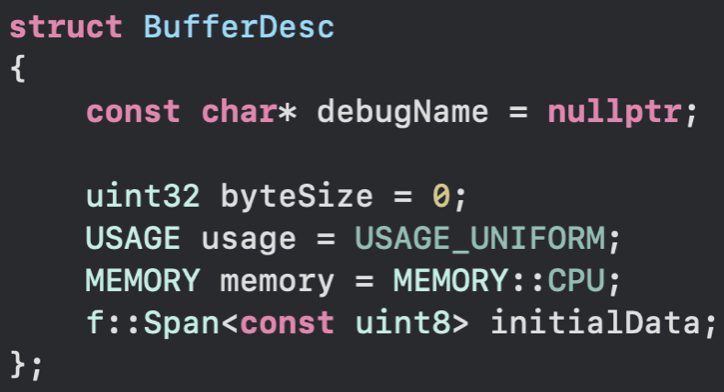
This is how I pass complex data to function:
Function has one parameter: const reference to a struct. Struct has good default values. You use C++20 designated struct initializer to set the values you want to change from defaults. Needs a custom span supporting initializer list.
English

@sixtyvividtails @SSanesti @mboehme_ Yes, the "true" branch of the if statement is the one checking for overflow. I assumed this was clear in the context (it keeps the meaning from the first message in the thread).
English


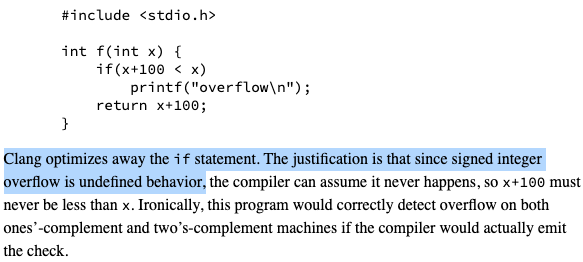
Me: Let's check if the upcoming addition is undefined behavior and bail out.
Compiler: Nah, let's remove that check since it is undefined behavior.
research.swtch.com/ub
English