Sabitlenmiş Tweet
Imran Sayed
949 posts

Imran Sayed
@imransayedratul
Social Media Manager @ Design Monks
Chittagong, Bangladesh Katılım Eylül 2023
210 Takip Edilen30 Takipçiler

@willsclips_ @mintlify Anyone can react. Few teams are structured to resolve immediately without chaos.
English

This is how @mintlify (YC22, $45M Series B) operates.
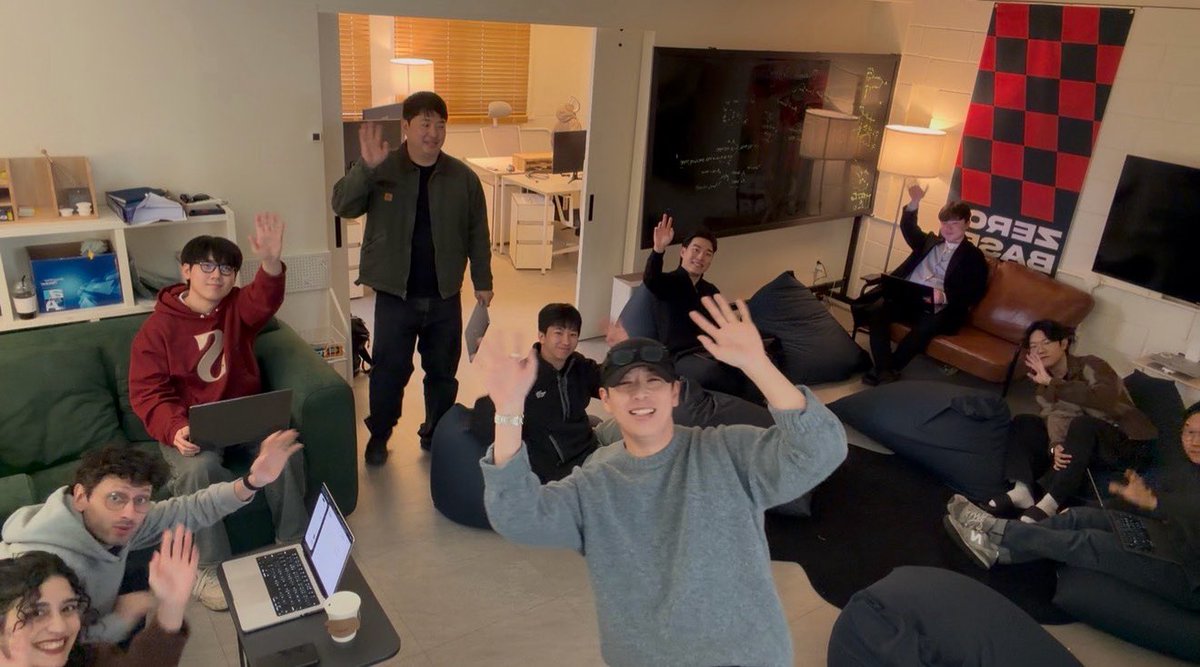
I was with the team shooting INSIDE STARTUPS when something broke during standup.
They stopped the meeting and fixed it immediately.
This is what moving fast actually looks like.
English

@haileyhmt Getting the interview is step one. What matters is how fast they understand why you win.
English

@emtalas Everyone credits talent. Few talk about the systems that turn talent into revenue. That’s the real story here.
English
Imran Sayed retweetledi

@samthekorean Environment helps, but output decides everything. What do top teams usually ship in those 4 weeks?
English

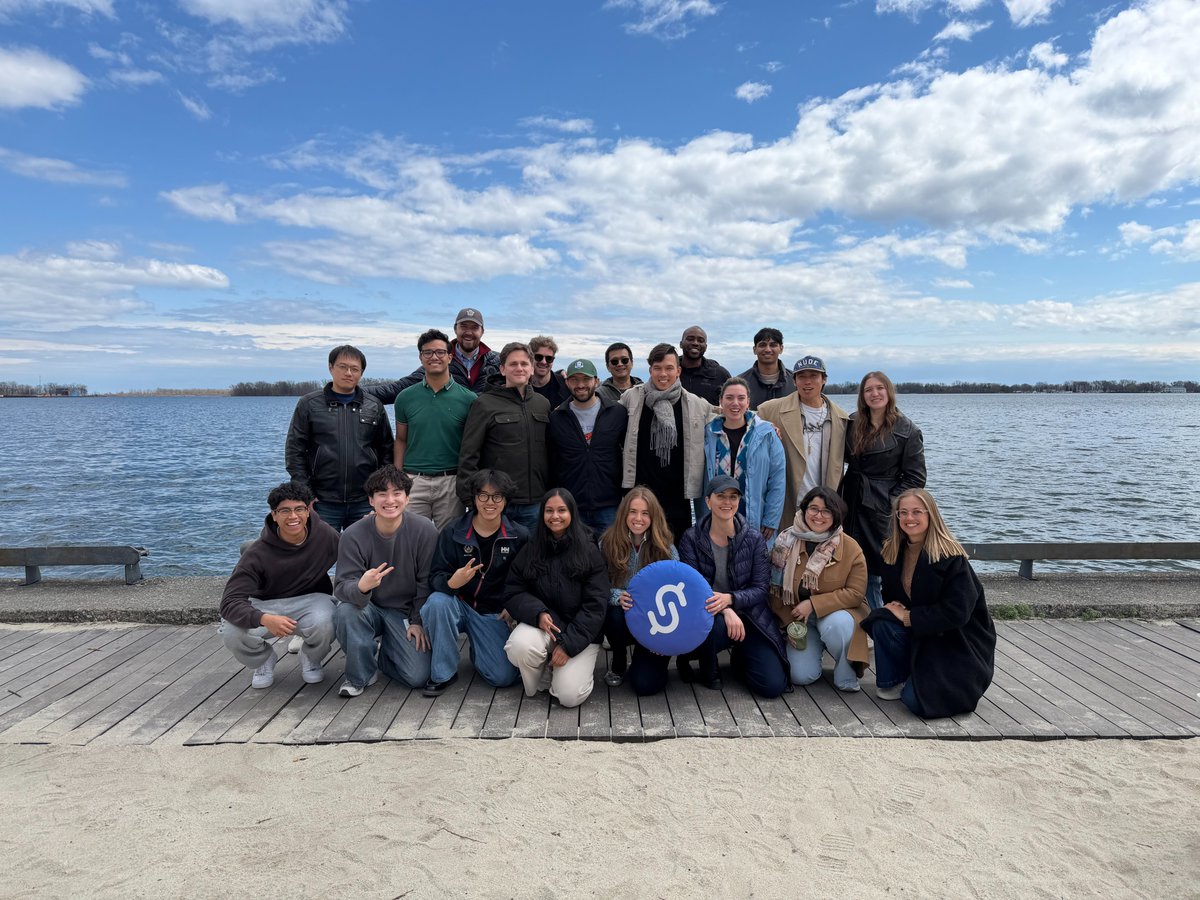
we are still accepting late applications to zerobase season 4.
-4 weeks in seoul
-building & shipping
-in person or online
-demo day
-up to $250k in funding
-sf camp
-kbbq & soju
deadline: may 10
apply at zerobase.ca

English

@katie_haun Capital is abundant. What’s scarce is founders who can turn it into real infrastructure.
English

Today we’re announcing $1 billion in new funds to back the bold founders shaping the next era of finance and technology.
I’ve been following the flow of assets my entire career and have never seen a more dynamic time. Financial infrastructure is being rebuilt from the ground up, new assets and markets are emerging, and an agentic economy is developing as AI agents begin to transact on behalf of humans. These areas, among others, are what will define the coming years as we deploy these new funds.
We’re excited for what’s ahead, and wrote about our thesis in the post below.
Katie Haun@katie_haun
English

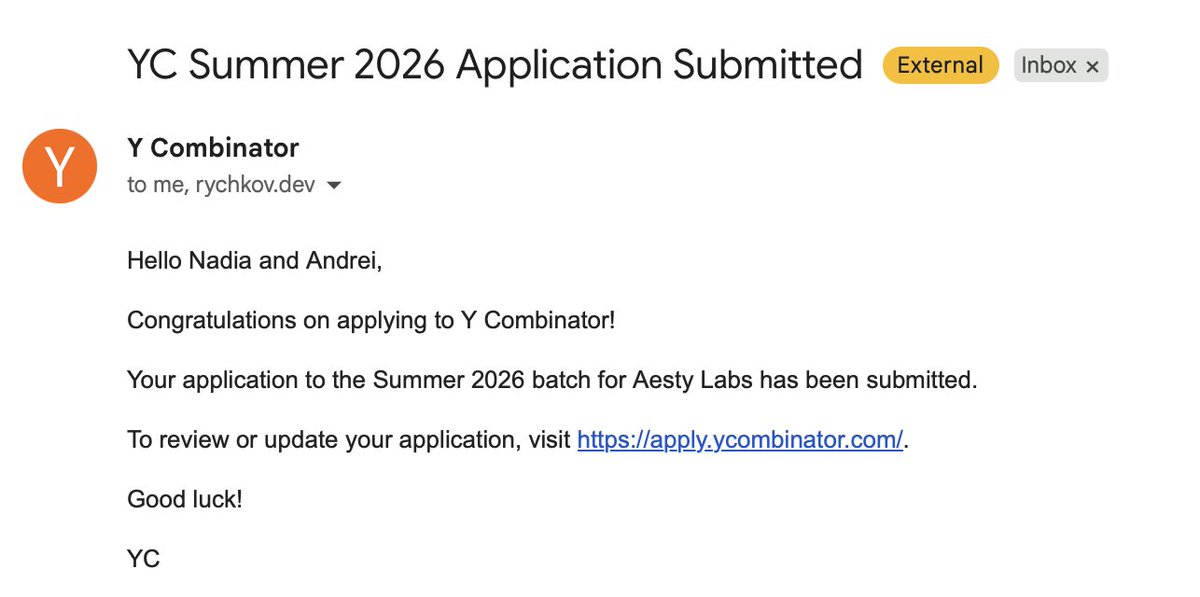
@nestymee @im_moonko @ycombinator YC rewards progress, not persistence alone. Curious what you’ve refined since last time.
English


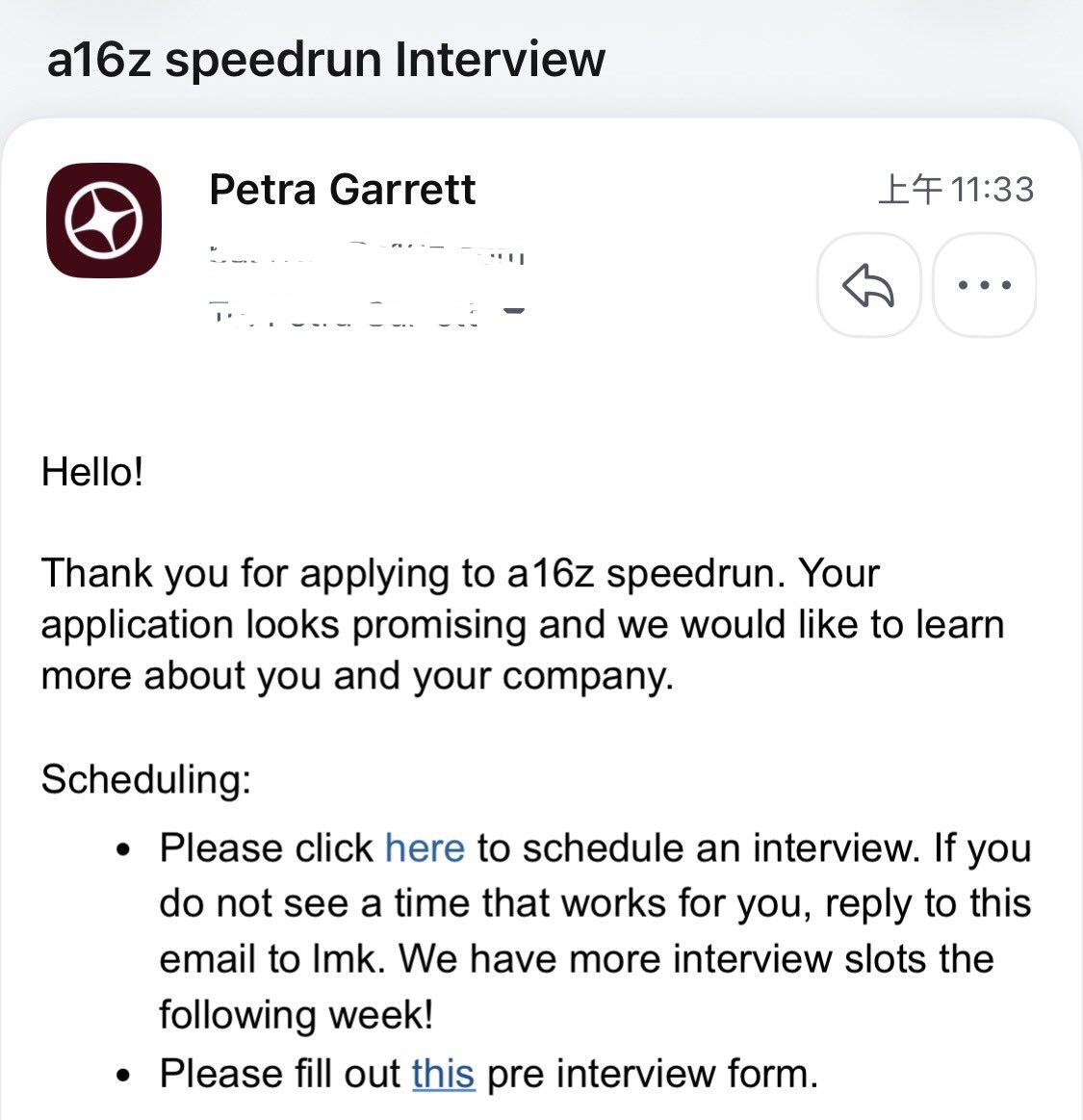
@miracleinvxker @a16z @speedrun Getting the interview is step one. Winning it comes down to clarity in the first 2 minutes.
English

@rork Fast growth is easy to show. Sustained usage is what proves this.
English

An app made in Rork just hit #3 in Finance on the App Store in Spain
Meet Alberto, 22yo founder of Flowfy.
When he joined Rork Stars in January he had made $750 total
Now he's at $22K and 100K+ downloads with his first IOS app.
This is how Rork can change your life.
Apply to Rork Stars today. Be the next Alberto

English

@JayHoovy People overestimate product, underestimate distribution. This proves it.
English

Stan just hit $40M ARR.
I grew up with nothing - and started with $0 in my dorm room.
I failed through multiple ideas before I found Stan.
But through Stan, we got really good at building distribution + a product that genuinely helps people.
Here's exactly how we did it:
1) Built in Public ($0 > $100K)
You need to recognize that if no one knows your business exists, they will never buy from you.
I posted dozens of cringey TikToks about my company building journey.
Most people won't get through that level of cringe.
But you will, because you recognize that if you don't put a stake in the ground for your business, no one will.
I posted 3 times per week:
- My wins
- My ups and downs
- My learnings
This taught me a ton about:
- What people found interesting about my company
- How to talk about my product in a way that resonated
- How to persist through embarrassment
2) Sending 10,000 Cold DMs
In parallel, I sent 10,000+ Cold DMs to land our first 100 customers.
Most people won't do this level of unsexy, manual work.
Every night, I would follow back anyone that looked like a potential customer and try to get them on a call.
On the call, I would do everything I could to help them, and see if they were a good fit for Stan.
I'd do 10+ hours of back-to-back calls, and then post TikToks until I passed out.
I would get rejected on 4 out of every 5 calls.
Then I'd finally land one.
Then, they'd backtrack. Or something else would go wrong.
But eventually - through sheer willpower - you land your first 100 customers.
3) Do Everything for your First 100 ($100K > $1M)
We did everything we could to help our first 100 customers become wildly successful.
I would personally:
- Make their first product to sell
- Consult them on how to make more money
- Draft them content ideas to help them go viral
That level of client-service slog was insane.
But it ended up being so worth it.
As a result, we made multiple people in our first 100 customers millionaires.
4) Building the Flywheel ($1M > $10M)
And what do people who you made a million dollars do for you?
They shout your name from the rooftops.
Every successful customer of ours became our best distribution channel.
Your job is to build a flywheel for your business:
For us, we built a "success story" flywheel.
For every new customer, our job was to make them as successful as possible.
Those customers would then shout us from the rooftops.
Then, we added a marketing team / engine on top that amplified those success stories via:
- Paid ads
- Email campaigns
- Documentaries
- PR
Our Flywheel: New Customers >>> New Success Stories >>> Amplify those Success Stories >>> More New Customers
5) Compounding that Sh** ($10M > $40M)
From here, your job is to build a compounding competitive advantage.
That way, for every turn of the flywheel, you get to play a higher level game.
A year ago, I raised the largest Creator round ever done:
- The Hormozi's invested
- Steven Bartlett invested
- GaryVee invested
I did this because at the time, Distribution was our top bottleneck (and one of the few things that matter in the age of AI).
Your job at this level is to constantly ask yourself:
"What is the top bottleneck in my business?"
Then evolve your time, identity, and skillset to get that job done.
Eventually, that bottleneck becomes things like: hiring, culture, strategy, new bets, org structure, or operating efficiency.
What I've learned is: whatever the topic, you will eventually figure it out if you just stack days and have a growth mindset.
6) My Final Lessons Learned
This journey will kick your a**.
It will constantly humble you.
It will make you doubt yourself in ways you didn’t think possible.
But the person you will become will be so worth it.
So just persist, have a growth mindset, and you will succeed.
You've got this.
(and btw - follow me if you want more free advice like this!! I'm going to be posting here a lot more)

English

@paulg Garages create focus. No meetings, no optics, just building.
English

It could actually be a significant problem that Europe doesn't have enough garages. This sounds like a joke, but I'm serious. Garages let you work on stuff that doesn't matter yet, which is how big things often start. The outliers of ideas need the outliers of space.
Jon Erlichman@JonErlichman
First offices of 6 companies worth a combined $21 trillion.
English

@hanghuang_ Early-stage founders optimize for access. Experienced ones optimize for outcomes. Same environment, completely different ROI.
English

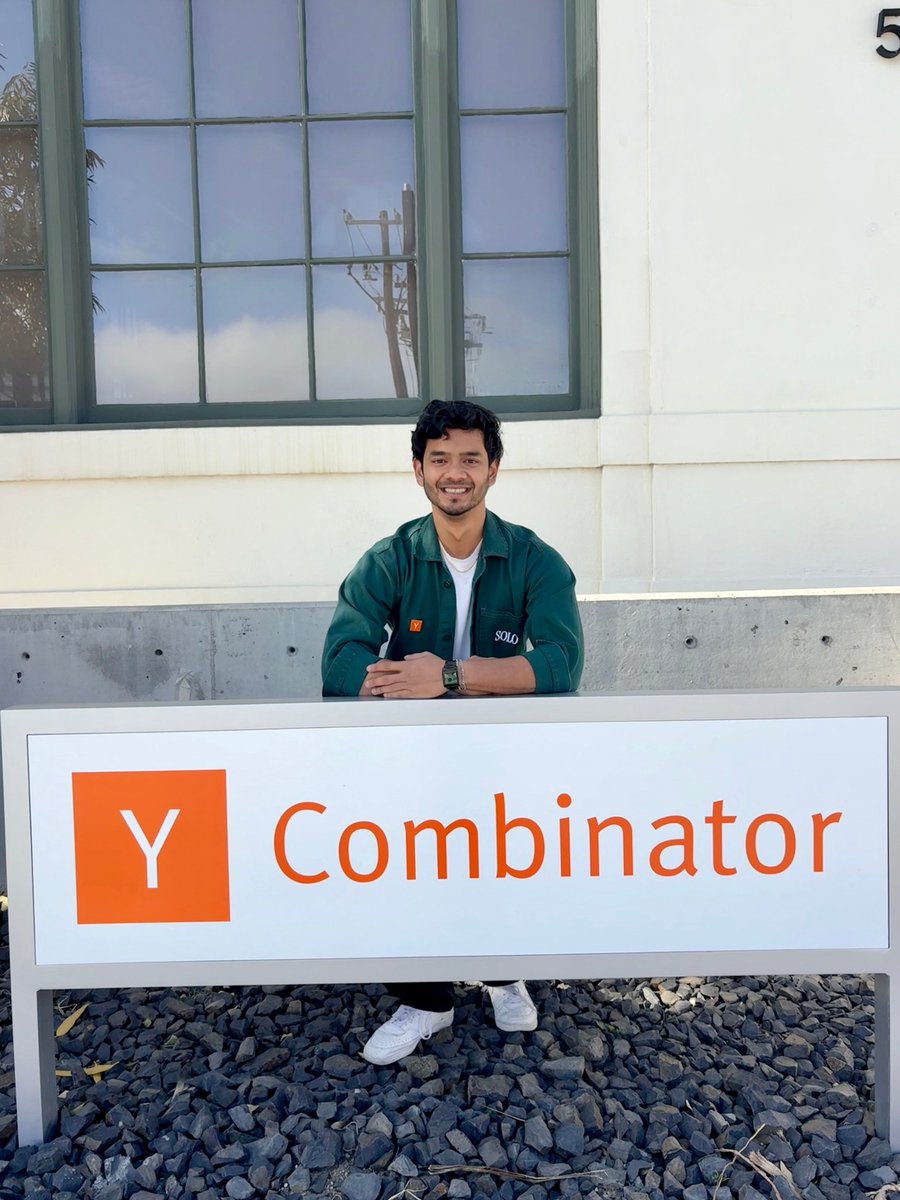
I'm 5 weeks into YC, here's my unsolicited opinion:
It honestly feels like college again lol.
Events every night. Parties. Mixers. Office hours. Dinners.
The young founders go to all of them.
This makes sense.
FOMO and peer pressure are real.
But what I've noticed is that the older founders and experienced ones skip almost everything.
They've done this before.
For instance, one of the only events I've gone to so far was one where I got to talk with @rauchg at a Vercel event for over an hour. We went in with a specific business outcome and left with a potential partnership in the works.
Everything else, I've skipped.
Here's my biggest takeaway: YC is a goldmine, but you have to dig for it.
YC is really what you make of it. And if you spend all your time at parties, you'll be left with a dead company.
Every time we get a new opportunity, I ask myself: will this help us move faster?
If yes, go.
If no, I stay home and ship.
Output is 100x more important than showing face.

English

@amasad Building an MVP in a day is impressive. Proving people actually need it is the hard part.
English

Amazing what a single day of marathon vibe coding can achieve.
BCC@bekircagricelik
12 years ago, I tried to build Care4Some1 and couldn’t get it over the line. Today, Replit Agent helped me bring it back to life as a working MVP in one day! Grateful to @Replit for the push to finally ship this. care4some1.com
English

@anushkmittal AI in group chats sounds powerful, but also noisy fast. The real challenge is knowing when not to respond. How are you handling that?
English

We have raised $8M to bring AI into your group chats.
shapes.inc is the next-gen whatsapp, re-imagined to be AI first.
Our life runs in group chats - it’s only natural for AI agents to join us in these conversations. Multiplayer AI is the next frontier for agentic systems.
Excited to come out of stealth after 3.5 years of building and over 1B+ conversations.

English

@ycombinator @ExpanseCompute @ismaeel_bashir_ @nkdem_b @yafet_melake @erenzmendi03 Big win if this actually reduces time to result, not just cost. What’s the most common workflow you’re optimizing first?
English

Expanse (@ExpanseCompute) unlocks wasted GPU capacity. Submit jobs with the right resources. Optimize them to run faster. Debug failures in seconds. Cloud + on-prem HPC.
Congrats on the launch, @ismaeel_bashir_, @nkdem_b, @yafet_melake, and @erenzmendi03!
ycombinator.com/launches/QCF-e…
English

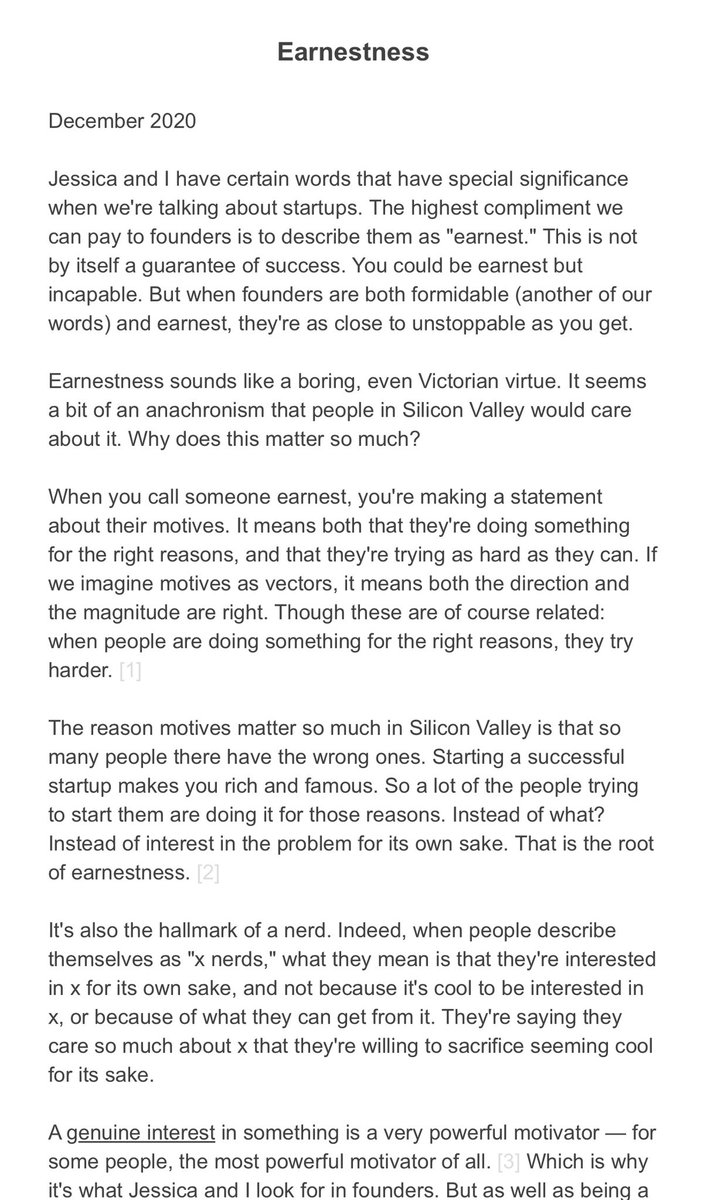
“When founders are both formidable and earnest, they're as close to unstoppable as you get.”
Paul Graham on earnestness: paulgraham.com/earnest.html

English

@ycombinator Earnest founders still fail all the time. Market timing and distribution don’t care about intent. Earnestness matters, but it’s not the moat.
English

@NamanyayG Respect the risk. Now it’s all about turning that vision into something users can’t ignore. What’s the first real use case you’re betting on?
English

@far33d If agents are the users, distribution shifts from ads, integrations.
English

Agent-native products are coming.
Every product on the internet was built for a human with eyes, a cursor, and a credit card. Agents have none of those things.
Most companies are teaching agents to pretend to be humans. That's a hack. The real opportunity is products designed for agents from scratch.
Everything inverts:
• Discovery → protocol registries, not ads and billboards
• Trust → machine-readable reputation, not brand
• Onboarding → full capabilities upfront, not a narrow slice
• Payments → spend authorization, not checkout flows
• Retention → zero. Agents switch between API calls.
30 years of human product design. Day one of agent product design.
English