Sabitlenmiş Tweet

The McRib is back. BTC historically goes up >2x after the McRib returns. Don't fade the McRib.
Not financial advice.

English
internbrah
7.4K posts

@internbrah
that's intern, brah @monad | prev @mit

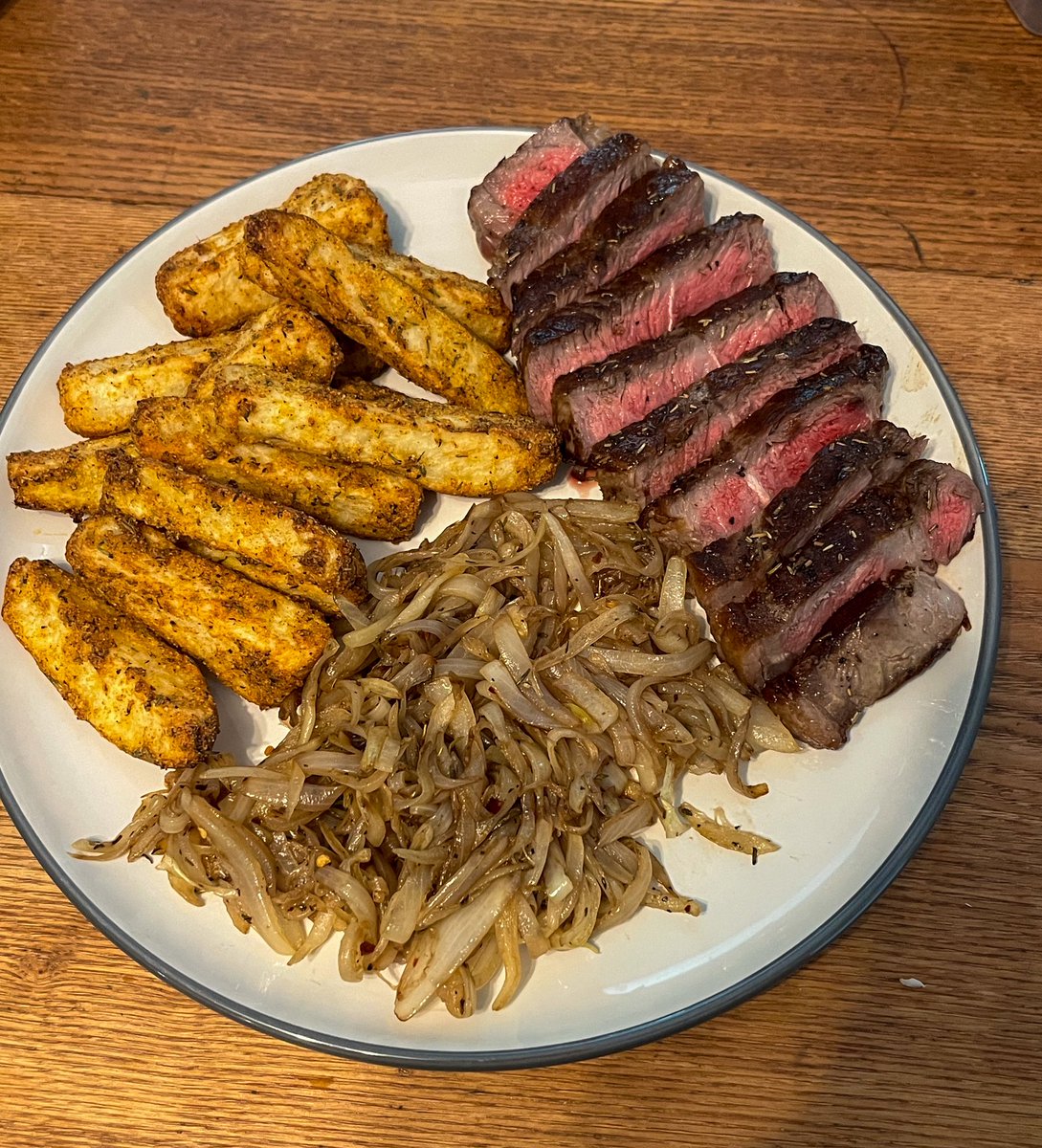
These were GREAT banana bread is so much better in muffin form Got a bit experimental with these, caramellized 2 bananas and mashed with 2 uncooked bananas, and did coffee cake crumbly stuff on top





Category Labs is proud to introduce Cadence, our multiple-concurrent-proposers (MCP) consensus protocol that matches the optimal good-case latency of single-leader consensus while supporting arbitrarily short block intervals. When combined with BTX, our design for encrypted mempools, this represents a significant step towards solving the problem of MEV at the protocol level. In nearly every blockchain today, a single party ends up in control of each block: it decides which transactions get in, and can reorder them at will. MCP is the natural fix, but most recent designs pay for it with a separate aggregation phase, adding two extra communication rounds per block. Cadence makes the proposers part of consensus itself. Its fast path finalizes in an optimal three communication rounds, even when proposers are offline. Cadence also offers speculative finality, similar to MonadBFT, after just two rounds, revertible only if a proposer provably equivocated. In a simulation using estimated network delays between Monad mainnet's 200 globally distributed validators, finalization takes 219 ms on average, speculative finality 167 ms. Cadence pushes pipelining to the extreme: each block is proposed and finalized in its own independent consensus instance, without waiting on preceding blocks. The block interval then becomes a protocol parameter that can be arbitrarily small. At our initial target of 100 ms, a transaction waits on average just 50 ms to enter a proposal, and oracle prices, liquidations, and auctions can update every 100 ms. Cadence dynamically throttles the opening of new instances to bound the number of outstanding slots even during periods of network instability. When the network is healthy (under synchrony), a transaction included by an honest proposer can be neither dropped nor deferred (short-term censorship resistance), and no proposer can see the others' proposals in time to react (hiding). We prove both, together with safety and liveness under partial synchrony at the optimal 3f+1 fault bound. The Cadence protocol is modular: each module is simple on its own, and any of them can be swapped out without touching the rest. Cadence also builds on components already being deployed: proposals are disseminated as erasure-coded chunks over Deterministic RaptorCast, now rolling out on Monad, and validators vote on proposal digests, so voting does not wait for the full data to arrive. Start with the interactive tutorial: category.xyz/cadence. Full paper: arxiv.org/abs/2607.02275. Joint work by Kushal Babel, Fatima Elsheimy, Lioba Heimbach, Mohammad Mussadiq Jalalzai, Tobias Klenze, Jovan Komatovic, Jason Milionis, Mike Setrin, and Victor Shoup.


Rasmr admits he used to buy meme coins before dropping comparison videos and sell the pump "When I used to make meme coin comparison videos I started to notice that my videos would impact the chart a little bit. So I would film a video, like one time I did Michi versus Nubcat, Michi won, and I bought some Michi on some side wallets. Put like 8 bands into it, dropped the video, it went up 15% and I sold for like a $3k gain." "At the time I made $4k a month so I was like let's go, I just made $3k, I'm the goat. And it was off these retarded little meme coin comparison videos. I don't even do shit like that anymore because I don't need to and it's not worth it. That was me trying to take advantage of my influence, meanwhile other people figured out how to make millions."