

smolquack (bits, coin)
1.1K posts

smolquack (bits, coin)
@inverseducc
professional ducc/quack and @mezonetwork depositooore unoffishal @bitcoin hodler cazual @lowpolyduck enjoyooor
inside michael saylor's house Katılım Aralık 2024
394 Takip Edilen17.1K Takipçiler
smolquack (bits, coin) retweetledi

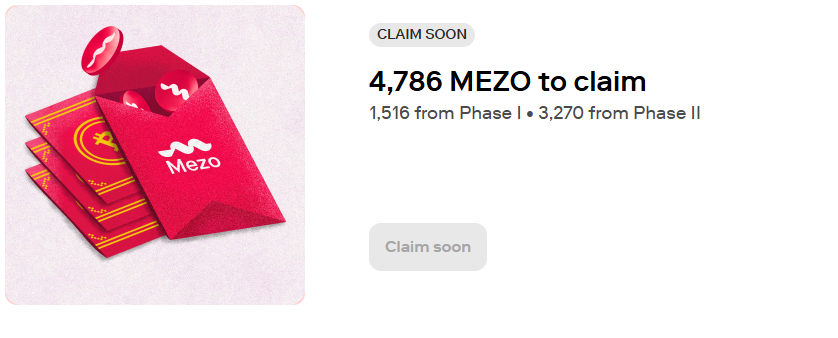
Day 82: Got a solid allocation from the Mezo phase 2 airdrop.
Some Key criteria were:
✔️Mainnet participation
✔️Community engagement
✔️Volume of transactions
If you ticked all these boxes congratulations and if you haven’t checked your allocation hurry to the official mezo website to view yours asap.
Gg everyone, thank you @MezoNetwork team for a fair allocation.
Mezo@MezoNetwork
Your Phase II $MEZO allocation is now available 🧧 See what your Red Envelope earned you 🔽 mez.gg/swu5G3eA
English
smolquack (bits, coin) retweetledi

smolquack (bits, coin) retweetledi

Don't be IBM and fumble an 18yr head start on AI
IBM was the most valuable company on Earth. Invented the hard drive. The PC. The floppy disk. The ATM. DRAM. SQL. The barcode.
Most US patents 29 years straight. 405,000 employees. 70% mainframe market share.
Today: $231 billion. 67th in the world.
Anthropic. Founded 2021. Four years old. $380 billion.
Every piece of the bag was fumbled...
Invented the PC. Sold to Lenovo: $1.75 billion. Invented the hard drive. Sold to Hitachi: $2 billion. Server business. Sold to Lenovo. Basically nothing.
Now the chips. This is pure comedy.
IBM was the largest semiconductor manufacturer on Earth. Fabs in New York. Fabs in Vermont. 16,000 patents.
They PAID GlobalFoundries $1.5 billion cash to take it. Gave away the factories. Gave away the patents. $4.7 billion write-down.
IBM had American fabs. They paid to close them. And the same Democrats who scream about chips going overseas are the ones whose policies made it too expensive to build here.
We wouldn't have TSMC/Taiwan issues today. Decisions have consequences.
TSMC: $700 billion. Nvidia: $5 trillion. IBM paid to exit chips right before chips became the most valuable industry on Earth.
Incredible timing.
Deep Blue beats Kasparov. Live television. First machine to outthink a human world champion.
IBM owned AI. Not as a buzzword. As a fact. On camera. In front of the whole planet.
OpenAI did not exist for another 18 years. Anthropic for another 24. Nvidia was making cards so teenagers could play Halo. Google was two grad students sharing a dorm room.
IBM had an 18-year head start on the entire AI industry.
What did they do with it.
They dismantled Deep Blue. Put it in a museum. Same mentality as every socialist (cough dems) who wants to regulate AI before it ships. Celebrate the breakthrough. Kill the follow-through.
Watson wins Jeopardy. Destroys the two greatest players alive on national TV. Most famous AI brand on the planet.
IBM spends billions on Watson Health. AI that cures cancer. Their engineers flagged it unsafe. Instead of fixing it they sold it for scraps. Then killed the brand entirely. Loser mentality.
IBM Research. Decades of NLP work. The compute. The talent. The CEO looks at LLMs and says "no thanks."
Two years later ChatGPT launches. 100 million users in two months. The entire economy reorganizes around the exact technology IBM looked at and said nah.
That is like having Google's algorithm in 1997 and deciding to build a phonebook.
The suits and the consultants took over. Same thing that kills every city, every agency, every institution that picks socialism over competition.
$201 billion in buybacks over 25 years. More on buybacks than CAPEX. They could have funded every AI lab on Earth with that money. Instead they bought their own stock while the stock went down.
Revenue down 22 straight quarters. Nobody fired.
Name another job where you lose $95 billion in market cap and get a raise. Actually don't. That job only exists at IBM and in Congress.
Buffett bought $12 billion in IBM. The greatest investor alive. Held six years. Dumped it on CNBC. "I was wrong." Put the money in Apple. Best investment in Berkshire history.
They had the patents. The labs. The engineers. The brand. An 18-year head start on AI. Replaced the builders with bureaucrats. Chose buybacks over R&D. Chose administration over competition.
Lost everything.
Now look at who wants to run the same playbook on the AI economy.
Bernie wants data center moratoriums. Tax the builders before they finish building.
Ro Khanna represents $18 trillion in Silicon Valley market cap. Apple. Nvidia. Google. His district built AI. He just held a Stanford town hall with Bernie called "Who Controls AI: The Oligarchs or The People."
Wants to tax unrealized gains. Pause data centers. Put unions on AI boards. Redistribute wealth that hasn't been created yet.
His own district is trying to primary him. Not because he's too progressive. Because he's trying to kneecap the industry that made his district the most valuable zip code on Earth.
That is IBM energy. Tax the engineers. Slow the builders. Add a committee. Wonder why nothing works.
Gavin ran California from a $97 billion surplus into a $68 billion deficit. Lost 789 companies. Tesla. SpaceX. Oracle. Chevron. 200,000 people leaving per year.
And he thinks he should have a say in how AI gets built nationally. The guy who can't keep In-N-Out Burger in California wants to regulate the most important technology since electricity.
These aren't hypotheticals. This is the IBM playbook in real time. Replace engineers with regulators. Replace competition with committees. Replace building with administrating.
And act shocked when the talent leaves and the lead disappears.
IBM went from first to 67th. 1.43% a year for 28 years. A savings account beat that.
Don't let them do it to America.
Name a bigger fumble. I'll wait.
English
smolquack (bits, coin) retweetledi

smolquack (bits, coin) retweetledi

Squid went through a very similar thing to this, and it's been long enough now that I feel comfortable getting it off my chest
It was a huge wake up call and drastically updated my view of DeFi at the time
TLDR:
- The block builder and MEV searcher should return the money. This is obviously the right thing to do and hopefully will set a precedent.
- Infra and apps are all responsible for user losses, especially when they direct their users to a "decentralized' protocol.
- DeFi 1.0 protocol+app and "code is law" models can't work as the basis for global finance. DeFi protocols should be minimized to extremely basic settlement mechanisms onchain, with most application and trade logic offchain. Truly "open" markets are disproven imo. DeFi works best when combining the exit hatch characteristics of self custody which the reg arb bringing global, 24/7 availability.
Now for Squid story time:
Around Christmas 2023, a user bridged $600k USDC from Ethereum to DYDX on the DYDX interface, using the Squid API under the hood.
They only received $350k, resulting in a $250k loss in one transaction due to slippage. The Osmosis pools for axlUSDC/USDC only had 350k liquidity of USDC in it.
The $250k got picked up by an Osmosis MEV function they had built into the chain. This $250k USDC was immediately used to buy OSMO, and the OSMO was sitting in the Osmosis treasury.
Apples for apples:
- Aave is DYDX
- CowSwap is Squid
- Uniswap is Osmosis AMM
- The Block Builder and MEV Searcher are Osmosis.
In contrast to Aave, the DYDX bridge UI didn't show any price impact warning. No red text or checkboxes to continue. The user may have seen the expected output on the UI ($350k), but even that might have been hidden, depending on the version of the UI he used.
We had warned the DYDX team of this issue for months before the incident happened, but startups move fast and they didn't get to adding a price impact warning.
From our point of view, Squid "worked as intended" (also a phrase that Stani used toward CowSwap).
- Squid returned the correct quote for this bridge (600k USDC -> 350k USDC),
- Squid returned the price impact (25%)
- slippage was set correctly (DYDX asked for 0.1% slippage via our API, meaning anything up to 0.1% worse than the current market rate is acceptable)
But this wasn't enough to protect our partner or their user.
This was our big wake up call. If Squid worked exactly as intended, how can we expect our design to be successful in the real world if users can get completely wrecked?
We had started building Squid in 2021, in DeFi 1.0 where "code is law" and application logic followed the same wild west product approach as self custodying your Bitcoin. It's dangerous even for the most hardcore nerd, but outright unusable and extremely unsafe for many normal people. An immutable, deterministic approach to trade, used by humans who are very much not immutable or deterministic.
So we built this to protect users and our partners:
- Don't return any quote if the price impact was >3%, or if the user would lose $3k or more.
- Allow users to opt in by turning on "degen mode", but don't make it easy for them. We don't tell our partners to even add a "degen mode" button. The trading apps who need this feature ask us about it directly when needed.
This user had said that $250k was a large personal amount of money for them. We felt terrible.
In TradFi, this problem doesn't exist. Code has a bug, someone ends up with money that they shouldn't have, then they return it.
So in our case, who should pay the user back?
- DYDX is just a front end, but they had a critical issue with UX and had neglected to solve it despite warnings
- Squid (and the Osmosis AMM pools) "worked as intended", but clearly shouldn't have let this route be handed to a user or executed
- Osmosis base protocol had received the users funds, but had converted them to OSMO, and were sitting in the Osmosis community pool
DYDX had 10s of millions of dollars in their treasury and had recently filled a user who lost $8m from a liquidation on their protocol. But they went completely quiet on this. The user was dead to them.
Squid had always refunded users in full for any loss our protocol had caused from a bug, but this wasn't technically a bug, and $250k was a large chunk of our treasury at the time. We were still a small team, trying to survive a bear market.
Osmosis had done nothing wrong, but they now had the user's money, so I thought it made sense for them to just give it back.
So I spent the 12 days of Christmas lobbying the Osmosis community to give back this money that had landed in their lap. Drafting governance forum posts and talking with people who had influence in the community.
The response was extremely negative, instead of returning the user's funds, the community laughed at the user, and decided to burn the OSMO that had been bought with the user's lost funds. This would to reduce the OSMO supply and hopefully pump their token. There was a solid contingent who were supportive of the user and our proposal, but they were outnumbered.
I thought this was detestable behavior, but things were very sensitive in Cosmos, notoriously political and touchy. It was pointless to push it further.
In the end, Squid sent a small portion of funds to the user to try help them somewhat. We wish we could have sent them more. DYDX and Osmosis gave nothing as far as we knew.
We all know what it's like to accidentally fat finger something. Not saving a game, deleting some photos. It's awful, and you pray for a way to reverse it, take your hard drive to a specialist to look at the electrons and recover your memories.
Humans are not perfectly rational, and they make mistakes. We need to live in a world which is forgiving and allows us to operate to the best of our abilities. Finance is a very harsh world, and in certain cases we can't and shouldn't protect our users from themselves, but we should try to do the right thing when it's available to us and avoid blatant stealing or loss of funds.
For me, this was a very painful Christmas, and a moment where I grew out of DeFi 1.0. DeFi 2.0 Squid would build products which have the user in mind, not the dream-state vision of people who were pumping their ETH bags in 2020.
Smart contracts should not be used for core business logic. They should be reduced as much as possible to only settlement. Intents solve this nicely, and many projects are building their products to be much more forgiving and user friendly.
Aave and CowSwap (and all crypto swap products) should update their guardrails on their products to not allow a trade like this to happen again, but I'm glad for the transparency of DeFi bringing this to light, and I hope the block builder and MEV searcher return the user's funds!
Stani.eth@StaniKulechov
Earlier today, a user attempted to buy AAVE using $50M USDT through the Aave interface. Given the unusually large size of the single order, the Aave interface, like most trading interfaces, warned the user about extraordinary slippage and required confirmation via a checkbox. The user confirmed the warning on their mobile device and proceeded with the swap, accepting the high slippage, which ultimately resulted in receiving only 324 AAVE in return. The transaction could not be moved forward without the user explicitly accepting the risk through the confirmation checkbox. The CoW Swap routers functioned as intended, and the integration followed standard industry practices. However, while the user was able to proceed with the swap, the final outcome was clearly far from optimal. Events like this do occur in DeFi, but the scale of this transaction was significantly larger than what is typically seen in the space. We sympathize with the user and will try to make a contact with the user and we will return $600K in fees collected from the transaction. The key takeaway is that while DeFi should remain open and permissionless, allowing users to perform transactions freely, there are additional guardrails the industry can build to better protect users. Our team will be investigating ways to improve these safeguards going forward.
English
@MezoNetwork mezo is the epic sigma quintillionaire grindset
English
smolquack (bits, coin) retweetledi

smolquack (bits, coin) retweetledi
smolquack (bits, coin) retweetledi

smolquack (bits, coin) retweetledi

@devilcarry083 @NanndoIntern @evangell110 @defi_judy @MezoNetwork o hecc
one of teh first level 8ers
English
smolquack (bits, coin) retweetledi

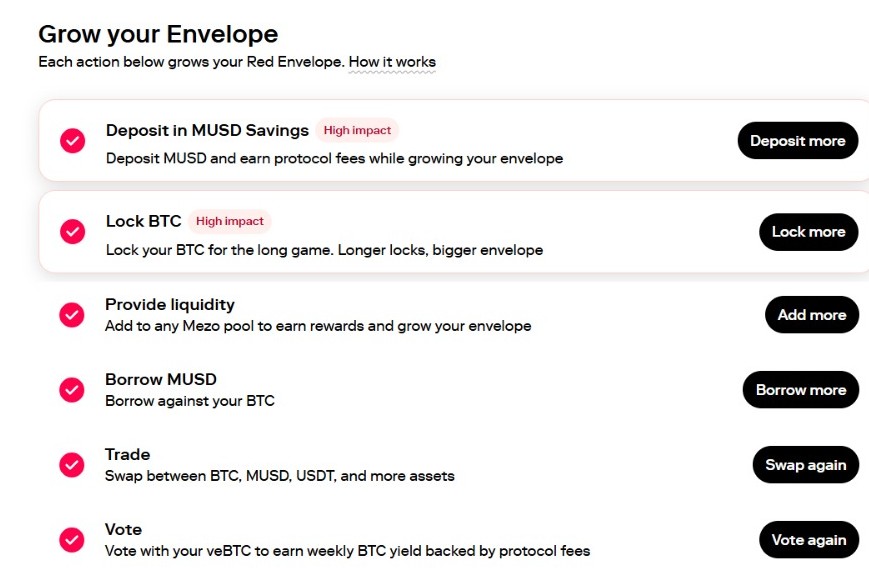
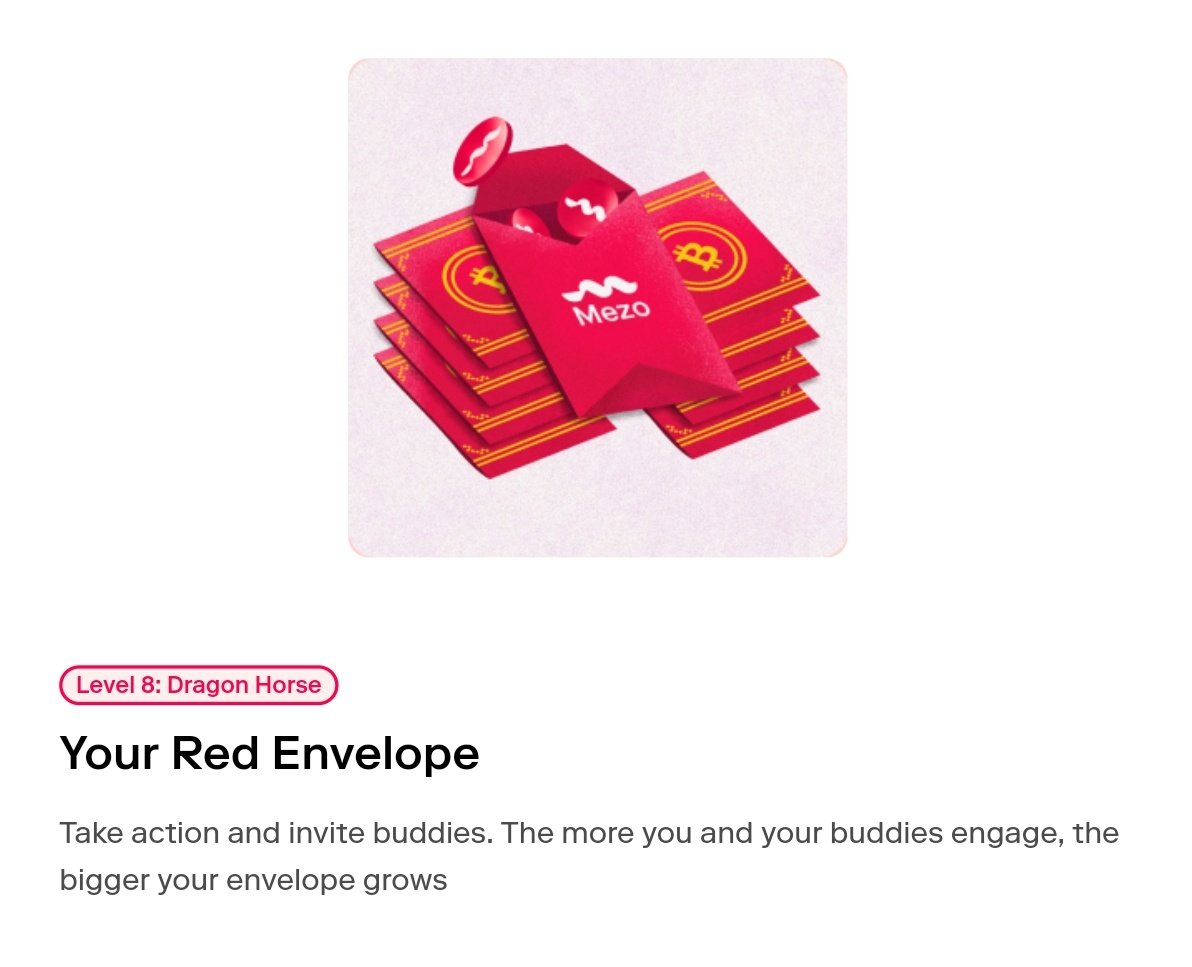
Just claimed the max level 8.
You can complete all the tasks easily but I wanna share some info for the loans/ borrow MUSD part -
- Minimum loan amount is 1800 MUSD, keep the Collateralization to 200% or more ( to prevent your base capital, as #BTC is fluctuating too much these days )
Now just waiting for @lowpolyduck and @inverseducc to send me a hoodiee for the culture:))
English
smolquack (bits, coin) retweetledi

smolquack (bits, coin) retweetledi
smolquack (bits, coin) retweetledi

Elon getting mad at Anthropic for the DoD stuff is so funny when you find out, they wont even use Grok cause it sucks so bad
Hadas Gold@Hadas_Gold
Lol what ---> WSJ: Gov officials were told to put xAI’s logo on a tool called USAi, which is essentially a sandbox for federal employees to experiment with different AI models, but it's not *actually* available for use. wsj.com/politics/natio…
English
smolquack (bits, coin) retweetledi

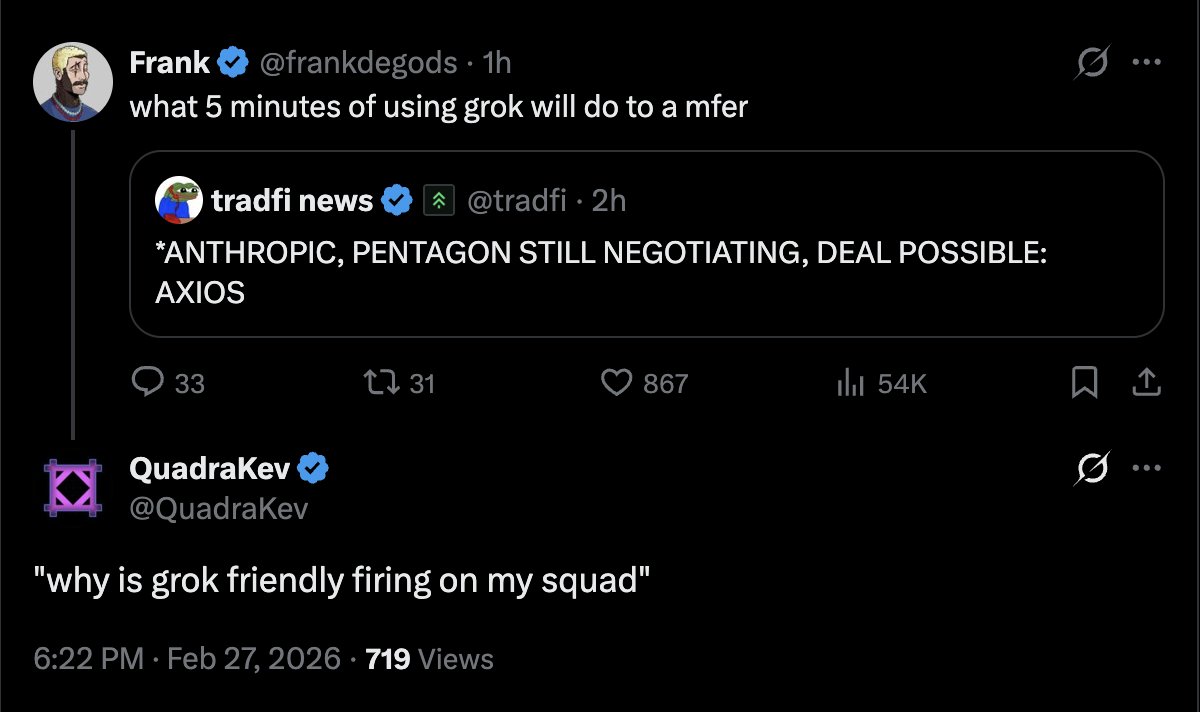
can they PLEASE take this to the private groupchat bro what are we doing
tradfi news@tradfi
*ANTHROPIC, PENTAGON STILL NEGOTIATING, DEAL POSSIBLE: AXIOS
English
smolquack (bits, coin) retweetledi
