Ismaen

608 posts

Ismaen banner
Ismaen

Ismaen

@ismaen_

PM @salesforce👨‍💻. Average golfer 🏌️‍♂️. Ex - @microsoft

Los Angeles, CA Katılım Nisan 2013
494 Takip Edilen286 Takipçiler
Sabitlenmiş Tweet
Ismaen
Ismaen@ismaen_·
🕵️Connect, chat, transform, and migrate your data, from one system to another -- all through natural language. Here's a look at an AI Agent that moves data from @salesforce, transforms the data, and writes it into @airtable. Built with @AirkitAI We're looking for developers who are interested in getting their hands on our beta. Reply to this thread or DM me! Video inspired by a post shared by @yoheinakajima
English
4
1
3
2K
Ismaen retweetledi
Marc Benioff
Marc Benioff@Benioff·
Welcome to Agentforce: a powerful data platform and an exceptional agent builder. The key to making agents truly effective is data. Salesforce agents deliver greater accuracy thanks to our integrated & comprehensive data & metadata. Without data, you're left with just a "dumb" LLM. No agent platform will gain traction without integrating data and metadata at its core. Get Agentforce at Dreamforce. ❤️
English
8
41
289
49.4K
Ismaen retweetledi
Marc Benioff
Marc Benioff@Benioff·
Build your own Gen AI Agents with Salesforce’s new Agentforce platform—anyone can create, test, and scale custom Gen AI Agents using our unique Einstein1 low-code platform—deeply integrated with our Einstein1 platform. The future of AI Agent and App Dev is in your hands! With Agentforce, your custom AI agents: - Achieve greater accuracy by securely grounding in all your enterprise data with Data Cloud - Take action seamlessly by leveraging Flow automations - Connect effortlessly to your enterprise APIs through MuleSoft - Test with confidence in Sandboxes before deployment - Use in your apps, web, social, and Slack. Humans with AI drive customer success, together. Now everyone is an Einstein. More to come at Dreamforce 2024! 💙 sforce.co/3WUfGIX
English
12
53
222
70.7K
Ismaen retweetledi
jason liu
jason liu@jxnlco·
The biggest application of AI is to selectively regress to the mean. The performance of any AI copilot will likely regress to the mean of the data set. This means that you are more likely to increase the performance of low performance to average than to increase the high-performance much to even higher levels (without adaptation). The ability to conditionally regress to the mean is where the value will likely be extracted first. As a default, your tools should be selling 'we make your worst performers average'.
English
41
29
294
71.2K
Hassan
Hassan@nutlope·
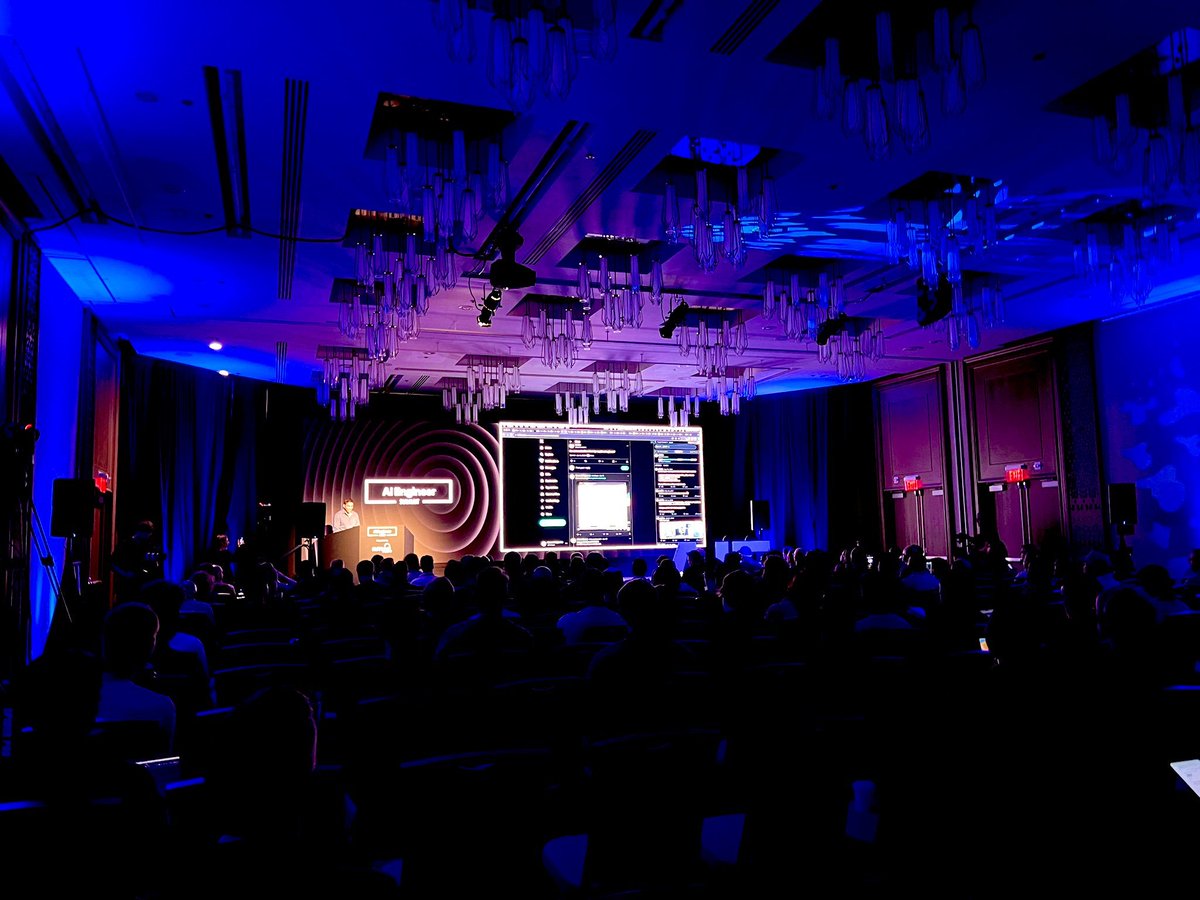
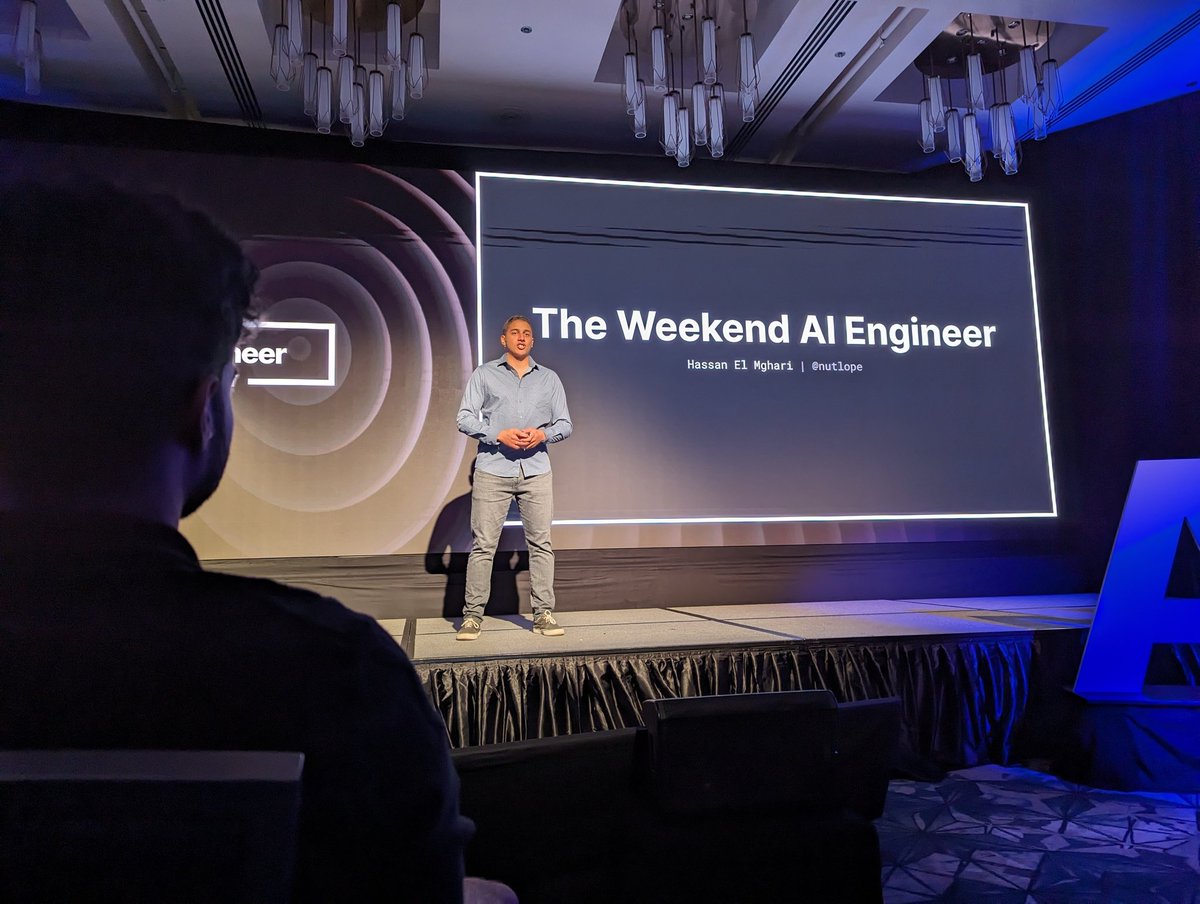
Spoke at my biggest ever conference today! The talk was on how to build AI projects on weekends that can scale to millions of users. Gonna post the full talk when it's out!
Hassan tweet mediaHassan tweet mediaHassan tweet mediaHassan tweet media
English
50
24
769
115.7K
jason liu
jason liu@jxnlco·
100% @simonw best talk of the conference.
English
4
1
30
4.2K
Ismaen
Ismaen@ismaen_·
“Vibe checking” outputs seems like a common theme for a legit evaluation technique for your LLM apps 😂 #aiesummit @aiDotEngineer
English
1
1
17
963
Ismaen
Ismaen@ismaen_·
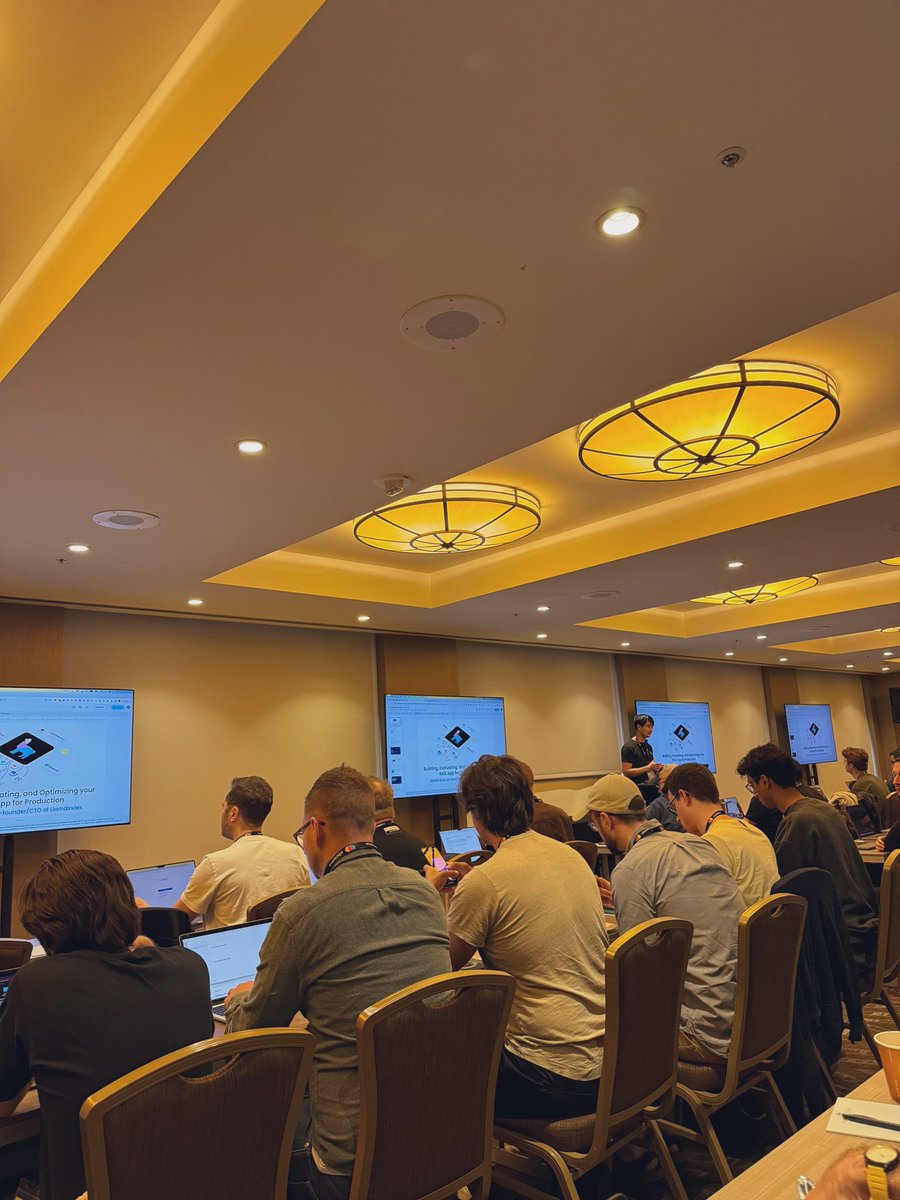
First session of the @aiDotEngineer conference! Building, Evaluating, and Optimizing your RAG App for Production Presented by Simon Suo @llama_index
Ismaen tweet media
English
0
0
4
94
Alex Volkov
Alex Volkov@altryne·
Just checked in to @aiDotEngineer and already had a few great conversations with super talented folks! Can't wait to bring you some of this energy via X spaces (times later tonight) Meanwhile I'm collecting all the folks I meet in this X list: x.com/i/lists/171115…
English
5
6
49
9.4K
Adam
Adam@AIFastTrack·
No-Code Delivers Benefits by Changing the Game No Need to Wait for Developer Resources Faster Development at a Fraction of the Cost Update Applications at the Speed of Business What are you waiting? Start learning no-code now!
English
7
1
11
2K
Ismaen
Ismaen@ismaen_·
This is super interesting. we're building a product that kind of hits this target market (think low-code for ai engineers to build AI Agents and LLM apps). I never thought about the category of citizen AI engineer, but you're right, this is definitely going to emerge over time. I guess its what people started coining as "prompt engineers" but there's a lot more to it than prompts IMO
English
0
0
0
33
Bill Chambers
Bill Chambers@bllchmbrs·
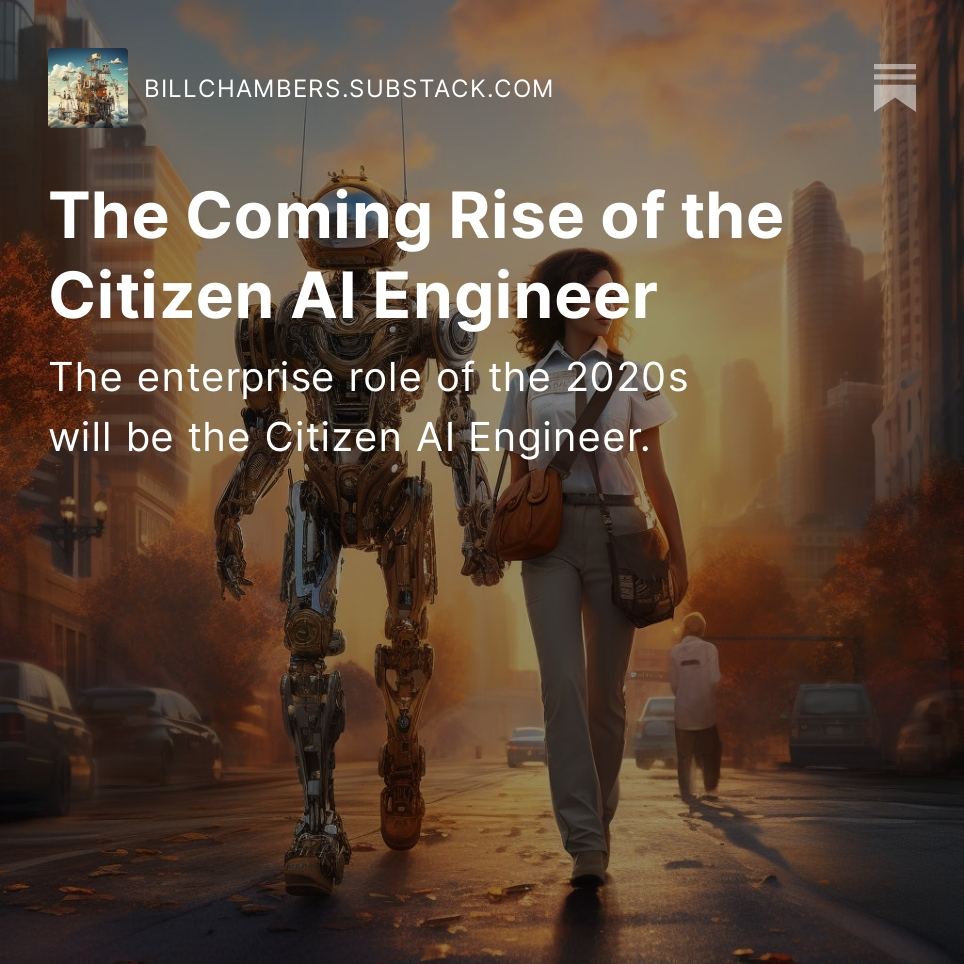
This post is going to introduce a role the future. The Citizen AI Engineer. Walking into the future, hand in hand with a robot.📷 This role is fundamentally nontechnical but that heavily uses AI to solve business problems. 1000s of new products will be built to service this end user. Let’s review some background, history, and get to know this coming role better. Then we’ll discuss the competitive landscape for serving this user. Background: AI Engineering The Rise of the AI Engineer on @latentspacepod is an insightful post about the generational shift in applied AI. In short, developers who are not applied researchers (or ML engineers) can now build incredibly powerful AI-powered applications. This development is set to change the game for AI adoption. You should read the post on Substack, but here's my TL;DR: changes in technology are allowing a new role to emerge at companies of all sizes. The two key technologies are: - Foundation models - Developers can build with AI without needing to understand AI. - Foundational AI tools - Tools like @langchain , @llama_index , and others make it easy to integrate foundation models and providers into various applications. These exist across 2 dominant languages, Python and JavaScript. The tools mentioned above are shifting the balance from ML engineering and ML researchers (a specialized skillset that will remain important but requires more training and experience) to the vast number of developers who know Python and JavaScript. @swyx put the consequence concisely: "A wide range of AI tasks that used to take 5 years and a research team to accomplish in 2013, now just require API docs and a spare afternoon in 2023." Lastly, while it's not technology, the shear amount of news, excitement, attention, and money in AI is creating a Cambrian explosion of new projects, tools, and products in the AI domain. Our economy is built around what gets attention. AI has sucked the air out of the room. In short, @swyx posits a new role, the "AI Engineer," is likely to emerge as a dominant role in software engineering over the next decade. I agree AI Engineers will rise. However, I argue there’s even more to come that will have larger impact: The Citizen AI Engineer. The Citizen AI Engineer Just as we've seen the rise of Citizen Data Scientists over the past decade, I posit that the next decade will see the rise of the Citizen AI Engineer. This role will overshadow AI Engineers because of shear numbers. It is a business user, someone non-technical, who gains significant capabilities with LLMs on their own data. What is a Citizen AI Engineer? A Citizen AI Engineer is a role in which a business-focused, but fundamentally non-developer persona, will be able to leverage AI tools to build and ship all kinds of new products within enterprises - without a heavy reliance on developers (day to day). Citizen AI engineers will use tools like ChatGPT by @OpenAI and tools custom-built for them by AI engineers, to drive large-scale business changes in everything from operations to forecasting and supply chains. Why Now? There are several trends that are going to enable this user to succeed. General Purpose Foundation models - The models aren't perfect, but as we've seen with the rise of ChatGPT, they can handle a number of tasks. Foundational tools - Tools like @langchain , @llama_index , and others yet to be created, make it easy to integrate foundation models and providers into different applications. While Citizen AI Engineers won't use these tools directly, they're going to enable the proliferation of tools built by AI Engineers that give Citizen AI engineers superpowers. Coding isn't just for Developers - Tools like Cursor, @github Copilot, and #ChatGPT Advanced Data Analysis can do the work of entire developer teams. They aren't perfect, but they're extremely powerful. This is just the beginning and these tools have personally, written devOps pipelines, helped teach me @typescript , and administer databases. The combination of all these tools (and the growth they're going to experience in the next 5 years) represents a state change in enterprise applications. What Does the Old World Look Like? You're a data analyst at Home Depot. Every week, you're running a financial forecast against your data lake, bringing together several pieces of data to solve a business problem. This report is one that is sent up to upper leadership. You know some basic #SQL, but have no knowledge of #Python, R, or any other data science tools. The report and forecast you build involve bringing together several kinds of data in a way that is particular to your business. Every week, you and your manager get questions about the forecast and how certain factors affect that forecast. You get follow-ups about: "What's happening in this region?" "Why is there so much disparity in XYZ dataset versus another one"? You're putting out 🔥fires🔥 and have to prioritize only the most urgent requests. Your manager has talked about hiring a data analyst to do some of these immediate reports, but you all haven't been able to get the headcount. Your team has started looking into no-code app builders and other automated data analytics tools, but haven't been able to find something that fits the bill. What Does the New World Look Like? Your team just adopted Enterprise DataChat (note: this product doesn't exist, but it's not difficult to imagine. I have no insider knowledge here. This is pure speculation.) Your AI engineering team just integrated several DataChat plugins to give access to business data sources and defined some auto-function-calls to perform semantic retrieval against corporate presentations and data in your business unit. They've also made available some DataChatFunctionExtractors to extract data from various unstructured data sources. Now, instead of building presentations, you log into DataChat and specify your report requirements. It's generated automatically. You can inquire about different variations but finalize on your same format, but include some notes for questions you're sure to get. It's taken a quarter of the time it used to take. Moreover, because your organization has adopted DataChat, you're able to provide a closed-domain chat application as part of your presentation. Leadership can now chat with your presentation and ask and answer their own questions about the content and data feeding it. DataChat enables you to monitor this "conversation" in real time, you've got complete observability on the entire conversation about your deliverable and even able to double check and work with your engineering team to add more data sources and functions to make this experience even more full-featured. The Delta from Old to New The old world is unidirectional - content is produced and consumed. It’s a factory. The new world enables interactive consumption. You'll not just digest presentations, but actively question them, live. You’ll build your own derivatives with a few clicks and prompts. AI Engineers Build tools, plugins, and integrate AI to your data and ecosystem. Citizen AI Engineers bring AI and tools to the critical business problems that are relevant to your domain.
Bill Chambers tweet media
English
3
6
15
3.2K
Irvin Zhan
Irvin Zhan@IrvinZhan·
📣 Shipping stunning product UI just got easier! Introducing Subframe realtime collaboration.
English
2
3
24
2K
Ismaen
Ismaen@ismaen_·
love seeing reactions when i show off our AI Agent Studio to developers 🔥. I get to relive those holy sh*t moments
English
0
0
4
122
Ismaen
Ismaen@ismaen_·
Are there any low code platforms out there designed for AI Engineers?
English
0
0
1
130
Ismaen
Ismaen@ismaen_·
major fomo not living in SF when you're working in AI
English
0
0
1
83