Ann Pierce

2.5K posts

Ann Pierce banner
Ann Pierce

Ann Pierce

@itsannpierce

Solving interpersonal conflict https://t.co/IGyQ5ObXXc

San Francisco Katılım Nisan 2011
316 Takip Edilen5.7K Takipçiler
Sabitlenmiş Tweet
Ann Pierce
Ann Pierce@itsannpierce·
Hey hi hello. It's me, Ann, the yellow sweater-wearer. I gave this talk at The Love Symposium. It was called Understanding Interpersonal Conflict. Here's generally how it went: -A conflict is a disagreement. Not all disagreements escalate into fights. -Fights are caused by threat (real or perceived). Some people are more threat-sensitive than others and will even read into neutral situations to see threat -- especially related to a core insecurity or fear. People who are highly threat-sensitive can be scary and controlling, but it comes from a tender and hurt place. Still you should probably steer clear of them if you don't like fighting. -The most ubiquitous threat most of us encounter day-to-day is invalidation. Invalidation = communication that conveys you are bad or wrong. Even if we are logical people, our body processes this like "you should not exist." It takes a strong sense of self and skill in emotional regulation to remain stable when someone is invalidating us. -We invalidate each other all the time though, and here's why. Perspective-taking is computationally expensive for our brains, so what we do instead is called projecting. Projecting is when you assume other people are like you. The problem is, because we're constantly projecting instead of empathizing, everyone appears to us like failed versions of ourselves -- doing things we would not do for reasons that are not immediately obvious. So we bucket this confounding behavior into catchalls like "bad" and "wrong." -Because our projecting brains give us the illusion that we understand others more than we do, we misunderstand each other constantly. Like just about always. -If you want to collaborate with people effectively, you need to reduce threat and create safety. This isn't "kumbaya" nicey-nice stuff; the world's top negotiators teach this exact thing. Threatened people are defensive, calculating, focused on "winning." They are limited in what they can see and think. People who feel safe can be honest, objective, creative, collaborative. -Fights are almost never about the thing they appear to be about on the surface. When people feel safe, they can start to tap into their subconscious and communicate what they really care about. So if your spouse wants to move to a new city because they desire adventure, but you fear losing touch with your family, you can begin to surface possibilities related to increasing adventure and keeping in touch with family. The deeper you go into these underlying concerns, the more you realize there are many more than 2 options here, and you can both have what you want. -Emotional validation is a near-panacea for decreasing threat and increasing safety. Validation means approval. Sometimes you don't approve of what someone is doing, saying, or the conclusions they've reached. But no matter how much you disagree, you can always validate someone on the level of feeling. That's because emotions are just bodily functions. Emotions originate as changes in our body (slowed digestion, increased heart rate, diverted blood flow) brought on by perceived threat. These signals eventually travel to our brain where we attempt to interpret them intellectually. But all things said, they're involuntary. So there's no reason for judgments like "You shouldn't be angry." We say things like this when we want to control the other person. But this just increases threat, intensifying the feelings. So instead you should show acceptance and concern for emotions (e.g. nod, mirror someone's frustration back to them on your own face). -The other thing is to make room for multiple perspectives to exist. Most people inherently take a "monologue stance" about conflict. They practice what they will say with the intent to deliver it as a declaration about the other's badness/wrongness. But the truth is, as sure as you feel, you just don't have all the information. People are incredibly surprising when you seek clarification from them. Turns out, you misinterpreted what they meant. Or there was a reason for their behavior you would never have guessed. So it's much better to approach people neutrally like, "Here's what I was feeling and thinking and the way I interpreted this. What was it like for you?" -Ultimately, if you invalidate someone, they'll invalidate you back. If you try to control someone, they'll try to control you back. You win by letting go. Even in an extreme case e.g. someone you love is diagnosed with schizophrenia and is not taking their meds because they don't believe they're sick. You could try to force them to believe they're sick, but you'll fail. Disagreements will escalate into fights. If instead you allow them to be who they are, feel how they feel, think what they think.. you can start to have an honest relationship, and then you're not so stuck. e.g. They tell you that the thing they can't stand about the meds is fatigue. So you can start to address that together. -"Conflict is the test by which people learn how much they matter to each other." Disagreements will happen. The more you interweave your life with someone, the more likely that is. Voicing that disagreement is a risk. It's scary. The other person could judge you, dismiss you, label you "not worth it." But dealing with disagreement is an investment in the long-term potential of a relationship. When both of you take that risk and invest energy into hashing things out, a deeper level of intimacy is unlocked. The relationship is stronger than it was before. When your friend knows that you won't make them bad/wrong, invalidate their feelings, or push your perspective on them, that safety feels a lot like love. Anyway. That's my talk. If you liked it I'd love to hear from you!
shreeda is looking for writers@freeshreeda

"Conflict is the test by which people learn how much they matter to each other"

English

87
1.1K
6.7K
645.7K
Ann Pierce
Ann Pierce@itsannpierce·
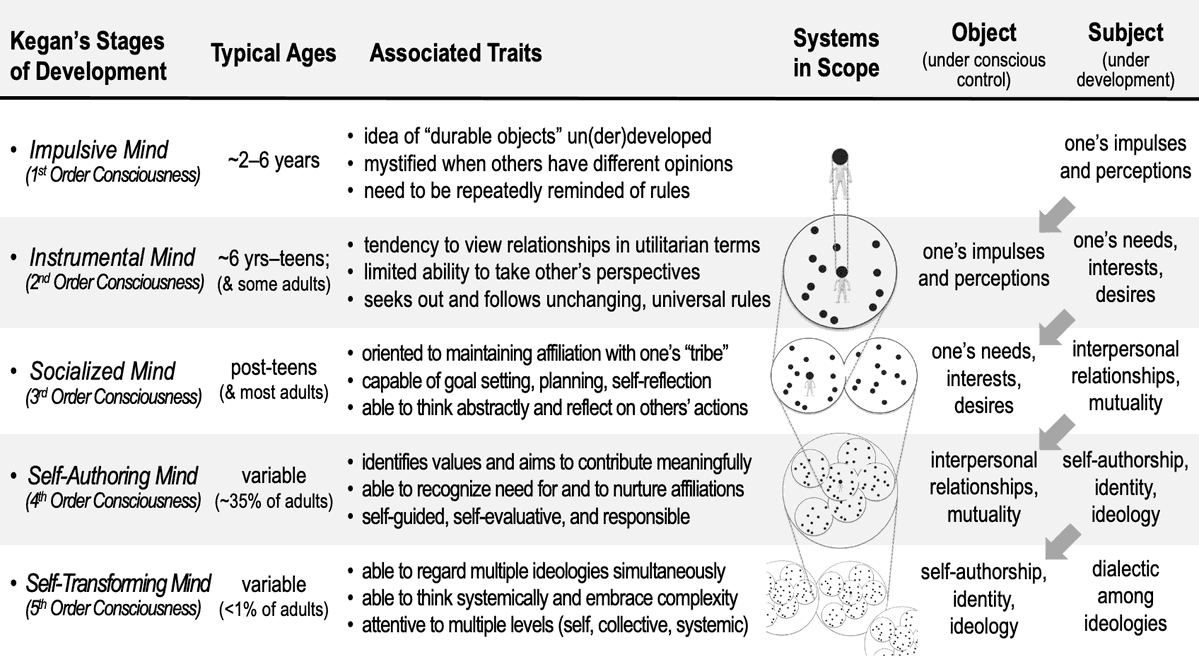
Yes that feels right. Which to a 3 might come across as anti-social (why are you hassling me, my tribe, the Good Ideology that causes peace and love) and to a 4 combative (they must have an agenda/are trying to bait and trap me). Just as “there’s truth in all sides” can be easily confused for the 3’s suicidal empathy as opposed to genuine observation. We absolutely do lack 4-to-5 cultural bridges!
English
1
0
3
27
Harry - Agency School 4/10-12!
@itsannpierce @Alphiloscorp @strangestloop I'd propose that stage 5 engagements might look less like assertions and declarations, and more like curiosity, identifying assumptions in the premise, and reframing to see things in a new light x.com/TVachaW/status…
Vacha@TVachaW

I find this phenomena to be very true in spiritual development: Rather than finding solutions to our problems, we shift to a state where the problem is no longer a problem.

English
1
0
4
45
ꜱᴘᴀᴄᴇ ᴘᴜɴᴋ
i am sourcing a husband for a close friend of mine she’s * Bay Area but not the tech part * Of questionable Jewish status * high IQ (broke in the devoted her life to God way) * Family oriented * 33+, wants marriage within 36 months * Decent looking brunette disgusted by the concept of evaluating a potential mate via appearance * Perverted, but in a semi-unsettling but also transcendant religious way Who’s on the market?
English
18
3
111
5.1K
Ann Pierce
Ann Pierce@itsannpierce·
@Alphiloscorp @strangestloop Yeah! There’s the meta-level “we’re all more alike than it appears” or “there’s always good reasons for the way things have gone” or “there is truth in all sides” but these always come out sounding trite! So why bother if the scaffolding isn’t there to be understood
English
1
0
5
74
Rat King Crimson
Rat King Crimson@Alphiloscorp·
@itsannpierce @strangestloop I confess I have thought of each of these separately, but never thought of these in connection to each other. It makes sense. What assertive declarations is a 5 likely to offer apropos of nothing? Not much, probably.
English
1
0
3
79
Ann Pierce
Ann Pierce@itsannpierce·
@Alphiloscorp @strangestloop Yeah I share your sense that the 3 to 4 gap and 4 to 5 gap are different sizes. Just look how bountiful 3-to-4 messaging is in media (stories about “finding yourself” and “standing up for what you believe in”), yet 5 thinking is completely alien to the average person
English
1
0
3
39
Rat King Crimson
Rat King Crimson@Alphiloscorp·
@itsannpierce @strangestloop My intuition is: 1) The scale is not linear at all, so yes 5 is way further away from 4 than 4 is from 3 2) Owing to this *and* the depth of disposition dependence (e.g., OCEAN) which arises *only* between 4 and 5, yes 5 is exceedingly rare.
English
1
0
3
40
Ann Pierce
Ann Pierce@itsannpierce·
@Alphiloscorp @strangestloop This. 4s can see that diff ppl have diff values but are still emotionally invested in one being “right” - either yours or theirs
English
1
0
3
28
Rat King Crimson
Rat King Crimson@Alphiloscorp·
@strangestloop Off of the cuff: because 4's can do that, but not while holding their own perspective as well. That's 5's who can bridge as one of multiple things at once, whereas for 4's is is something they're focused on specifically.
English
0
0
5
216
Ann Pierce retweetledi
Sivori
Sivori@sivori·
Much of life’s beauty only reveals itself when you commit to something. Some doors only open when other doors have closed.
English
3
13
92
1.7K
Ann Pierce
Ann Pierce@itsannpierce·
@basilYam Sorry the pointing came out sassier than I expected lol
English
0
0
1
77
Ellie
Ellie@basilYam·
Sometimes unhappy people try to talk me into believing what they believe and I can’t rebut them bc they’re so smart and logical and they’re like “see? It really is like that” but it sounds like they’re saying life sucks and my experience is that life is great, so.
English
16
2
109
3.2K
Bryan Johnson
Bryan Johnson@bryan_johnson·
Something happened in the past six months post psilocybin and 5-MeO-DMT that I can't fully explain. The brain data helps but doesn't complete the picture. Feels like a home I didn't know I was looking for. I'm trying to figure out what to do with that now.
English
504
110
4.2K
335.6K
eddie..
eddie..@sad_andlost·
How to foster community without having to small talk Build community no small talk reddit Less small talk more community events how
English
1
0
1
167
creekseeker
creekseeker@mudscryer·
That’s one of the definite differences that im really appreciating and noticing already. People honestly seem more friendly and genuine and people value just hanging out and chilling so im having a really easy time finding stuff to do and creating social spaces. There’s less of a hustle culture, it’s not as beautiful but there is a lot of beauty to it still, and there is less proximity to power and wealth and there’s something to be said of that, but Elon Musk does live here, lol
English
1
0
1
90
creekseeker
creekseeker@mudscryer·
Thank you God for forcibly removing me from the Bay Area and putting me back in Austin, Texas
English
5
0
43
1.1K
Ann Pierce
Ann Pierce@itsannpierce·
I went to an event called a Rejectionathon in NYC a decade ago, and I’m recreating it next weekend at Agency School! Participants will be put into teams, given a list of challenges, and unleashed upon SF. The team with the most rejections wins. Gonna be SO FUN
Ann Pierce tweet mediaAnn Pierce tweet mediaAnn Pierce tweet media
Agency School@AgencySchool_

Last chance to sign up to attend @AgencySchool_ Join us next Friday for an amazing set of talks by @HeidiPriebe1 @gptbrooke @myhandle @nopranablem @itsannpierce @stephen_zerfas @lifeext @sabethunder @WystanTBS @Plus3Happiness @dkazand @kathryndevaney @SarahAMcManus @minnowpark

English
2
0
10
765
Ann Pierce
Ann Pierce@itsannpierce·
I wrote a dorky essay about the 2016 Rejectionathon that’s still up on Medium if you’re curious! @annpierce/i-attended-a-rejectionathon-to-boost-my-confidence-cac7732550e0" target="_blank" rel="nofollow noopener">medium.com/@annpierce/i-a…
English
0
0
0
210
Matthew Dub
Matthew Dub@5matthewdub·
@itsannpierce @ArtirKel audio only means you can do it on a walk. You can sometimes pace a conference room, but never a zoom call.
English
1
0
1
20
Ann Pierce
Ann Pierce@itsannpierce·
I really hate Zoom (video chatting). Eye contact is off, and you’re positioned in this blunt, stark way vs. the way ppl normally sit or stand IRL. And I notice my body registers it more as “screen” than “people” attentionally. Is there anyone else like me who’s gotten over this?
English
13
1
36
1.6K
konrad
konrad@praeterproptr·
@itsannpierce Lmao iirc they were artificially readjusting pupils on the video stream
English
1
0
1
11
Ann Pierce
Ann Pierce@itsannpierce·
@ArtirKel YES. I feel more sucked in / like I can sink into it more somehow. And imagination seems superior to Zoom body language
English
1
0
2
13