James Lawley

3.1K posts

James Lawley banner
James Lawley

James Lawley

@jameslawley

talking tech / making pictures / occasionally music + spurs

Bristol, UK Katılım Ekim 2010
998 Takip Edilen403 Takipçiler
James Lawley retweetledi
Marcelo Lebre
Marcelo Lebre@marcelolebre·
We shipped @remote MCP this week. I ran it with the team to see what it could actually do. A few things that stuck with me. Total cost of employment, by country, all in: salary, taxes, fees, FX. Used to be a finance project. Days of work for a number that was already slightly stale by the time it landed. One prompt. Back before my next call.
English
4
6
21
2.4K
Ramin Nasibov
Ramin Nasibov@RaminNasibov·
Meanwhile in Tobleronistan.
Ramin Nasibov tweet media
English
142
3.7K
63.5K
766.1K
James Lawley retweetledi
scott belsky
scott belsky@scottbelsky·
great makers are liable to become managers/leaders. but the legendary leaders figure out how to remain (or once again become) makers. AI unlocks the era of “leader makers.” Watching teams emerge w/ superior alignment, collapsed talent stacks, and unfathomable potential to build.
English
6
13
145
19.8K
James Lawley retweetledi
Remote
Remote@remote·
Global payroll is one of the hardest problems in business. We've spent 7 years solving it. Today we open it up, and step into our next chapter as the leading global employment infrastructure. Any company, any tool, any AI agent can now connect directly to Remote via MCP. No API keys. No custom integrations. Just the infrastructure tens of thousands of companies already run on. Watch @jobvo explain👇
English
9
16
160
4.4M
James Lawley retweetledi
⚭
@lekimgym·
You need to touch saltwater sometimes not always grass.
English
119
19.7K
79.2K
2M
James Lawley retweetledi
Aakash Gupta
Aakash Gupta@aakashgupta·
Let me explain exactly why Apple still uses drag-to-install in 2026, because the joke here accidentally proves Apple right. A macOS .app is a single self-contained folder disguised as a file. Every dependency, every framework, every resource lives inside it. Drag it to Applications, it works. Drag it to Trash, it's gone. No registry entries. No leftover DLLs. No uninstaller that misses half the files. Windows installers scatter fragments across Program Files, AppData, the registry, system32, and a dozen temp directories. Uninstalling a Windows app is an archaeological dig. Five years later you're still finding config files from software you forgot you owned. Linux is worse. Dependency hell is so common they named it. Entire package managers exist to solve the problem of "I installed something and now nothing else works." Flatpak and Snap were invented specifically to copy what macOS bundles already did natively. The macOS bundle architecture came from NeXTSTEP in 1989. Steve Jobs brought it to OS X in 2001. The core design hasn't changed because the core design was correct. An app is a folder. Installation is a copy. Removal is a delete. Three operations that map perfectly to how humans already think about files. The drag-to-install window with the arrow isn't lazy UX. It's the entire thesis of the system made visible. You are literally just moving a folder. There is no "installation" step because there's nothing to install. The app is already complete. Every other OS eventually tried to get here. Windows got MSIX. Linux got Flatpak. Mobile figured it out from day one because phones shipped after Apple proved the model. The pattern everyone else converged toward is the pattern this tweet is calling outdated. The funniest part: the app being dragged in that screenshot is Claude. An AI that can write code, analyze documents, and reason about complex systems. And the most advanced step in getting it onto your machine is holding down a mouse button and moving your wrist two inches to the right. That's not a design failure. That's a 37-year-old architecture so good that the most sophisticated software on earth still ships inside it.
Noah Cat@Cartidise

it’s 2026 and this is how you install apps on macOS

English
342
1.3K
12K
1.7M
James Lawley retweetledi
Tony Fadell
Tony Fadell@tfadell·
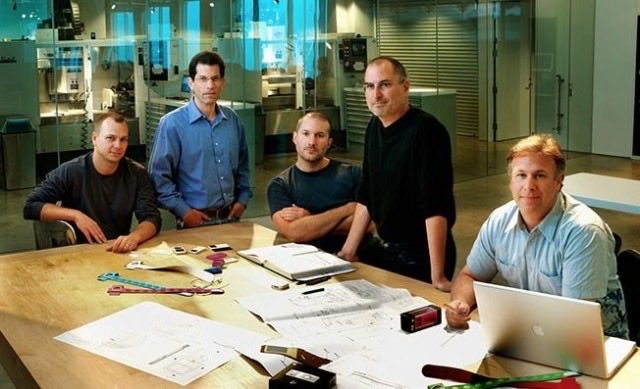
50 years of @Apple From the early days of the #iPod to bringing the #iPhone into the world, some of the most formative years of my career were spent there. The products and teams stay with you. But more importantly so does how Apple thinks. A few lessons that have held true for decades: 1) Start with the user, not the tech. The question isn’t “what can we build?” but “what problem actually matters?” 2) Focus is everything. Apple is defined as much by what it says no to as what it builds. 3) End-to-end matters. Hardware, software, services. It all has to work together. 4) Details are the product. What feels small is what users remember. 5) Debate hard. Commit fully. 6) Build for the long term. We’re in another moment of massive technological change. The fundamentals haven’t changed. The companies that win build things people actually use and can’t imagine living without. Congrats to everyone who has been part of Apple’s first 50 years! 🙌
Tony Fadell tweet media
English
79
572
4.5K
244.7K
Notion
Notion@NotionHQ·
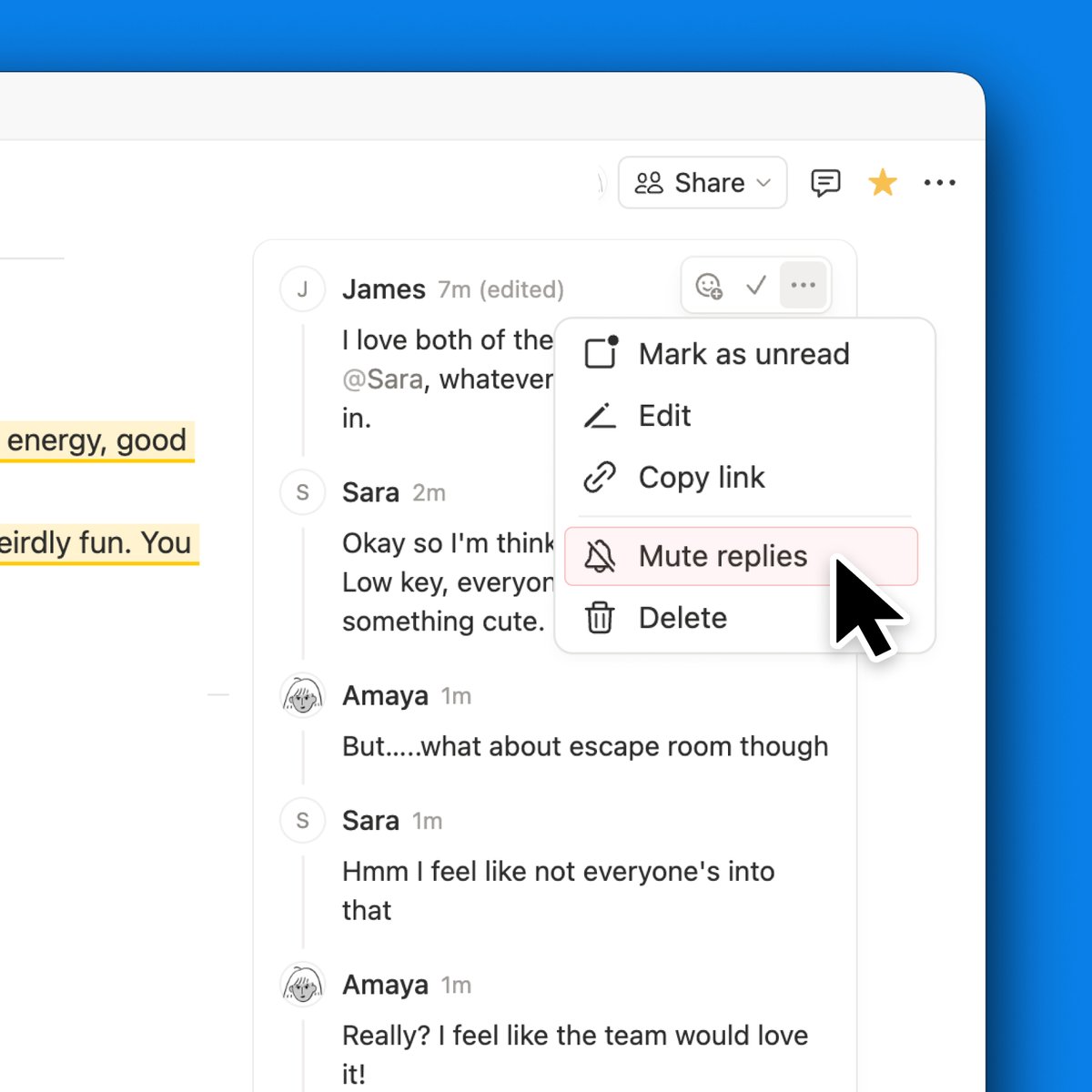
A li’l quality-of-life update: Mute replies to discussions you’re done with. Peace and quiet, until someone @-mentions you.
Notion tweet media
English
11
3
170
16.3K
James Lawley retweetledi
Tony Fadell
Tony Fadell@tfadell·
One of the hardest parts of management is letting go. Not doing the work yourself. You have to temper your fear that becoming more hands-off will cause the product to suffer or the project to fail. You have to trust your team – give them breathing room to be creative and opportunities to shine. - #BUILD Chapter 2.1 Just Managing
English
6
10
131
12.5K
James Lawley retweetledi
Kevin Roose
Kevin Roose@kevinroose·
We made a blind taste test to see whether NYT readers prefer human writing or AI writing. 86,000 people have taken it so far, and the results are fascinating. Overall, 54% of quiz-takers prefer AI. A real moment! nytimes.com/interactive/20…
English
427
421
3.1K
3.5M
James Lawley
James Lawley@jameslawley·
@ai Would be interesting to compare the predicted Notion agent credit spend of this one though (come May 4th when they start billing for usage).
English
0
0
1
177
anand iyer
anand iyer@ai·
We built a CRM on top of Notion for our fund (deal pipeline, LP tracking, contact scoring, analytics) in ~2 weeks using Claude Code + Notion agents. Our system does what some platforms are charging $10-15K/year do for institutional investors, except it's custom-fit to how we actually work. Build vs SaaS is real. Vertical SaaS might get disrupted by its own customers.
English
7
7
94
21.7K
James Lawley
James Lawley@jameslawley·
@akothari @NotionHQ MiniMax M2.5 is a great start, looking forward to some other “cheaper” models being available (especially for custom agents)… waste of tokens to have Sonnet on some simple tasks!
English
0
0
0
193
Akshay Kothari
Akshay Kothari@akothari·
We're working hard to make @NotionHQ the AI Switzerland🇨🇭 -- make it incredibly easy for you (and your company) to pick whatever model you'd like to use. All your context in one place + any model you want to use = full control over how you want to build an agentic future.
Notion@NotionHQ

We're adding more models to Notion, starting with our first open weight model. ICYMI, Custom Agents now support MiniMax M2.5, an open weight model that’s up to 10x more cost-efficient for basic tasks. More choices, less lock-in 🫡

English
21
9
174
32.6K
James Lawley
James Lawley@jameslawley·
I thought it was Knights in White Satin
English
0
0
0
20
James Lawley
James Lawley@jameslawley·
Deployed our first Worker as part of our @NotionHQ Custom Agents setup, it’s like actual magic… feels like the possibilities are endless (pending cost review haha)
English
2
1
6
3.6K
James Lawley retweetledi
Tony Fadell
Tony Fadell@tfadell·
PMs don’t just ship features. They kill them. Shipping isn’t the job. Shipping the right product is. A great PM doesn’t fall in love with the roadmap. They fall in love with the problem and have the guts to say: This isn’t solving it. This adds complexity. This doesn’t matter. Every feature, setting, UI, element should fight to exist. At Nest, we had one rule: If you can’t explain why it matters, it doesn’t ship. You had to tell us the why. The reason a real person would care. That one rule killed dozens of features.
English
65
167
1.7K
283K