Jeremy Hoffman

6.2K posts

Jeremy Hoffman banner
Jeremy Hoffman

Jeremy Hoffman

@jeremyhoffman

@jeremyhoffman.bsky 🐘 @[email protected] Xoogler. Mountain View YIMBY. 🥑🔰 housing, biking, transit, games, guitar, puzzlehunts, fatherhood.

Mountain View, CA Katılım Şubat 2009
284 Takip Edilen645 Takipçiler
Sabitlenmiş Tweet
Jeremy Hoffman
Jeremy Hoffman@jeremyhoffman·
The tragedy of #CampFireSmoke highlights the urgency of the twin crises of global warming and California's housing shortage. This will be the 21st century -- disasters like this, every year, worldwide; homes lost; air and water poisoned -- unless we build green now. #YIMBY
English

1
0
20
0
Leah Libresco Sargeant
Leah Libresco Sargeant@LeahLibresco·
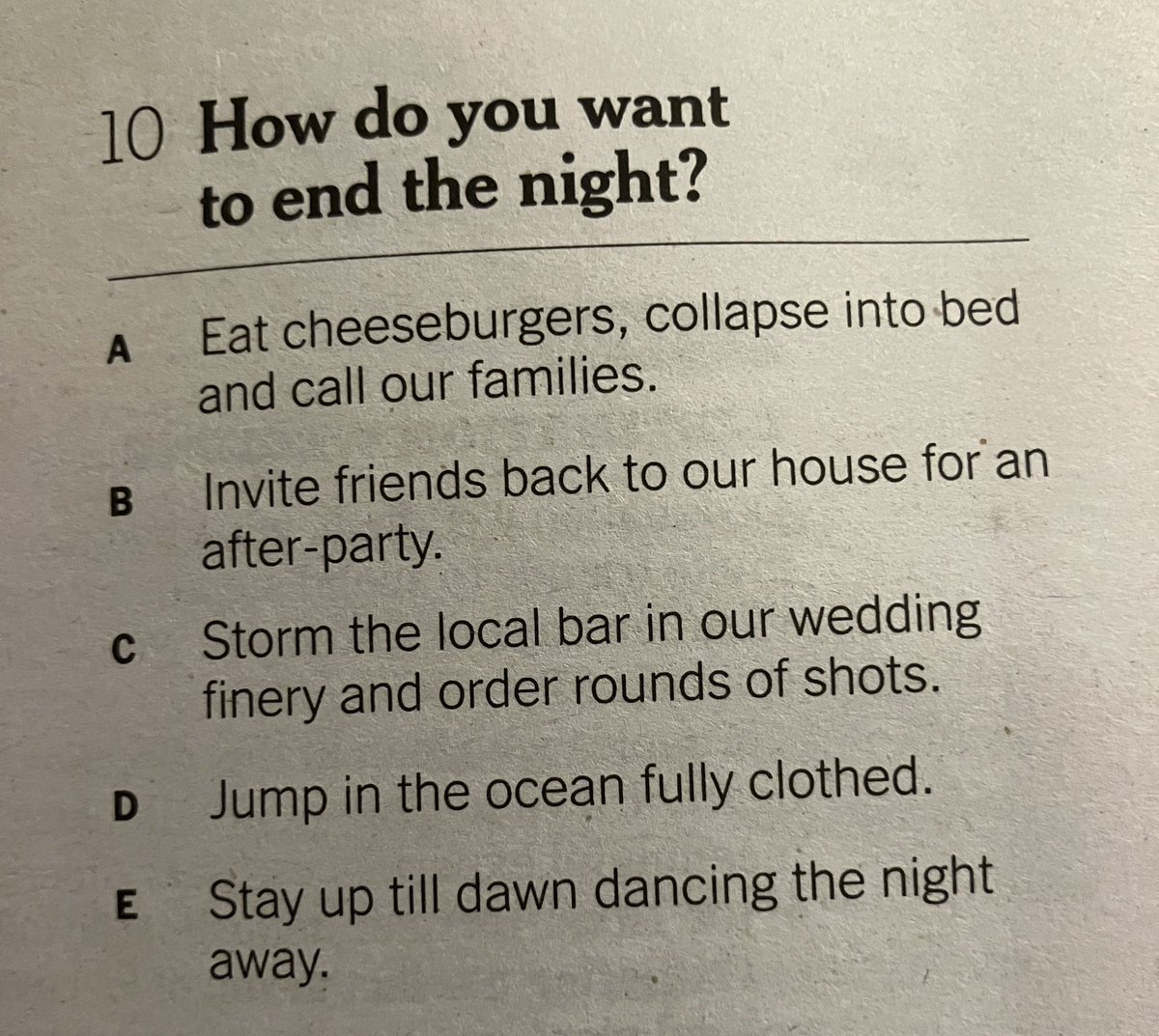
The NYT ran a special wedding planning section, and this quiz on preferences seems to omit one notable, traditional option.
Leah Libresco Sargeant tweet media
English

301
230
17.7K
1.9M
Jeremy Hoffman retweetledi
Dmitri Dolgov
Dmitri Dolgov@dmitri_dolgov·
Speed matters. A @Waymo vehicle was driving in a 25mph zone in LA when an oncoming car swerved into our lane while speeding up to over 70mph… 3x the speed means 9x the destructive energy. Good to see the Waymo Driver react early and safely to make room.
English
31
91
2K
619.9K
Jeremy Hoffman
Jeremy Hoffman@jeremyhoffman·
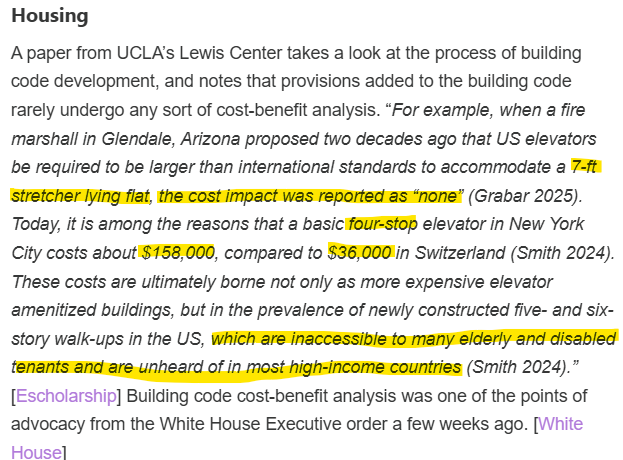
@rrbrussell @willpoffwebster Sounds like cost-benefit analysis that should totally be conducted. Seems like no such analysis was conducted before if the costs were listed as "none".
English

0
0
3
37
Robert R. Russell
Robert R. Russell@rrbrussell·
Okay, what is the risk to a carrying a patient on a backboard down 6 flights of stairs versus taking an elevator? I doubt the math is favorable to the stairs for a non fire scenario. Next question. How many smaller elevators do I need to accommodate the same traffic a larger elevator can handle? Is elevator size or elevator transit time per direction the limiting factor? Your argument basically assumes that the two items are completely substitutable when they aren’t because of the capacity and capability differences.
English
1
0
0
363
Will Poff-Webster
Will Poff-Webster@willpoffwebster·
This is a strange quirk of the US building code being developed by a non-government org. If the government made these regulations, they would have to justify random additional costs by cost-benefit analysis not just vibes The result is every US apartment and condo is less affordable, and our elevators cost 4.5x more than noted low-cost, low-income… Switzerland
Trevor Acorn 🔰🌹🇺🇸🌎@trevoracorn

Brutal. Code writers need to understand the basics of a cost-benefit analysis.

English
6
43
474
42.5K
Jeremy Hoffman retweetledi
Trevor Acorn 🔰🌹🇺🇸🌎
Brutal. Code writers need to understand the basics of a cost-benefit analysis.
Trevor Acorn 🔰🌹🇺🇸🌎 tweet media
English
11
82
575
103.8K
Jeremy Hoffman retweetledi
Jerusalem
Jerusalem@JerusalemDemsas·
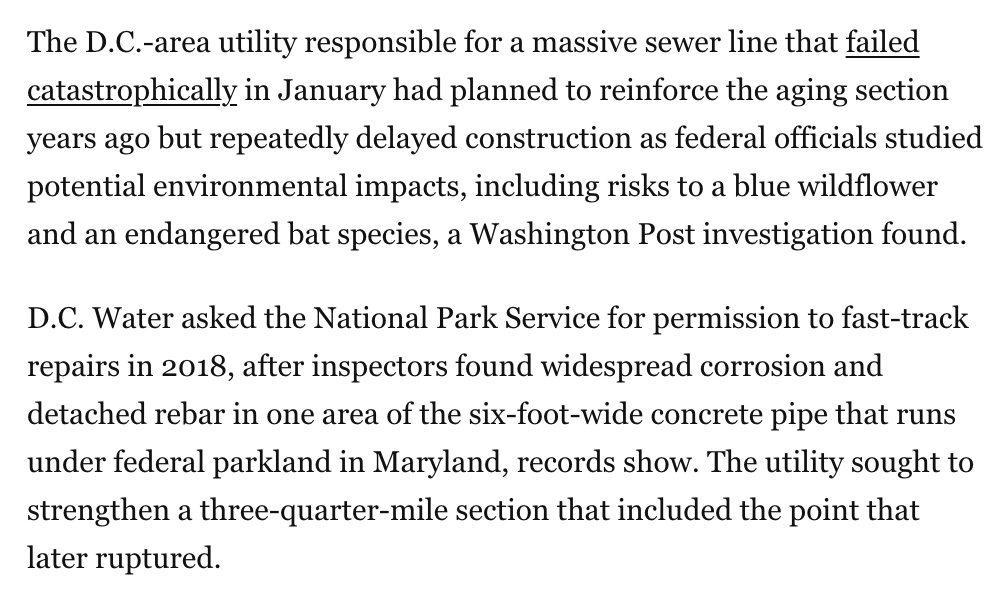
One of the largest spills of untreated wastewater in American history happened while an environmental review process held up sewer line repairs because they were studying risks to a flower and a bat.
Jerusalem tweet media
English
70
1.2K
6.8K
341.5K
Jeremy Hoffman retweetledi
Ryan Moulton
Ryan Moulton@moultano·
When you chose a school for your kids, you probably didn't realize you were choosing educational software, but that choice of software might be more consequential for your kid than the choice of school. moultano.wordpress.com/2026/03/12/our…
English
64
195
2.5K
780.9K
Jeremy Hoffman retweetledi
Jeremiah Johnson 🌐
Jeremiah Johnson 🌐@JeremiahDJohns·
The best version of the Democratic Party is a party that taxes the public to fund an efficient, simple, robust safety net, and that can build public infrastructure fast. The worst version of the Democratic Party is economic slop about 'nobody should pay taxes but millionaires', and also grinds economic activity to a halt with a million regulations on everything. The first actually believes in the power of the state to do good. It thinks the system is worth funding and defending. It believes in the fairness of a safety net but also in the power of economic growth and dynamism. The second is cynical crap that just wants to identify heroes and villains and hysterically strike out at whoever is 'bad'. Rich people bad, only they should pay taxes. Big Companies bad, they shouldn't be allowed to do anything. It has no actual vision of the good.
English
80
455
3.5K
125.3K
Jeremy Hoffman retweetledi
Alec Stapp
Alec Stapp@AlecStapp·
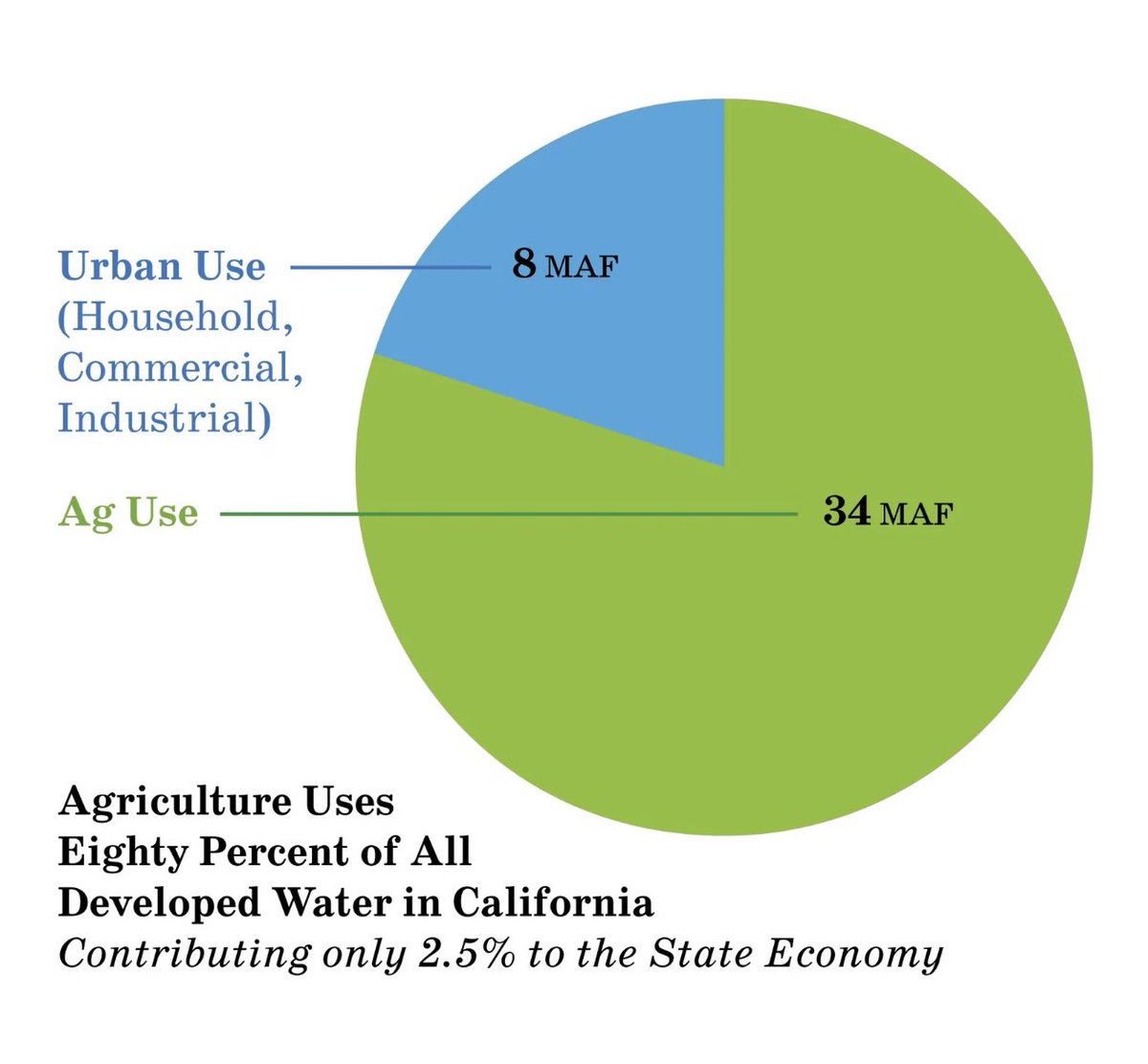
Chatted with a water resource economist at an event in California yesterday. The state’s water “shortage” really is one of the most unforced errors in policymaking. Key stats: - farmers use 80% of the developed water supply - residents use 20% - cities pay ~20x higher prices (!) for water than farmers (~$722/acre-foot vs ~$36/acre-foot) - some of the biggest agricultural districts in the state pay literally $0 for their water - meanwhile agriculture accounts for just ~2% of California’s economy It’s crazy that politicians tell residents to take shorter showers or get rid of their lawns instead of just charging farmers the market price for their water usage.
Alec Stapp tweet media
English
309
371
2.9K
574.8K
Summer Jaeger
Summer Jaeger@SummrWrites·
I explained to my 3yr old son that his 6mo brother will one day be able to walk and run, and will always want to play with him. He will want to go outside with him and shoot water guns and nerf guns and build legos with him. He will never have to ask, "Do you want to play with me?" because he is always going to be playing with him. I wish I could burn an image of his face, filled with absolute awe, surprise, and excitement, into the back of my eyelids. I really believe that siblings are one of the best gifts you can give to your children.
English
57
110
6.1K
303.3K
Jeremy Hoffman retweetledi
patch
patch@Grownded·
Story time: Me and my wife enjoy a small luxury, fresh blueberries on our cereal in the morning, which I buy at ≈ $2.50 a pint every single week excepting a couple weeks a year when the prices are higher, or the 2 months I pick them from my own bushes. Blueberries have a country of origin stamp requirement. Every year, I watch as my blueberry source marches from Chile and Argentina up through Central America, through the States and into Canada, only to repeat. All for a consistent 2.50 a pint, week after week, year after year. The "food system" makes this not only possible, but profitable to all involved, just so I can live like a king and have fresh fruit on my Cheerios. The modern world is amazing and we don't appreciate the bounty that we have at our fingertips nearly enough.
patch@Grownded

That fry represents one, maybe 2 shelf stable, long storage, Idaho potatoes grown in a single field by a single farmer, processed and flash frozen for indefinite storage until needed, fried on demand as needed That fruit cup is the result of 7 different fruit suppliers, harvested and shipped fresh from global supplies in a matter of hours to a day, hand cut and assembled and served immediately before browning and decay sets in. The fact you can do that for the cost of 15 minutes of labor or less is a f---ing miracle.

English
81
483
10.6K
666.5K
Héliographe
Héliographe@heliographe_·
If you put the Apple icons in reverse it looks like the portfolio of someone getting really really good at icon design
Héliographe tweet media
English
187
2.4K
60.6K
1.4M
Jeremy Hoffman retweetledi
Connor Boyack 📚
Connor Boyack 📚@cboyack·
Maduro’s capture illustrates what I believe is one of the biggest problems in politics: people frequently treat principles as costumes—worn when convenient, discarded when costly. Over nearly two decades working in and around politics, I’ve watched the same pattern play out again and again—and today’s events in Venezuela put it on display in neon. The US military carried out strikes in Caracas and captured Venezuelan President Nicolás Maduro and his wife, flying them to New York in what the administration is framing as a kind of “law enforcement” operation.  Look, there are plenty of people who never even pretend to have a core set of principles they cling to. They’re utilitarians and technocrats—ruled by polling, vibes, ambition, and career incentives. Fine. At least they’re honest about being wind vanes. But most people do claim to stand for a consistent set of ideas—constitutional restraint, limited government, “America First,” non-intervention, rule of law, due process, sovereignty, you name it. The problem is that they’re often inconsistent, especially when the outcome is emotionally satisfying. Today proved that again. People who claim to champion the Constitution suddenly ignore its restraints on executive power and, when pressed, point to court precedent, congressional statutes, and past presidential deviations as if those things are the Constitution. “But… the Barbary pirates!” “But George H.W. Bush removed Noriega in Panama!” “But the courts said XYZ!” “But Congress passed some statute in 199-whatever!” So I’ve asked a simple question, repeatedly, across social media threads today: Where, exactly, is the constitutional provision authorizing the president to invade another country and depose its leader? The replies come back empty, no constitutional provision cited. They can't, because it doesn't exist. The Constitution gives Congress the power to declare war. No "targeted strikes" or anything of the like are separately authorized for the president to execute at his whim. That’s the whole point of written limits: the text is supposed to bind you. Instead, we get arguments that past presidents did it, and some lawyers said it was okay. This is tantamount to saying “Billy did it, so I thought it was okay for me to do it.” That’s playground logic, not constitutional rigor. And that’s my point: there is no rigor. There’s only precedent—meaning, prior lawlessness used to justify the next round of lawlessness. The administration itself appears to be leaning on the idea that indictments and “national interests” somehow transform regime change into a lawful “arrest mission.” Trump was elected in part because people were exhausted by foreign meddling. He was praised (by some of these same voices!) for resisting the interventionist itch. And now he’s kicking up dirt in Venezuela. “But Venezuelans are happy!” the commenters have repeatedly said. “They’re in the streets celebrating!” Yes. Sometimes they are. That’s not a serious argument. That’s the-ends-justify-the-means dressed up as compassion—again, playground-level reasoning. Guess what: Iraqis filled the streets when Saddam was deposed. “Baghdad Celebrates Saddam’s Fall,” read a headline in Voice of America, for an article describing dancing and cheering as thousands poured into the streets.  Then Iraq spiraled into insurgency, sectarian civil war, mass death, displacement, and the conditions that helped give rise to ISIS. Libyans filled the streets when Gaddafi fell. So then we got an article titled “Libyans celebrate Gaddafi’s death” in Al Jazeera, describing jubilant crowds and the “end of tyranny.”  Then Libya fractured into militias and rival governments, becoming a prolonged civil conflict and a humanitarian disaster. I could go on. You get the pattern. Here’s the deeper point that people keep refusing to learn: if your principles only apply when they’re easy, you don’t have principles… you have preferences. And preferences make terrible guardrails for state power. Every time you cheer an exception, you’re not just celebrating a moment… you’re authoring a precedent. You're excusing the next guy, in any political party, and for any reason, to do it too. If you’re applauding unilateral regime change today because the target is a villain, you’re also applauding unilateral regime change tomorrow when the target is someone you don’t want touched. Power doesn’t care about your intentions (or your preferences). It cares about the permission slip we seemingly always give it. To be clear: Maduro is no hero. He’s a tyrant who has presided over ruin and repression. But the question isn’t whether Maduro is bad (he obviously is). The question is whether we are governed by law or by appetite. Because “he’s bad” is not a constitutional argument, nor is "Venezuelans are happy and freer." It’s the (fake) argument every president uses when he wants to do something he has already decided to do. And this is why presidents since Washington have gotten away with exceeding constitutional limits: because the public trains them to. They learn that violating restraints can spark national pride, satisfy a thirst for vengeance, and earn adoration from people who swear they oppose unchecked power—right up until it produces an outcome they like. You want a country of laws? Then act like law matters when it’s inconvenient. Stop treating the Constitution as a decoration. Stop citing precedent as if it were permission. Stop excusing today’s overreach because you hate today’s target. Because the bill always comes due, and the payment is usually made by people who never voted for the war, never authorized the mission, and never wanted their country turned into the kind of thing it once claimed to oppose. So yes, we can answer James Madison’s question: “Will it be sufficient… to trust to these parchment barriers (i.e., the Constitution) against the encroaching spirit of power?” Obviously not. Parchment only restrains power when the people treat it as a leash—not a suggestion. When half the country cheers the leash getting snapped because their guy did it to their enemy, the paper might as well not exist. And that's the cycle we've long been in. Yes, Venezuela may be a little freer, for now. But listen to the triumphalism in Trump's announcement. In the same breath as announcing Maduro’s capture, he talked about sending in “our very large United States oil companies,” and about the U.S. “running” Venezuela's government “until such time as we can do a safe, proper, and judicious transition.” This is the raw material of unintended consequences: blowback, corruption, and the kind of protracted entanglement that turns “just this once” into the next twenty years. Count me out. I've seen this story before, and I don't like how it ends.
Connor Boyack 📚 tweet media
English
394
762
2.9K
306.1K
Jeremy Hoffman retweetledi
Tenobrus
Tenobrus@tenobrus·
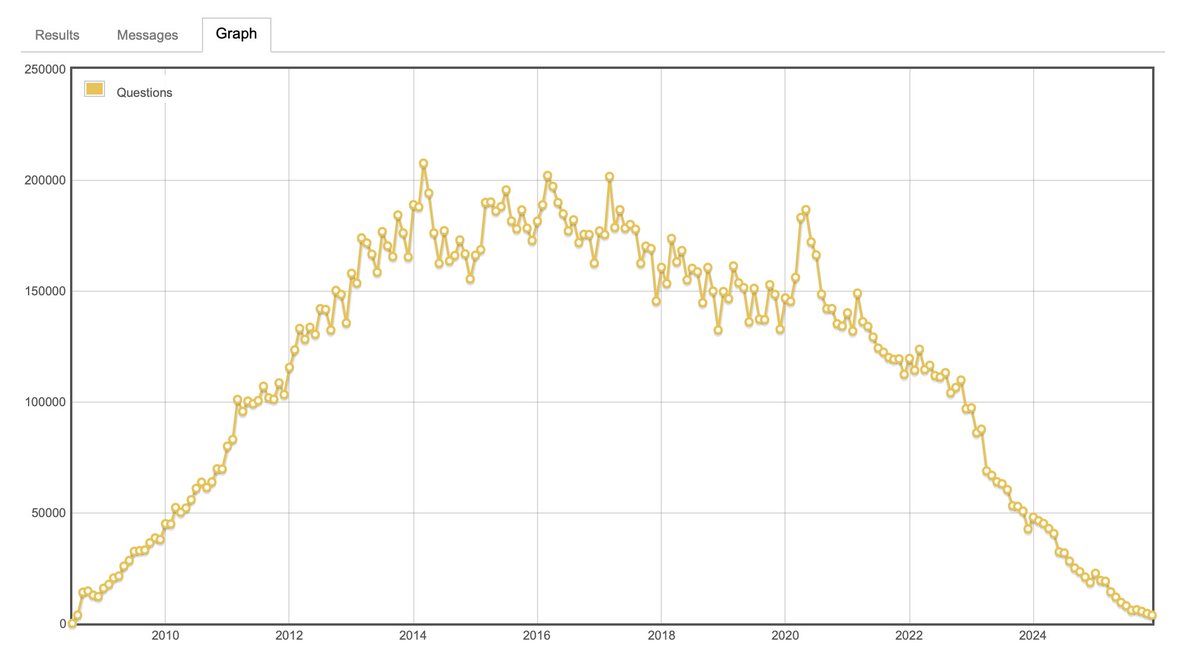
monthly stack overflow questions over time. 3710 questions last month, just slightly under the 3749 from the first month of it being public. human software engineering had a good run, and now we've come full circle.
Tenobrus tweet media
English
155
246
4.6K
669.7K
Jeremy Hoffman
Jeremy Hoffman@jeremyhoffman·
@hubbstercat @bpodgursky I think kids vary widely. Parents should listen to each other for potentially useful advice, but always keep in mind that your mileage may vary and you have to play the course you're on.
English
0
0
0
8
just a bluebird
just a bluebird@hubbstercat·
@bpodgursky Having asked my kids to do those things with me when I didn’t have time to play and got a resounding EW NO, lol. They actually just wanted me to play video games/action figures/whatever with them.
English
4
0
24
3.4K
Ben Podgursky
Ben Podgursky@bpodgursky·
When your kids ask to play with you, remember that the actual ask is "I want to spend time with you". They ask to play because play is all they know. If you'd rather do a project (gardening, making an IKEA shelf), just propose doing it with them. They'll be just as excited.
Patrick Heizer@PatrickHeizer

Dads: a simple reframe that has helped me actually want to play with my kids more: There is going to be a last time that they ever ask me to play together, I won't know when that will be, and that I'll desperately wish for it again once it's past. Life is brief. Truly savor it.

English
56
982
20K
548.6K
Jeremy Hoffman retweetledi
Dylan
Dylan@DylanMcD8·
That extra space is totally a dark pattern to make you think it's a fake email and ignore it (this is a 100% real email)
Dylan tweet media
English
189
1.4K
76.2K
2.8M
Jeremy Hoffman retweetledi
Dr. Jon Slotkin
Dr. Jon Slotkin@slotkinjr·
As a neurosurgeon I care a lot about road safety. By now you’ve probably seen @Waymo’s stunning safety results (like 91% fewer serious crashes). But they didn’t just publish data headlines. They released the raw CSV files and data dictionaries. I did a much deeper analysis. A fascinating story emerges when you analyze how they’re achieving this. This isn’t incremental improvement - it’s categorical. We’re looking at the potential elimination of traffic deaths as a leading cause of mortality. The intersection breakthrough: Waymo has essentially solved intersection crashes, with 95% fewer injury incidents than human drivers in the same locations. That’s transforming the deadliest driving scenario. The national math: If every US vehicle performed like Waymo, we’d prevent 33,000-39,000 deaths annually and save $0.9-1.25 trillion in societal costs. Even partial adoption at 27% would save ~10,000 lives per year. In terms of magnitude, this would be the equivalent of eliminating every pedestrian death nationally in a year. The physics signature: Here’s what fascinates me: 47% of Waymo’s contacts involve less than 1 mph delta-V. They’re not just avoiding crashes; they’re converting unavoidable incidents into gentle bumps. It’s like having physics itself on your side. We’re not talking about marginal safety gains. The data represents a fundamental shift from harm reduction to harm prevention. The methodology matters: I used their dynamic geographic benchmarks (comparing like-for-like road conditions) and verified the findings hold across San Francisco, Phoenix, LA, and Austin. The safety advantage actually increases in more complex urban environments. Link to raw data below…. Notes on my approach: Analysis based on 96 million miles of Waymo Rider-Only (RO) data through June 2025, utilizing Waymo's dynamic geographic benchmarks to compare Waymo Driver performance against human drivers under similar road conditions and operational design domains. The projections for national impact (deaths prevented, societal costs) involve several assumptions. Given Waymo's zero reported fatalities, the direct serious injury reductions were mapped to national fatality statistics using established NHTSA-derived ratios that correlate serious injury crash rates with fatality rates. This extrapolation assumes that Waymo's observed serious injury prevention capability would translate proportionally to fatality prevention. Societal cost savings are estimated by applying average per-fatality and per-injury economic costs (e.g., medical, lost productivity, quality of life) as published by NHTSA, scaling these national averages to the projected number of avoided fatalities and injuries based on Waymo's safety performance. These figures represent the potential annual impact if the Waymo Driver's safety profile were widely integrated into the national fleet. @ethanteicher
Dr. Jon Slotkin tweet media
English
334
835
4.8K
1.1M
Jumanji (Ju Ju Binx)
Jumanji (Ju Ju Binx)@jg091297·
@wantthepfunk @sam_d_1995 Does it help the public when you have no mortgage, lived in your house for 50 years making all payments on time, miss a tax payment, and the government takes over your land and home and kicks you out?
English
3
1
10
776
Jeremy Hoffman
Jeremy Hoffman@jeremyhoffman·
@KrisKruijshaar @ProfDBernstein @dieworkwear I was out on the street with an anti-prop-8 sign that Tuesday. One man said "if we let men marry men, then they'll let men marry dogs next". Another yelled "f*** you f*****" out his car window.
English
1
0
1
9
derek guy
derek guy@dieworkwear·
Obergefell v. Hodges made me believe in the whole "arc of history bends towards justice." In the 90s, I didn't think gay marriage would be legalized in my lifetime bc homophobia was so rampant. We would have never gotten here without the decision and now it may be overturned.
English
341
2.3K
41.1K
1.8M
Jeremy Hoffman
Jeremy Hoffman@jeremyhoffman·
@AlexGodofsky I once saw a list of tips to save on gas that included "try lowering the volume of the music in the car".
English
0
0
3
134
Alex Godofsky
Alex Godofsky@AlexGodofsky·
One of the most important arguments against altruism is that some huge fraction of people have *no idea whatsoever* about the scale, if any, of the benefits of their altruistic actions and will easily deceive themselves into doing nonsense like this.
English
32
79
1.6K
88.6K