Jerome Drevon

2.4K posts

Jerome Drevon banner
Jerome Drevon

Jerome Drevon

@jeromedrev

Associate @gvagrad Three books on Jihad in Egypt, the politicisation of Syrian Jihadis, and HTS in Syria

Geneva, Switzerland Katılım Ağustos 2016
633 Takip Edilen5.6K Takipçiler
Sabitlenmiş Tweet
Jerome Drevon
Jerome Drevon@jeromedrev·
Five years in the making, based on dozens of travel to Idlib under HTS control, multiple interviews with Ahmad al-Sharaa, his closest associates, other factions, ministers, dissidents, opponents, civil society, diplomats, and more hurstpublishers.com/book/transform…
Jerome Drevon tweet media
English
35
224
1.1K
214.6K
Jerome Drevon retweetledi
Shanaka Anslem Perera ⚡
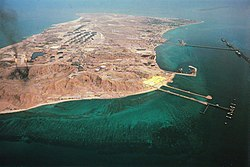
JUST IN: The Strait of Hormuz is open. It has been open every day since February 28. The IRGC never closed it. What the IRGC did is convert 21 miles of international waterway into a permissioned gate with a toll booth, a vetting process, and a guest list. Traffic has collapsed 70 to 80 percent. But the handful of tankers that transit each day do so with IRGC clearance, paid in yuan or USDT, at $2 million to $4 million per vessel. The process is now documented. A tanker operator contacts an IRGC-linked intermediary. The operator submits vessel ownership, flag state, cargo manifest, destination, crew list, and AIS transponder data. The IRGC runs background checks: no US-linked ownership, no Israeli cargo, no flagging to aggressor states. If approved, a toll is negotiated. Payment is executed in cash, Chinese yuan, or USDT on the Tron network. The IRGC issues VHF radio clearance with a specific time window and route through Iranian territorial waters near Larak Island, where IRGC Navy performs visual confirmation. The vessel transits. No physical escort is provided. The “protection” is the removal of the interdiction threat. You are safe because the entity that would attack you has decided not to. China passes. India passes. Pakistan, Turkey, Malaysia, Iraq, Bangladesh pass. Shadow fleet operators aligned with Russia pass. Not all pay the full toll. Some receive exemptions through government-to-government arrangements. Some pay reduced rates. Some pay nothing because the geopolitical alignment is payment enough. The system is not a blockade. It is a membership club with a cover charge denominated in currencies that are not the US dollar. And here is what nobody is covering. Lloyd’s of London and the international insurance market have withdrawn standard hull and machinery coverage for Hormuz transits. War-risk policies now carry premiums of up to 5 percent of vessel value, $5 million for a $100 million tanker, per voyage. But the actuarial models that price those premiums now incorporate IRGC vetting status as a risk-reduction variable. If a vessel can prove it has paid the toll and received VHF clearance, the probability of loss drops from above 20 percent to below 5 percent. The same models that price hurricane risk and earthquake exposure are now pricing IRGC compliance as a safety factor. The insurance industry has done something no government intended: it has formalised IRGC authority over the strait in actuarial mathematics. A tanker that pays the toll is insurable. A tanker that does not is stranded. Dozens of vessels sit outside the strait right now, unable to transit because no underwriter will cover them. The insurance withdrawal is not a market reaction. It is a structural enforcement mechanism that makes IRGC permission the prerequisite for commercial shipping. Every toll paid in yuan is a barrel that settled outside the dollar system. Every USDT transaction on Tron is a 3-second settlement bypassing SWIFT and sanctions. Iran’s parliament is drafting legislation to formalise the toll as “security compensation.” If that bill passes, ad-hoc extortion becomes sovereign law, and the precedent for chokepoint monetisation enters the international legal framework. Gold watches from the side. Spot prices muted at $5,000 to $5,400 by dollar strength and rising yields, while central banks in China, Russia, and India quietly accumulate on every dip. The short-term safe-haven has not fired. The long-term de-dollarization trade is loading. The strait is open. The molecules move. But only for those who pay the toll, in the currency the toll booth accepts, after the vetting the toll booth requires. The rest wait. The clocks tick. Saturday arrives. open.substack.com/pub/shanakaans…
English
300
1.4K
3.8K
2.3M
Jerome Drevon retweetledi
Benjamin R. Young
Benjamin R. Young@DubstepInDPRK·
My forthcoming book, "Reds, Revolutions, and Rebellions: How China, Cuba, and Vietnam Transformed Guerilla Warfare," with @CornellPress now has a webpage! Scheduled to come out on July 15, 2026. You can pre-order now. #bookTabs=1" target="_blank" rel="nofollow noopener">cornellpress.cornell.edu/book/978150178…
English
1
11
40
2.6K
Jerome Drevon retweetledi
Anna Jacobs Khalaf
Anna Jacobs Khalaf@AnnaLeaJacobs·
This @FT report is among the best I’ve seen on Saudi Arabia during this conflict. It captures the nuances of the Saudi-Iran relationship, the detente, and the tensions and questions around this war extremely well👇great reporting as usual from @ahmed @cornishft ft.com/content/272194…
English
6
181
750
88.8K
Jerome Drevon retweetledi
Muhsen AlMustafa
Muhsen AlMustafa@MuhsenAlmustafa·
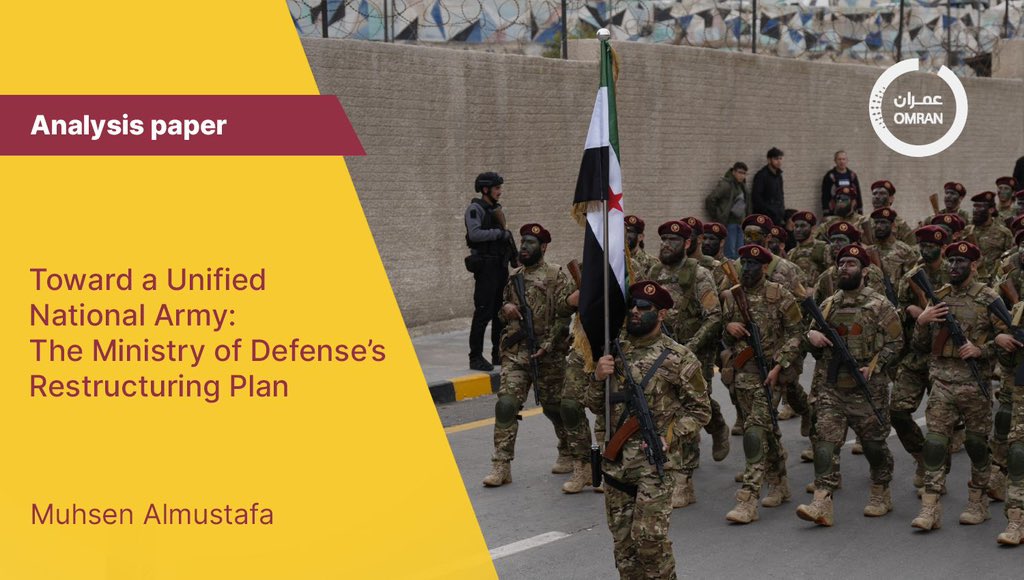
What does my latest paper, “Toward a Unified National Army: The Ministry of Defense’s Restructuring Plan” published with @OmranDirasat, offer? The paper provides an analytical reading of the process of rebuilding #Syria’s military institution after the fall of the Assad regime. It unpacks the political and military context of restructuring, examines the main features of the Ministry of Defense plan, and explores the challenges of unifying command and consolidating weapons, the file of defected officers and military hierarchy, the shift toward a professional army and a new military doctrine, as well as operational performance and field discipline. It also addresses civil–military relations within the constitutional framework of restructuring and the impact of a tense regional environment on this process. The paper is structured around the following main sections: 1.Introduction 2.The Political and Military Context of Restructuring 3.Core Features of the Ministry of Defense Plan 3.1 Unifying Command and Consolidating Weapons 3.2 The Defectors and Military Hierarchy 3.3 Toward a Professional Army and a New Military Doctrine 3.4 Operational Performance and Field Discipline 4. Civil–Military Relations Within the Constitutional 5.Framework of Restructuring Restructuring Amid Regional Uncertainty 6.Conclusion For more: bit.ly/40EFudf English PDF: bit.ly/3OZwUmC Arabic: bit.ly/4tNv08n
Muhsen AlMustafa tweet media
عمران للدراسات@OmranDirasat

The fall of the Assad regime reopened the question of the army as a state institution rather than an instrument of authoritarian rule, at a moment defined by a security vacuum and military fragmentation that compelled the state to rebuild centralized military decision-making and a legal monopoly over force. Within this context, the Ministry of Defense’s plan emerged as a multi-level approach combining faction integration, rank regulation, and force redistribution with longer-term tracks aimed at rebuilding military education, developing a national doctrine, and transitioning toward a “smaller, more professional army” based on voluntary service. The Ministry has already integrated more than 130 factions while rejecting any regional, religious, or ethnic particularism within the military structure. Yet incomplete integration tracks most notably the Syrian Democratic Forces file remain a decisive test for unity of arms, chain-of-command coherence, and the very meaning of security sovereignty. At the same time, the file of defected officers and military hierarchy remains the most sensitive, as it combines professional, symbolic, and political dimensions. Its success will depend on the Ministry’s ability to reduce exceptions, unify standards for appointment and promotion, and establish transparent evaluation mechanisms that prevent mediation, favoritism, and disguised quota-sharing. Regionally, the Ministry is operating in an anxious environment that requires leveraging training partnerships and knowledge exchange with Turkey, Saudi Arabia, negotiation tracks with Russia, and cooperation against ISIS as instruments for building capacity without becoming beholden to any one axis or opening the door to political interference in the structure of the army. Taken together, the current moment represents a historic opportunity to establish a professional national army under civilian oversight and built on competence rather than loyalty provided that military reform is tied to a transitional justice track, transparent standards for recruitment and promotion are institutionalized, and the military remains subject to the constitution, the law, and effective oversight. Analysis paper: Toward a Unified National Army: The Ministry of Defense’s Restructuring Plan Author: @MuhsenAlmustafa Read more: bit.ly/40EFudf

English
0
8
13
4.6K
Jerome Drevon retweetledi
Elizabeth Tsurkov
Elizabeth Tsurkov@LizHurra·
Several factors that limited the previous IL/US-Iran war to just 12 days now carry less weight. The Israeli leadership would prefer this war to be long. Why? Decreased rate of Iranian missile fire at Israel: Compared to the 12 Day War, the daily rate of missiles fired at Israel is lower, meaning less material damage, fewer lives lost, and slower depletion of interceptor missiles (which were running low by the end of the previous conflict). The lower intensity also allowed the Israeli government to partially reopen the economy five days in, with further restrictions lifted today. All businesses near shelters can now operate. This limits the economic cost of prolonging the war. Larger bank of targets due to more ambitious goals: In the 12 Day War, the Israeli target set included only sites linked to the nuclear and missile programs. Israel completed this list and then sought to end the war. Some regime targets were hit on the 12th day to compel Iran to accept a ceasefire, but they were not struck otherwise. The current target set is much larger. Israel wants the war to continue until the Iranian regime is stripped of all military and repressive capabilities, creating optimal conditions for collapse. A senior IDF official told @mako_feed: Israel wants to destroy "every missile, tank, jet, artillery cannon and ship" of the Iranian Army and IRGC... "we have enough work for weeks, maybe even more." Targets linked to the regime's repressive apparatus include all IRGC, Thar Allah, Basij, police, and "Morality Police" bases and stations, plus alternative locations once those forces flee their headquarters. Any gathering of such forces (numbering in the hundreds of thousands) would also be a relevant target. Unclear cut-off point: In the 12 Day War, the goals were limited and the endpoint was clear. In this war, the regime's breaking point is unknown. Regime collapse is notoriously hard to predict. I suspect Israeli intelligence is seeing signs of destabilization (such as soldiers refusing orders, per information they provided to @TheEconomist), while other parts of the regime are holding. In such uncertainty, it is easy to believe that a few more days of strikes will bring the regime to its breaking point. This is a recipe for an attrition war (which is mostly one-sided in the case of Israel and Iran, but not Iran and its Arab neighbors). The U.S. factor: In the 12 Day War, Trump's pressure contributed to ending the war when it did. In this war, Trump's position appears unclear, with varying durations for the war mentioned. A senior IDF official noted last week that the initial target set was developed for two more weeks of strikes. He was rebuked by the Prime Minister's Office (per @Haaretz), as this seemed out of line with Trump's recent mention of a 4-5 week campaign. Bottom line: At minimum, the initial target set will likely be completed. If the U.S. maintains its demand for "unconditional surrender," the war could last considerably longer. Israel definitely won't be the one to pull the plug.
English
16
46
210
35.5K
Jerome Drevon retweetledi
Guy Laron
Guy Laron@guy_laron·
1. Is Trump planning to "Venezuelize" Iran? This analysis deviates from the mainstream media portrayal of a fickle, senile, or Bibi-led president. It assumes Trump is evil but rational. A thread. 🧵
Guy Laron tweet media
English
153
478
1.8K
1.3M
Jerome Drevon retweetledi
Dr Andreas Krieg
Dr Andreas Krieg@andreas_krieg·
Literally, everyone in the Gulf is asking this question, quietly. These voices will get louder $3.6tn dollars in Gulf money invested in Washington, and America still pivots ideologically to support Israel, its greatest net consumer of US power in the world
English
126
1.5K
7.3K
542.2K
Jerome Drevon retweetledi
Tahrir Podcast - بودكاست التحرير
Tahrir Podcast resumes soon. Independent analysis & reporting on Egyptian politics + in-depth interviews with authors of new books on the region. Please consider supporting our independent media platform via Patreon for as little as $3/month. 👇🏽 patreon.com/TahrirPodcast
English
0
9
14
7.1K
Jerome Drevon retweetledi
Stephen Pomper
Stephen Pomper@StephenPomper·
It's crazy, risky & wrong that we live in a world where one person can risk the future on elective war. Congress, courts & natsec lawyers from both parties created this mess. Now they/we need to fix it. 🙏 @ForeignAffairs foreignaffairs.com/united-states/…
English
0
9
17
2K
Jerome Drevon retweetledi
Crisis Group
Crisis Group@CrisisGroup·
Jama’at Nusrat al-Islam wal-Muslimin is now the dominant jihadist group in the central Sahel. Our latest report unpacks how states can address the growing risks of jihadist expansion. crisisgroup.org/rpt/africa/sah…
English
0
16
19
3K
Jerome Drevon retweetledi
Muhsen AlMustafa
Muhsen AlMustafa@MuhsenAlmustafa·
في هذه الورقة البحثية أقدّمُ قراءةً لمسار إعادة بناء الجيش السوري بعد سقوط #نظام_الأسد عبر تحليل خطة #وزارة_الدفاع السورية في توحيد القرار العسكري وحصر السلاح من خلال دمج الفصائل وتنظيم الرتب، وما يرافق ذلك من توجه لبناء تعليم عسكري وعقيدة وطنية والانتقال إلى جيش أصغر وأكثر مهنية قائم على التطوع. تخلص المادة إلى أن اختبار السيادة الحقيقي يتجسد في استكمال الدمج غير المنجز ولا سيما مسار "قوات سوريا الديمقراطية"، وفي ضبط ملف التراتبية والضباط المنشقين بمعايير تعيين وترفيع شفافة تقلص الاستثناءات وتمنع الوساطة، بالتوازي مع تحويل الانضباط الميداني الذي برز مطلع 2026 إلى سياسة مؤسسية دائمة عبر قواعد اشتباك ورقابة ومحاسبة، مع توظيف الشراكات الإقليمية لبناء القدرات دون الارتهان، بما يفتح فرصة لعلاقات عسكرية مدنية متوازنة تسمح بتأسيس جيش وطني مهني خاضع للدستور والقانون والرقابة المدنية وقائم على الكفاءة لا الولاء. للمزيد: bit.ly/4tNv08n
عمران للدراسات@OmranDirasat

أعاد سقوط نظام الأسد طرح سؤال الجيش بوصفه مؤسسة دولة لا ذراعاً سلطوياً، في لحظة فراغ أمني وتعدد فصائلي فرضت على الدولة بناء مركزية قرار عسكري واحتكاراً قانونياً للقوة. ضمن هذا السياق، جاءت خطة وزارة الدفاع كمقاربة متعددة المستويات تجمع بين دمج الفصائل وتنظيم الرتب وتوزيع القوى، وبين مسارات استراتيجية لإعادة بناء التعليم العسكري وصياغة عقيدة وطنية والانتقال إلى نموذج "جيش أصغر وأكثر مهنية" قائم على التطوع. وقد تمكنت الوزارة من إدماج أكثر من 130 فصيلاً مع رفض أي خصوصيات مناطقية أو دينية أو عرقية داخل البنية العسكرية، لكن مسارات الدمج غير المكتملة وخاصة ملف قوات سوريا الديمقراطية لا تزال اختباراً حاسماً لوحدة السلاح وسلسلة القيادة ولمفهوم السيادة الأمنية. في الوقت نفسه، يبقى ملف الضباط المنشقين والتراتبية الأكثر حساسية لأنه يمزج المهني بالرمزي والسياسي، وتنجح معالجته بقدر ما تقلص الاستثناءات وتوحد معايير التعيين والترقية عبر آليات تقييم شفافة تمنع الوساطة والمحاصصة المقنعة إقليمياً، تتحرك الوزارة في بيئة قلقة تتطلب توظيف الشراكات التدريبية وتبادل الخبرات (تركيا، السعودية، مسارات التفاوض مع روسيا، والتعاون ضد داعش) كرافعة لبناء القدرات دون الارتهان لمحور أو فتح بوابة لتدخل سياسي في بنية الجيش. وبالمحصلة، تمثل اللحظة الراهنة فرصة تاريخية لتأسيس جيش وطني مهني خاضع للرقابة المدنية ومبني على الكفاءة لا الولاء، شرط ربط الإصلاح العسكري بمسار عدالة انتقالية، وترسيخ معايير شفافة للتجنيد والترفيع، وضمان خضوع المؤسسة للدستور والقانون والرقابة. ورقة تحليلية بعنوان: نحو جيش وطني موحد.. قراءة في خطة وزارة الدفاع لإعادة تنظيم المؤسسة العسكرية إعداد: محسن المصطفى @MuhsenAlmustafa للمزيد: bit.ly/4tNv08n #المنتدى_السوري #عمران_للدراسات_الاستراتيجية #قسد #الجيش

العربية
0
3
8
1.9K
Jerome Drevon retweetledi
Carayol Rémi
Carayol Rémi@RemiCarayol·
Résumé : pour l'imposture @FBBlackler, tous ceux et toutes celles qui ne pensent pas comme elle sont (c'est selon) des agents infiltrés / des complices / des idiots utiles des Frères musulmans On le savait déjà. Mais c'est toujours utile de le redire lemonde.fr/idees/article/…
Français
7
31
107
3.1K
Jerome Drevon retweetledi
Elizabeth Tsurkov
Elizabeth Tsurkov@LizHurra·
For Syria's new leadership, taking steps to share power "will be difficult, especially for a set of leaders who spent the last decade operating in an environment in which political dissent typically manifested in armed violence and in which keeping strict control was essential for survival. But now, clinging too tightly to power could cost the central government its domestic legitimacy"
Jerome Drevon@jeromedrev

In Syria, following impressive international successes and the recent reunification of the country, the time has come for a more inclusive political transition to secure and consolidate the gains achieved @NanarHawach @CrisisGroup @ForeignAffairs foreignaffairs.com/syria/trouble-…

English
2
8
48
8.2K
Jerome Drevon retweetledi
Quentin M.
Quentin M.@MllerQuentin·
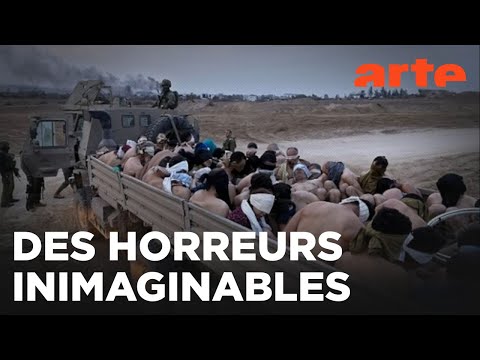
"Un Palestinien sodomisé par un chien de geôliers israéliens et d'autres otages palestiniens obligés de regarder" youtube.com/watch?v=PHizfe…
YouTube video
YouTube
Français
88
1.5K
2.1K
397K