James

19.3K posts

James banner
James

James

@jfalek

I am just another with LC, with sequela not as bad as many, but still looking for a more “normal life” in the midst of the seemingly never ending pandemic.

North Carolina, USA Katılım Ocak 2009
728 Takip Edilen861 Takipçiler
Sabitlenmiş Tweet
James
James@jfalek·
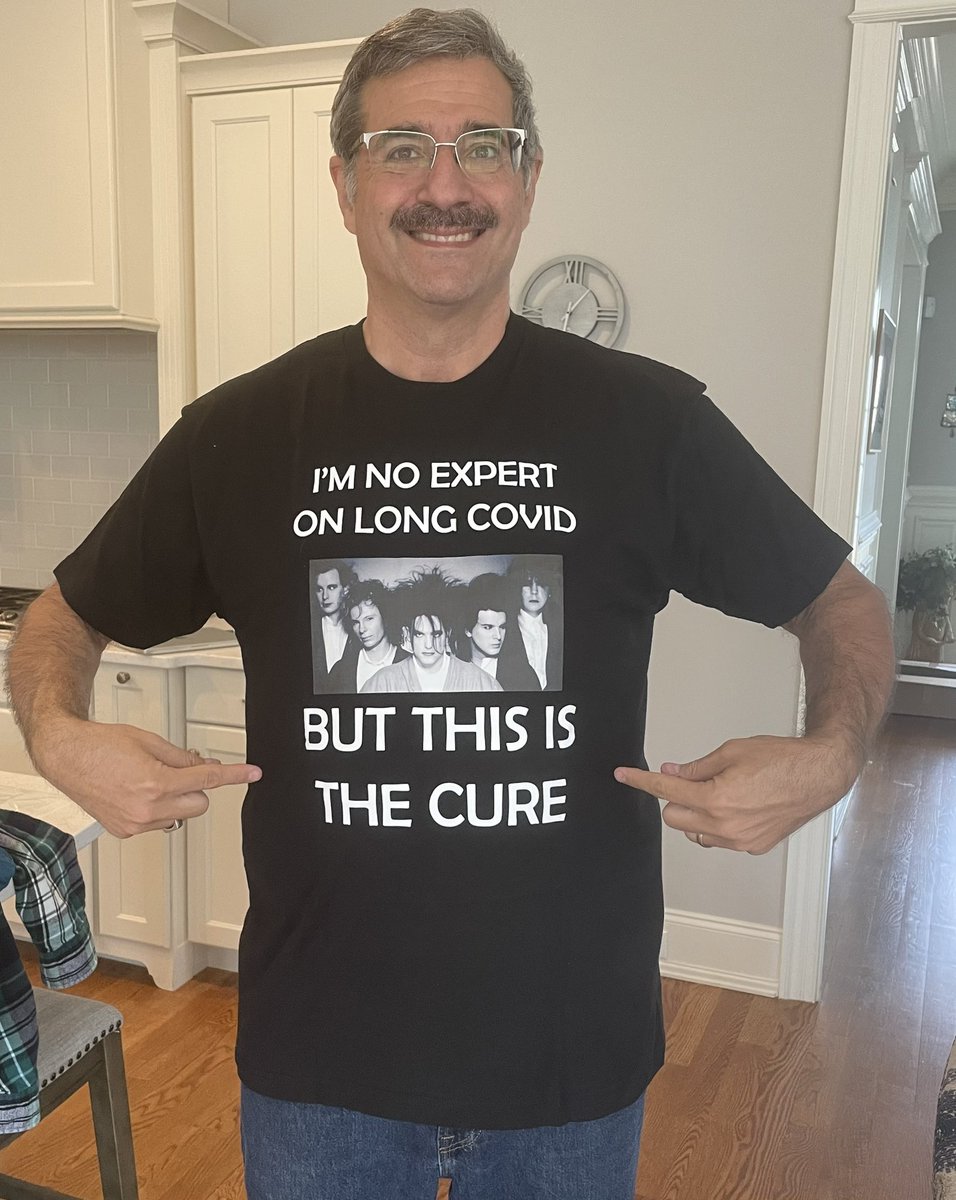
#longCovid Just got my new t-shirt. I can’t tell you how happy this makes me😊 H/T to @sarbarella for the idea to evolve her #covid t-shirt to #longCovid
James tweet media
English
18
16
168
8.6K
James
James@jfalek·
People are still betting for the Hantavirus 🤮🤮🤮
James tweet media
English
0
0
0
26
James retweetledi
Dr. Sean Mullen
Dr. Sean Mullen@drseanmullen·
“Identity comes first. The dreams come second.” Put another way: we rarely change behavior until we can first imagine ourselves as the kind of person capable of that change. That’s where self-complexity matters. To help people grow, you need to understand how the pieces of identity fit together — which self-aspects are strong, fragile, disconnected, or missing entirely. Real change happens when people can begin constructing a clearer path toward a hoped-for self they can actually see themselves becoming.
Goku@ProjectGokuu

Emily McDonald says your brain will not let you imagine goals that don't match your current identity. She references identity-based motivation theory, which shows your brain physically blocks you from dreaming up things that don't fit who you currently believe you are. This is why advice like "dream bigger" rarely works. The person hearing it doesn't have the identity yet, so their brain refuses to generate the bigger dream. The ceiling on what you can imagine is the same as the ceiling on who you think you are. McDonald says her own life only changed when she did the work on her self-concept first. Once her identity expanded, her brain started generating big goals on its own. She decided to get a PhD in neuroscience and went after a Nobel Prize. Identity comes first. The dreams come second. — Emily McDonald on the Codie Sanche's (@Codie_Sanchez) podcast PS: B2C health apps, SaaS, brand or info founders: We'll make 𝕏 your #1 organic acquisition channel in the next 90 days without you writing a single tweet. In just 55 days, this account grew to 10.1K followers and 37.3M impressions. Book a call to learn more: cal.com/goku/15-min-me…

English
1
3
30
2.6K
Dr. Sean Mullen
Dr. Sean Mullen@drseanmullen·
The avg person has had 5 infections. I’d say 5-8% of adults understand. Only 1% choose to do anything about it. The rest are still in denial & they’ll ride that to the grave. In the next 5 years, we might awaken another 5-7% & maybe we can get another 2-3% to change their course.
Cat (CovidSolidarity)@CovidSolidarit1

How long before people work out repeat Covid infections have a long-term effect on health? 5 years? 10 years? 30 years? Never?

English
36
148
1K
29.4K
James retweetledi
Ihtesham Ali
Ihtesham Ali@ihtesham2005·
A psychologist at the University of North Carolina spent 20 years proving that a single 20-second hug rewires the human cardiovascular system, and the experiment she ran is so simple you can replicate it tonight at home. Her name is Karen Grewen. She works inside the UNC School of Medicine's Department of Psychiatry. The paper that made her famous was published in 2003, and almost nobody outside her field has read it. Here is what she actually did. She recruited 183 healthy adults living with a long-term partner. She split them into two groups. The warm contact group sat together for 10 minutes holding hands while watching a romantic video. Then they stood up and hugged each other for exactly 20 seconds. The control group sat alone in a separate room for the same amount of time doing nothing. Then she made every single one of them give a public speech in front of a panel. Public speaking is one of the cleanest stressors in psychology. Heart rate spikes. Blood pressure climbs. Cortisol floods the system within minutes. It is the laboratory version of every stressful moment you have ever had at work. The people who had been hugged for 20 seconds before walking into that room had measurably lower blood pressure responses to the stress. Lower systolic. Lower diastolic. Lower heart rate increases. Everything was the same.. the speech, the panel, and fear. But this time completely different physiological response. The hug had not made the stress disappear. It had changed how the body was allowed to respond to it. Two years later Grewen ran the follow-up study that explained why. She drew blood from 38 couples before and after the same warm contact protocol and measured what was actually changing inside them. The answer was a hormone called oxytocin. Oxytocin is the chemical your body releases during childbirth, breastfeeding, and orgasm. It is the same molecule that makes a mother feel calm holding her newborn. Grewen's data showed that 20 seconds of physical contact with a trusted partner triggered a measurable spike in plasma oxytocin in both men and women, and the size of that spike directly predicted how much their blood pressure dropped. The mechanism turned out to be older than recorded history. Oxytocin binds to receptors in your heart, your blood vessels, and the part of your brainstem that controls how aggressively your nervous system reacts to threat. When the hormone shows up, the entire fight-or-flight machine downshifts. Your blood vessels widen. Your heart slows. Your cortisol production gets suppressed. This is not a feeling. This is a chemical instruction your body sends to itself that you can measure with a blood pressure cuff. The detail Grewen kept emphasizing in her interviews was the duration. Three seconds is the average length of a hug between two humans. It is too short. The hormonal cascade does not have time to start. 20 seconds is the threshold where the oxytocin actually crosses into the bloodstream in a quantity large enough to do something measurable. A follow-up study tracked 59 premenopausal women over time and found that the ones who hugged their partners most frequently had lower resting blood pressure and higher baseline oxytocin levels than the ones who did not. The effect compounded. Daily hugs produced a permanent shift in the cardiovascular baseline. A separate review of long-term partner contact research found that married adults with frequent affectionate touch had significantly lower rates of heart disease and all-cause mortality than equally healthy adults without it. The American Heart Association now cites this body of research when explaining why social isolation is treated as a cardiovascular risk factor on the same level as smoking. The most haunting line in Grewen's research is one she said in an interview after publishing the second paper. She pointed out that the average American touches another human being less than they did 50 years ago. Phones replaced eye contact. Texts replaced visits. Hugs at the door got shorter. The thing that used to regulate our cardiovascular system multiple times a day quietly disappeared from most adult lives. Your body still expects it. The hormone receptors are still there waiting. The system was designed to be reset by physical contact with people who feel safe, and the reset takes 20 seconds. You can run the experiment yourself tonight. Hug someone you love for 20 full seconds. Count it out. The first 10 will feel awkward. Around 15 something shifts. By 20 the shoulders drop, the breathing slows, the chest opens. That is not in your head. That is your bloodstream changing.
Ihtesham Ali tweet media
English
32
457
1.5K
90.9K
James retweetledi
Data Report
Data Report@CovidDataReport·
This feels like watching wheel of fortune where they have themes for each week. We recently had Hantavirus week. Now this week will be Ebola week? what next?
English
1
10
46
805
James
James@jfalek·
Some people are actually betting on the hantavirus to be successful🤯. This is so wrong in so many ways
James tweet media
English
0
1
1
101
James retweetledi
James retweetledi
Gerard Hughes ( @ghhughes.bsky.social )
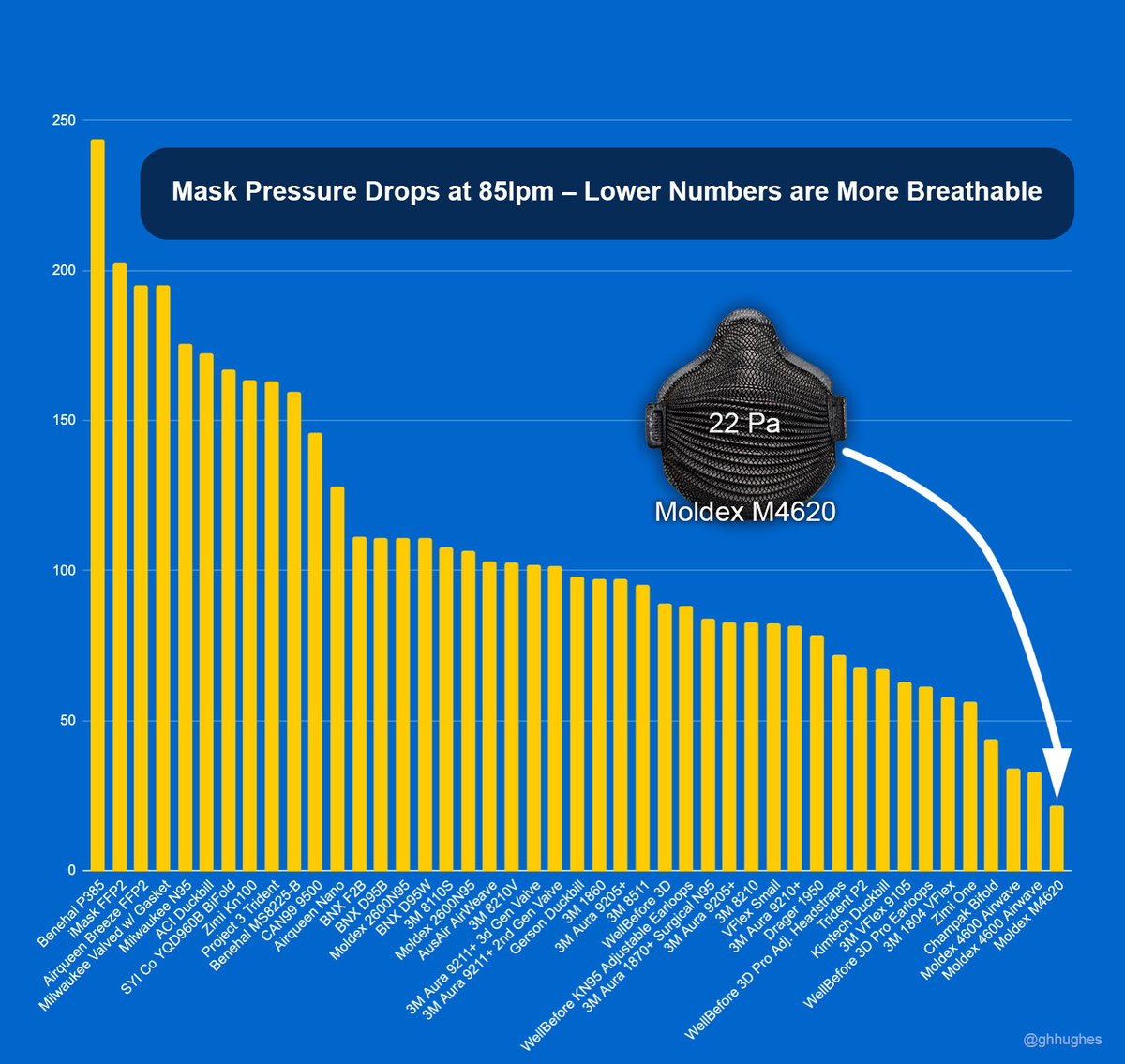
I am stunned at the breathability test results for this Moldex Airwave N95. I've been testing various masks to see how breathable they are using a testing machine, and the Airwave was so breathable I had to run the test again with another sample just to make sure the test results were real. It is massively more breathable than other good quality N95s I've tested. --- Lower pressure drop scores mean it takes less suction to draw air through the mask. So lower scores are better.
Gerard Hughes ( @ghhughes.bsky.social ) tweet media
English
30
85
492
17.6K
James retweetledi
jellyrollblues #CovidIsNotOver #LongCovidAwareness
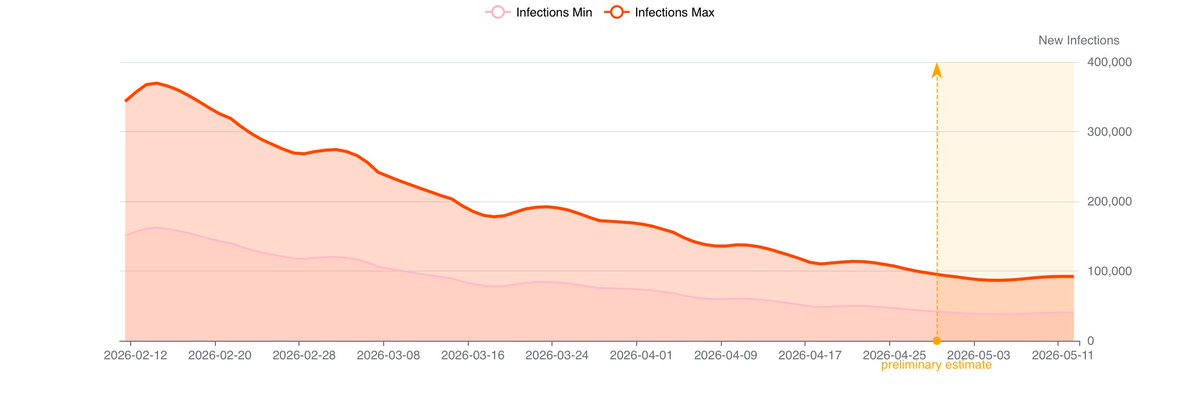
Below 100,000 New Daily Infections?! That is what the preliminary numbers indicate from 4-29 through 5-12. I will provide a variant proportions analysis tomorrow. This is the lowest since July of 2021. My model indicates a slow increase over the next 2 1/2 months to roughly 250k.
jellyrollblues #CovidIsNotOver #LongCovidAwareness tweet media
English
7
23
206
5.5K
James
James@jfalek·
@michael_hoerger @LadyLonghaul Since getting Long Covid (cognitive), my ability to hold two conflicting ideas or behaviors at one time has been significantly reduced 🤯. Please mask 😷
English
0
0
0
4
Mike Hoerger, PhD MSCR MBA
Mike Hoerger, PhD MSCR MBA@michael_hoerger·
#4 – Compartmentalization – Holding two conflicting ideas or behaviors, such as caution and incaution, rather than dealing with the anxiety evoked by considering the incautious behaviors more deeply (hypocrisy) Hospitals and clinicians claim to value health/safety but then don’t require universal precautions Public health officials claim to value evidence but then give non-evidence based advice (handwashing over masking), obscure or use low-value data over high-quality data (self-reported case counts over wastewater), etc. Getting a flu vaccine but not a Covid vaccine Interviewing long Covid experts who recommend masking in indoor public spaces but then going to Applebee’s Masking in one potentially risky setting (grocery store) but not masking in another similar or more-risky setting (classroom) Infectious disease conference where people are unmasked Long Covid and other patient-advocacy meetings where only half the people mask In-person only EDI events Not testing because it’s just family Mask breaks
Mike Hoerger, PhD MSCR MBA tweet media
English
28
485
2.1K
187.8K
Mike Hoerger, PhD MSCR MBA
Mike Hoerger, PhD MSCR MBA@michael_hoerger·
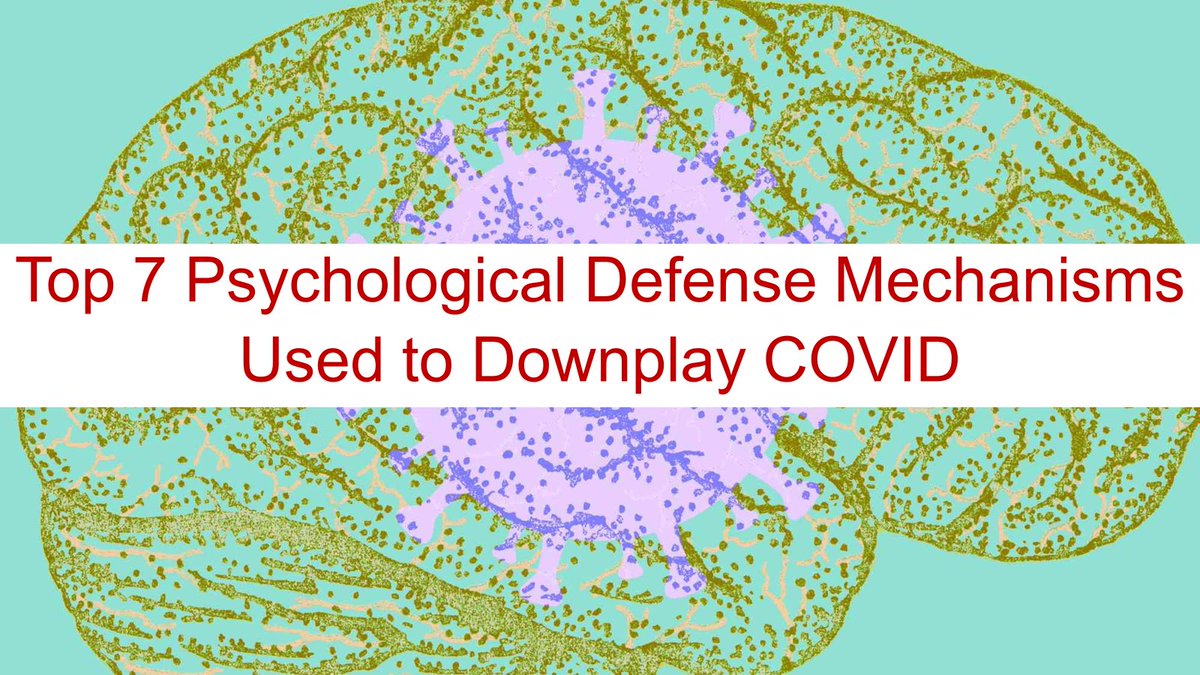
As a clinical health psychologist, I notice that many people are using psychological defense mechanisms to downplay the risk of COVID. These are my Top 7 examples: 🧵
Mike Hoerger, PhD MSCR MBA tweet media
English
286
4.6K
8.9K
1.4M
James
James@jfalek·
@Be_like_legend Just trying to keep up with terminology, not trying to be a twit: Is the term ADD still used? Hasn’t it been replaced with ADHD, or the different neurodivergent labels?
English
1
0
3
114
𝐋𝐞𝐠𝐞𝐧𝐝
𝐋𝐞𝐠𝐞𝐧𝐝@Be_like_legend·
Neurodivergence includes: - Autism Spectrum Disorder - Asperger's Syndrome - ADD - ADHD - Audiory Processing Disorder - Down Syndrome - Dyslexia - Dyscalculia - Dysgraphia - Dyspraxia - Hyperplexia - Obsessive Compulsive Disorder - Prader-Willi Syndrome - Sensory Processing Disorder - Synesthesia - Tourette Syndrome Please be aware and be kind. 🫶🏼
English
142
1.2K
5.7K
176.2K
James retweetledi
🤠
🤠@heavensbvnny·
Dear algorithm, connect me with ADHDers who woke up Saturday with big plans and are currently lying in bed reading this instead of doing any of them.
English
203
169
3K
80.7K
James retweetledi
calbeargirl.bsky.social
I spoke with my long Covid doctors at UCSD and for the first time, they did not equivocate. In their experience, reinfection worsens long Covid for 90% of their patients. The remaining 10% maintain their current baseline. Nobody improves with reinfection. Don’t FAFO.
GIF
English
14
202
615
12.6K
James retweetledi
𝓲𝓬𝓮
𝓲𝓬𝓮@be_like_ice·
Neurodivergents don't do small talk. We do soul talk or silence.
English
31
387
2.9K
54.9K