

jimternyila
92 posts
jimternyila
@jimternyila
General Manager, US @ Infinite Lambda Modernize data, enable AI
Philadelphia, PA Katılım Ocak 2018
1.6K Takip Edilen196 Takipçiler


@cypherpunk @cameron What are you doing with your life science assets?
English

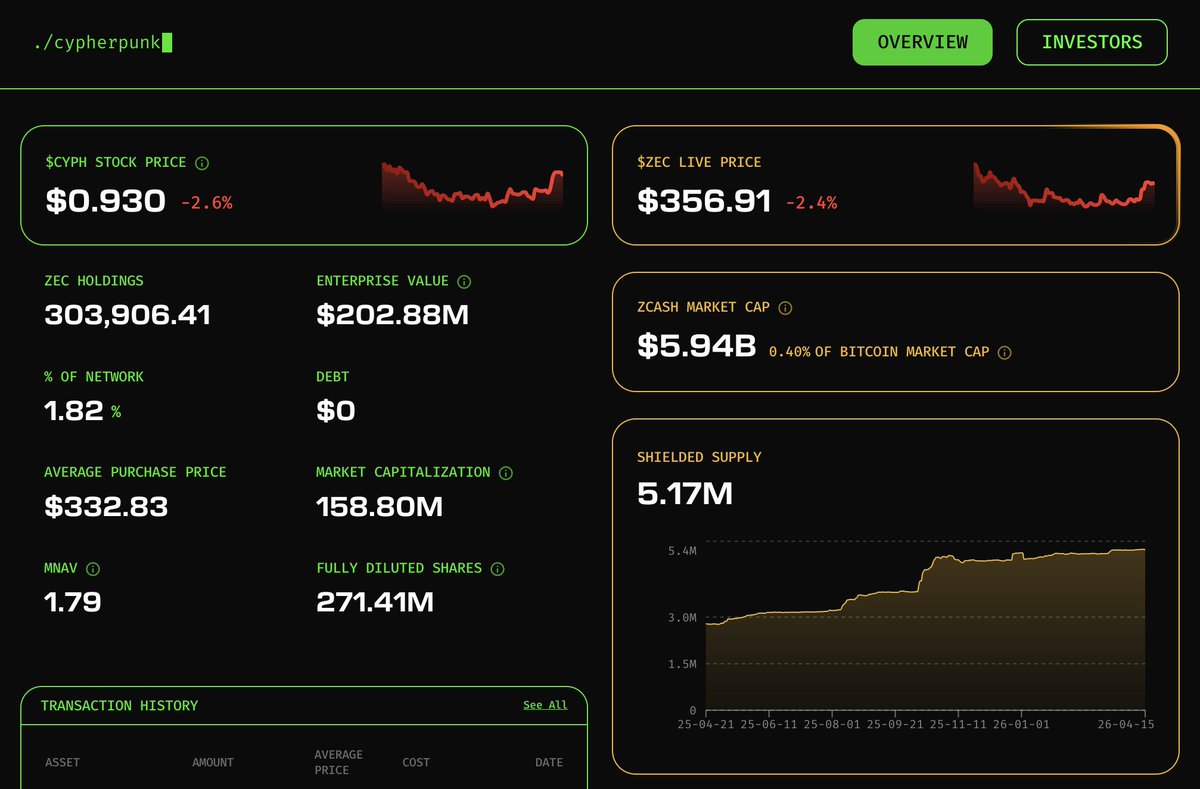
Today we launched our new website and investor dashboard with key metrics.
We've also purchased an additional 9,163.32 ZEC at an average purchase price of $234.63 per ZEC.
This brings our total ZEC holdings to 303,906.40, at an average price of $332.83.
Onward.
English
@caprioleio Check out Infinite Lambda (data/AI engineering boutique). High leverage, narrow focus, AI-native delivery
English

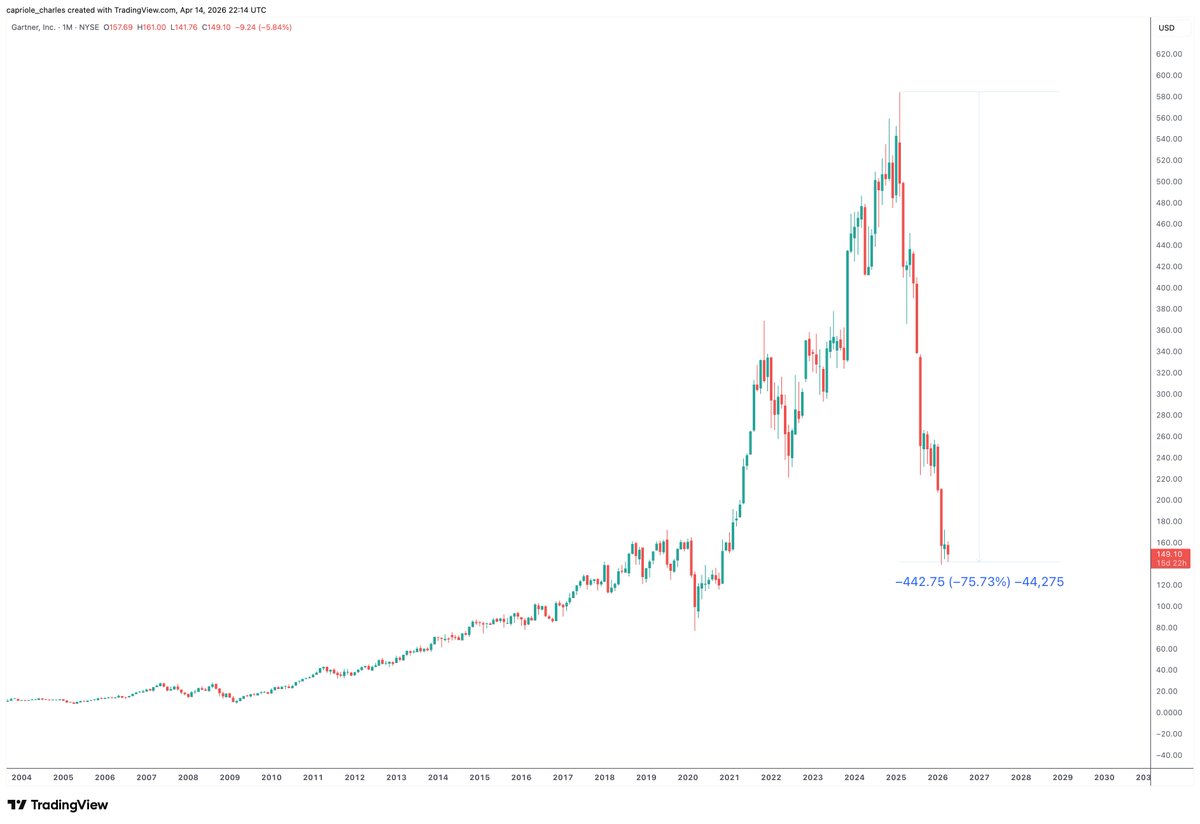
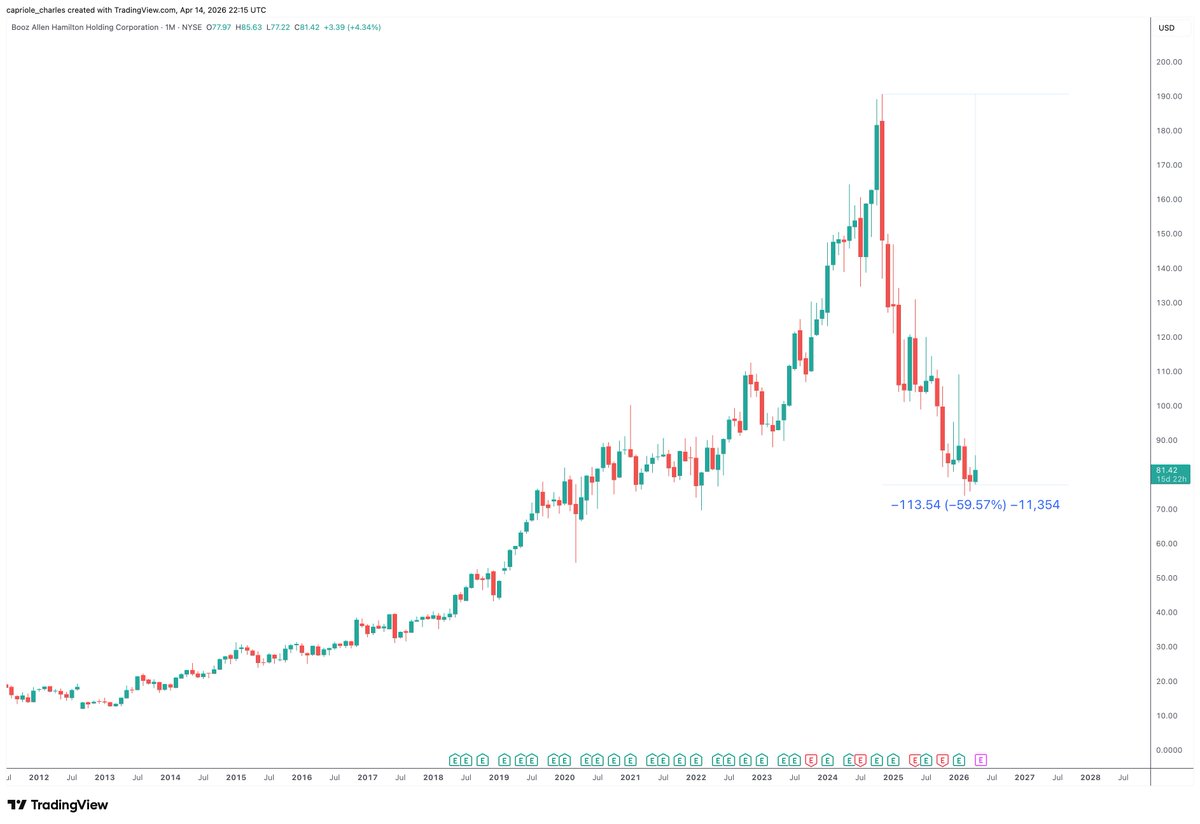
The world is short human intelligence.
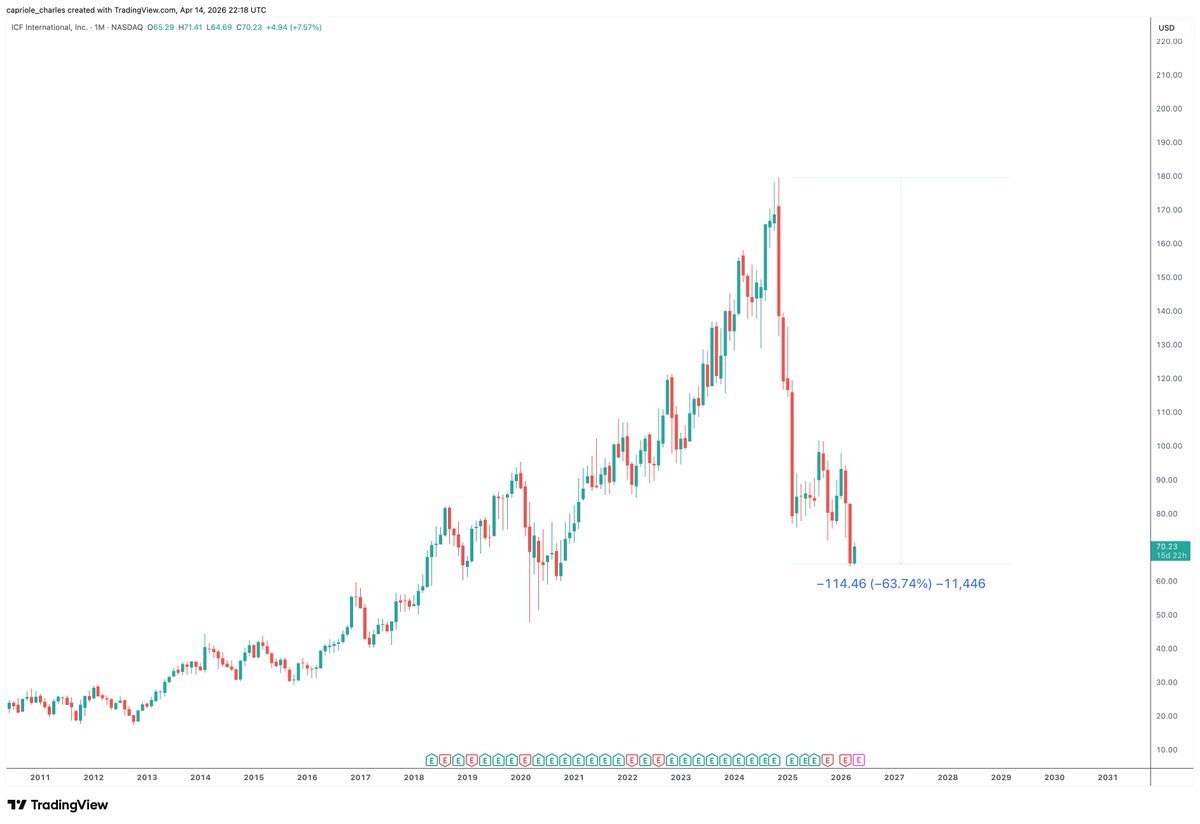
Management Consulting firms are in free fall, after seeing decades of steady price appreciation.
It's hard to imagine a world where companies with armies of consultants billing $1000s an hour exist alongside the AGI. Specialized micro boutiques leveraging AI and experience makes sense, expect most others will fail within 3-4 years.

English
English

English

Why doesn't someone just put the Monero tech into a sidechain of BTC? Are sidechains still not viable enough as a mechanism?
@giacomozucco - you are my go-to sidechain person. Do you have an answer? :D
English
@cypherpunk @zodl_app Specifically FL-501 anti-GDF-15 program for cachexia
Português
English
Actually, there is another way, and it's called $CYPH.
At Cypherpunk, our objective is to not only accumulate ZEC but to advance its ecosystem.
$CYPH currently gives you exposure to both $ZEC and @zodl_app (the most important Zcash app).
We are not content with being passive holders. We are here to will the future we want to see into existence.
Grayscale@Grayscale
Grayscale Zcash Trust (Ticker: $ZCSH) is the only way to get exposure to @Zcash $ZEC in the U.S. through your brokerage account. Zcash is similar to Bitcoin in its design. Zcash $ZEC was created from the original Bitcoin code base, but it uses a privacy technology that encrypts transaction information and allows users to shield their assets. See important disclosures and learn more about $ZCSH: grayscale.com/funds/grayscal…
English
jimternyila retweetledi

Privacy matters.
@Zcash's approach stresses optional privacy over mandatory privacy - giving users and applications a choice between shielded or transparent behavior based on needs.
Grayscale Zcash Trust (Ticker: $ZCSH) is the only way to get pure exposure to @Zcash $ZEC in the U.S. in your brokerage account.
See important disclosures and learn more about $ZCSH:
grayscale.com/funds/grayscal…
English
jimternyila retweetledi

@levie Infinite Lambda does this for customers. Enabling ai with better data platforms.
English

We dramatically underestimate how much change management it is going to take to automate most knowledge worker tasks.
Between data being in legacy environments or systems or without good APIs, context missing for doing the task, teams that are less technical, and other factors, there’s still a lot of work to drive real AI transformation in an enterprise.
This is actually great news if you’re building right now because the opportunity is to build the software bridges to make this easier, or to build new services firms to help with this change management. Opportunity is all around for those looking.
Jason Shuman@JasonrShuman
Silicon Valley thinks AI agents are a $20/mo self-serve subscription. Main Street is paying local agencies $10,000 just to turn them on. Everyone assumes AI will be bought primarily online like Slack or Zoom. I think they are wrong. Some of the biggest winners in the AI boom won't be the software vendors. It will be the humans installing it. Here is the reality of SMBs right now: • 54% lack internal AI expertise. • 41% have data quality too poor for AI to even work. • 41% already prefer buying AI through a local IT provider. You cannot "1-click install" a genius AI into a messy CRM or a 15-year-old server. It will just execute the wrong tasks at the speed of light. The AI software will be cheap and a lot will absolutely be bought online. Making it actually work for a messy, real-world business will be expensive. Very bullish on the "Do It For Me" economy being back.
English
@levie infinitelambda.com
We move people off legacy fast.
Check out Infinite Lambda.
English
“We’ve also been moving off legacy systems with poor, slow, outdated, and inconsistent APIs.”
If you’re building software that can’t work fully headlessly in a way that agents want to use, you’re not prepared for what the future of software is going to look like.
Agents will use software 100X more than people, and people will more and more interact with their data and workflows via agents across many different platforms.
This is the real risk but also opportunity for platforms right now. Software doesn’t go away, but it becomes the guardrails and business logic for what agents are able to operate on. But if you can’t connect to wherever the agents want to do that work, you’re DOA.
Guillermo Rauch@rauchg
Almost every SaaS app inside Vercel has now been replaced with a generated app or agent interface, deployed on Vercel. Support, sales, marketing, PM, HR, dataviz, even design and video workflows. It’s shocking. The SaaSpocalypse is both understated and overstated. Over because the key systems of record and storage are still there (Salesforce, Snowflake, etc.) Understated because the software we are generating is more beautiful, personalized, and crucially, fits our business problems better. We struggled for years to represent the health of a Vercel customer properly inside Salesforce. Too much data (trillions of consumption data points), the ontology of Vercel was a mismatch to the built-in assumptions, and the resulting UI was bizarre. We generated what we needed instead. When you don’t need a UI, you just ask an agent with natural language. We’ve also been moving off legacy systems with poor, slow, outdated, and inconsistent APIs, as well as just dropping abstraction down to more traditional databases. UI is a function 𝑓 of data (always has been), and that 𝑓 is increasingly becoming the LLM.
English
@etnshow @sequoia @JulienBek Check out infinitelambda.com, we are crushing it in the software+services ai enablement space.
English

Sequoia (@sequoia) Partner @JulienBek tells us why the next $1Trillion company will be a software company masquerading as a services firm:
"Ultimately, if you look at the TAM today, for every dollar that you spend on software, $6 are spent on services".
"If you sell the tools, the models are getting better and better and so you're at risk... whereas, if you sell the services, you're actually delivering outcomes."
"Until now, we could really just go after the $1, but now with services first and human at the centre, we think you can capture the six".
Julien Bek@JulienBek
English
jimternyila retweetledi

@JulienBek @ryanjdaniels @mitch_troy @jakeserval @BrendanFoody @davepaffenholz @andrei_serban @justindross @ChKashifAli @nicckopp @StephenHedlund @askvladi Infinite Lambda - Data Modernization, enabling AI
Català

Some of the founders building autopilots across these verticals 👆@ryanjdaniels @mitch_troy @jakeserval @BrendanFoody @davepaffenholz @andrei_serban @justindross @ChKashifAli @nicckopp @StephenHedlund @askvladi
Who should we add?
English

I've been asking $100m+ company execs one question:
"What is the #1 thing slowing/stopping your company's AI transformation?"
A non-exhaustive list of responses:
1) Data quality and connectivity of systems. Plus systems that play nice with AI.
2) Lack of leadership buy-in and implementation
3) Data governance restrictions.
4) Willingness of staff to adopt AI.
5) Incurious culture. Lack of knowledge of the current state of AI
6) Tooling doesn't have API access; team is still learning how to use LLMs.
7) Industry regulation/privacy.
8) Data quality and lack of a comprehensive AI system across the full company.
9) Unclear ownership across teams.
10) Time to actually build solutions.
11) Mixed AI literacy levels across teams.
12) No clear strategy / I'm starting the initiative from scratch.
13) Quality output.
14) Upskilling developers.
15) Silos.
16) Data Security and Security Guideline unclear.
17) Lack of training.
18) Data quality is unclear across multi-product teams.
19) Time.
What would your answer be to this question?
English
@paras_doshi @Opendoor Love it. That’s the stack that we promote. Haven’t worked with blessed dashboard queries tho.
English

we use Snowflake Cortex as the foundation. YAML-based metrics and dimensions that define how our data should be queried. On top of that we feed our AI agents the full institutional context (dbt context, data catalog, blessed dashboard queries from GitHub, Slack threads, docs) so the LLM knows our data, not just generic SQL. Basically want the system to not behave like a "new grad who has no context" but a tenured employee w/ context is deterministic and we work backwards from ensuring that end-state.
English
Most data teams are still building dashboards nobody looks at.
We killed 1,400 of ours.
Replaced them with a semantic layer you can talk to. Built custom AI tooling that replaced SaaS we were paying six figures a year for. Every person on this @Opendoor data team has unlimited tokens and AI agents running alongside them daily.
Real estate is the largest asset class on earth and the transaction still feels like 1997. That's the data problem we wake up to. Pricing millions of homes. Optimizing tens of millions in ad spend. Building models that move real dollars, not slide decks.
Our CEO's (@nejatian) mandate is "default to AI." Not a slogan. How we actually operate. Opendoor might be the most AI-native public company you haven't been paying attention to.
Small team. Absurd talent density. Embedded across the entire C-suite. You touch pricing, marketing, product, sales, operations — all of it!
We're hiring across Agentic Analytics Engineering and Data Science. Seattle or Toronto.
If this is the kind of data team you've been looking for, stop scrolling and apply:
Agentic Analytics Engineering: grnh.se/mqzo4ab46us
Data Science: grnh.se/awisi8t36us
English

The Hollow Men
American capitalism is rotting from the head down. We have replaced the "Owner-Operator"—the risk-taker-with a new, parasitic class of corporate bureaucrat: The Risk-Free Insider.
By "Insider," I am not referring to a specific title. I am referring to the entire administrative state that has captured the modern corporation. This includes the Directors who exist solely to collect fees, the Executives who exist solely to collect bonuses, and the Managers who exist solely to hire consultants.
These are the hollow men of the boardroom. They are masters of PowerPoint. They wear the right suits. They say the right buzzwords about "governance" and "ESG." But they are mercenaries fighting a war with someone else’s ammunition.
In a functioning economy, authority is tied to liability. If you make a bad decision, you lose your own money. That fear of loss is the only thing that keeps a business honest. It forces you to cut waste, obsess over the customer, and stay late to fix what is broken.
Today, we have severed that link.
We have rigged the game so that heads, the Insider wins; tails, the shareholder loses.
If the stock goes up, the Insider collects a massive performance bonus. If the stock crashes due to their own incompetence, they are fired with a "Golden Parachute" worth tens of millions. They are gambling with the house’s money, and they never leave the table poorer than they arrived.
This looting starts in the boardroom.
We have normalized a "Country Club" culture where directors are selected based on social profiling rather than their ability to build a business. The modern board member is often a professional tourist—paid an average of $350,000 a year.
Let’s be brutally honest about what that number represents. The average director is paid nearly five times the GDP per capita of the United States. They earn more for attending four quarterly lunches than the vast majority of Americans earn in five years of hard labor.
And for what?
Most of these directors are "over-boarded," sitting on three or four boards simultaneously. They treat directorships as a gig economy for the elite. They fly in, rubber-stamp a compensation package they didn't read, and fly out. They collect checks from companies they do not understand, do not use, and certainly do not love.
They are not there to ask hard questions. They are there to be collegial. They are there to protect the other Insiders.
And what happens when these boards hire executives who also have no personal capital at risk?
We get the Delegation Economy.
When a Risk-Free Insider faces a crisis—bloated expenses, a broken supply chain, or a stale product—they do not roll up their sleeves. They hire a consultant. They pay a strategy firm millions of shareholder dollars to produce a 100-page deck telling them what they already know.
This is not management. It is intellectual money laundering.
They use shareholder capital to buy an insurance policy for their own careers. If the plan fails, they can blame the consultants. They delegate the work because they are terrified of the responsibility. They would rather preside over a slow, comfortable decline than risk a bold mistake.
While American Insiders are busy optimizing their severance packages, our global competitors are optimizing their products. They are not slowed down by bureaucracy. They are not waiting for a slide deck. They are outworking us.
If we continue to fill our C-suites with administrators instead of operators, we will lose our edge. We will see iconic American franchises hollowed out by fees, managed for the benefit of the Insiders, while the true owners—the shareholders—are left holding the bag.
The time for polite governance is over.
If we want to save the American economy from mediocrity, we must demand a return to the "Owner’s Mentality." We need leaders who treat shareholder capital with the same reverence they treat their own savings. The era of the Risk-Free Insider must end.
English


@chamath re-engineering codebases is one thing, but the real bottleneck is often cultural inertia, not just technical debt.
English
Are you running a large-scale modernization program at your company?
8090 can help you move faster without sacrificing quality, with a customized version of our Software Factory - what we call a "Factory Line" - that can:
• Reverse-engineer many codebases across multiple repos and auto-generate authoritative business and technical documentation on those systems
• Forward-engineer into target architectures
• Optimize code as it runs to enable you to trim down systems (by deleting functions no longer necessary)
• Validate and certify that your new systems are correct
If this sounds interesting, we'd love to talk: factory-lines@8090.ai
English