Max Samuel

141 posts

Max Samuel banner
Max Samuel

Max Samuel

@jmaxsamuel

Founder/GP at Off Piste. Prev: Thiel Capital, SNÖ, Wilson Sonsini, Credit Suisse

Norway Katılım Mayıs 2009
492 Takip Edilen212 Takipçiler
Max Samuel retweetledi
Pat Grady
Pat Grady@gradypb·
You have $1 Trillion to build the compute backbone for AGI. How much goes to space? 100% So says @PhilipJohnston of @Starcloud_ Hear why…
English
12
12
122
23.2K
Max Samuel retweetledi
Brad Stulberg
Brad Stulberg@BStulberg·
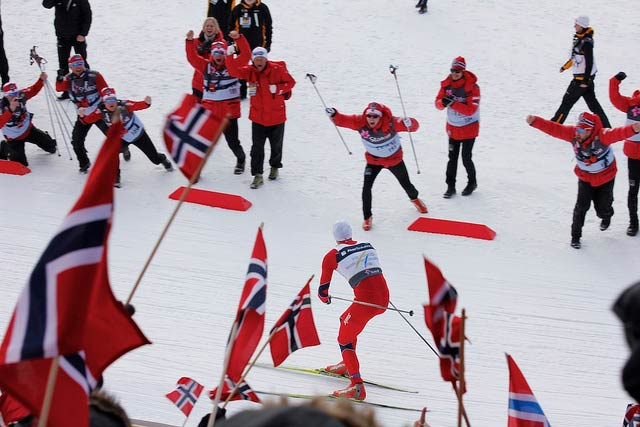
Norway consistently wins the most medals at the Winter Olympic Games, with a population of just 5.6 million people. A big part of their success is how they treat youth sports—and it’s the opposite of what we do in the US. Here’s what we can learn from Norway: 1. Scorekeeping: In the US: Youth sports tend to be hyper competitive even at early ages. Leagues almost always keep score. In Norway: Scorekeeping isn’t even allowed until age 13. Removing winners and losers keeps the focus on the process not outcomes. It keeps kids engaged longer because it minimizes pressure (and tears) and maximizes fun, learning, and growth. The goal isn’t to win a third grade championship. It’s to love sport and keep playing. 2. Trophies: In the US: If you give everyone a trophy, you’re creating snowflakes who will never gain a competitive edge. In Norway: Whenever trophies are awarded, they are handed out to everyone. If getting a trophy makes young kids feel good, we should give them trophies. Maybe they’ll come back and play again next year!! As for the creation of snowflakes with no competitive edge—Norway’s athletes are tough as nails and all they do is win. 3. Prioritizing Fun: In the US: Far too often, the goal is to win. In Norway: The national philosophy is “joy of sport.” Youth sports in the US are driven by adults, ego, and money. Youth sports in Norway are driven by fun. Only half of kids in the US participate in sports. The number one reason they drop out: because they aren’t having fun anymore. In Norway, 93% of kids participate in youth sports. Fun is the foremost goal. 4. Playing Multiple Sports: In the US: There’s pressure to specialize early and play your best sport year round. In Norway: Try as many sports as you can before specializing as late as college. Norway encourages kids to try all types of sport. This reduces injury and burnout and increases all-around athleticism. It also helps promotes match quality, or finding the sport you are best suited for as your body develops, which is impossible if you commit to a single sport too early. 5. Affordability In the US: There is increasingly a pay-to-play model with high fees for leagues, equipment, and travel. This excludes many kids from playing. In Norway: It’s a national priority to keep youth sports affordable and therefore accessible for all. Kids aren’t priced out, which creates opportunities for everyone to participate (and develop into athletes), regardless of their parents’ income level. We could learn a lot from Norway: In the US, 70% of kids drop out of youth sports by age 13. This not only diminishes an elite-athlete pipeline, but it also destroys an opportunity for healthy habits and all the character lessons kids can learn from sport. In Norway, lifelong participation in sport is the norm. The goal isn’t to have the best 9U team. It’s to develop the best athletes. Those are two very different things. And Norway has the gold medals to prove it.
Brad Stulberg tweet media
English
630
1K
5.3K
2.1M
Max Samuel retweetledi
Jakob Diepenbrock
Jakob Diepenbrock@jakobdiepen·
America is the greatest country in the world. But we need more founders working on real problems. If you are in the early stages of building something that matters, you have to be in El Segundo.🇺🇸 Apply to the Spring Cohort in bio.  Deadline February 20th.
English
143
181
1.1K
288K
Max Samuel retweetledi
Scott Nolan
Scott Nolan@ScottNolan·
Energy is the root of all economic activity, and fuel is the bottleneck. Thanks for digging in @mariogabriele. For anyone who wants to help end the bottleneck, @generalmatter is hiring in LA, western KY and central WA. High-agency engineers, builders and operators wanted.
Mario Gabriele 🦊@mariogabriele

America used to be #1 in the world for nuclear energy and controlled 86% of global uranium enrichment. Today? We've fallen to last place. As we approach the January 2028 ban on Russian uranium, the United States is facing a massive fuel crisis. If we don't reshore this capability, the future of our grid may be at risk. In this episode, @ScottNolan (Partner at @foundersfund & Co-founder of @generalmatter) reveals his plan to take back America's lead. We discuss: • How Scott is applying the SpaceX playbook of cost reduction to uranium • The massive market opportunity in HALEU and next-gen fuel • Scott's counterintuitive advice: avoid starting companies unless the mission is this important. Timestamps (00:00) Introduction to Scott Nolan (02:24) General Matter’s mission to rebuild U.S. enrichment (08:31) Scott’s background: From SpaceX and Founders Fund to General Matter (17:50) How Scott’s focus evolved over 13 years at Founders Fund (33:30) How U.S. uranium enrichment quietly came to an end (38:34) The Russian uranium ban and the 2028 supply cliff (50:56) What the U.S. needs to actually scale nuclear energy (59:30) Why General Matter chose Paducah, Kentucky (01:07:06) The $900 million Department of Energy award (01:14:12) Final meditations


English
7
18
219
37.2K
Max Samuel retweetledi
Philip Johnston
Philip Johnston@PhilipJohnston·
For the last several months, we’ve been working on the design of our @Starcloud_-3 distributed constellation of 200kW inference nodes in dawn-dusk sun-synchronous orbit, providing many gigawatts of low-cost AI compute. It seems we’re not alone! 🙌
English
29
55
232
47.9K
Katherine Boyle
Katherine Boyle@KTmBoyle·
We’ve rejected boredom at every stage of life. Constant attention and entertainment are the norm now, so parents have become the cruise directors for their kids. Boredom is extremely important for children, and yet “good parenting” would have you believe your kids need activities and constant stimulation, an endless list of appointments and fun. What they really need is time to sit with their own thoughts, while mom and dad need time to do laundry and their taxes. We’re all trying and worrying way too much when we should let the kids be consumed by boredom. It’s how they learn to create new worlds.
Tim Carney@TPCarney

Here's what's going on: Dads are spending more time with their kids, which is good. Moms are working more outside the home. Moms are NONETHELESS spending more of their day on *purely parenting responsibilities.* We're overparenting. It's anti-natal.

English
50
102
1.5K
316.5K
Justin Mateen
Justin Mateen@justinmateen·
The “best practices” of productivity are quietly killing your real output. I’ve built my career doing the exact opposite. I operate on instinct. I know within two minutes if I’m going to invest in someone. The rest is just sizing. I don’t have an assistant. I don’t have an analyst. I don’t schedule meetings. If someone wants to connect, I tell them to text me day of and I’ll do my best to make it work. I keep my time open so I can focus on whatever matters most in real time. That’s how I maximize output. I’m a founder first. Some days I’ll spend hours on FaceTime with a founder talking product, KPIs, fundraising, drafting emails, or joining stand-ups. I don’t overcomplicate. I make a decision and move on. I’m rarely at a desk. I do almost everything from my phone. Calls are for things that actually need a call. Most things can be handled with a text. If I’m awake, I’m probably working, but family moments come first. My edge is the flexibility to go deep when needed and the ability to focus on the most important thing at any given time. My days are always full. They’re just never pre planned. The best part is that when you don’t schedule anything, people almost always pick up when you call. Pro tip: If going fully unscheduled feels extreme, ease into it. Start with a couple scheduled meetings per day, then cut down to a few per week. You’ll feel your focus and quality of thought improve quickly. It may not be for everyone, but try it. You might actually like it.
Justin Mateen tweet media
English
31
2
163
34.9K
Max Samuel retweetledi
Philip Johnston
Philip Johnston@PhilipJohnston·
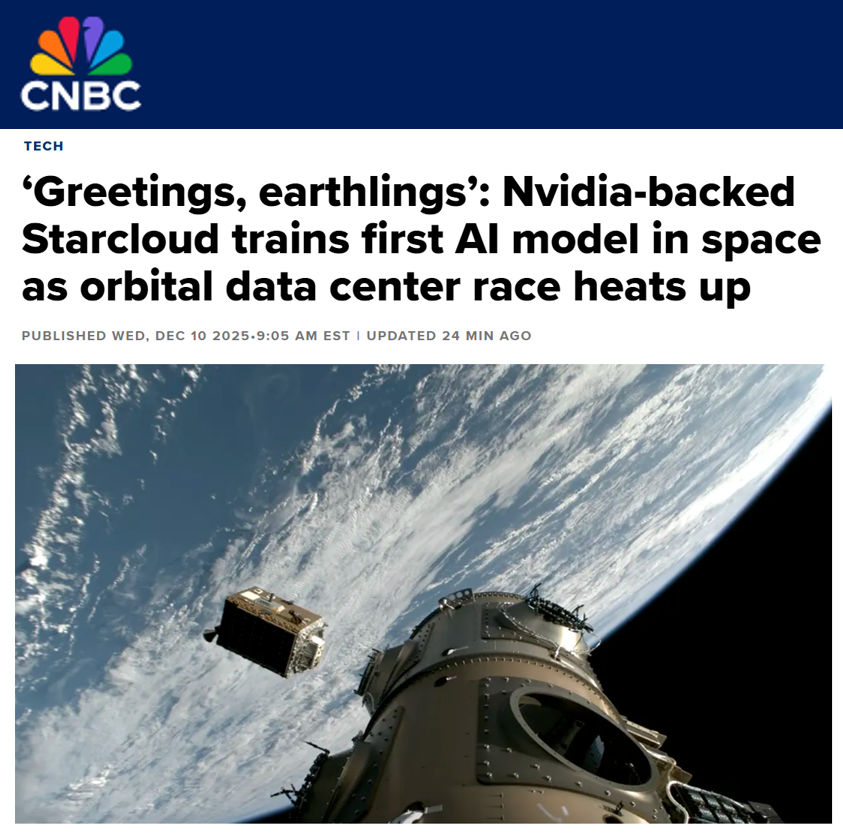
We just trained the first LLM in space using an @Nvidia H100 on Starcloud-1! 🚀 We are also the first to run a version of @Google's Gemini in space! This is a significant step on the road to moving almost all compute to space, to stop draining the energy resources of Earth and to start utilizing the near limitless energy of our Sun! Thanks @pia_singh_ and @CNBC, for highlighting our work! @starcloud_, @AdiOltean, @ezrafeilden
Philip Johnston tweet media
English
253
474
3.4K
685.1K
Patrick OShaughnessy
Patrick OShaughnessy@patrick_oshag·
"The most important thing in the next 3-4 years is data centers in space. In every way, data centers in space, from a first principles perspective, are superior to data centers on earth. In space, you can keep a satellite in the sun 24 hours a day. The sun is 30% more intense, which results in six times more irradiance than on Earth. So you don't need a battery. The cooling in these data centers is incredibly complicated. Space cooling is free. You just put a radiator on the dark side of the satellite. The only thing faster than a laser going through a fiber optic cable is a laser going through absolute vacuum. Link satellites with lasers, and you have a faster and more coherent network than any data center on Earth."
Patrick OShaughnessy@patrick_oshag

This is my fifth conversation with @GavinSBaker. Gavin understands semiconductors and AI as well as anyone I know and has a gift for making sense of the industry's complexity and nuance. We discuss: - Nvidia vs Google (GPUs + TPUs) - Scaling laws and reasoning models - The economics of AI compute - Why Blackwell's delay mattered - The bear case on the AI capex buildout - Data centers in space - The mistake SaaS companies are making Few people love investing more than Gavin. His closing answer about why he loves it turned into a full reflection on his investing origin story, which I had never heard before. Enjoy! Timestamps: 0:00 Intro 5:03 The Blackwell Transition 23:15 The Prisoner's Dilemma 27:12 The Bear Case: Edge AI 37:19 Meta, Open Source, and Model Depreciation 43:08 Geopolitics and Rare Earths 50:42 Data Centers in Space 56:06 Power Constraints as a Governor 1:11:31 The SaaS Mistake 1:16:17 Nuclear and Quantum 1:22:25 Gavin’s Investing Origins


English
859
1.6K
10.1K
8.2M
Max Samuel retweetledi
Talfan
Talfan@talfanevans·
For a long time I've been obsessed by the idea of Scenius - disproportionate impact produced by outlier groups of people in a distinct time and place. Bell Labs, Xerox Parc, Skunkworks, ARPANet, 1930s Paris - progress in science, technology and art has historically been uneven. theatlantic.com/science/archiv…
English
2
9
53
629.2K
Max Samuel retweetledi
Y Combinator
Y Combinator@ycombinator·
Starcloud (@Starcloud_Inc1) recently made history by launching a satellite with an NVIDIA H100 into orbit — the first time a GPU that powerful has ever operated in space. It's the first step toward building AI data centers in orbit, powered by continuous sunlight and cooled by radiating heat into deep space. Their approach could one day rival the world's biggest data centers while using less energy, zero fresh water, and far lower emissions. YC's @aaron_epstein visited Starcloud's HQ, where co-founders @philipjohnston, @EzraFeilden, and @Adi_Oltean explained how they built a working prototype in just 15 months — and why big tech is racing to space for AI compute.
English
51
119
524
279.9K
Ezra Feilden
Ezra Feilden@ezrafeilden·
We have successfully made contact with Starcloud-1, spacecraft is in "Nominal Operations" mode, attitude control is stable and tracking the ground station. Batteries are topped off. We're healthy.
English
24
29
681
53.3K
Packy McCormick
Packy McCormick@packyM·
a sweater that you can pull halfway up your forearms without stretching it beyond repair. who's building this?
English
64
11
379
104.2K
Max Samuel
Max Samuel@jmaxsamuel·
@isaiah_p_taylor Agreed - although this prob leads to tightening regulation / enhancing disclosure requirements on private companies, and then the point of private becomes partially defeated
English
0
0
0
101
Isaiah Taylor - making nuclear reactors
I receive hundreds of emails from middle class Americans asking to invest in Valar. These emails make me very sad. I spent a few days reading them and being depressed last week. I remember what it was like to believe in Elon when I was in middle school. My cousin Joe and I had absolute conviction that Falcon would work well before Falcon 9. I didn’t even think to invest, investing money was not a category in my head (I was 12). Now I’m on the other side. The weight of knowing that these people, cut the cut from the same cloth, true believers in me and my mission, could get generation wealth from betting on ME—and yet I can’t take their money—this is crushing. I’ve spent a long time thinking about why this is. The simple fact is that public securities law is meant to protect middle class Americans from scams and devastating losses, but practically what it’s doing is cutting out middle class Americans from the best companies during the periods of their fastest growth. In fact, there seems to be an anti-pattern emerging. The worst companies SPAC and dump their garbage on retail, the best companies stay private and focused for as long as they possibly can. It truly hurts my soul that the people for whom a couple million dollars could change their lives forever are the only people who are not allowed to join me on this journey. The only ones allowed on the ride have already won life. Don’t get me wrong, I am deeply grateful for my investors. I’m a big fan of rich people, they rock. Planning to be one myself. But I can’t help seeing the injustice of a situation where the people who I grew up around are excluded from the party. I don’t think that a free-for-all is the right answer. Securities law grew up in response to a wave of scams in the early 20th century which left many families destitute. I can think of many private companies that I wouldn’t want my fellow Americans to be tricked by. But I know that the status quo is broken. The only practical proposal I have is to create a program which allows unaccredited investors to purchase private securities and T-bills 1:1, capping the downside to 50%. But maybe the answer is reforming requirements for public companies and changing investor rights. I fear though that our society is too litigious to make these reforms fundamental enough to make companies like mine want to go public.
English
113
38
988
222.3K
Ken Howery
Ken Howery@KenHowery·
I’m honored and humbled to have been confirmed by the Senate tonight to serve as our Ambassador to Denmark. I look forward to representing our country and building on the strong friendship between the United States and Denmark. 🇺🇸🤝🇩🇰
English
128
8
117
97.3K
Eric Jiang
Eric Jiang@veggie_eric·
why is pizza in the Bay Area such absolute trash like wtf, we nerds can cook up a recipe for a gajillion-parameter model no problemo but can't figure out a mildly appetizing ratio for some flour, water, and cheese
English
1K
149
4.9K
11.8M
Packy McCormick
Packy McCormick@packyM·
Walked the kids to school this AM. Weather is absolutely perfect in the greatest city in the world. Just walked outside to grab a delicious salad. Ate it. Writing to The Social Network soundtrack. Stripe is launching an L1. Birds play tonight. Y'all mind if I have a great day?
English
13
0
172
12.3K
Max Samuel
Max Samuel@jmaxsamuel·
@jaltma @brian_armstrong How can crypto / coinbase offer a public offering system that avoids mispricing issues of traditional IPOs?
English
0
0
0
70
Jack Altman
Jack Altman@jaltma·
Can't wait to do the podcast with @brian_armstrong tomorrow. What would you be most interested to hear about?
English
174
36
475
74.2K
Max Samuel
Max Samuel@jmaxsamuel·
Good sign when a founder comes from somewhere it’s unpopular / difficult to be one
English
1
0
11
5.3K