Johan Feito

2.4K posts

Johan Feito banner
Johan Feito

Johan Feito

@johanfeito

Technologico ergo sum.

Barcelona, Spain Katılım Mart 2009
385 Takip Edilen579 Takipçiler
Johan Feito
Johan Feito@johanfeito·
@JFV92 @erraticorunhes Creo que el problema es que solo es 1M de m2 y no 10M, más que la densidad. Tenemos las ciudades top densidad del mundo, no va mal algo de opciones.
Español
2
0
0
1.4K
Johan Feito
Johan Feito@johanfeito·
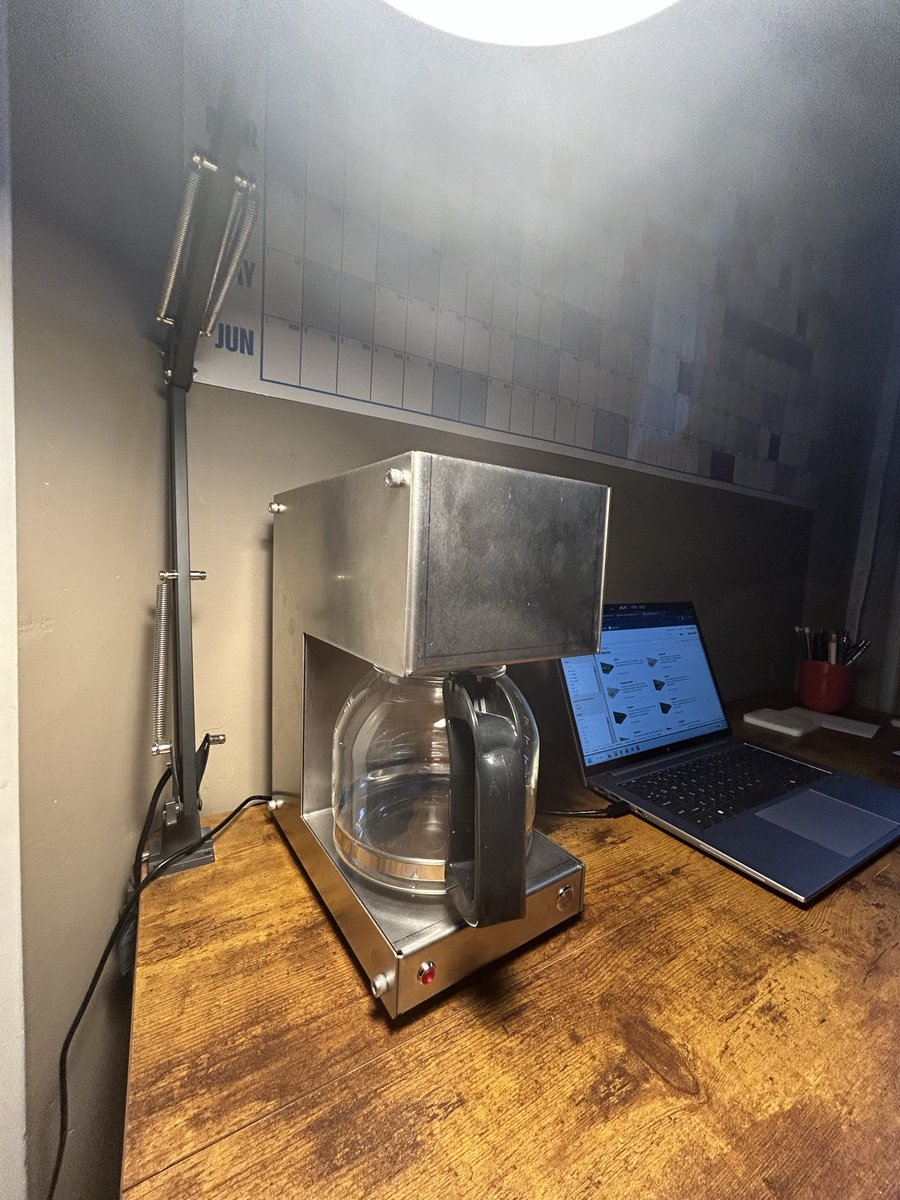
@forestmanjohn I have a Sage/Breville Precision Brewer which I love, but also totally hate because of the plastic situation. Reserved one of yours, can’t wait for it!
English
0
0
0
8
JC Foster
JC Foster@forestmanjohn·
3 months ago, I quit my job to chase a dream: to build an affordable, convenient, plastic-free coffee maker. Grateful for everyone who has reserved ❤️ puresteelco.com
JC Foster tweet media
English
3.3K
2.3K
35.3K
9.7M
Samuel Gil
Samuel Gil@samuelgil·
¿A quién le apetece venirse al primer meetup sobre @openclaw en Madrid? 📆 5 de marzo a las 18h 📍 Samplia Hub (Callao) Ni confirmo ni desmiento que habrá 🦞 para todos en el cocktail. Bueno, sí, lo desmiento. luma.com/lolflzsg
Español
26
16
151
34K
Johan Feito
Johan Feito@johanfeito·
@elwatto Continuing with Cacaolat, even if all their competitors had the same tech, with 150 across all competitors (or whatever the number is) you’re already producing enough milk chocolate for the entire planet. High technology leverage across the board in any industry means less jobs
English
0
0
0
15
Johan Feito
Johan Feito@johanfeito·
@elwatto I see your point, and agree. I’m making a slightly different one. This morning I went to the Cacaolat factory, the whole thing runs with 15 per shift. AI will reduce how many people work on each company, thus companies having less people-problems overall.
English
1
0
1
19
Miguel Carranza
Miguel Carranza@elwatto·
Folks discovering faster software development with AI and thinking building companies is easy now are in for a big disappointment. Writing code was never the hard part. Outside of true solo operators (which will exist, but won’t be the norm), this is still going to be VERY hard.
Miguel Carranza@elwatto

computers are easy. people are hard.

English
12
3
60
5.5K
Jaime Novoa
Jaime Novoa@jaimenovoa·
¿Cómo era el refrán de las barbas del vecino?
Bitcoin News@BitcoinNewsCom

NEW: Dutch Parliament Member Michel Hoogeveen explains how the 36% unrealized capital gains tax, just passed by the House of Representatives, will work. Here is a more detailed example: Step 1. Starting position You own 500 shares. Value on Jan 1, 2028: €50,000 Value on Jan 1, 2029: €100,000 So the paper gain is: €100,000 − €50,000 = €50,000 unrealized profit You did not sell. But for tax purposes, that €50,000 is treated as income. Step 2. Apply exemption You are married, so you get a €3,600 exemption. €50,000 − €3,600 = €46,400 taxable amount Tax rate: 36% €46,400 × 36% = €16,704 tax bill That bill is due in May, even though you never sold anything. Step 3. Market falls before you pay Now suppose by May the shares drop in value. New total value: €60,000 So your portfolio is no longer worth €100,000. It’s worth €60,000. But the tax bill is still €16,704, because it was calculated based on the January 1 valuation. Step 4. You must sell shares to pay tax To raise €16,704, you sell part of your shares. After paying the tax, you’re left with: €60,000 − €16,704 = €43,296 Originally you had 500 shares. Now you have 360 shares left. You were forced to sell 140 shares. 140 ÷ 500 = 28% of your shares gone. Step 5. What happened economically? Before the correction: Paper gain was €50,000. After the correction: Portfolio is worth €60,000. Original cost basis was €50,000. Real gain is only €10,000. But you paid €16,704 in tax. So instead of being up €10,000, you are now: €43,296 − €50,000 = €6,704 below your original starting value. You turned a €10,000 real gain into a €6,704 net loss. And you lost 28% of your shares permanently.

Español
11
1
28
8.9K
Johan Feito retweetledi
Naval
Naval@naval·
Self-directed learning through AIs is an autodidact’s paradise.
English
778
1.9K
19.7K
863.1K
Johan Feito
Johan Feito@johanfeito·
I Was at a moon landing exhibit in Poland and simulated ‘a small step for a man’
English
0
0
0
24
Johan Feito
Johan Feito@johanfeito·
Dealing with slack messages:
English
0
0
0
20
Johan Feito
Johan Feito@johanfeito·
@toni_pn Pues va a ser que hay CFOs (como el que describes), y 10x-CFOs. Aunque creo que realmente hay CFOs, y administrativos con inflación de título 🤷
Español
1
0
2
325
Toni Perez
Toni Perez@toni_pn·
El puesto directivo más sencillo, pero vamos, por muchísimo, de una empresa de software es el de CFO. Un SaaS es tan sencillo de modelar que vamos... Una base de datos, cuatro excels y no más de 10 automatizaciones y... No se tiene q dedicar al mes ni 8 horas.
Español
6
0
15
5.6K
Johan Feito
Johan Feito@johanfeito·
@TheGoodKnowmad Poca broma. Todo lo que se perdió desde los Romanos que tardamos siglos en recuperar y lo que hemos perdido para siempre
Español
0
0
6
1.6K
The Good Knowmad ™ 💬
The Good Knowmad ™ 💬@TheGoodKnowmad·
Dentro de no mucho, los intelectualoides q se suman a todas las modas creyendo ser visionarios, empezarán a decir esto q yo digo ahora: la gente que ahora tiene 40-50 años no se podrá jubilar, pero no pq las pensiones sean inviables, sino pq serán los únicos capaces de trabajar.
acm consulting@consulting_acm

@TheGoodKnowmad Vamos a sufrir incapacidad de producción. Ya paso el año pasado en una empresa que fabrica los cañones del 155, tuvieron que llamar a personal ya jubilado para que les explicase como producirlo.

Español
7
32
173
58.5K
Johan Feito
Johan Feito@johanfeito·
@elwatto Debería ser un red flag incluso a inversores. Es un mindset de Zero-Sum de libro. Equity a empleados y con condiciones claras y justas es la base.
Español
0
0
1
188
Miguel Carranza
Miguel Carranza@elwatto·
Me explota la cabeza que aún en España haya founders que no quieran dar equity a los empleados (más allá de lo malas o buenas que sean las leyes). Así no se construye ecosistema ni se cambia la cultura.
Español
32
14
187
25.7K
Johan Feito
Johan Feito@johanfeito·
It’s the other way around, they’re focusing on what makes their beer taste better. They get to put all of their resources on building experiences on top of the models. iPhone market share will only grow going forward.
Aakash Gupta@aakashgupta

Apple's $1B annual check to Google is the most expensive admission of defeat in tech history. The company that builds custom silicon for everything just admitted they can't build a competitive LLM. Not at quality. Not at scale. Not at the speed the market requires. When you're Apple and you're paying someone else to power the most important consumer AI surface you control, you've lost the capability race. This is surrender dressed as partnership. Every previous "powered by" deal Apple's done has been in categories they chose not to compete in. Search, maps data, cellular modems. This is the first time they're paying for something in a category they desperately want to own but simply can't. Google tripled enterprise API share in 24 months. From 5% to 18% (Menlo data). The $1B for Siri integration comes from a position of strength, not desperation. When your enterprise motion is working and you're gaining 4-5 percentage points per quarter, you can afford to play offense on consumer brand. Apple gets to avoid another Maps-level embarrassment. Google gets 300M+ daily impressions exactly when their enterprise numbers say they've earned it. The timing is perfect. By the time Gemini launches in Siri in 2026, Google's enterprise trajectory has them accelerating past 25% share and suddenly every laggard F500 buyer realizes they're about to be the last ones on the old stack. The parameter count tells you everything about Google's actual infrastructure advantage. 1.2T parameters for a voice assistant working in real-time means their TPU optimization and serving infrastructure is multiple generations ahead of where anyone thought they were. You can't fake that. Either your inference costs make it economically viable or they don't. Apple looked at their own silicon roadmap, looked at Google's serving costs at that parameter scale, and decided it was cheaper to pay $1B annually than to build the infrastructure themselves. Apple. The company with more cash than most countries. The company that spent a decade building the M-series chips specifically to own their entire stack. They ran the numbers and concluded that Google's infrastructure economics were better than anything they could build in the next three years. The deal structure almost certainly has performance gates and swap rights. Apple's not locked in. Google is. But Google can afford to be locked in because the enterprise chart says they're already winning the game that matters. Apple gets optionality. Google gets proof their inference infrastructure scales to consumer latency requirements, plus user data to improve the model, plus brand awareness to match their enterprise momentum. What makes this different from the search deal is that Google's approaching from a position of enterprise strength rather than monopoly defense. The search deal was "please don't build your own search engine." This deal is "we're winning enterprise and need consumer brand velocity to match." Apple sees the same Menlo chart everyone else does. They know Google's enterprise trajectory is real. The $1B is Google converting enterprise credibility into consumer distribution before anyone else figures out how to do the same thing. Apple gets to save face. Google gets to win.

English
0
0
0
50