John Paterson

37.9K posts

John Paterson banner
John Paterson

John Paterson

@johnpat007

Longtime DoD/NASA Contractor. Aviation, Space, Industrialist, MOVIES, POP art, Lunar Ice Mining mega-creative I mingle ! Locals Ant. Valley/LA say hello

Lancaster, Manhattan Beach CA Katılım Ağustos 2013
1.3K Takip Edilen942 Takipçiler
John Paterson retweetledi
Tony Seruga
Tony Seruga@TonySeruga·
🏭 The Garden Grove Crisis: Overview The GKN Aerospace facility in Garden Grove, California, has been a toxic catastrophe in slow motion. This plant has been processing aerospace components with known hazardous materials — hexavalent chromium, cadmium, and other heavy metals — for decades. The core allegation is that systematic neglect of environmental safety protocols has exposed workers and the surrounding community to dangerous levels of carcinogenic compounds. Hexavalent chromium (the Erin Brockovich chemical) is no joke. It’s a known carcinogen that damages DNA, causes lung cancer, and leaches into groundwater with devastating persistence. The facility’s crisis came to a head with reports of: - Improper waste disposal practices spanning years - Workers reporting chronic health issues consistent with heavy metal exposure - Regulatory inspections found significant violations - Community groundwater contamination concerns - Gavin Newsom’s government turned a blind eye. Was it an appeasement to Xi Jinping and China? 🇬🇧 The Melrose Industries Connection This is where it starts to get ugly from a national security and accountability standpoint. Melrose Industries — a British private equity-style turnaround firm — acquired GKN in a bitterly contested $10 billion hostile takeover in 2018. This was the original GKN, a company founded in 1759 that literally supplied cannons to the British military during the Napoleonic Wars and built Spitfires in WWII. A cornerstone of British industrial heritage, gutted by financial engineers. Melrose’s business model is well-documented and brutally simple: 1. Acquire undervalued industrial companies (often with hostile bids) 2. Slash costs aggressively — R&D, maintenance, environmental compliance, workforce 3. Extract maximum cash flow 4. Sell the stripped-down entity for a profit within 3-5 years They did this with previous acquisitions like Elster Group and Nortek. GKN was just their biggest target. The Garden Grove situation is a textbook case of what happens when a short-term-profit-maximizing financial owner takes over a complex industrial operation with serious legacy environmental liabilities. Environmental compliance, worker safety, and long-term remediation planning are cost centers — exactly the line items that get hollowed out under the Melrose model. 🇨🇳 The China Angle This is where the national security dimension gets genuinely alarming. GKN Aerospace is not some peripheral parts supplier. They manufacture critical components for: - F-35 Lightning II (Lockheed Martin) - F/A-18 Super Hornet (Boeing) - CH-53K King Stallion (Sikorsky) - Multiple commercial aircraft platforms (Airbus A350, Boeing 787) - Engine components for Rolls-Royce, GE, and Pratt & Whitney Now consider the ownership and supply chain structure: Melrose Industries itself is publicly traded on the London Stock Exchange, but the deeper concern is about where GKN Aerospace's supply chains, joint ventures, and customer relationships extend. GKN Aerospace has: - A significant joint venture in China — GKN Aerospace has partnered with Chinese state-owned and state-linked aerospace entities for years, including work on the COMAC C919 (China's homegrown narrow-body competitor to the 737/A320) - Technology transfer agreements that involve sharing manufacturing processes, material science, and quality control methodologies with Chinese partners - Supply chain integration where Chinese-sourced materials and components flow into GKN's global operations — including potentially into US military supply chains The F-35 connection makes this especially sensitive. GKN produces the F-35’s canopy, among other components. The idea that a British holding company — itself under pressure to maximize returns — might be cutting corners on environmental compliance at a facility that feeds into the most advanced fighter program on the planet, while simultaneously maintaining deep joint venture relationships with Chinese aerospace entities, is the kind of multi-layered security concern that doesn’t get nearly enough attention. How the f*ck is this allowed? 🔥 The Larger Pattern This isn’t just about one facility. The GKN/Melrose situation exemplifies a broader rot in Western defense industrial policy: - Hostile foreign ownership of critical defense suppliers with minimal CFIUS-style scrutiny (because the UK is an "ally") - Financial engineering that prioritizes short-term extraction over long-term capability and safety - Environmental externalization, where cleanup costs get dumped on taxpayers while profits go to London and the Caymans - Technology leakage risks through joint ventures with adversary nations that get treated as routine “commercial” arrangements The Garden Grove toxic crisis is the physical manifestation of this financialization. When you strip out maintenance budgets, defer environmental remediation, and cut compliance staffing to hit quarterly EBITDA targets, you get hexavalent chromium in the groundwater and sick workers. The fact that this is happening at a facility tied to the F-35 supply chain while the parent company’s broader network extends deep into China’s aerospace sector should be setting off every alarm bell in Washington! Instead, Melrose just announced they’re planning to spin off or sell GKN Aerospace in 2025-2026 — the classic “strip, flip, and walk away” endgame, leaving the environmental liabilities for someone else to clean up. It’s a case study in why treating defense industrial base assets as financial instruments rather than strategic capabilities is a slow-motion national security disaster. Now, Newsom and the California Uniparty legislature’s cozy relationship with the CCP should make more sense. 🌐 The China Dimension — Why This Goes Beyond Environmental Crime The joint venture structure is the sleeper issue here: - GKN Aerospace + SAMC (COMAC subsidiary) — Joint venture to manufacture composite horizontal tail planes for the C919, China's direct competitor to the 737 and A320 - GKN Aerospace + AVIC + COMAC — 2020 aerostructures joint venture - 12 manufacturing locations across China, 5,000 employees — Deep integration into China's aerospace ecosystem The concern isn’t just that a British holding company owns a defense supplier. It’s that the same corporate entity simultaneously: - Produces F-35 canopies for the US military - Partners with Chinese state-owned aerospace companies on advanced composite manufacturing - Is apparently cutting corners on maintenance to the point of near-catastrophic failure The intelligence community should be asking: was the deferred maintenance just standard Melrose cost-stripping, or was there any external factor at play? A facility producing military aircraft components that suffers a catastrophic failure — whether accidental or otherwise — is a national security event. @realDonaldTrump @POTUS @VP @JDVance @USTreasury @SecScottBessent @DCSAgov @SecWar @PeteHegseth @DeptofWar @OASWIBP @EPAregion9 @EPA @OSHA_DOL @FBI @HASCRepublicans @HASCDemocrats @GOPoversight @OversightDems @SECGov @TheJusticeDept @DAGToddBlanche @CIADirector @CIA
English
12
105
239
11.2K
John Paterson retweetledi
Dyerbolical Horror (☥𝐃𝐁)
Sigourney Weaver’s screen test for Ripley in Alien (1979) changed everything. Relatively unknown actress. Role originally written for a man. One audition later...and cinema history was born. Ridley Scott had Fox secretaries watch it. They fought over whether she was the next Jane Fonda or Faye Dunaway. He had his Ripley.
English
11
44
409
11.7K
MikeZilla Minus One
MikeZilla Minus One@ihateclaims·
#otd in 1934 Gustav Holst the English composer of The Planets dies at 59. What’s your favorite movie about interplanetary travel? Mine is When Worlds Collide.
GIF
English
12
1
20
465
KenFarmer ⒶⓋ
KenFarmer ⒶⓋ@KenFarmerTV·
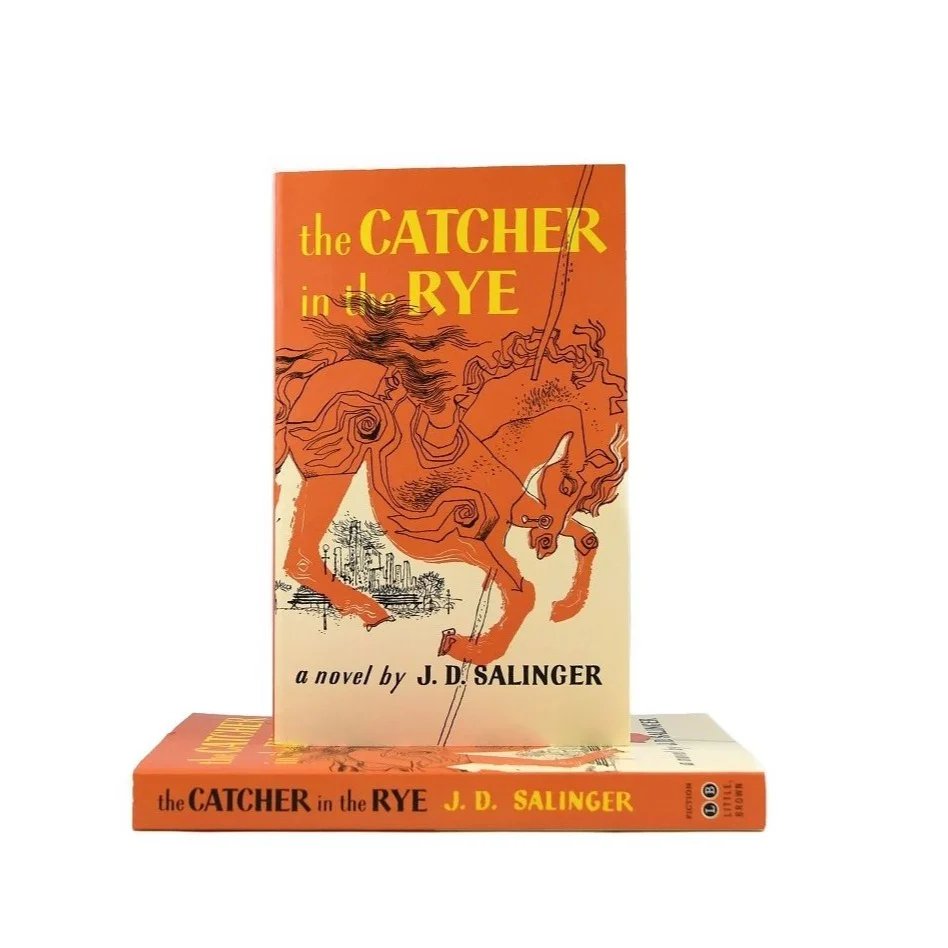
Just curious. How many of you have read Catcher In The Rye ?
KenFarmer ⒶⓋ tweet media
English
793
48
1.8K
63.9K
John Paterson retweetledi
𐌁𐌉Ᏽ 𐌕𐌉𐌌𐌉
I came across a theory that AI is starting to make more mistakes because the internet is increasingly polluted with AI slop. The idea of AI cannibalising itself into obscurity is one of my favourite things ever. I hope it is true and I hope it becomes impossible to fix.
English
512
11.7K
96K
864K
John Paterson
John Paterson@johnpat007·
Actual Progress on shipping in SoH and Oil down $ A U.S.-Iran agreement to reopen the Strait of Hormuz holds promise, but shippers remain cautious and production facilities and inventories will take time to restore wsj.com/business/energ… via @WSJ
English
0
0
0
21
John Paterson retweetledi
Luce
Luce@lucyshow11·
In the 70s and 80s there was something called auto shop and kids learned how to build or fix their own cars. Nowadays, I think many wouldn’t even know how to change a tire… what happened to the world?
Luce tweet media
English
48
35
199
7.8K
John Paterson retweetledi
daz
daz@MetamateDaz·
I genuinely don't understand people like Bezos and Musk. If I had billions of dollars, I would just start fixing everything. Homeless veterans sleeping on the streets? Not on my watch. Hungry children going to bed with empty stomachs? Hell no. They could be making life better but instead choose to build spaceships and data centers to pump stocks and destroy the planet
English
6.8K
753
5.5K
1.2M
John Paterson retweetledi
Dennis Wingo
Dennis Wingo@wingod·
@MetamateDaz They are, on a level that you simply don't understand.
English
3
1
37
449
John Paterson retweetledi
Flopping Aces
Flopping Aces@FloppingAces·
Man, you could practically hear the collective groan in every newsroom across America. For about 12 glorious hours, the San Diego mosque shooting was absolute catnip for cable news. Two teenage white boys attack a mosque, three innocent people dead ... the “right-wing domestic terrorism” script wrote itself. Chyrons blazing, panels booked, every anti-MAGA hack already sharpening their knives. Then the manifesto dropped. And everything went dead quiet. Turns out Cain Clark and Caleb Vazquez weren’t exactly card-carrying conservatives. These two pathetic Jew-obsessed incel weirdos titled their murder diary “Sons of Tarrant” and filled it with deranged pages of “IT’S THE JEWS” on endless repeat. They weren’t right-wing, weren’t MAGA, weren’t Trump fans ... nah, they proudly called themselves Third Positionists who worshipped Nationalist Socialism and Eco Fascism. One was autistic and marinating in online poison. The other got force-fed mandatory “ethnic studies” classes that spent the first two weeks hammering “whiteness” and “white privilege” until he started hating himself and his own mixed-race family. Oh, and the system had been warned for over a year: FBI knew about Vazquez, 5150 psych hold, gun seizure attempt, the works. Mom was blowing up police phones for two straight hours while short-staffed cops treated it like a runaway kid case. But once the full, messy, politically inconvenient picture hit the internet? The 24/7 coverage didn’t just slow down. It died. Nothing kills a beautiful partisan morality play faster than facts that refuse to cooperate. The media isn’t in the truth business ... they’re in the narrative enforcement business. And this one didn’t confirm shit. (article below)
English
210
5K
18.1K
515.9K
John Paterson retweetledi
Ricardo
Ricardo@Ric_RTP·
Microsoft just banned its own engineers from using AI. The tool was literally costing MORE than the humans it was supposed to replace. They lied to you about AI adoption and now the whole narrative is blowing up: Microsoft gave thousands of engineers access to Claude Code six months ago and encouraged them to use it. Engineers loved it and adoption exploded. But then the invoices arrived. Token-based pricing means every query, every code review, every debugging session costs money. At scale across 100,000 engineers, the numbers became so large that Microsoft issued an internal order to cancel nearly all Claude Code licenses by end of June and force everyone onto their own cheaper tool instead. The company that invested $5 billion in Anthropic just told its own people to stop using Anthropic's product because it costs too much. Uber's story is even worse... Their CTO Praveen Neppalli Naga told The Information that the budget he planned for the full year was "blown away already" by April. Uber had rolled out Claude Code in December 2025. By March, 84% of their 5,000 engineers were using it with 70% of all committed code coming from AI systems. Heavy users were burning $500 to $2,000 per month each. Naga himself spent $1,200 in a single two-hour demo session. The company had even built internal leaderboards ranking engineers by how much AI they used. They literally gamified the spending and then ran out of money. Now look at what Nvidia's own VP of applied deep learning Bryan Catanzaro said to Axios last month. Direct quote: "For my team, the cost of compute is far beyond the costs of the employees." This is a VP at the company that SELLS the chips saying that using AI is more expensive than paying humans. Think about what this means for the entire AI narrative. Every CEO on every earnings call for the past two years has said the same thing: AI will make us more efficient, reduce headcount, and cut costs. The stock market rewarded every company that said it. Fired workers, stock goes up. Announced AI adoption, stock goes up. But the actual companies deploying AI at scale are discovering the math doesn't work. The MORE employees use AI, the HIGHER the bill. Goldman Sachs forecasts a 24x increase in token consumption by 2030 as companies adopt AI agents. Gartner just published a report showing that even though individual token prices will drop 90% by 2030, total enterprise AI costs will go UP because agents consume exponentially more tokens per task than basic tools. Meta built an internal dashboard called "Claudeonomics" to track which employees use the most AI. Amazon started pushing engineers to "tokenmaxx," their internal term for consuming as many AI tokens as possible. Both companies are spending hundreds of billions on AI infrastructure this year alone. And Microsoft, the company that bet its entire future on AI, just told 100,000 engineers to stop using the tool they liked best because the per-token bills got out of control. The companies building AI are telling investors it saves money. The companies using AI are finding out it costs more than the humans it was supposed to replace. And even the company that makes the chips just admitted it through its own VP. This is the gap nobody on Wall Street is pricing in. $725 billion in AI infrastructure spending this year across Big Tech. And the first companies to actually deploy these tools at scale are already pulling back because the economics don't work. What do you think?
English
1.8K
9K
22.2K
2.6M
John Paterson
John Paterson@johnpat007·
@tkohl LOL enjoy your meal fatso !!! ??? that's one backsassin pig
English
0
0
1
11