

Jorge Suarez Basañez
127.8K posts

Jorge Suarez Basañez
@jorgefsb
Ayudo a quien ❤️ y busca 👾 VIVIR DE LOS #videojuegos 🎮 GM https://t.co/A68Nflo7KD @karaokulta 🕹️ https://t.co/dtgLrcAqqu GaaS 4 Brands #gamedev #Roblox
Guadalajara Katılım Şubat 2007
5.2K Takip Edilen2.7K Takipçiler
La oficina de Amber es un lugar donde las ideas, la creatividad y las risas forman parte del día a día. Encontramos tiempo para divertirnos, colaborar y convertir una buena idea en algo que nos haga sonreír. Inspirados por The Office, decidimos recrear una de las intros más
Español
Jorge Suarez Basañez retweetledi

Hermes is INSANE as an operating layer for your business.
If you’re using it like ChatGPT, you’re probably leaving 90% of the value on the table.
The first thing I’d do is create separate profiles by job.
Thinking profile: stronger model, strategy, planning, pushback.
Execution profile: writing, editing, research, task completion.
Workflow profile: one specific loop like CRO, content, sales, SEO, or recruiting.
Then I’d give each profile a simple rule:
"Don’t just answer me. Rate the idea. Push back. Tell me what’s missing. Help me improve the system."
That’s how I’m using Hermes right now:
ericosiu@ericosiu
English
Jorge Suarez Basañez retweetledi

🚨 I’ve posted before about having Hermes interview you before starting a project.
Now it’s a full-blown open-source skill in the Hermes Field Kit.
And this isn’t some endless questionnaire that asks what your “preferred communication style” is 14 different ways.
The interview-me skill:
- Checks your available files, notes, and tools FIRST
- Asks one high-value question at a time
- Separates facts, assumptions, constraints, preferences, and unknowns
- Stops asking questions when another answer wouldn’t change the next move
- Produces a clean decision brief before proceeding
Saves NOTHING to memory without explicit approval
Trigger it with:
“Interview me before you start.”
“Help me turn this rough idea into a decision brief.”
“Learn my preferences before drafting the plan.”
Less guessing.
Less prompt ping-pong BS.
More agents that actually understand the assignment before they start swinging the hammer.
The interview-me skill is live in Hermes Field Kit: 👇
github.com/asimons81/herm…

English
Jorge Suarez Basañez retweetledi

Meta just paid $2B+ for Manus. not a model — an agent layer built on top of other companies' models.
read that again. the models underneath were Anthropic's and Alibaba's. the $2B was for what sits on top: the layer that turns an instruction into executed work.
that is the story of 2026 — value moving from the model to the organization operating it.
Matrix is that layer as a product you can run today: models become departments with owners, memory, and proof of work.
the model is a dropdown. the layer above it is worth billions.
English
Jorge Suarez Basañez retweetledi
the case film that beat the tip cards, if you want to see what "receipts over slogans" looks like: x.com/matrix_build/s…
and if you want agents that read their own metrics before drafting: matrix.build
Matrix@matrix_build
we gave a company of agents one idea — Porter, an AI agent that fights for renters — and asked for a YC-grade pitch. not one chatbot. five departments: intake locked the investor brief. design planned all 12 slides. the critique desk attacked its own deck — "emotionally sharp, but legally loaded. missing proof. cut it." launch packaged the assets. every step checked in with proof. the human only picked the idea. watch a pitch deck get built like a company, not a prompt:
English
Jorge Suarez Basañez retweetledi

a social app with no algorithm and no ads just raised $12.3M.
yope. private by default. no feed built to hook you. just small groups of real friends.
and it's already near 15M users, with over half opening it 5+ days a week.
the founders who win social next won't be the ones adding screen time limits. they'll be the ones who built something worth using less compulsively from day one.
that's the bet $12.3M just backed. bookmark this one.
YOPE@yope_app
the next big social network won't have a public feed, an algorithm, or ads. 14M people are already there. we raised $12.3M led by @northzoneVC (early backers of @Spotify and @Klarna) to build the first AI-native app made to strengthen real relationships.
English
Jorge Suarez Basañez retweetledi
Jorge Suarez Basañez retweetledi
I tried to sneak a bad decision past my own AI agents. They wouldn't let me.
The setup: two agents, one shared memory, running entirely on my laptop.
One agent added a file that quietly swapped our database for Postgres. The other read the shared log, saw the rule that said "use SQLite, not Postgres," and stopped it cold, quoting the exact decision it broke.
Then I shut everything down and restarted it. Same catch. All offline, no cloud, no API key.
Everyone is racing to add more agents right now. Almost nobody gives them a shared memory that survives a restart. That is the real unlock.
My honest take: a team of agents that forgets every decision the second it finishes is not a team. This is the fix.
Full breakdown in the article.
Prajwal Tomar@PrajwalTomar_
English
Jorge Suarez Basañez retweetledi
Okay THIS is the Opus 5 vs GPT-5.6 Sol showdown everyone's been waiting for.
Hyperagent ran both models head to head inside a real browser agent, on real tasks, and showed the exact cost of every run. That's the kind of test that actually tells you something, instead of one more leaderboard.
I've been running both on client work myself, so I went straight to the results, and honestly they change how you should be picking a model.
How I actually choose now, below.
Hyperagent@hyperagentapp
Opus 5 is a modest upgrade, but it has tough competition in GPT-5.6 Sol Initial thoughts from our early access: > Clearer writing than Fable's dense communication style > Still gets too verbose compared to GPT models (even when explicitly instructed to keep text purposeful) > Strong on browser use inside Hyperagent > Strong on reviewing complex data to justify a decision > Less likely to take creative risks. More of a "rule follower" personality. Costs shown for five test cases (GPT-5.6 Sol was consistently much cheaper) Explore and judge the actual work for yourself in thread 👇
English
Jorge Suarez Basañez retweetledi
This should not be this good.
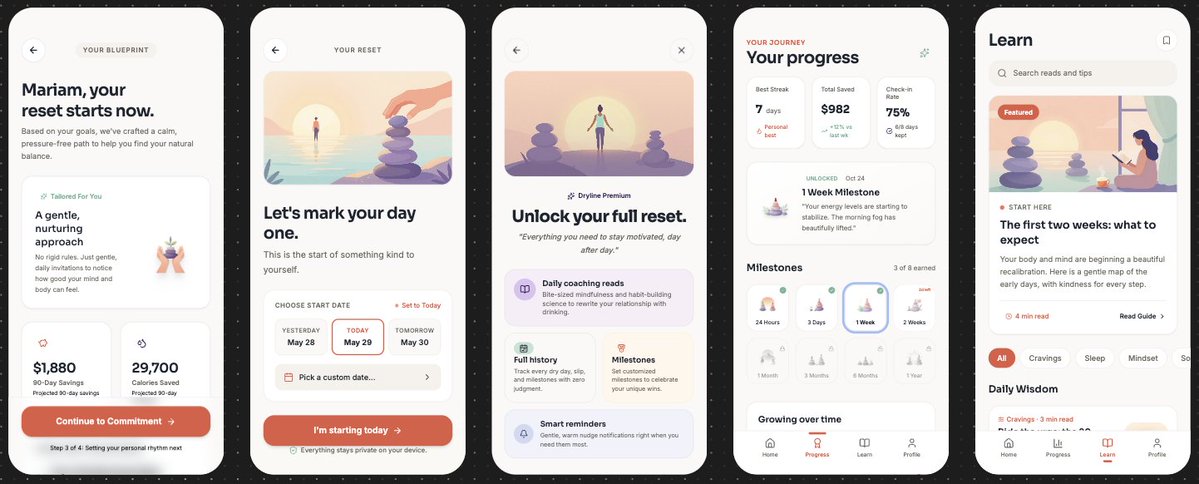
I designed + built the UI of this mobile app (20+ screens) in UNDER an hour.
Most people are sleeping on this workflow. They burn hours designing screen by screen, or worse, let the model guess the whole thing. I let Claude write the plan and the design system does the rest.
We are not going back to Figma at the agency.
(the full workflow is in the article)
Prajwal Tomar@PrajwalTomar_
English
Jorge Suarez Basañez retweetledi
Nobody told me Claude Code would get THIS good at creative work.
I stopped paying my designer two months ago because of it. Connected to Higgsfield, it generates product photos, ads, banners, and full launch videos that used to cost me real money every single week.
And the best part is the whole thing runs itself. It plans my content on Sunday night and generates everything while I sleep. I wake up Monday to a full week of work waiting for a 20 minute review.
My content didn't slow down when the designer left. It sped up.
The whole setup is in the article below, step by step.
Prajwal Tomar@PrajwalTomar_
English
Jorge Suarez Basañez retweetledi
Okay this one genuinely surprised me.
I sent the same message to two people. One got it on WhatsApp. The other got a text.
I didn't pick either one. Sent looked at each person, checked where they actually respond, and routed it.
With Twilio, that decision was my job. Two separate systems, two bills, and me in the middle deciding who gets what.
Now the message just finds the right person on its own. That's the whole product.
(the full system, including where the 40% bill drop comes from, is in the article below)
Prajwal Tomar@PrajwalTomar_
English
Jorge Suarez Basañez retweetledi
Hermes Agent Tip of the Day 🪽
Stop telling Hermes:
“Clean up this code.”
That’s way too vague.
Instead, have it simplify your code at four different altitudes:
🔹 Line level
Remove duplication, dead code, and unnecessary complexity.
🔹 Function level
Improve naming, tighten logic, and reduce branching.
🔹 Module level
Clean up responsibilities, dependencies, and boundaries.
🔹 Architecture level
Challenge the overall design, not just the implementation.
That last one is where the magic happens.
Sometimes the problem isn’t an ugly function.
Sometimes the entire abstraction is wrong.
The updated simplify-code skill now includes a fourth high-level reviewer specifically to catch those architectural issues.
Don’t just ask AI to make your code prettier.
Ask it to make your software better. 🪽

English
Jorge Suarez Basañez retweetledi
More hot fire from the Nous kitchen!
All of the skills (yes ALL of them) just got some major love.
hermes update
JUST DO IT! 🤘🏻
Teknium 🪽@Teknium
Just gave Hermes' skills an overhaul - all the built in and optional skills we support with some qol improvements, enhancements, reorgs, cleanup, and more. Enjoy!
English
Jorge Suarez Basañez retweetledi

OFICIAL: ¡Adiós a AWS, Vercel, Heroku, Railway y proveedores de servidores caros!
GUARDA ESTO si pagas cinco servicios distintos para mantener una aplicación funcionando.
Alguien acaba de liberar una alternativa open source, solo conectas tu repositorio, detecta automáticamente tu stack y despliega la aplicación en tu propio servidor.
Se llama OpenShip y lo hace todo desde una sola plataforma.
Sin configurar pipelines.
Sin escribir archivos YAML.
Sin depender de una plataforma cerrada.
Incluye:
→ Despliegues automáticos al hacer push
→ Entornos de preview por cada rama
→ Staging y producción separados
→ Rollbacks con un clic
→ Dominios y certificados SSL automáticos
→ Servidor SMTP integrado
→ Backups programados
→ Logs y métricas en tiempo real
→ Aplicación de escritorio, panel web y CLI
→ API y servidor MCP para conectarlo con agentes de IA
También puedes desplegar en tu infraestructura:
• PostgreSQL
• MySQL
• MongoDB
• Redis
• Almacenamiento
• Workers y WebSockets
• Aplicaciones Docker y Docker Compose
Puedes instalar el panel de control en tu ordenador y administrar tus servidores mediante SSH, sin exponer públicamente OpenShip.
Todo se ejecuta sobre contenedores Docker estándar, eso significa:
Tus servidores.
Tus datos.
Tu infraestructura.
Sin bloqueo de proveedor.
Ya ronda las 7.600 estrellas en GitHub y acaba de lanzar su versión v0.3.0.
Todavía es un proyecto joven y parte de su documentación sigue en desarrollo, pero merece mucho la pena seguirlo.
Búscalo en github com/oblien/openship
Miguel Ángel | GptZone@MiguelMaestroIA
Un exingeniero de Netflix acaba de liberar uno de los repositorios más interesantes para reducir el coste de los agentes de IA. Ya supera las 61.000 estrellas en GitHub. Open source. Licencia Apache 2.0. Se llama Headroom y comprime todo lo que tu agente lee antes de enviarlo al modelo: → Salidas de herramientas → Logs interminables → Fragmentos de RAG → Archivos y código → Historial de conversaciones El resultado: Hasta un 60-95 % menos de tokens en datos JSON y alrededor de un 15-20 % menos en agentes de programación. Lo mejor: • Funciona de forma local • Tus datos permanecen en tu máquina • Conserva los archivos originales • El agente puede recuperarlos cuando necesite más detalles Puedes conectarlo con Claude Code, Codex, Cursor, Aider o Copilot mediante una biblioteca, un proxy o un servidor MCP. Según sus pruebas, mantuvo la precisión en benchmarks como GSM8K y TruthfulQA incluso después de comprimir el contexto.
Español
Jorge Suarez Basañez retweetledi
Este plugin de Chrome es UNA JOYA.
Hace ingeniería inversa de cualquier imagen que encuentres en Internet.
Analiza cualquier imagen y la convierte en un prompt detallado. Después puedes copiar ese prompt y utilizarlo en herramientas de generación de imágenes.
Solo tienes que hacer clic derecho sobre ella y analizará:
→ El estilo visual
→ La composición
→ La iluminación
→ Los colores
→ Los materiales
→ El ambiente
→ Los detalles del sujeto
Después convierte todo ese análisis en un prompt detallado que puedes copiar y utilizar en tu generador de imágenes favorito.
También permite seleccionar únicamente una zona de la pantalla y generar el prompt en varios idiomas o en formato JSON.
Funciona de dos maneras:
• Haciendo clic derecho sobre cualquier imagen.
• Seleccionando una zona concreta de una página mediante una captura.
Perfecto para descubrir cómo se creó una imagen y replicar su dirección visual.
Búscalo en promptcard net
Don Quijote de la IA@IA_Quijote
OFICIAL: ¡Adiós a AWS, Vercel, Heroku, Railway y proveedores de servidores caros! GUARDA ESTO si pagas cinco servicios distintos para mantener una aplicación funcionando. Alguien acaba de liberar una alternativa open source, solo conectas tu repositorio, detecta automáticamente tu stack y despliega la aplicación en tu propio servidor. Se llama OpenShip y lo hace todo desde una sola plataforma. Sin configurar pipelines. Sin escribir archivos YAML. Sin depender de una plataforma cerrada. Incluye: → Despliegues automáticos al hacer push → Entornos de preview por cada rama → Staging y producción separados → Rollbacks con un clic → Dominios y certificados SSL automáticos → Servidor SMTP integrado → Backups programados → Logs y métricas en tiempo real → Aplicación de escritorio, panel web y CLI → API y servidor MCP para conectarlo con agentes de IA También puedes desplegar en tu infraestructura: • PostgreSQL • MySQL • MongoDB • Redis • Almacenamiento • Workers y WebSockets • Aplicaciones Docker y Docker Compose Puedes instalar el panel de control en tu ordenador y administrar tus servidores mediante SSH, sin exponer públicamente OpenShip. Todo se ejecuta sobre contenedores Docker estándar, eso significa: Tus servidores. Tus datos. Tu infraestructura. Sin bloqueo de proveedor. Ya ronda las 7.600 estrellas en GitHub y acaba de lanzar su versión v0.3.0. Todavía es un proyecto joven y parte de su documentación sigue en desarrollo, pero merece mucho la pena seguirlo. Búscalo en github com/oblien/openship
Español
Jorge Suarez Basañez retweetledi

Most founders still babysit their AI agents by hand.
The ones pulling ahead automate three things:
End-to-end test:
- A browser agent runs your whole flow ( signup, create a case, discovery).
- Runs Mon/Wed/Fri. ~$60 in tokens.
- Catches bugs your test suite misses.
Triage session:
- When a test fails, a child agent spins up to fix it.
- Finds the failure
- Opens a PR
- Pings you in Slack
- Hands off.
Production watchdog:
- Every day at 9am, it reads every event your paying customers triggered.
- Rolls it into a summary
- Links straight to the real UI
- Like a chief of staff briefing you each morning.
Think:
- End-to-end test = did prod break
- Triage = fix it without me
- Watchdog = what actually happened yesterday
Build agents that make themselves better.
That's the unlock.
The Startup Ideas Podcast (SIP) 🧃@startupideaspod
English
Jorge Suarez Basañez retweetledi

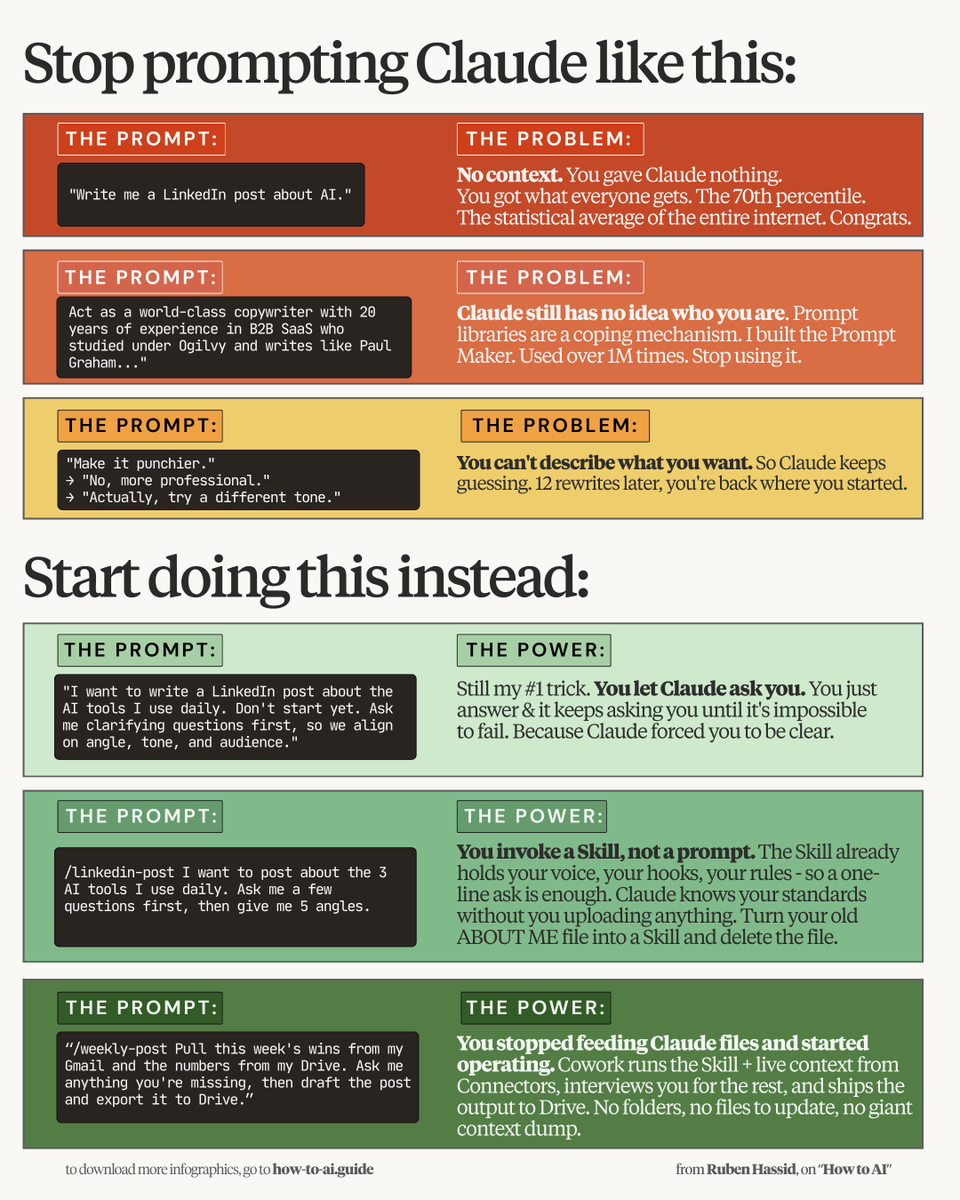
Prompting is dead.
Here's what to actually do instead (in one image):
1. Download the Claude desktop app (free to start).
2. Open Cowork, the tab between Chat & Code.
3. Go to Settings → turn almost everything OFF.
4. Keep only Connectors on. Gmail + Google Drive.
5. Leave Global Instructions empty.
6. Delete the "Cowork" folder. Delete the .md files.
7. Turn it into Claude skills instead: /skill-creator.
8. Don't want to start from scratch? Grab my 27 Claude Skill library (free) → how-to-ai.guide
9. Check your inbox. The email has the library link.
10. Open the link → download the Skills folder.
11. In Claude: Customize → Skills → Upload a skill.
12. Bake your voice, hooks, rules & rejections into it.
13. Invoke it with a slash: /my-voice + a one-line ask.
14. Prompt Claude: "ask me questions first."
15. Let Claude interview you until it can't fail.
16. Export the output straight to Drive. One button.
17. Model: Opus 4.8 on High. Fable-5 when it's free.
By the way, here are the red flags you're still working like it's 2025:
1. You built a "Claude Cowork" folder. Folders leak.
2. You maintain about-me .md. Make it a Skill.
3. You re-upload the same files. Skills auto-travel.
4. Your prompt is 500 words. Skill + one-line prompt
5. "Act as a copywriter…" it still doesn't know you.
6. You dump giant context. Claude goes in circles.
7. You told it to "never read output folder." It reads it
8. You re-explain your tone. Put it in a Skill once.
9. You copy random prompts They're not your voice
10. You don't use Connectors. It can't see Gmail...
11. You're still in Chat. The top 1% are in Cowork.
12. You think "prompting" is a skill. You operate now
13. You never got my Skill library: how-to-ai.guide.
Yes, I was the folders-and-files guy. I was wrong.
People still type 500-word prompts in 2026.
Want to help your network upgrade?
♻️ Repost this so they finally drop the folders.
Ruben Hassid@rubenhassid
English
Jorge Suarez Basañez retweetledi

Governments pay millions for this kind of system. Someone just open-sourced it for free.
It's called Crucix. It watches the entire world and texts you when something changes.
Pulls from 26 live sources every 15 minutes:
- Satellite fire detection, flight and vessel tracking
- Conflict zones and economic indicators
- Live crypto and market prices
- Social sentiment from Telegram intel channels
It's two-way. Pushes alerts to Telegram and Discord. Text it back, type /brief for a summary.
No cloud, no subscription. Runs on your own machine.
100% Free. Open Source.
English