

sonny
27.5K posts

This stupid dork is lying again is was a planned exercise. From Grok.. 👇
Yes, there was a large explosion producing a visible mushroom-like cloud (or plume) near Beit Shemesh, west of Jerusalem, in Israel on the night of May 16, 2026.35
It happened at a testing ground run by Tomer (a subsidiary of Israel Aerospace Industries), the state-owned defense firm that develops rocket motors and propulsion systems for missiles like the Arrow interceptor. Israeli officials and Tomer confirmed it was a pre-planned, controlled rocket propulsion experiment that “went according to plan,” with no injuries, no damage, and no security incident.35
The dramatic visuals (bright flash, fireball, and rising mushroom-shaped smoke plume) came from burning solid rocket propellant during the test. This is routine for such facilities but looked alarming because:
•It occurred without prior public warning.
•The site is near Sdot Micha Air Base (a sensitive missile-related location).
•It happened amid high regional tensions.
Social media (including the post you linked from Douglas Macgregor) quickly spread videos and speculation about attacks, false flags, or worse. Some replies even called it a nuclear event or sabotage. However, no credible evidence supports that—Israeli police and authorities reported nothing unusual beyond the planned test, and mainstream reporting aligns on the official explanation.0
This isn’t the first time a similar test has caused brief alarm (a comparable one happened in 2021). Mushroom-cloud-style plumes can form from large conventional explosions or propellant burns due to physics (rapid pressure changes in humid air), not just nukes—as seen in past non-nuclear incidents like the 2020 Beirut port explosion.
In short: Real event, real visuals, but not an attack or accident—just a scheduled defense test that went as intended. The speculation spread fast online because of the timing and optics.
English
Massive mushroom like explosion reported in Israel.
English
@NancySinatra I cannot believe its 28 yrs....
Frank sinatra records will be played for a 1000yrs.
English

Twenty-eight years ago, the world lost Frank Sinatra, and I lost my dad. I don’t think I’ll ever fully get over the loss of him, or the fact that my siblings and I were disregarded and not given a chance to say goodbye.
My father was one of the most extraordinary men I ever had the privilege to know. What an incredible life he lived, and what a remarkable legacy he left behind. On this sad anniversary, I find myself thinking about all he accomplished, the joy he brought to so many people, and the love he gave to those closest to him. The world could certainly use his warmth, kindness, grace, and wonderful sense of humor today. He had a way of making people feel special, whether it was one person sitting beside him or on stage in front of thousands.
What I regret most is that his great-grandchildren never got the chance to know him. Oh! How they would have loved each other.
Twenty-eight years later, the world still sings along with him. Young people continue discovering him for the first time, while those who loved him from the beginning still treasure the man and his music. His music is special because it came from somewhere real, and because he meant every word he sang. He left behind a body of work that continues to bring people comfort, joy, romance, and strength.
Dad was always concerned that his work would be forgotten, so he would be absolutely thrilled to know that his legacy lives on across generations, not only through his music, but in the hearts and on the playlists of millions of people around the world.
Frank Sinatra is eternal.
And I still miss my Daddy. I love you, Poppa.

English

@archivewarfare It's amazing how after 80 yrs, once mortal enemies are now strong allies. I am grateful for that.
English

Restored WWII Combat: The Pacific War. Fighting The Kamikaze.
The brutal clash between US Navy fleets and the Japanese Kamikaze. This restored 3-minute trailer captures the terrifying reality of aerial combat in 1944 and 1945.
English

Russia has lost 5 times the soldiers that Ukraine had during the war so far-Marco Rubio
Wow…
English
@fellaraktar He went on holiday in russian held
Crimea.....hes a con,fraud,fake.
He only wants the$$$$$$$$$$$$$
how many houses has he got around the world?
English
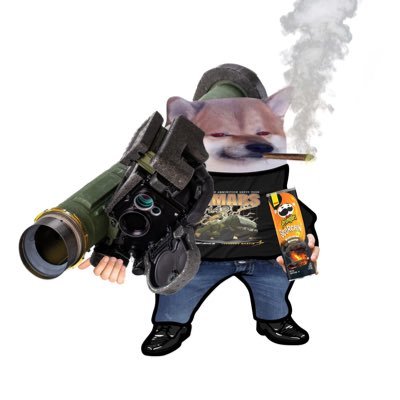
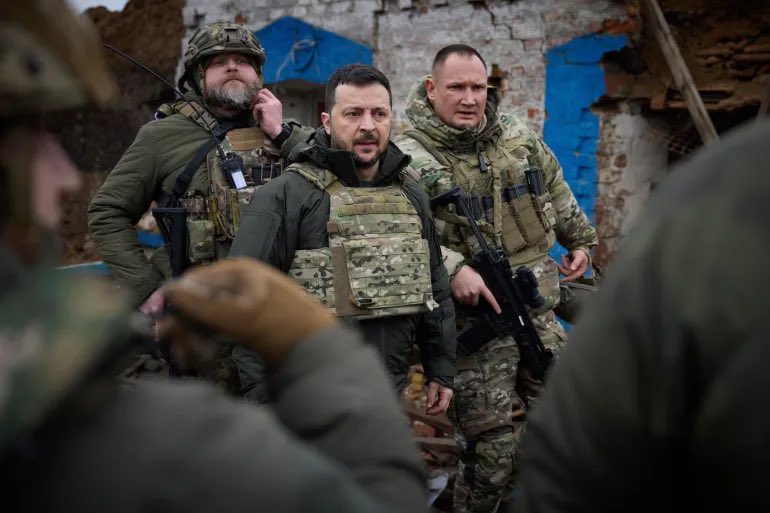
He could have ran away.
He stayed and led Ukraine in its darkest hour.
He could hide in a bunker.
But he visits the troops at the front.
He gets insulted and belittled by men not fit to shine his shoes.
He doesn’t respond.
He just does what is best for Ukraine.
Hero.
English

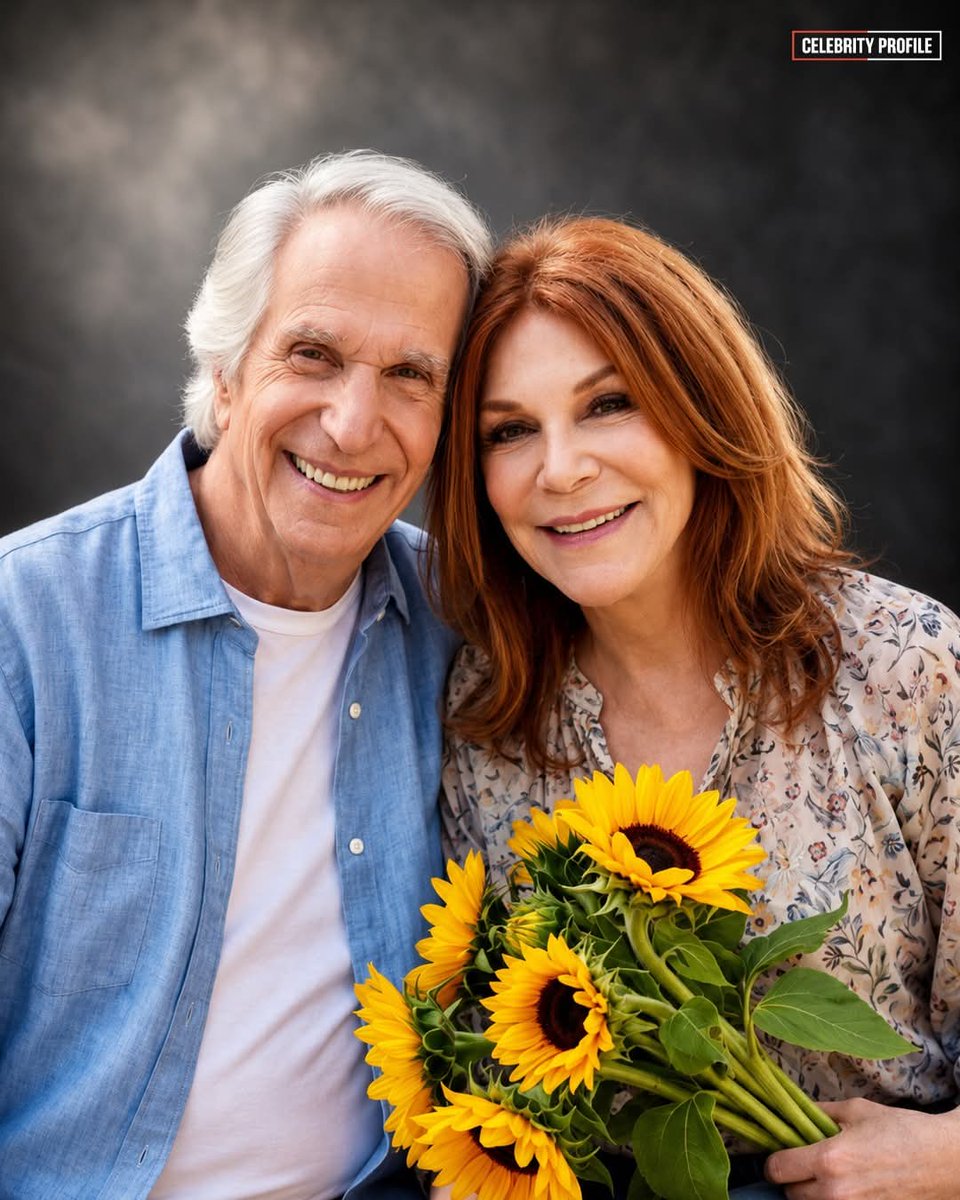
Beverly Hills, 1976. Henry Winkler walks into a clothing store. Needs a coat. Leaves with a life.
Stacey Weitzman is behind the counter that day — divorced, raising her young son Jed, simply doing her job. She smiles and asks if he needs help.
“You just did,” he thinks immediately.
They start talking. Ten minutes passes like ten seconds. Later, Henry would admit he didn’t want the conversation to end.
So he stayed.
The next day, he returned pretending he’d forgotten something. He pointed at jackets he clearly didn’t need while searching for another excuse to see her.
Stacey understood exactly what was happening.
At the time, Henry Winkler was already becoming one of the most recognizable faces in America. Happy Days had turned him into Fonzie, the leather-jacketed icon everyone adored.
But Henry wasn’t chasing attention.
He was chasing her.
And Stacey came with a little boy.
Some people might have called that baggage. Henry never did. From the beginning, he embraced both of them completely. Years later, Stacey reflected on it simply:
“He chose all of us on day one.”
In 1978, they married quietly in a small Manhattan ceremony without Hollywood spectacle or media attention. No grand performance. Just vows.
Then came daughter Zoe. Then son Max. Their house filled with noise, children, laundry, routines, and ordinary life.
That was exactly what Henry wanted.
“Fame is loud,” he later said. “Dinner with my kids is quiet. I picked quiet.”
Their marriage wasn’t built on dramatic gestures.
It was built on repetition.
Henry hid handwritten notes everywhere — inside books, purses, beside coffee cups. One note read: “You’re still the girl in the store. Now I just have 45 years of reasons why.”
Stacey saved every one in a shoebox.
At their thirtieth anniversary dinner, she read one aloud: “When I look at you, I see every day we’ve survived. And I’d survive them all again to get here.”
Nobody at the table could hold back tears.
Over the decades, they faced everything real families do — dyslexia struggles, illness, career highs and disappointments, children growing older, grandchildren arriving.
“We didn’t do perfect,” their daughter Zoe once said. “We did team.”
And every morning at 7 a.m., Henry still brings Stacey coffee.
Not out of routine.
Out of intention.
“It’s a proposal,” he says. “I’m asking her to marry me again today.”
No yachts.
No staged romance.
No Hollywood illusion.
Just two people continuing to choose each other long after the spotlight faded.
“People say we fell in love,” Henry once said. “No. We keep falling. On purpose. Every damn day.”
He walked into a store looking for a coat.
And nearly fifty years later, he still acts like he just found home.
English

“Those who accuse NATO of expansion and escalation are adopting the imperialist rhetoric and ideology promoted by Russia. NATO is not a threat to Russian security, just Russian imperialism.”
— Kaja Kallas, EU’s chief diplomat

English
@jurgen_nauditt Why do germans want to destroy russia?....your grandfathers tried and failed....badly
English
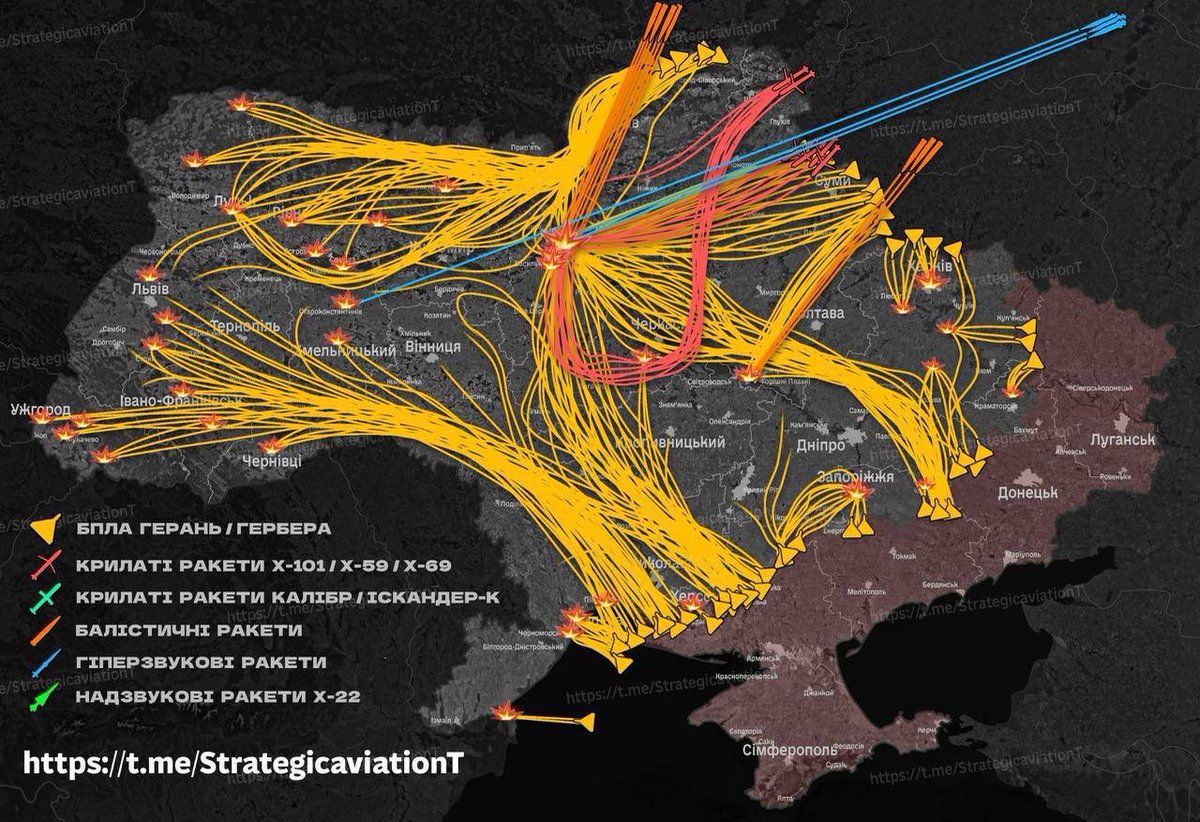
A knitting pattern?
No. These are the attack routes of approximately 1,600 Russian drones and missiles within a 24-hour period.
For over four years, Ukraine has been defending Europe—alone—against the Russian murderers.
English

"We forced Ukraine to give up nuclear weapons, cruise missiles, and strategic bombers.
We promised to protect Ukraine from Russia.
We made Ukraine vulnerable.
So yes, this is our war.."
- Bill Clinton
🫡

English
sonny retweetledi

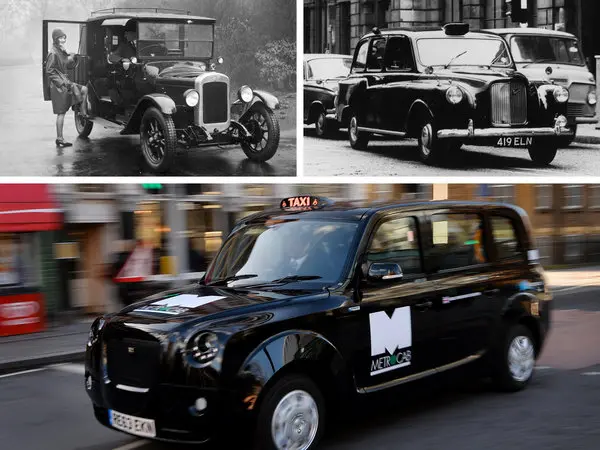
To get a license to drive a black cab in London, you have to memorize 25,000 streets, 20,000 landmarks, and the fastest route between any two points in a six-mile radius of Charing Cross. It takes most people three to four years.
A British neuroscientist asked the obvious question nobody had thought to ask. What does that actually do to a human brain?
Her name was Eleanor Maguire. The study changed neuroscience forever.
The exam is called The Knowledge. It was introduced in 1865, and the format has barely changed since.
Applicants ride a moped around London for years with a clipboard strapped to the handlebars, tracing every possible route between every possible pair of points in the city.
They get tested in person by an examiner who can ask them, on the spot, for the shortest legal route between any two addresses in a database of tens of thousands. Half the people who attempt it fail.
The ones who pass have spent an average of four years studying full time and have taken the test 12 times before getting through.
Maguire was watching a TV movie about it in 1995 when she had the idea. These were not ordinary people. They were people running one of the most extreme spatial memory training programs that exists anywhere on Earth.
If the human brain could be reshaped by experience, this was the cleanest natural experiment anyone was ever going to find.
She put 16 of them in an MRI machine.
Their posterior hippocampi were significantly larger than the brains of matched controls. The longer a driver had been working, the bigger the difference got.
A 40-year veteran had a measurably more developed hippocampus than a 5-year veteran, and both had more than someone who had never driven a cab.
Here is why that finding broke a century of consensus.
Until 2000, every neuroscience textbook in the world taught a version of the same idea. The adult brain is essentially fixed. You are born with a set number of neurons. Childhood is the window where the wiring gets laid down. After puberty, the structure freezes, and the rest of your life is just slow decline.
Maguire's study was one of the first pieces of human evidence that this was simply wrong. Adult brains physically remodel themselves in response to what you ask them to do. Not metaphorically. Structurally. With grey matter you can measure on a scan.
The skeptics had an obvious objection. Maybe people with bigger hippocampi were just more likely to become taxi drivers in the first place. The brains were not changing. The job was selecting for brains that already looked that way.
So Maguire ran the experiment again. Properly this time.
She recruited 79 trainees who were just starting to study for The Knowledge and 31 controls who were not. She scanned all of them at the start. Then she waited four years. Of the 79 trainees, 39 eventually passed the exam and 20 failed. She scanned them again.
The trainees who passed had grown larger posterior hippocampi over those four years. The trainees who failed had not. The controls who never studied had not. The brain change was not selection. It was construction.
The act of memorizing the city had physically rebuilt the part of the brain responsible for spatial memory, and the rebuild only happened in the people who actually did the work.
There is a quieter finding from this research that almost nobody quotes, and it is the one I cannot stop thinking about.
The drivers had a bigger posterior hippocampus, but they had a smaller anterior hippocampus. The brain had not magically expanded. It had reallocated. Tissue that was being used for one type of memory had been compressed to make room for another.
When Maguire ran follow-up cognitive tests, the cabbies were measurably worse than controls at certain visual memory tasks unrelated to navigation. They had paid for The Knowledge with something else. The trade was real.
She also ran a second control experiment that is the part of the story most people never hear. She scanned London bus drivers. Same hours behind the wheel. Same city. Same traffic. Same stress. The only difference was that bus drivers follow fixed routes. They do not have to navigate. Their hippocampi looked completely normal.
The cab drivers had not grown bigger hippocampi from driving. They had grown them from the constant, active, effortful retrieval of spatial information from memory.
That distinction is the entire study.
Then in 2020, McGill researchers ran the inverse experiment. They tracked 50 regular drivers and measured how often they used GPS. The participants who relied most heavily on turn-by-turn navigation had measurably weaker spatial memory. When the researchers retested a subset of them three years later, the heavier GPS users had declined fastest.
The hippocampus, the same region the cabbies had built up by ignoring shortcuts, was being slowly hollowed out in everyone else by accepting them.
The mechanism Maguire spent 25 years documenting works in both directions. Brains grow what you make them grow. They lose what you stop asking them to do.
The taxi drivers were running the most intense spatial memory training program on Earth. Most of the rest of us are running the opposite program without realizing it.
Maguire died in early 2025. UCL's tribute described the cabbie study as a stroke of creative genius. She had spent her entire career on a single question. What does it physically take to remember something, and what changes inside a person who remembers a lot of it.
The answer is the part that should change how you live.
English
@mikepompeo Looks like iran ruined the usa....fer
All yer high faluting,rootin,shootin
Youve been shown to be beatable, as did the vietcong,iraq,afghan and the last 3 only had donkeys,and 90 year old rifles.
English

Looks like Putin's greatest achievement in Ukraine could be transforming Kyiv into a global military power.
Great job Volodya.
Jennifer Jacobs@JenniferJJacobs
Scoop via @CBSNews: A memo between US and Ukraine outlines the terms of a defense deal between the two countries. It would allow Ukraine to export its military tech to the US and manufacture drones in joint ventures with American companies, @aidan_stretch reports.
English
sonny retweetledi

@taxiownerdriver @The_LCDC @TfLTPH Absolutely embarrassing test
Been driving 39years
Purely a money making scheme
I found the whole experience demeaning
I found the reception staff incredibly rude
I was made to stand in line like a schoolboy waiting to see the headmaster
96%
Lost 1/2 a days wages
English
sonny retweetledi
Palantir has been granted “unlimited access” to NHS patient data.
This is the same company that is involved in mass surveillance and genocide.
We did not consent to this. Get Palantir out of our NHS, now.
English
@LondonTrafficW1 @LDNCabRanks And what will they find wrong with
Putney bridge....dr watson?
Its a bit odd bridges west of the city
Seem to be falling into disrepair
English
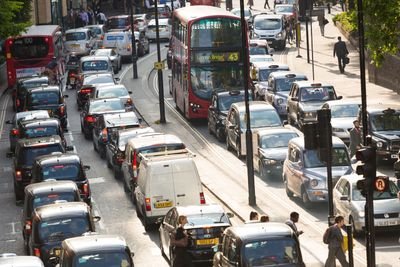
Breaking
Safety-critical temporary weight restriction on Vauxhall Bridge to be introduced from July 2026
brixtonbuzz.com/2026/05/safety…
English
sonny retweetledi

In Venezuela 6 weeks ago I was ill. Their health service took me in, gave me an emergency heart procedure and installed a pacemaker.
After 4 weeks inc a week in hospital I was passed fit to fly.
After 2 weeks in the UK still waiting for an urgent NHS cardiologist appointment.
English
sonny retweetledi

The EU claims that the “Hitler-Stalin Pact of 1939” enabled WWII. It omits ten crucial facts:
- The Soviet Union was not even among the first ten countries to enter into treaties and non-aggression pacts with Nazi Germany. In 1939 alone, Lithuania, Romania, Denmark, Italy, Estonia and Latvia all signed non-aggression pacts with Hitler. Poland entered into one as far back as 1934.
- The Soviet Union tried to form an anti-fascist alliance throughout the 1930s, and was repeatedly rebuffed by European powers.
- Despite that, the Soviet Union was the most powerful bulwark against fascism before the war. The International Brigades in Spain represent the most concrete example of organised antifascist military resistance before Hitler’s invasion of Poland. These Brigades were led by communist parties armed by the Soviet Union, who were abandoned by Western “democracies” and their policies of "non-intervention” which simply left German and Italian intervention uncontested.
- In that same tradition, Stalin offered to send one million troops to deter Hitler’s aggression during the 1938 Sudetenland crisis. Poland and Romania objected, while France and Britain decided to pursue appeasement. That appeasement aimed in part at ensuring that Germany’s energies were directed eastwards, against communism.
- The Soviet Union was the primary target of German imperialism. The USSR’s leadership was aware of this from the early 1930s — and Germany’s leadership did not hide the fact. Hitler had repeatedly promised that Germany would be the “bulwark" of the West against “Bolshevism”, a position that found broad sympathies among the Western ruling classes. Auschwitz was first built to house Soviet POWs, 3.5 million of whom were exterminated during the war.
- Nazi Germany was simply the turning inwards of Western European colonialism. It was in modern-day Namibia that Germany’s Imperial Chancery recorded perhaps the first use of the term Konzentrationslager — the concentration camp — to describe an instrument of mass extermination.
- Adolf Hitler drew particular inspiration from the US settler-colonial model. He remarked approvingly how the US settlers had “gunned down the millions of Redskins to a few hundred thousand and now keep the modest remnants under observation in a cage”. He sent jurists to study the US Jim Crow laws, which formed the basis of the infamous Nuremberg Laws.
- The Red Army liberated Auschwitz, then liberated Europe. If not for the US, which moved quickly to suffocate the rising communist movements on the continent, we might have seen socialism rise at least in Greece, Italy, France and, eventually, Portugal.
- After the war, West Germany quickly reneged on the Potsdam Agreement, filled its security services with former Nazis. NATO, also filled with former Nazis, was founded to wage war on socialism and anti-colonial struggles. In the process it resuscitated the Wehrmacht and paved the way for the German revanchism we are seeing today.
- As a result, we have endured decades of US-led imperial hegemony, whose effects are a dying planet and tens of millions of lives stolen by imperialist wars and sanctions alone. That hegemony has absorbed and expanded the historical mission of fascism, carrying it forward into a new century. Gaza is the clearest expression of that process today — but it is by no means the only one.
EUvsDisinfo@EUvsDisinfo
The Kremlin claims the Soviet Union “liberated Europe” in 1945. It omits one crucial fact: WWII was enabled by the Hitler–Stalin Pact of 1939, which carved up Europe between two totalitarian regimes. For millions in Central and Eastern Europe, Soviet “liberation” meant occupation, repression, deportations, and decades without freedom. The Soviet Union was an occupier. Russia is an occupier in Ukraine today.
English
@Martin640133571 @WWIIpix Ussr left in 91, 50,000 usa troops still in germany....why
English

@WWIIpix The Soviet military reaching Berlin meant that a hundred million central and east European people would be imprisoned for 50 years to come.
How can this be a “liberation” day?
English

"Lost German Girl", a beaten woman filmed on a country road near the Czech border during the surrender of Wehrmacht troops in early May 1945.
Captured by a US Army cameraman, the footage has been viewed millions of times online. Despite decades of speculation, her identity remains unknown. #WW2
English
English
@zoester73 Outside in the fresh air, having a brisque walk.
Well done you.
English


@polidemitolog @BiankaB12 Total bs....150 million russians against 650 million eu citizens plus 300 usa
Japan,aus,can,nz so thats about
1 bilion v 150 million
Only one outcome
English
For all those who think Europe should just be friends with Russia, do you think we haven't tried? It's not a preferable choice to be forced to spend points of GDP on defense which could be spent on growth, but Russia is going through the final phase of its imperialism, forcing us to respond.
English