Matthew D. Sacchet@MatthewSacchet
For thousands of years, Theravāda Buddhism—an ancient tradition with origins in India—has described what is considered the highest meditative attainment, called nirodha samāpatti, regarded as deeply connected to nirvana/enlightenment.
For the first time, we have been able to use brain imaging techniques to observe material correlates related to this meditative event in advanced meditators: the physical signature of the human brain in this condition.
Our findings provide initial validation for those who have wondered whether such a state has measurable correlates, or questioned the reports of practitioners who describe it.
Equally important, the material patterns we observed, when compared and decoded quantitatively against existing brain-mapping indices, aligned strikingly with indicators of well-being and the absence of suffering.
For now, I want to share this preprint because it represents a landmark not only in the neuroscience of meditation but also in the broader study of cognition.
We believe this preprint marks a milestone in the scientific study of meditative traditions, notably here from South Asia, and brain states, while also offering fresh insights into the nature of consciousness itself.
There are further deep implications for ongoing questions in neuroscience, which I will explore in future posts. More to come.
We're entering the era of empirical enlightenment: A scientific understanding of what might be the deepest forms of human spiritual development.
For the first time, science is starting to empirically capture what contemplatives have claimed for centuries: that conscious experience can be completely shut off on purpose. Not from trauma, sleep, or drugs, but through advanced meditation. And what comes after might be one of the most profound psychological shifts a person can experience.
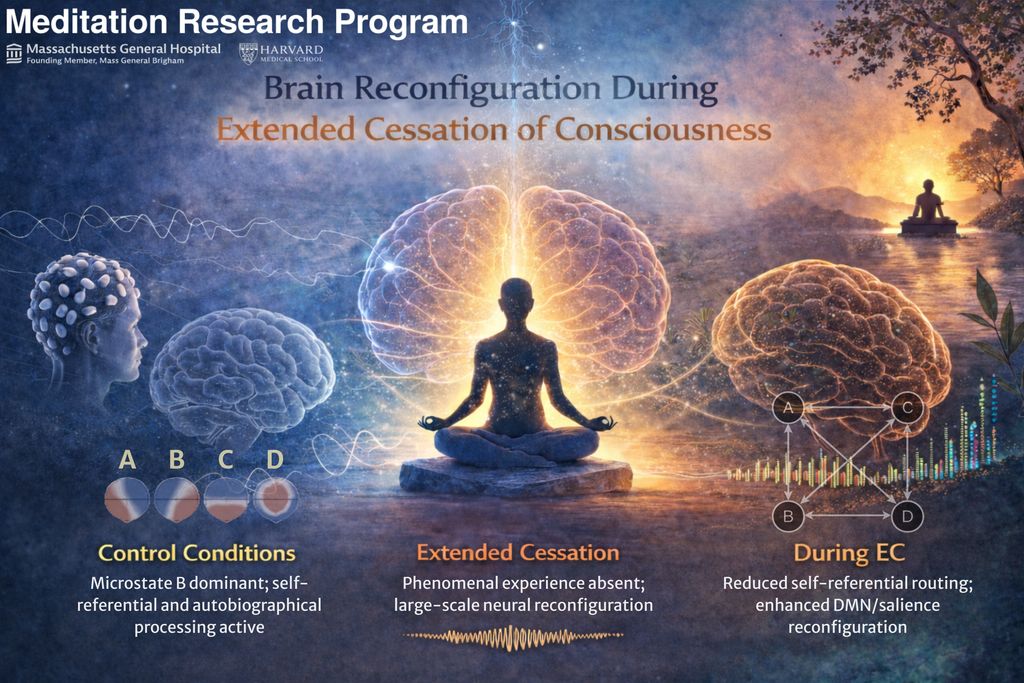
We’ve just released an initial preprint of the first-ever scientific study of Extended Cessation (EC). Using ultra-high-resolution 7T fMRI, we intensively tracked advanced meditators as they entered what some describe as nirodha samāpatti—the most advanced meditative state in certain Buddhist traditions, characterized as the cessation of all mental activity and conscious experience, and thought to be closely related to enlightenment (e.g., nirvana, nibbana).
Each participant, as a rare practitioner, accessed this state through advanced concentration and insight practices and all reported the same thing: no thoughts, no sensations, no emotions, no awareness, not even the sense of being. Consciousness went offline for extended periods.
Our neuroimaging results aligned with these first-person reports. Among the most striking findings:
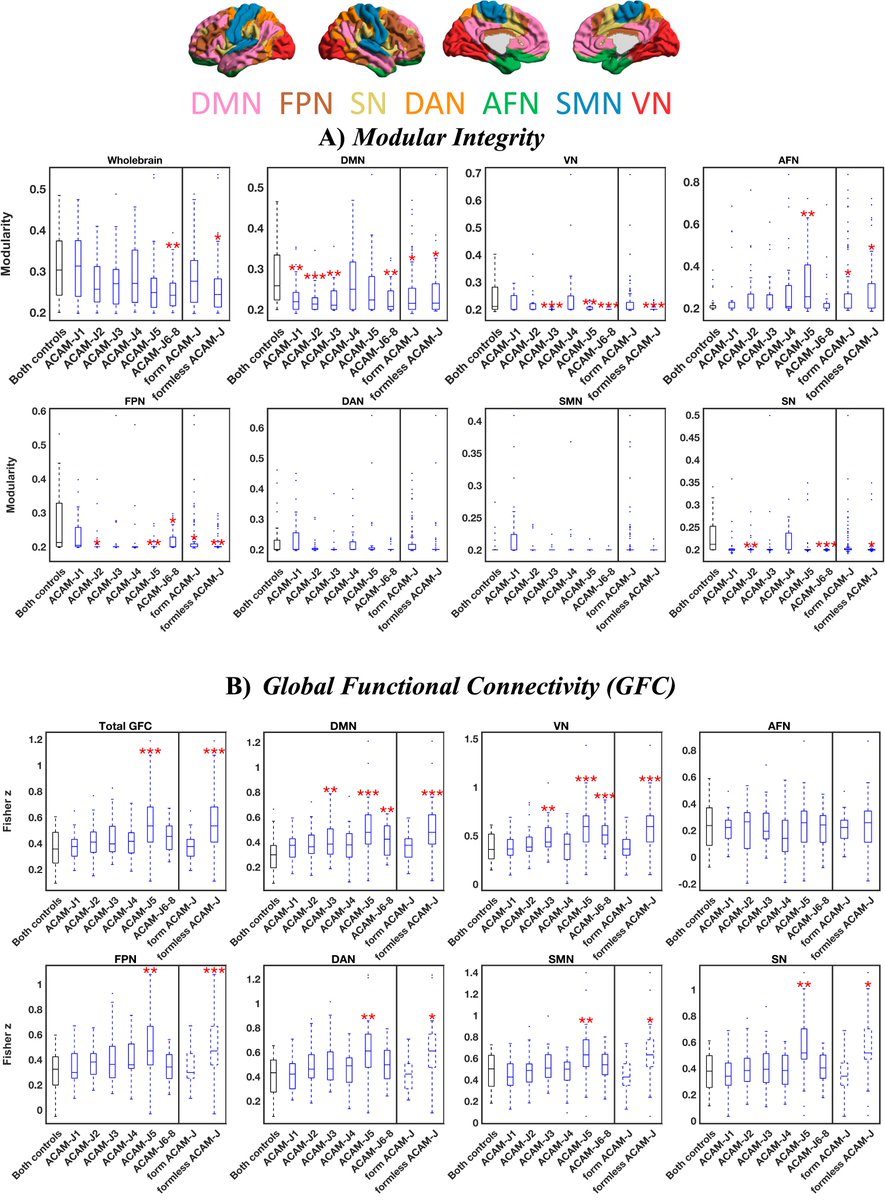
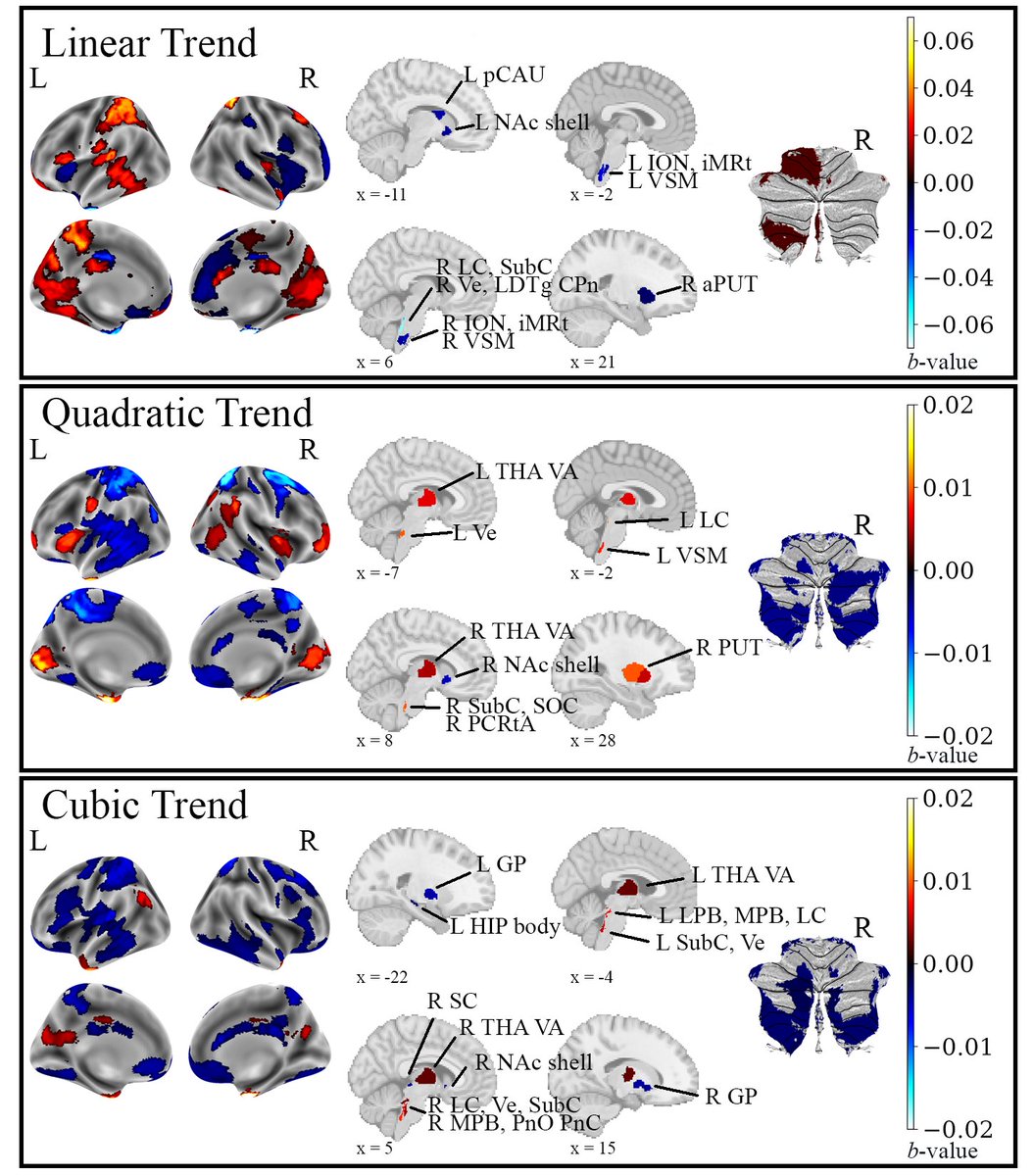
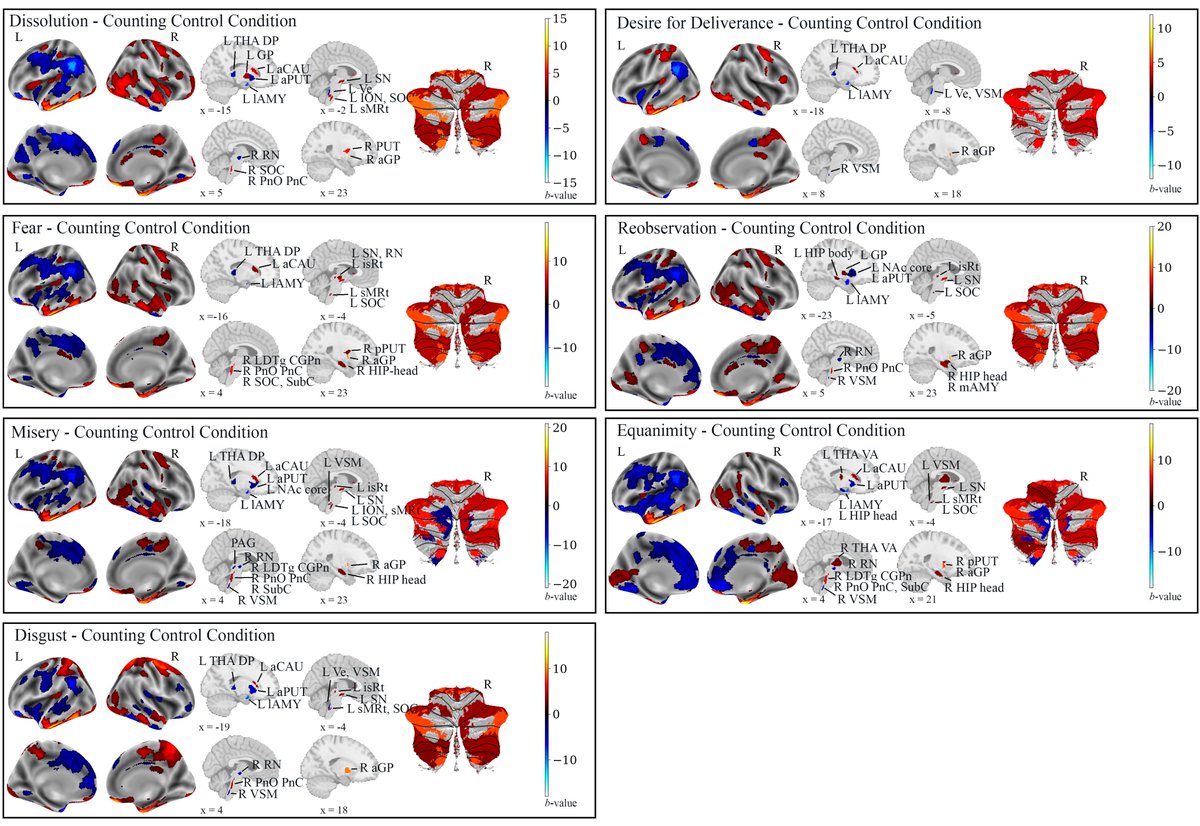
—Major brain systems, including the visual, central executive, and default mode networks, as well as subcortical and brainstem regions, reorganized significantly during EC, suggesting the brain was functioning in a fundamentally different way when consciousness went offline.
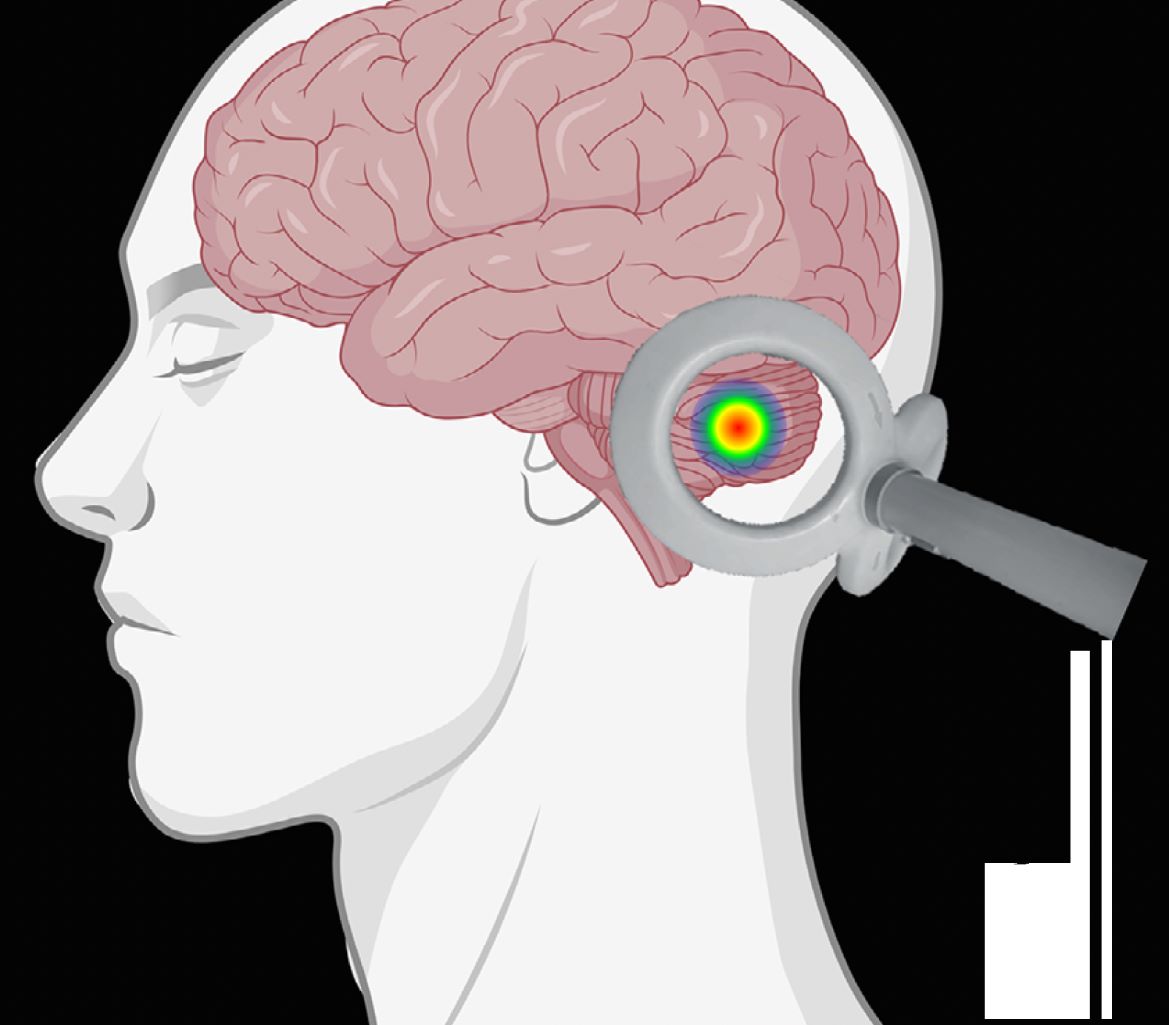
—Most brain regions communicated much less during EC, especially between the brainstem and higher-order cortical networks, suggesting a global quieting of brain communication, with a few sensory and subcortical areas remaining selectively active.
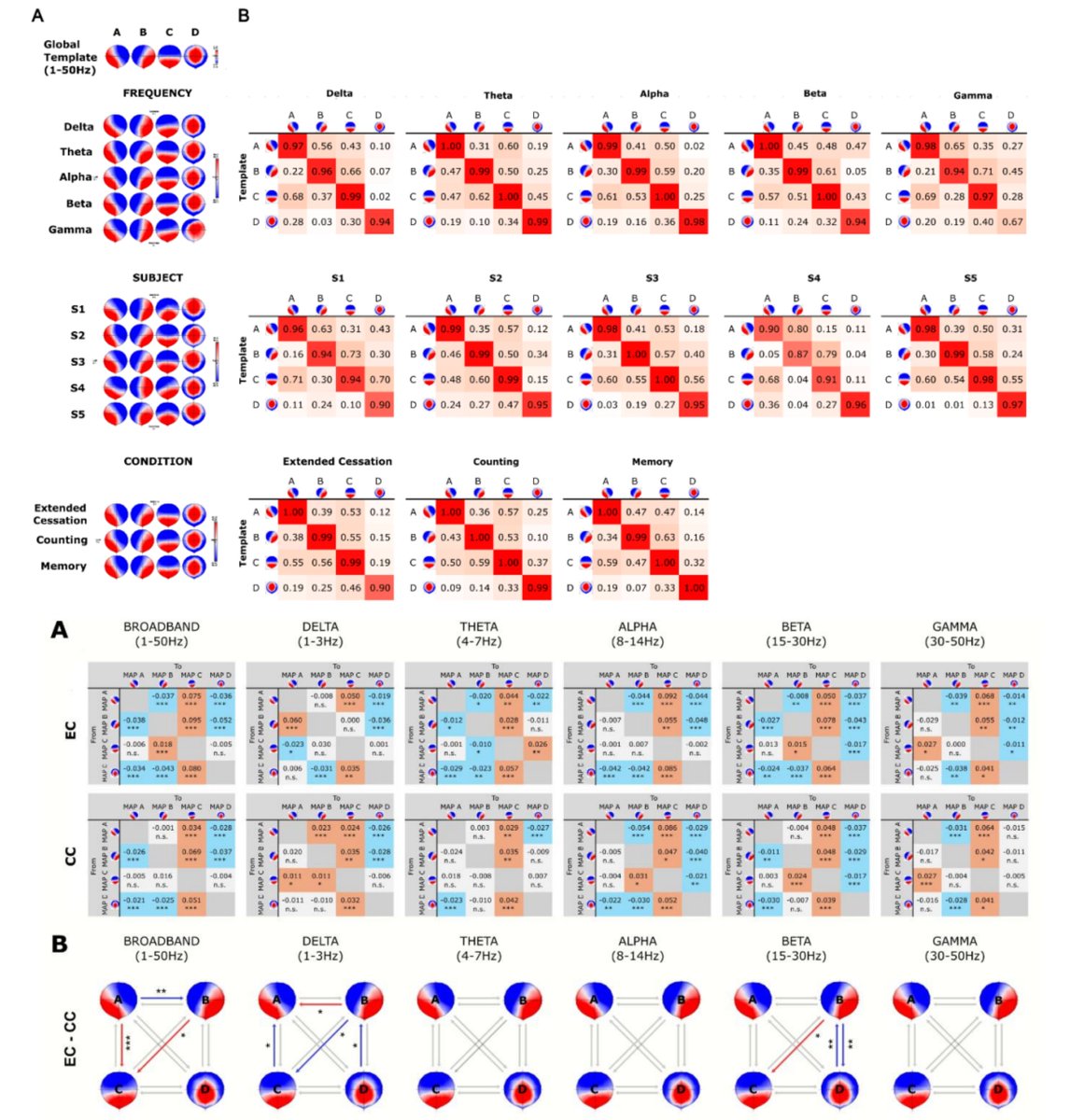
—The brain’s overall organization shifted in a surprising way: instead of going flat like in sleep or anesthesia, it became more polarized, suggesting that some types of neural processes may actually sharpen during cessation.
—The brain’s basic energy patterns dropped significantly, especially compared to memory-driven states, pointing to a broad cortical dampening consistent with a mental ‘shutdown.’
—Neural activity during EC aligned with brain regions rich in histamine H₃ receptors, linked to alertness and sensory clarity, while calming in areas tied to higher-order thinking and emotional reactivity. This pattern may help explain the clarity and peace reported after EC.
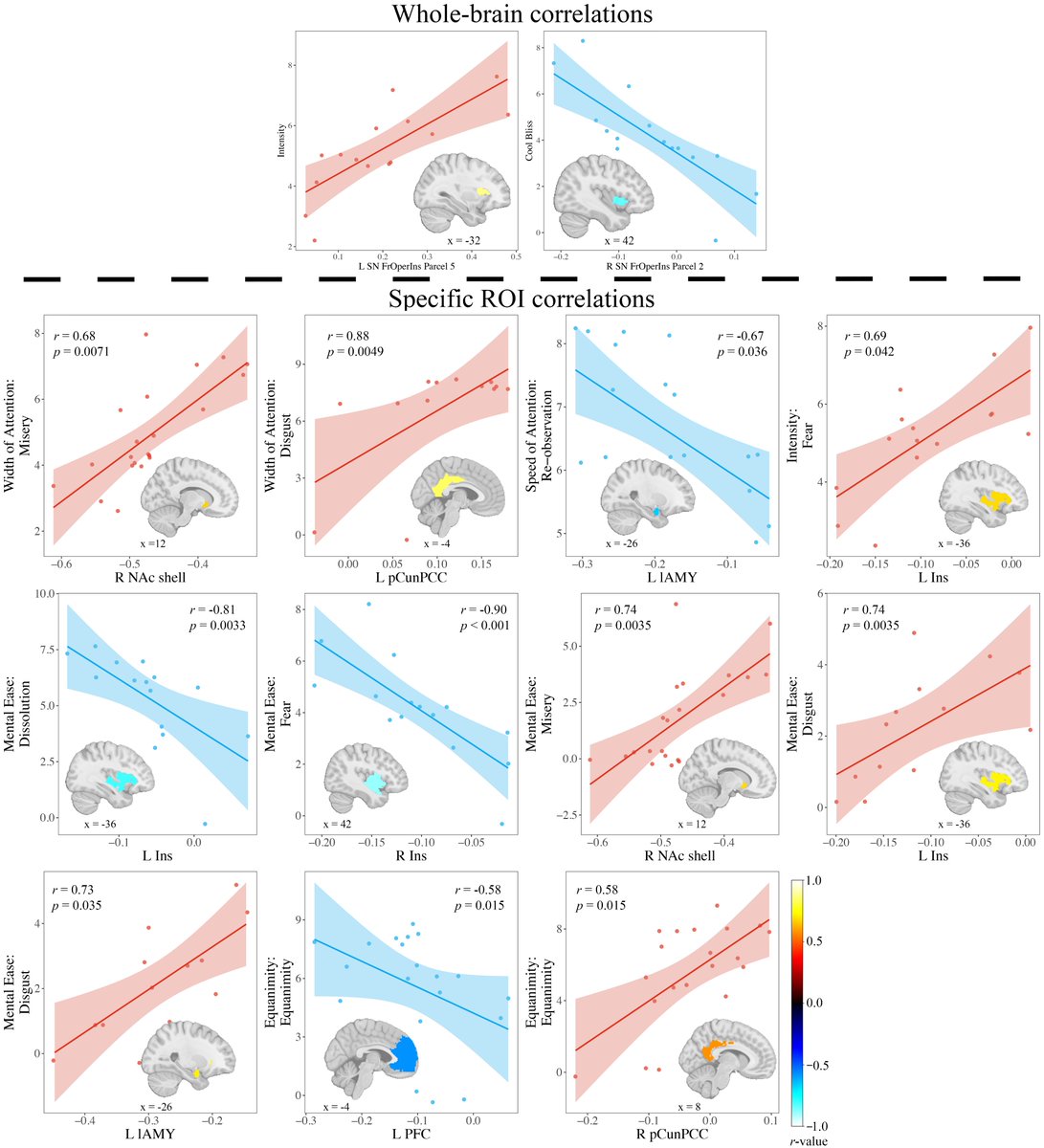
—Brain activity during EC was also related to brain modes associated with alertness and sensory clarity, while less with brain modes associated with psychological suffering such as loss, pain, anxiety, fear, and stress.
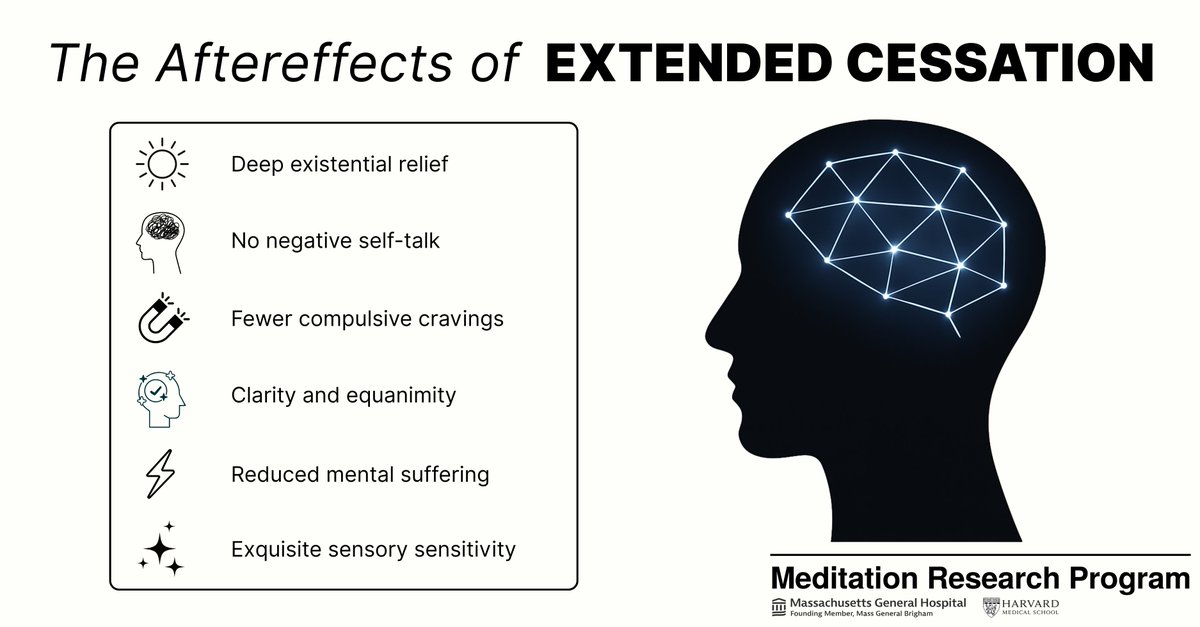
EC mirrors some descriptions from Buddhist texts of nirodha-samāpatti. Traditionally, this state is seen as a gateway to the radical reduction, even cessation, of psychological suffering. And that’s exactly what our participants described. After coming back online, they reported deep alterations to their minds: exquisite clarity, sensory vividness, radical openness, and lasting inner peace and joy.
We’re entering a new era of meditation research where radical contemplative claims and cutting-edge neuroscience are finally meeting on rigorous, empirical, and incredibly exciting terms. What once sounded like mystical metaphors are turning out to be measurable states and reproducible human capacities. And thanks to the astonishing dedication of a few rare practitioners who we have had the honor to study, we’re starting to explore questions about consciousness—and what the brain may still be capable of—in ways never before possible.
I am deeply grateful for my incredible colleagues on this study: Winson Yang @winsonfzyang, the first author, and our collaborators Akila Kadambi, Kilian Abellaneda-Pérez @kabellanedap, Grace Mackin, Isidora Beslic, Ruby Potash, and Terje Sparby @terjesparby.
You can read the full free preprint of the study in the comments.
If you find this work exciting or moving, my colleagues and I at the Meditation Research Program would be deeply grateful for reposts and sharing with others who may be interested.
This work is only made possible and meaningful through the generosity, dedication, collaboration, and insights of our growing community of scientists, scholars, and practitioners around the world.
May this work benefit many 🙏