
Sabitlenmiş Tweet
KageMan
6.3K posts


I’ll say the thing no one is saying: design culture is broken in lots of companies.
Often design teams & designers are the most resistant to change org in the EPD triad, with highly vocal AI opponents, and little skill or interest in the art of campaigning for influence or resources. Won’t hold a number like a PM, not yelled at about timelines like engineering. While I have brought design topics to the board convo, not a single board has pressed me our design talent, strategy, or velocity. Most teams treat design like a tax they don’t want to pay, and those that *do* take a deep interest and want to invest in design get back big “get out of my figma” energy. And if you’re too precious about craft to dirty your hands with the dark art of corporate politics, good luck getting more headcount. If a PM or engineer can get 85% there with tailwind and a dream, you better come to the table with more than “I represent the user.”
Great designers are worth more than almost anyone on the team, and I’ve worked with lots of gems, but this is 0% surprising to me.
Lenny Rachitsky@lennysan
I don’t know exactly what’s going on here, but it does feel AI-related. Unlike PM and eng, which started growing in 2024 (two years post-ChatGPT), design didn’t. If I had to venture a theory, I’d say that because AI is allowing engineers to move so quickly, there’s less opportunity—and less desire—to involve the traditional design process. That said, you’d think design would become a differentiator as more products compete for attention. Something to think about for your company! We’ll keep watching this trend and AI’s impact on org design more generally. One interesting observation we made when we went a level deeper: the ratio of demand for PMs vs. designers has flipped. In mid-2023, we went from more open designer roles to more open PM roles. And ever since, PM demand has been pulling away (currently 1.27x). This will be another trend to monitor, in terms of how AI is reshaping org design.
English

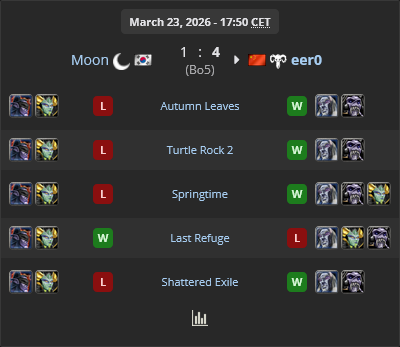


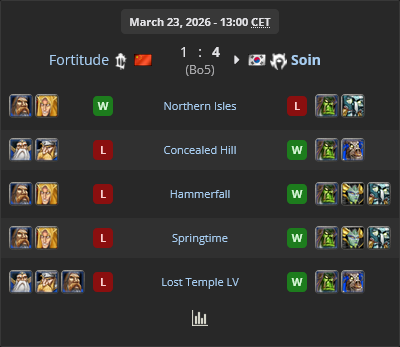
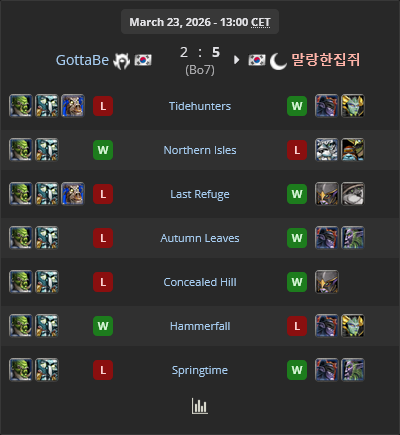


@Ladderlegend @mouzHeroMarine Guys drop the discord link! For those of us that watch sc2 but aren’t part of all discords!
English

The legendary @mouzHeroMarine is joining us on April 10th for a Terran MasterClass! 🇩🇪🛡️
Get ready to level up your #StarCraft2 game and pick the brain of one of the best in the scene. Community events don’t get better than this!
💡 Prep your questions & join us exclusively on Discord!
#SC2 #Masterclass #HeroMarine
#LadderLegends #MondayVibes
English

today my student, got to 6k on the european ladder. coming from 5.3 to this in around 2months~ is a big milestone. if you ever need to improve at this game. hit me up!

English
@jesslivingston Hello not to sidetrack but I'd love to help you with Youtube Thumbnails. I have some concepts already, would you be interested to explore this?
English

Founders should ask themselves "Am I currently ignoring anything on this list (when I shouldn't be)?" And answer honestly.
Paul Graham@paulg
Someone asked what advice founders ignore. That they: 1. Should change their name. 2. Should launch fast. 3. Shouldn't treat fundraising as success. 4. Shouldn't assume they can raise because it's time to. 5. Should fire bad people quickly. 6. Shouldn't talk to acquirers.
English

$33.1M opening day with zero green screens. Read that again.
Project Hail Mary cost $200 million to make. Lord and Miller built the entire Hail Mary spacecraft as a practical set. Thousands of physical buttons, hundreds of real screens, a hatch modeled after ISS designs. The alien, Rocky, is a full animatronic puppet designed by Neal Scanlan, the creature shop legend behind the best Star Wars practical work. Ryan Gosling acted against a real puppet in every single scene.
The movie has 2,018 VFX shots. That sounds like a lot until you compare it to Avatar: Fire and Ash, which ran over 3,500. The difference: Avatar builds the world digitally and asks the audience to believe it. Project Hail Mary builds the world physically and uses VFX to clean up wires, remove puppeteers, and paint in space backgrounds. One approach creates spectacle. The other creates presence.
This is a $200 million bet against the last 15 years of Hollywood production logic.
After Avengers: Endgame, the industry standardized around green screen stages and digital environments because it was faster and cheaper per shot. Studios could reshoot entire sequences in post. The tradeoff was invisible until it wasn't: audiences started describing blockbusters as looking like "video games." Snow White's $42M opening. The Marvels at $46M. Quantumania. Ant-Man built on a soundstage that looked like it.
Lord and Miller went the opposite direction and spent more money on physical construction than most studios spend on entire VFX pipelines. Greig Fraser, the cinematographer who shot Dune, lit the Hail Mary with practical lights so the camera could move freely through real corridors. When Gosling floats in zero-g, that's wire work, not simulation. When he touches a panel, it's a real panel.
Guillermo del Toro saw the film and called the commitment to practical sets and puppets "a goal, an aspiration, and a commitment. Especially now."
The "especially now" is doing all the work in that sentence. He's talking about an industry where the default response to a $200M budget is to minimize physical production and maximize digital flexibility. Project Hail Mary did the opposite and just posted the biggest non-franchise opening day in domestic box office history.
The audience can tell. They've always been able to tell.
DiscussingFilm@DiscussingFilm
‘PROJECT HAIL MARY’ has earned $33.1M in the film's domestic opening day. Biggest domestic opening day ever for any non-franchise film. Read our review: bit.ly/DFMary
English
Substack is turning into my fav reads now more than any other platform. I am still shy to write but I consume a lot more there than I do with any other platform. You have built a great thing @hamishmckenzie. Thank you.
English
KageMan retweetledi

We’re rolling out summaries for Articles now. Just tap the Summarize button if you want to know if it’s worth your time to read it (or if your attention span is 12 seconds).
English

my routine these days is i wake up and drop my kid off at preschool and get home to do some writing, but i keep forgetting to get breakfast and end up crashing like a fool. what are your favorite no-brainer mom/dad breakfasts? after the classic peanut butter sandwich
English

her: he's probably thinking about...
marc andreessen: " "

English
@Back2Warcraft Thank you for casting these, have been amazing to watch.
English

Can't wait for Quarterfinals, gonna be some greeeeat games!
Stowka@Stowka_WC3
Don't Rush Me Cup - Round of 16:
English


@theisaacmed mate none of those guys built b2b saas companies - clearly irrelevant people
English

I am a massive Founders pod fan.
I say this kindly. This take is bad.
Marcus Aurelius was a literal philosopher
Socrates
Julius Caesar wrote Gallic Wars and Civil war while literally doing war
Alexander The Great was personally tutored by Aristotle
Abraham Lincoln wrestled deeply with depression and meaning his whole life
Benjamin Franklin. Inventory, and had an autobiography that was deeply introspective about self improvement.
Andrew Carnegie funded 2500+ libraries. You think he didn’t spend a lot of time reading and thinking about what wealth was for?
Charlie Munger…. I could keep going endlessly.
David Senra@davidsenra
Great men of history had little to no introspection. The personality that builds empires is not the same personality that sits around quietly questioning itself. @pmarca and I discuss what we both noticed but no one talks about: David: You don't have any levels of introspection? Marc: Yes, zero. As little as possible. David: Why? Marc: Move forward. Go! I found people who dwell in the past get stuck in the past. It's a real problem and it's a problem at work and it's a problem at home. David: So I've read 400 biographies of history’s greatest entrepreneurs and someone asked me what the most surprising thing I’ve learned from this was [and I answered] they have little or zero introspection. Sam Walton didn't wake up thinking about his internal self. He just woke up and was like: I like building Walmart. I'm going to keep building Walmart. I'm going to make more Walmarts. And he just kept doing it over and over again. Marc: If you go back 400 years ago it never would've occurred to anybody to be introspective. All of the modern conceptions around introspection and therapy, and all the things that kind of result from that are, a kind of a manufacture of the 1910s, 1920s. Great men of history didn't sit around doing this stuff. The individual runs and does all these things and builds things and builds empires and builds companies and builds technology. And then this kind of this kind of guilt based whammy kind of showed up from Europe. A lot of it from Vienna in 1910, 1920s, Freud and all that entire movement. And kind of turned all that inward and basically said, okay, now we need to basically second guess the individual. We need to criticize the individual. The individual needs to self criticize. The individual needs to feel guilt, needs to look backwards, needs to dwell in the past. It never resonated with me.
English

That has been my approach throughout my career, and it is the approach we’re bringing to Leeroy Jenkins Kapital. With complementary strengths, shared conviction, and a deep belief in Europe’s ability to produce the next generation of iconic gaming franchises, we’re excited to back exceptional teams from day zero.
English
Alongside @AlexisKhouri & @clement_combal I’m building Leeroy Jenkins Kapital as Founding Partner.
An early‑stage fund dedicated to European video game companies
English
@aakashgupta Truly impressive how quickly you write and post across channels.
English
If you enjoyed this, you'll love the layer deeper in my newsletter and podcast.
Join 200K others and subscribe to not miss an update:
news.aakashg.com
English
Major cheat code in life: Learn to spot when someone is treating your kindness like weakness. They take advantage. They push limits. They assume you won't push back. Show them once that kind doesn't mean soft. They'll adjust.
English
@Back2Warcraft Tasteless and artosis although id love for it to be Warcraft players or casters like Neo and Saul
English

The countdown is on. Blizzard Classic Cup captains revealed March 10 (PT). Any guesses?👀

English
KageMan retweetledi

Neither of these men are married or have kids.
Both are simply obsessed with their own personal perfection and optimization.
There is nothing impressive about a single man with no kids sleeping well and being fit.
Show me a man with young children, a full time job, disrupted sleep, who works out regularly, eats healthy, trains Jui Jitsu, with a muscular body…
THIS is impressive. THIS requires extreme discipline.
Camus@newstart_2024
Chris Williamson just shared his "nuclear" sleep stack that's quietly changing his life—and Andrew Huberman breaks down exactly why it works: If you're lying in bed at 2 a.m. scrolling or staring at the ceiling, this 4-minute protocol combo might be the fastest way to shut your brain off without pills. The two killer techniques Williamson swears by: 1. The Mind Walk (visualization on steroids) - Imagine walking a route you know perfectly (your house → front door → street) - Do it with insane detail: feel the shoehorn, hear the key turn, feel the door handle, pressure of the pavement - It's like reading fiction for your nervous system—engages the brain just enough to stop problem-solving loops, but not enough to keep you awake 2. Resonance breathing with the Ohm stone lamp - Bedside lamp with induction-charging stone that has a built-in FDA-cleared HRV sensor - Hold the stone → 3/6/9/12-minute guided sessions with silent tactile vibration (no sound, no light, partner-safe) - Guides you into true resonance frequency (max vagal tone) → the stone knows when you hit it - Williamson calls it “the sickest” sleep tool he’s ever used—currently in stealth (ohmhealth, not widely available yet) Huberman adds the neuroscience: Looking down + eyelids lowering activates parasympathetic circuits and deactivates wakefulness-promoting brainstem nuclei. It’s literally pedaling the sleep pedal while shutting off the alertness arm. Williamson: “Some days you need the adventure story (mind walk), some days you need the physiological hammer (resonance breathing). Stack them and I’m cross-eyed into sleep.” Already trying one of these? Or is your nighttime routine still a war zone?
English