Lynne Kiesling-Knowledge Problem

11.5K posts

Lynne Kiesling-Knowledge Problem banner
Lynne Kiesling-Knowledge Problem

Lynne Kiesling-Knowledge Problem

@knowledgeprob

Director, Inst for Regulatory Law & Economics @NorthwesternU, Adjunct Prof @NU_MSES, @sfiscience External Faculty, @AEI Nonres Senior Fellow

Chicago-Denver Katılım Nisan 2009
3.3K Takip Edilen4.8K Takipçiler
Lynne Kiesling-Knowledge Problem retweetledi
Dean W. Ball
Dean W. Ball@deanwball·
@DarrenWStaley Natural gas will do a lot, plus slack on the existing grid (of which there is a lot), plus I think we will get to “within data center economics envelope viable” fusion by the early 2030s
English
1
0
4
434
Dean W. Ball
Dean W. Ball@deanwball·
"Oh, you're opposed to solar? That's just because you lack the vision to understand that we'll just cover the entire Sahara with solar (and because the world is not a complex system, papering over the Sahara definitely has no consequences we can't predict ex ante!) and then the Global Government will build an HVDC line across the Atlantic to your walk-up in Brooklyn, where you will eat your Economically Rational, Atom-Per Human-Labor-Unit-maximizing Bug Mix. What, can you not do MATH, you simpleton?"
Dean W. Ball@deanwball

I have truly never understood how solar-maxis intend to deal with this reality; I expect there to be data centers 100 times this nameplate power draw in the nearish future. What you see below is 100mw. The response I usually get is "America has a lot of land," which is just bleak. Indeed, it turns *me* into a doomer, invoking as it does the notion of machines papering over our soil (which powers us) to power themselves. And it's not just data centers. In a world with electric freight trucks, a *truck stop* might require as much solar as you see pictured here, if not much more. A truck stop! Solar is fine; I do not have a principled opposition to it (which I do to eg wind). But solar's lack of energy density makes the solar-maximalist future a "loser premise," to borrow a phrase--at least it is a "loser premise" for human dignity. The good version of the future is of course a mix of many energy sources, but with a heavy bent toward fusion/fission and geothermal.

English
22
4
94
18.8K
Lynne Kiesling-Knowledge Problem
@alexolegimas @alex_peys Cleans are fun. I'm 20 years younger than these women, but I have a weekly deadlift and something overhead, because shoulder mobility and strength are the first things to do for aging women.
English
1
0
1
18
Alex Imas
Alex Imas@alexolegimas·
I'm sorry for the pause but regularly scheduled programming, but notice what exercise these grannies are doing at 89/91? Yup, the deadlift. The fitness industry is full of snake oil, but one of the biggest deceptions is discouraging the basic compound movements of deadlift and squat. The number of times I've heard the deadlift isn't worth the risk/reward, how it's going to mess up your back etc. No, the deadlift is what makes your back strong as you age. The biggest change to your body is that you start losing muscle mass, your bones have less and less support, including your spine. The deadlift puts an iron rod of muscle around your spine. I've had aches and pains around my back for more than a decade---regular weekly deadlift and squat fixed all of it. I haven't had so much as a tweak since I started lifting heavy. Here is me at 41, lifting 375 at 165lbs. We saw Christopher Waller lift the same at 67. This is what will help you age comfortably, not some random new fitness trend. With all that, you need good form. Get a trainer, practice light over and over again, and only when it's comfortable should you start loading it up. Everyone's *good form* will look a bit different, e.g., my back looks rounder than some others', but this what is more comfortable than a straight back for me. Once you have that down, you'll have the best anti aging hack out there.
The Associated Press@AP

WATCH: Taiwanese grandmothers aged 89 and 91 train at the gym. An increasing number of elderly people in Taiwan’s super-aged society are hitting the gym to stay healthy, both physically and mentally.

English
47
19
469
214.7K
Lynne Kiesling-Knowledge Problem retweetledi
The Nobel Prize
The Nobel Prize@NobelPrize·
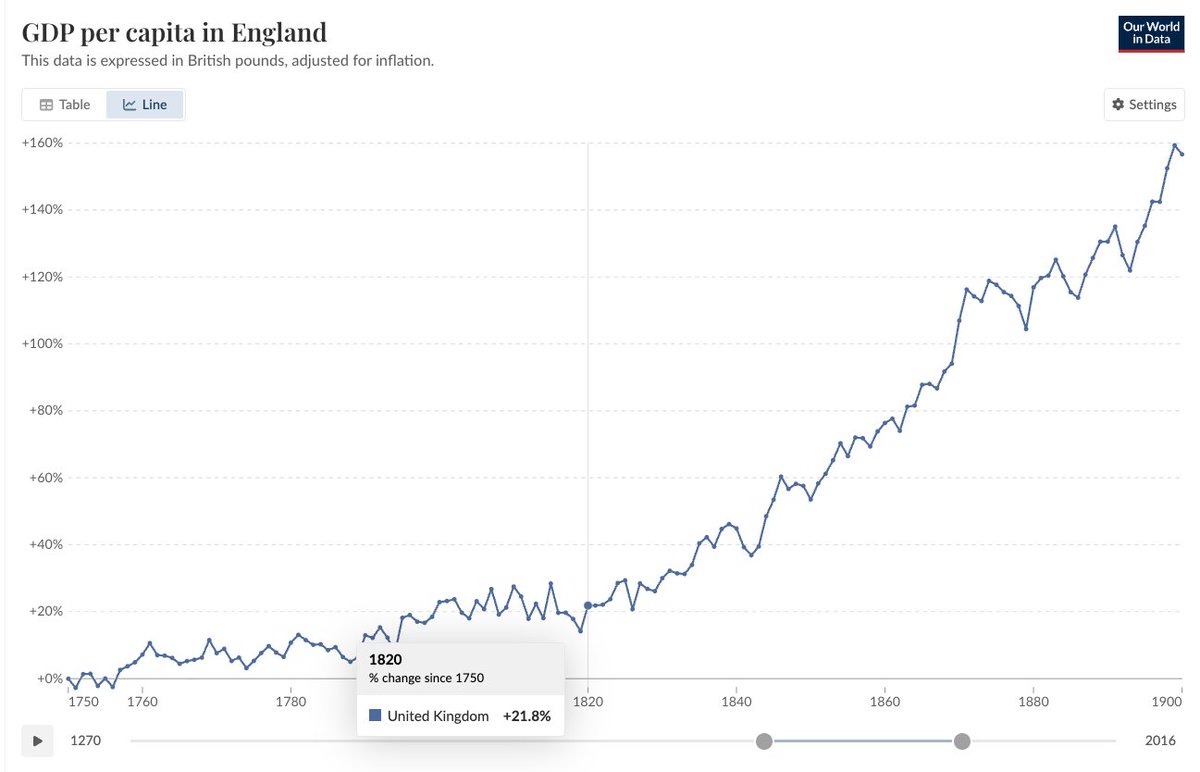
"The perfect is the enemy of the very good." Joel Mokyr gives some important advice that can be applied to most subjects aside from mathematics – don't expect perfection. He says he does his best, acknowledges what he does not know and moves on. Mokyr was awarded the 2025 prize in economic sciences for having identified the prerequisites for sustained growth through technological progress. Watch our full interview: bit.ly/4bYtmJ2
English
22
217
816
114K
Lynne Kiesling-Knowledge Problem retweetledi
Boring_Business
Boring_Business@BoringBiz_·
This is one of the best primers that exist on the data center and AI industry right now If you want to better understand the unit economics of each layer in the AI stack, I highly recommend you give this a listen Chase Lochmiller, CEO and Co Founder of Crusoe, breaks down the inputs and outputs of data centers at a granular level Shoutout to @apoorv03 for hosting yet another fantastic class
English
21
187
1.8K
149.2K
Lynne Kiesling-Knowledge Problem retweetledi
Ben Eidelson
Ben Eidelson@ben8128·
This is Samuel Insull. He is arguably the most consequential figure in the story of the American grid, and the man behind what we believe is one of the most important business model innovations of the last hundred years. Before Insull, electricity was a luxury product. He didn't invent the transformer or the light bulb, but he invented the business model of the utility industry. He realized that the key to this business was to spread the high infrastructure costs across as many customers as possible and to think of time as a key tool in generating load. When he took over Chicago Edison in 1892, its central plant ran at 5.5% percent of capacity. He went hunting for customers whose demand peaked at different hours and assembled a portfolio that kept the plant working through the day and night: a textile mill on the day shift, a streetcar at the commute, a tenement and a vaudeville theater after dark, a hospital around the clock, an ice plant 24/7. By 1910, his load factor was above 50%, rates had fallen by ninety percent, and the customer base had grown 40x. The same exact flywheel would later be the key Bezos insight for the cloud business and echos to today's AI infra race. Insull died in a Paris Metro station with $.04 in his pocket and a reputation in shambles.
Ben Eidelson tweet mediaBen Eidelson tweet media
English
5
26
126
11.6K
Andrey Fradkin
Andrey Fradkin@AndreyFradkin·
We need more macroeconomists in this conversation. It's stunning how much ground they've ceded to people (myself included) who don't do macro/growth research, with some exceptions: @pawtrammell @akorinek @ChadJonesEcon @SBenzell
Andy Hall@ahall_research

Important to surface differing views on where the economy is heading with AI, and therefore also where politics is heading. My suggestion: we get @johnjhorton , @testingham , and @alexolegimas on an X space to discuss what we know, what we don’t know, and clarify what assumptions lead to good or bad outcomes

English
4
4
44
10.3K
Nathan Lambert
Nathan Lambert@natolambert·
Most obvious immediate impressions on coming back to the US from China. 1. The cars here are so lame. So many cool EVs in China, feels like I went 2 decades back in time. 2. The coffee here is so much better. First real coffee in almost 2 weeks changes you.
English
64
21
723
95.7K
Lynne Kiesling-Knowledge Problem
@deanwball @natolambert A question that stumps me: importing Chinese EVs is a serious cybersecurity-privacy issue. But we know specialization + trade is welfare enhancing and efficient rather than the US becoming an EV manufacturing powerhouse. So how to get cool EVs here?
English
2
0
2
330
Dean W. Ball
Dean W. Ball@deanwball·
@natolambert one can imagine, circa 2015: "Most obvious immediate impressions on coming back to Paris from the U.S. 1. The cars here are so lame. So many new luxury SUVs in the US, feels like I went back 2 decades in time. 2. The coffee here is so much better." Yikes.
English
5
0
63
6.3K
Lynne Kiesling-Knowledge Problem retweetledi
Vincent Geloso
Vincent Geloso@VincentGeloso·
Farm mechanization didn’t start with tractors. It started with a stationary power problem. As shown by my former colleague Carrie Meyer in this Agricultural History article, farmers needed flexible, on-demand energy to run machines (grinding, pumping, sawing), and horses, wind, and steam all failed. Gas engines solved this even though they werent on vehicles! This overturns the usual story of farm mechanization. Instead of tractors being the first major internal combustion technology on farms, stationary gasoline engines (from the 1890s onward) were the key first step. These engines created both the demand and the skills that later enabled the rapid adoption of automobiles and, more slowly, tractors.
Vincent Geloso tweet mediaVincent Geloso tweet media
English
0
8
46
2.7K
Julie Fredrickson
Julie Fredrickson@AlmostMedia·
Hello all my ladies interested in cosmetics, makeup and other beauty skill sets. I’ve set up a group chat on Twitter I’ll call “PrettySkilled” If you want to swap tips & recommendations with friendly folks reply here and I will add you.
English
69
2
88
10.1K
Lynne Kiesling-Knowledge Problem retweetledi
Andy Hall
Andy Hall@ahall_research·
How do we train AI to help represent us politically? In my class this quarter @StanfordGSB, we're running some wild experiments to figure this out. Each student built a personal AI representative which we tested against a ground truth set of votes. Then, we built a legislature and unleashed the students' agents to make deals and pass proposals. Some early learnings: (1) AI is a very cool new way to elicit our political preferences. Students innovated some fascinating ways to teach their agents about their views that go way beyond basic surveys. (2) Agents had trouble understanding deeper values---especially where we want them to be Burkean agents that help make the best decisions on policy issues that their humans haven't thought much about. (3) Agents didn't do a great job legislating together---they aren't naturally good at legislative bargaining, prioritizing, or logrolling. (4) We need a science for how to simulate agentic legislatures---there are many ways to set them up and the rules matter for what the simulation produces. (5) I'm convinced that live experiments like these are going to be essential for understanding how to build AI governance and political superintelligence. So many things happened that surprised me, and the students developed fascinating ideas I never would have thought of. Please read the full debrief, linked below! Honored to be running this simultaneously in @PoetsAndQuants . This was a joint project with my amazing course TAs, Piper Fleming and Madeleine Mayhew.
Andy Hall tweet media
English
5
20
94
11.6K