𝐋𝐚𝐤𝐬𝐡 𝐑𝐚𝐠𝐡𝐚𝐯𝐚𝐧

4.2K posts

𝐋𝐚𝐤𝐬𝐡 𝐑𝐚𝐠𝐡𝐚𝐯𝐚𝐧 banner
𝐋𝐚𝐤𝐬𝐡 𝐑𝐚𝐠𝐡𝐚𝐯𝐚𝐧

𝐋𝐚𝐤𝐬𝐡 𝐑𝐚𝐠𝐡𝐚𝐯𝐚𝐧

@laraghavan

Founder of Cyb3rSyn Labs | Helping accelerate the transition away from mainstream management practices!

Katılım Ocak 2016
359 Takip Edilen529 Takipçiler
Sabitlenmiş Tweet
𝐋𝐚𝐤𝐬𝐡 𝐑𝐚𝐠𝐡𝐚𝐯𝐚𝐧
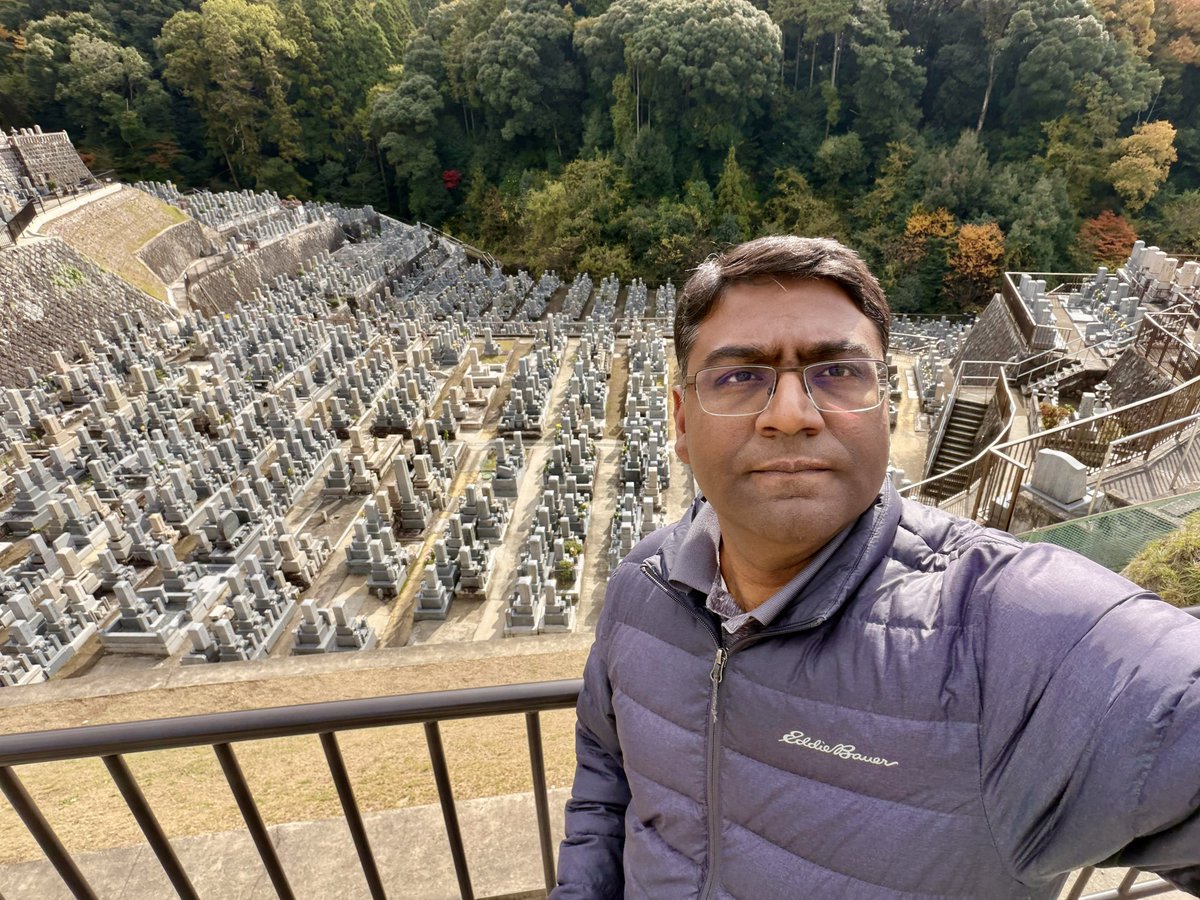
𝐀𝐠𝐞 𝐢𝐬 𝐛𝐞𝐭𝐭𝐞𝐫 𝐮𝐧𝐝𝐞𝐫𝐬𝐭𝐨𝐨𝐝 𝐢𝐧 𝐫𝐞𝐯𝐞𝐫𝐬𝐞! It was @nntaleb that drove home to me that aging should not be seen using the distance from birth, rather through the estimated distance from death. I like to visit and walk the cemeteries whenever I’m in a new city to remind myself of the eventuality and give me the courage to speak truth to power. I recently went back to Japan after 20 years. Here is me walking the cemetery in Kyoto. Well, why am I talking about this now? I wrote a book! A book that I wrote knowing that I’m going to be dead one day and that I must come clean about the mistakes I made as a Tech. leader. Failed executives don’t write books about their failures. They just go on to make millions and fail elsewhere. They may appear to be a success if you just look at quantifiable metrics like their net worth or the share price of their company. But they are miserable failures if you look closely at what they did to the lives of their employees - bureaucracy, burn out, forced relocations, layoffs, etc. So I decided to write a book that catalogs and details many of my mistakes. On thinking deeper, they are not just my mistakes, but the mistakes of mainstream management in general - I simply took them for granted without questioning their validity and effectiveness. As much as I have become skeptical of anything prescriptive (what to do) that ignores the unique context in front of us, I think it is important to talk about what NOT to do. So, I made sure this book is full of negative advice (what NOT to do) - traps and pitfalls you must avoid. Why negative advice? I go back to Nassim Taleb, who explains the why elegantly: “I have used all my life a wonderfully simple heuristic: charlatans are recognizable in that they will give you positive advice, and only positive advice, exploiting our gullibility and sucker-proneness for recipes that hit you in a flash as just obvious, then evaporate later as you forget them. Just look at the “how to” books with, in their title, “Ten Steps for - - ” (fill in: enrichment, weight loss, making friends, innovation, getting elected, building muscles, finding a husband, running an orphanage, etc.). Yet in practice it is the negative that’s used by the pros, those selected by evolution: chess grandmasters usually win by not losing; people become rich by not going bust (particularly when others do); religions are mostly about interdicts; the learning of life is about what to avoid.” Grab a copy here: cyb3rsyn.com/products/mmm-b… #leadership #systemsthinking #complexity #cybernetics #philosophy
𝐋𝐚𝐤𝐬𝐡 𝐑𝐚𝐠𝐡𝐚𝐯𝐚𝐧 tweet media
English
3
9
88
17.6K
𝐋𝐚𝐤𝐬𝐡 𝐑𝐚𝐠𝐡𝐚𝐯𝐚𝐧
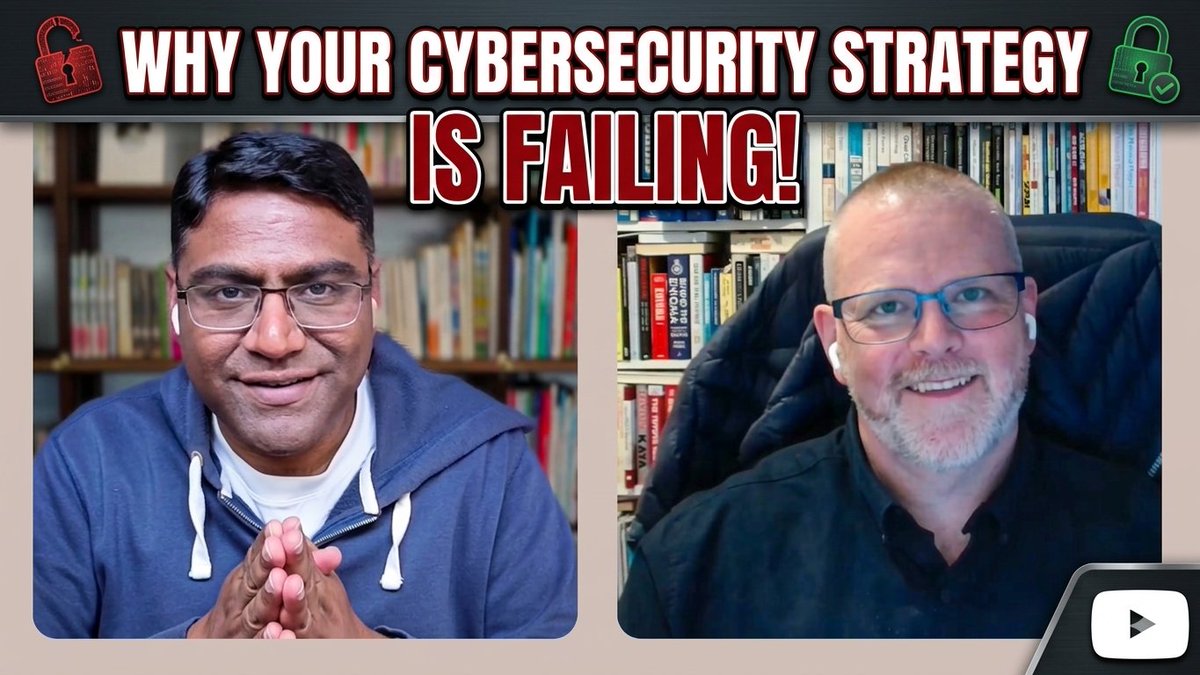
Why your cybersecurity strategy is failing! In episode 40 of the Cyb3rSyn Labs Podcast, I sit down with @GlennDynaminet, founder/CTO of Dynaminet and discuss about applying systems thinking and cybernetics — especially Stafford Beer’s Viable System Model (VSM) to cybersecurity. Glenn traces his path from language studies and market research into software leadership and security, influenced by Deming, Meadows, Ackoff, Beer, Ashby, Wiener, and John Boyd. He argues cybersecurity outcomes are deteriorating (more breaches, rising costs, ransomware, and supply-chain issues) because the industry lacks a systemic worldview, blames individuals, with compliance driving scan-and-score practices that flood teams with vulnerabilities and false positives, creating friction between security and developers. The discussion critiques command-and-control governance, emphasizes communication/feedback loops, autonomy with cohesion, requisite variety, and draws safety analogies showing how redesigning systems can improve both flow and security. Checkout the podcast and my reflections here: cyb3rsyn.com/p/cybernetics-… #cybersecurity #systemsthinking #cybernetics cc: @botchagalupe
𝐋𝐚𝐤𝐬𝐡 𝐑𝐚𝐠𝐡𝐚𝐯𝐚𝐧 tweet media
English
0
0
2
27
𝐋𝐚𝐤𝐬𝐡 𝐑𝐚𝐠𝐡𝐚𝐯𝐚𝐧 retweetledi
Yun-Ta Tsai
Yun-Ta Tsai@yunta_tsai·
Pursuit of happiness, builder edition: - Find a problem you love spending your life solving. - Spend your life solving it.
English
28
29
368
16.7K
𝐋𝐚𝐤𝐬𝐡 𝐑𝐚𝐠𝐡𝐚𝐯𝐚𝐧 retweetledi
Sean McClure
Sean McClure@sean_a_mcclure·
Have to disagree with this one. Academia is rotten with prestige cascades, publish-or-perish incentives, funding politics, advisor lineage effects, citation cartels, conformity pressures, risk aversion against unconventional work, and protected classes that rise by identity rather than merit. There is also the survivorship bias; countless capable people who disappeared because they lacked stability, connections, the right identity, or modern institutional acceptance.
English
0
1
10
465
𝐋𝐚𝐤𝐬𝐡 𝐑𝐚𝐠𝐡𝐚𝐯𝐚𝐧 retweetledi
Yun-Ta Tsai
Yun-Ta Tsai@yunta_tsai·
This is the best era to be an individual contributor to build.
English
11
13
271
8.7K
Peter Askew
Peter Askew@searchbound·
$NET just testing this... I noticed if you add a stock symbol (plus dollar sign) that twitter will embed a neat graph of stock performance...
English
2
0
11
925
𝐋𝐚𝐤𝐬𝐡 𝐑𝐚𝐠𝐡𝐚𝐯𝐚𝐧
Every Silicon Valley corporation has a version of “squid games” going on, at varying levels of toxicity - just like this 👇🏾
Jeremy Bernier@jeremybernier

Meta was easily the most toxic company I've worked for. There's a reason the Chinese call it "Squid Game". Others refer to it as "Hunger Games" or "Lord of the Flies". I think they're all accurate. The company culture is basically every man/woman for themselves. The performance review process (PSC) not only doesn't incentivize helping others, if anything it actually discourages it since everyone is stack ranked against each other. Imagine working on a team where every 6 months, one of you is going to get axed. Of course it's going to become toxic. "Bottoms up" culture is a complete farce - it's just a way for leadership to offload accountability. The Tech Leads (TLs) have all the power - owning the relationships and tribal knowledge to gatekeep projects to their buddies. Managers are "people managers" with limited technical understanding, who basically aggregate TL feedback and create performance review packets to calibrate with other managers and IC7+. The takeaway is that your destiny is in the hands of the TLs, and TLs unlike managers have no responsibility for your career. There are no repercussions for unethical behavior. I've seen managers and TLs throw others under the bus and get away with it. The only mission bonding the company together is individual self-preservation. Save your own ass to survive for another stock vesting, and throw someone else under the bus if you need to. That's why layoffs rarely impact directors/VPs or tenured IC7+ despite the fact that they're paid by far the most. Even this recent mass layoff that was supposed to "flatten" managers layers barely affected directors/VPs/IC7+, and fell predominantly on M1s - the lowest rung of the management chain. The culture is extremely performative and focused on box ticking and optics. Everything is about PSC (the performance review system) and perception. This means tons of meetings, useless AI slop posts, and top-down initiatives that don't benefit anyone but maybe help tick off the impact box of some go-getter at the top. Impact is not enough - it has to have sufficient complexity. So complexity is added for complexity's sake. The org I was in (Facebook ads) is 90% Chinese, and the entire leadership chain up to the VP level is Chinese. Mandarin is the primary language at the office, except in official meetings with non-speakers. Chinese work culture is very different from American work culture, with 996 (9am-9pm, 6 days/week), top-down nature, emphasis on saving face (eg. don't question your superiors), and toxicity being quite common. Naturally when an org is completely dominated by a single ethnicity that's notorious for not integrating, elements from their work culture seep in. Of the layoffs I witnessed in this org, 3/4 were not Chinese (just to be clear, most Chinese are very kind so don't take this as an attack. But it is a reality that I think most people outside this company are completely unaware of, and I question if leadership is even aware despite the fact that we're talking about the company HQ) I had the most toxic manager of my life here. I watched him deliberately set up a new hire to fail, driving them to needing to see a psychiatrist for anxiety + depression, and getting them fired. Then he suddenly disappeared for 8 months, before leaving the company. I could go on and on, but this is already pretty long and I think you get the point. Yes there are a lot of great, kind people here. I managed to transfer out of my first team into a new team with a great manager where everyone was very smart, supportive, and hardworking. But the company has its Squid Game reputation for a reason. Company culture comes from the top. It seems leadership is either too removed to notice, or maybe don't really care anymore because I guess they already made their billions and us plebs are expendable these days.

English
0
0
1
173
Harsha Perera
Harsha Perera@harshacoach·
@laraghavan “Like pounding flour while the house is on fire” (in Sri Lanka) “asleep at the wheel” is popular in London
English
1
0
1
45
𝐋𝐚𝐤𝐬𝐡 𝐑𝐚𝐠𝐡𝐚𝐯𝐚𝐧
“… What we call 'progress' turns out to be a recognition of advances in technique, and has little to do with advance in understanding. In short, we have become very good at following our technological nose - regardless of where we shall end up. But understanding is a product of modeling, and the useful models change very little over the millennia.” - Stafford Beer
English
0
0
2
52
Yun-Ta Tsai
Yun-Ta Tsai@yunta_tsai·
It would be strange if someone called themselves a certified home builder after only taking a class without building a single home. White-collar jobs seem to be the only exception. The tests and inspections required to qualify as a home builder often exceed those needed to become a PhD, because you must defend the home you built against the test of time.
English
12
4
107
6.9K
Mahmoud Rasmi
Mahmoud Rasmi@Decafquest·
wherein @ohimani and i explore purpose and stuff: This raises a further question: to what extent is having a purpose important? What does purpose have to offer us individually, collectively, and professionally that would add value to our lives? parkviewgroup.com/the-roundabout…
English
2
0
8
470
𝐋𝐚𝐤𝐬𝐡 𝐑𝐚𝐠𝐡𝐚𝐯𝐚𝐧
I think it is because every other product is designed for humans - from door knobs to dishwashers. At the minimum you are going to need fingers/hands. If you want to build a general purpose robot, then it is better to resemble a human. A special purpose robot on the other hand can be drastically redesigned (like how a robot vacuum doesn’t need a handle). I wonder if there a psychological aspect of acceptance as well - for people to allow it inside their home and trust it.
English
0
0
1
141
𝐋𝐚𝐤𝐬𝐡 𝐑𝐚𝐠𝐡𝐚𝐯𝐚𝐧 retweetledi
Satyaki Roy
Satyaki Roy@Satyaki_R·
Time takes time to unfold.
English
3
2
27
3.6K
𝐋𝐚𝐤𝐬𝐡 𝐑𝐚𝐠𝐡𝐚𝐯𝐚𝐧 retweetledi
Robert Sterling
Robert Sterling@RobertMSterling·
I just had the craziest experience at the airport. We are about to board a flight to Atlanta when the pilot from the incoming plane walks out of the jetway. Guy is probably late 50s, salt and pepper hair, military look. The kind of pilot you instantly feel good about seeing on your flight. Pilot walks over to the counter, gets on the PA system, and starts addressing everyone. “Folks, I’ve been doing this a long time. Flying one of these jets is easy. The hard part is looking at 130 people and telling them their flight is going to be delayed.” Audible groans throughout the boarding gate. Most people here are flying to Atlanta as a layover before another flight. 130 people just had their day become a complete mess. The pilot goes on. “I get it, trust me. But here’s the deal: During our landing, we had a small mechanical issue. I’m not your pilot for the next leg, but I don’t feel confident the jet’s safe to fly until we have a mechanical team look it over, and I don’t feel comfortable asking the next pilots to fly you guys until we get confirmation.” He points at the agents next to him behind the counter: “Now, none of this is the agents’ fault. Please be kind to them. I’m the one who made this decision, not them, so any inconvenience you experience is my fault. Just please know that I don’t do this lightly, and I’m only doing it because I believe it’s in the best interests of everyone’s safety.” Now this is where the story gets crazy. The pilot puts the microphone down, grabs his suitcase, and all the people in the gate… Start clapping. I’m not joking, everyone starts clapping for the guy. 130 people who just had their travel plans ruined give an ovation to the guy who made the decision and delivered the message. All because he addressed them with decency and transparency, took ownership of the decision, made it clear that it was necessary, and explained why it was in everyone’s best interest. It’s honestly one of the best examples of strong communication—of strong leadership, for that matter—that I’ve seen in a long time. @Delta, whoever your Atlanta to Wichita pilot was this morning, he’s one of the good ones. Please tell him the delayed passengers of flight 1637 appreciate what he did.
Robert Sterling tweet media
English
2K
14.6K
112.6K
4.6M