nodeV retweetledi

nodeV
209 posts


@lemm001
TypeScript slinger by day, Cardano goblin by night


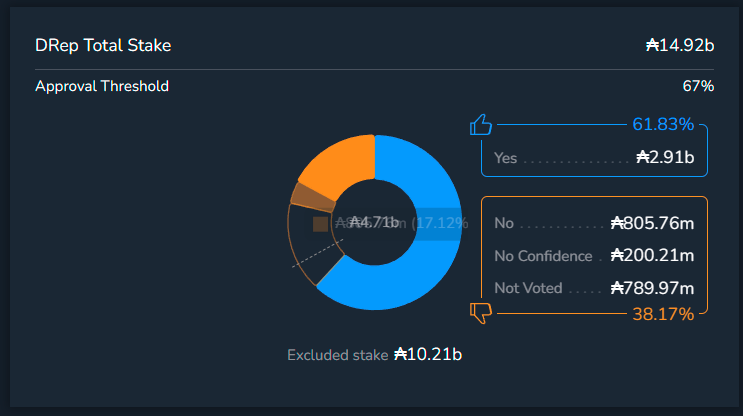
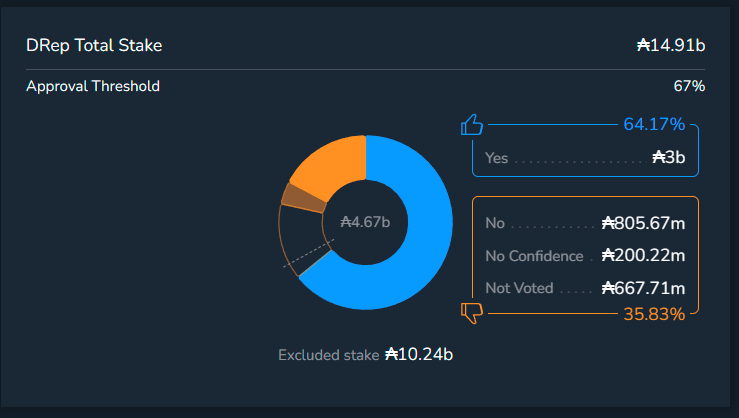
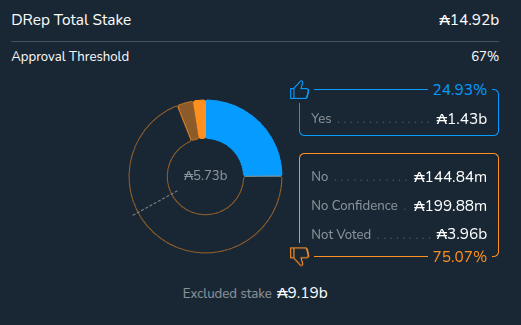
Quote-reposting my earlier thread because I want to be clear about what was actually at stake, and why I think every ADA holder needs to understand it. The short version: Cardano's decentralized governance was built to prevent exactly the situation that just played out. It did not prevent it. Navjit, as a DRep, asked a basic question: Should DReps who hold paid Midnight Ambassador roles abstain on IO's treasury proposals due to conflict of interest? That is not a personal attack. That is the textbook governance question. Every recusal rule in every legitimate institution is built on it. The response was not procedural. It was a coordinated public campaign by parties with direct financial stakes in the proposals passing - @IOHK_Charles himself, IO employees, and IO-aligned contractors. Within hours, IAG was down 32%. Real holders lost real money. These are not abstract token holders. They are families inside our own ecosystem. The same people who hold IAG also hold ADA. The damage was inflicted on Cardano's own community. What concerns me more than the attack itself is what it confirms about the structure. Look at who sits where: → IO proposes the slate of treasury actions. → Midnight Foundation, an IO spin-out led by a former IO executive, sits on the Pentad coordinating the ecosystem response. → Anastasia Labs, run by Phil DiSarro (@phil_uplc), is named as a delivery partner in the proposals (Midgard). Phil also holds an elected seat on the Constitutional Committee - the body that rules on the constitutionality of those same proposals - and on Intersect's Open Source Committee. → Blockfrost, acquired by IO, has its own ₳7.92M ask in the same slate. Every check in the system is, in part, populated by the entity being checked. That is not what CIP-1694 was designed to produce. I am not asking anyone to take my word for any of this. The proposal documents, election results, ownership chains, and independent reporting are all on the public record. Links at the end of this post. Read them. Decide for yourself. My concern is not personal. I am a DRep. My job is to vote on what is good for Cardano. What I saw over the past weeks tells me this: Asking the wrong question - even a question the Constitution explicitly anticipates - now carries a documented risk of losing your project's value, your community's savings, and your standing in the ecosystem. If that is the operating rule, no project will raise the next question. That is how a decentralized network stops being decentralized in practice while remaining decentralized on paper. I voted NO on the IO proposals because I do not think the current leadership of IO can be trusted to wield this much treasury allocation without abusing the position. To other DReps: → Look at the documented record. → Vote your own conscience. → Ask CC members to recuse where conflicts exist. → Redelegate if your current DRep won't engage with this honestly. Cardano was built to be better than this. Whether it is, is now up to all of us. SOURCES: The IO 2026 treasury slate being voted on: iog.io/news/io-treasu… 2025 Constitutional Committee election (phil_uplc among the seven elected): intersectmbo.org/news/constitut… Anastasia Labs / Midgard (Phil DiSarro's company, named as delivery partner in the IO slate; bio lists IOHK working group and Emurgo roles): projectcatalyst.io/funds/12/carda… IOG's acquisition of Blockfrost (January 2024): iohk.io/en/blog/posts/… Independent reporting on the 34% IAG crash following Charles's public campaign: thecryptobasic.com/cardano-founde…






🏁 TON leads Layer-1 blockchains in finality time. Sources: telegra.ph/Comparison-of-…