
leon lizarraga

43K posts

leon lizarraga banner
leon lizarraga

leon lizarraga

@leonpres

Coordinador @FLACMA Región Caribe y Centroamérica y Presidente del Consejo Directivo del Instituto de Administración Pública del Estado de Quintana Roo, A.C.

Chetumal, QRoo Katılım Haziran 2011
2.8K Takip Edilen2K Takipçiler
leon lizarraga retweetledi
Lorenzo Valdés Cortina
Lorenzo Valdés Cortina@LorenzoValdesC·
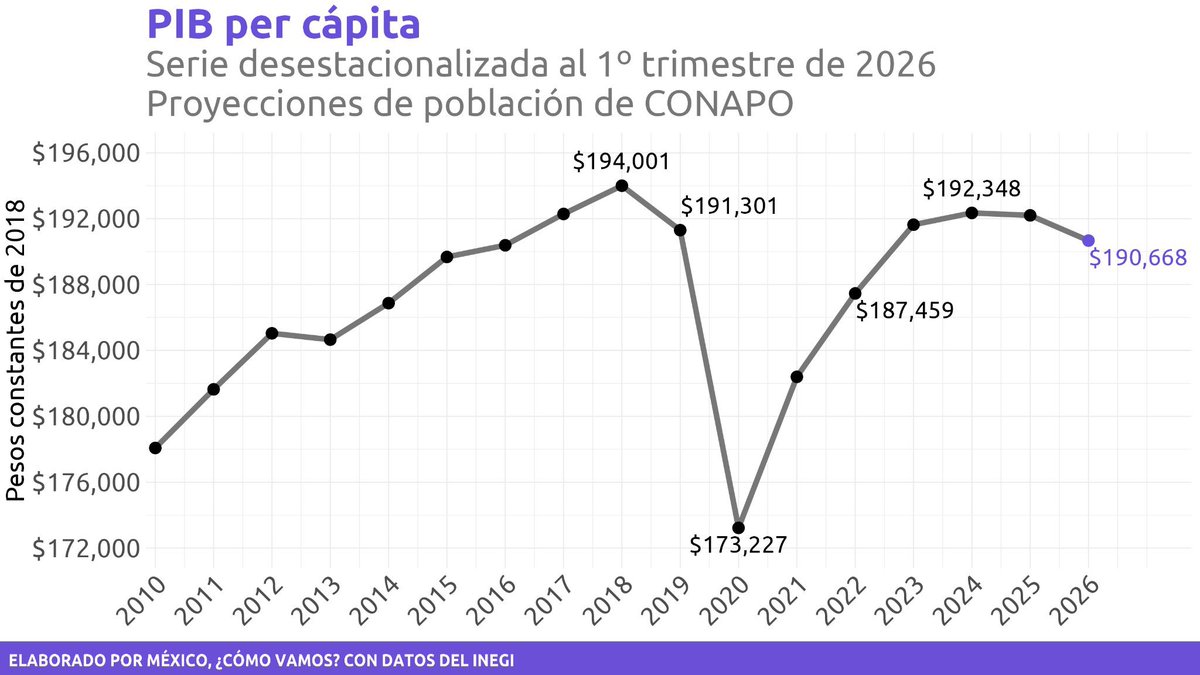
Cuando te venden que la economía mexicana está creciendo, esta es la razón por la que gran parte de la población siente exactamente lo contrario. Digo, tampoco es que la economía mexicana haya mostrado un crecimiento destacado en los últimos 8 años ha crecido en promedio 0.5% anual. Si le sumas que los ingresos per cápita no avanzan y la inflación acumulada en los últimos 8 años es de 45%, los ingresos pierden poder adquisitivo, los costos de vida pesan y cuestan cada vez más y por eso existe un deterioro significante en la economía mexicana. Desafortunadamente, México ha seguido el camino equivocado. La incertidumbre jurídica ha frenado la inversión privada y la mala asignación de recursos en proyectos faraónicos con nulo retorno económico ha impedido que mejoren la productividad y el ingreso per cápita.
Lorenzo Valdés Cortina tweet media
Español
1
16
20
444
leon lizarraga retweetledi
The Data of Everything
The Data of Everything@TheDataHubX·
Best Countries in the World by Overall Performance 1. 🇨🇭 Switzerland 2. 🇩🇰 Denmark 3. 🇸🇪 Sweden 4. 🇩🇪 Germany 5. 🇳🇱 Netherlands 6. 🇳🇴 Norway 7. 🇬🇧 United Kingdom 8. 🇫🇮 Finland 9. 🇱🇺 Luxembourg 10. 🇦🇹 Austria 11. 🇧🇪 Belgium 12. 🇫🇷 France 13. 🇮🇪 Ireland 14. 🇦🇺 Australia 15. 🇮🇸 Iceland 16. 🇸🇬 Singapore 17. 🇯🇵 Japan 18. 🇺🇸 United States 19. 🇨🇦 Canada 20. 🇰🇷 South Korea Note: Rankings are based on multiple factors including quality of life, entrepreneurship, cultural influence, economic strength, business environment, and overall global perception. Source: U.S. News & World Report (Best Countries Rankings 2026)
The Data of Everything tweet media
English
3
25
99
7.1K
leon lizarraga retweetledi
World of Facts
World of Facts@factostats·
Top 20 world’s most polite countries: 1. 🇯🇵 Japan 2. 🇨🇦 Canada 3. 🇬🇧 United Kingdom 4. 🇨🇳 China 5. 🇩🇪 Germany 6. 🇵🇭 Philippines 7. 🇸🇪 Sweden 8. 🇩🇰 Denmark 9. 🇫🇮 Finland 10. 🇿🇦 South Africa 11. 🇦🇺 Australia 11. 🇨🇭 Switzerland 13. 🇺🇸 United States 14. 🇮🇳 India 15. 🇮🇪 Ireland 16. 🇳🇿 New Zealand 17. 🇳🇴 Norway 18. 🇹🇭 Thailand 18. 🇫🇷 France 20. 🇧🇷 Brazil Based on a global survey by Remitly, nearly 5,000 people across 26 countries shared their experiences with politeness, hospitality, and everyday manners around the world. 🖇️ Source: Remitly
World of Facts tweet media
English
4
35
122
5.6K
leon lizarraga retweetledi
Vigia Ciudadano
Vigia Ciudadano@VigiaCiudadano7·
⚽💔 “Le robaron al mundo un gusto popular” El director mexicano Alejandro González Iñárritu lanzó una fuerte crítica contra la organización del Mundial 2026: «No siento ningún ambiente mundialero. Hay muy pocos partidos en el país, muy pocos partidos en México. Creo que el haber dispersado un Mundial en tres países me parece algo de avaricia de la mafia de la FIFA, cobró tres veces un Mundial. El haber metido muchos más equipos ya hace una curaduría de calidad, el nivel va a bajar. El costo de los boletos me parece una grosería. Mi padre, que no tenía dinero, recuerdo en el partido de Argentina famoso (2-1 en Cuartos de Final) contra Inglaterra en el gol de Maradona de "La Mano De Dios", yo fui a ese partido, y para que mi papá me haya invitado quiere decir que él podía pagar ese boleto. O sea, antes había un acceso, pero ahorita el boleto más barato es de 10 mil pesos o 20 mil pesos, y si quieres llevar a tus hijos es una barbaridad. Le han quitado al mundo un gusto popular que se robaron, y ahora para verlo en la televisión tienes que pagar. Antes era verdaderamente una celebración de un país orgulloso de ser el que invitaba al mundo, había alegría, un orgullo. Ahora, dividido en tres países, me parece una mala decisión de los que manejan el mundo de los corporativos».
Vigia Ciudadano tweet media
Español
261
3.4K
18.1K
508.6K
leon lizarraga retweetledi
Erick Lobo
Erick Lobo@ErickLobo·
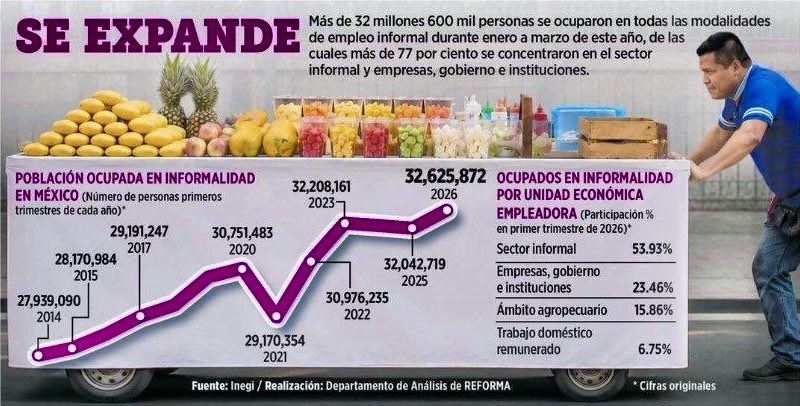
De cada 10 empleos nuevos que se generaron en la fuerza laboral del país en abril de este año, 9.9 de ellos corresponden a la ocupación informal, de acuerdo con la Encuesta Nacional de Ocupación y Empleo (ENOE) de Inegi.
Erick Lobo tweet media
Español
0
12
22
590
leon lizarraga retweetledi
IMCO
IMCO@imcomx·
México está rezagado en gobierno electrónico, lo que limita la calidad de la interacción Estado-ciudadano. 💻 En promedio, 1 de cada 5 ciudadanos logra realizar un trámite completo o hacer un pago digital. La CDMX encabeza la proporción de ciudadanos que hacen trámites en línea.
IMCO tweet media
Español

0
8
16
498
leon lizarraga retweetledi
Dossier22
Dossier22@ProyectoDossier·
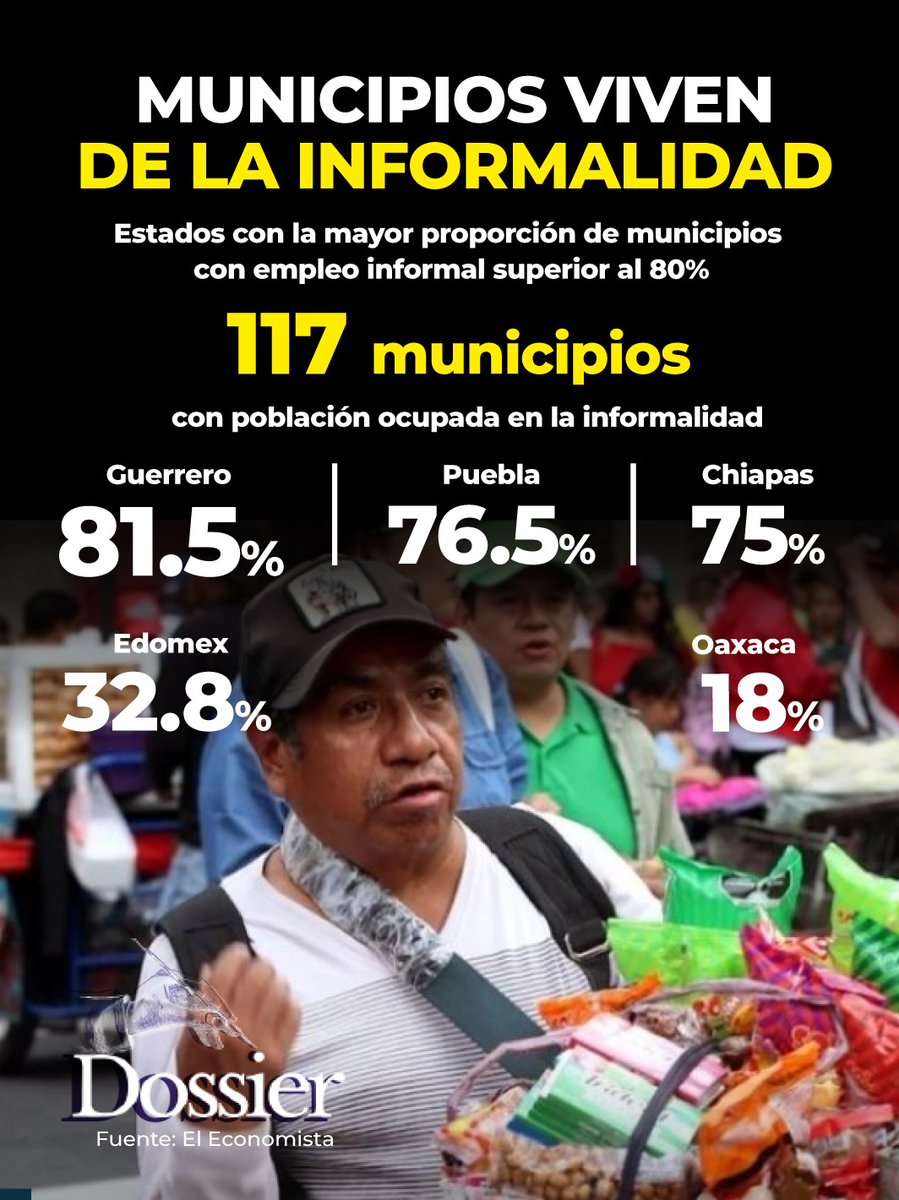
Al inicio de 2025, 177 municipios del país registraron a toda su población ocupada en la informalidad, bajo un esquema de trabajo vulnerable. 🫠 #Oaxaca concentró cerca de la quinta parte de esos municipios, junto con #Guerrero, #Puebla y #Chiapas.
Dossier22 tweet media
Español
0
9
11
172
leon lizarraga retweetledi
Lectócratas
Lectócratas@lectocratas·
📖 Esquema para el análisis político — David Easton (1965) DESCARGA GRATUITA revistanotaalpie.wordpress.com/wp-content/upl… Prefacio "Nos hemos propuesto desarrollar una serie integrada de categorías de fuerte relevancia empírica que permita interpretar la vida política como un sistema de conducta." 🧵1/10
Lectócratas tweet media
Español
1
74
242
7.4K
leon lizarraga retweetledi
Arturo Herrera
Arturo Herrera@RealArturoH·
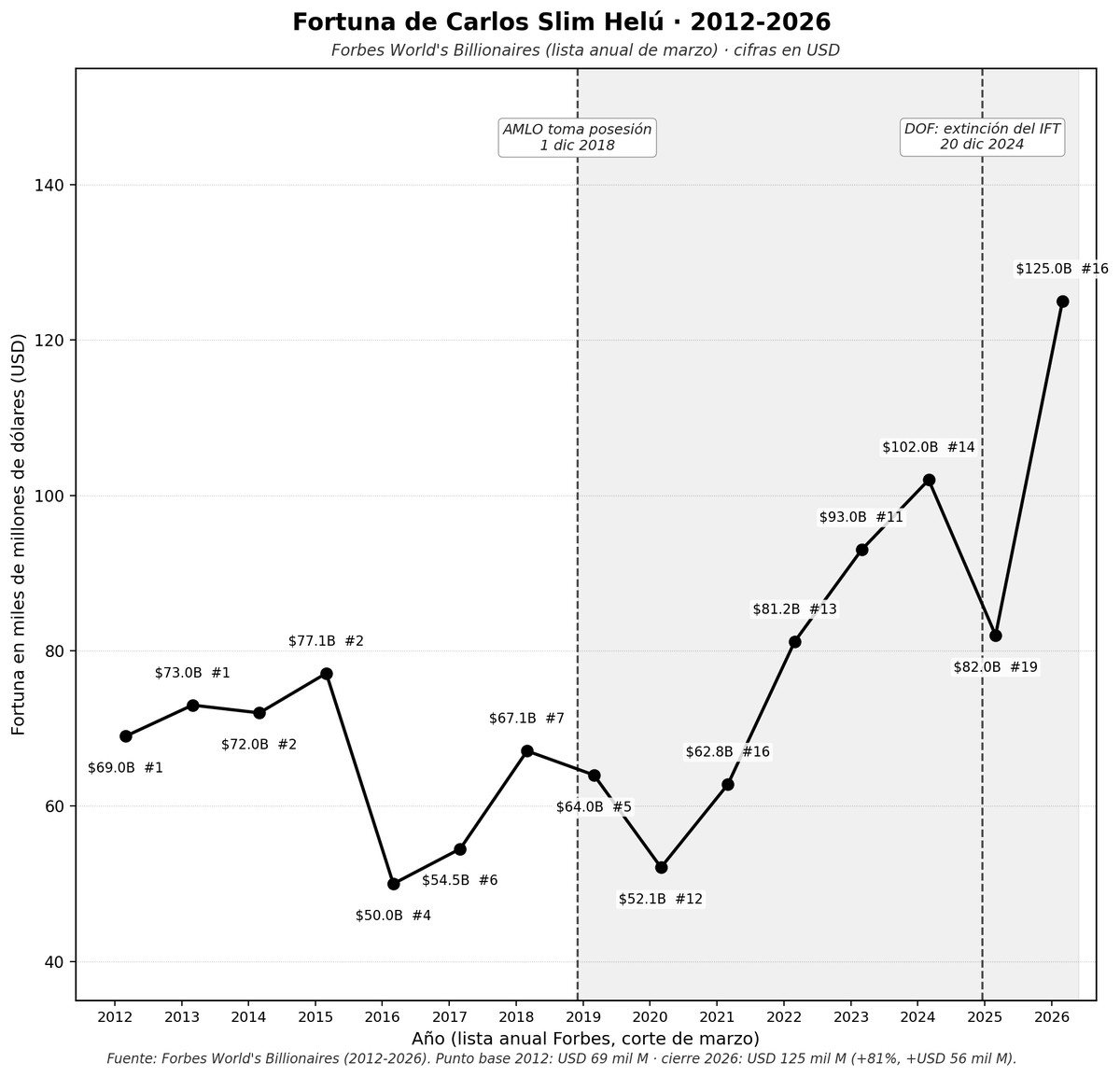
Así ha evolucionado la fortuna del ingeniero Carlos Slim, pasando de 67 billones de dólares en 2018 a 125 en 2026. Su incremento no se debe a que ha sido "mejor empresario" sino a los contratos con el gobierno de México, y a la reforma que eliminó el IFT en 2024. Por eso el señor está tan contento con Morena.
Arturo Herrera tweet media
Español
74
932
1.6K
26.3K
leon lizarraga retweetledi
INAP México
INAP México@inap_mx·
Te invitamos a cursar de forma gratuita La IA en la Administración Pública, impartido por Aurora Policy Solutions y el INAP. Fecha: 8, 9 y 10 de junio Modalidad: presencial o virtual Duración: 6 horas Cupo limitado Mayor información de horarios e inscripción en el siguiente enlace. 🔗 forms.cloud.microsoft/r/A3JkVQqhaY #Tecnología #Innovación #Datos #TransformaciónDigitalMX #LiderazgoPúblico #AprendizajeContinuo #CapacitaciónProfesional
INAP México tweet media
Español
0
48
100
6.3K
leon lizarraga retweetledi
León Barrena Rodríguez & Partners LLP
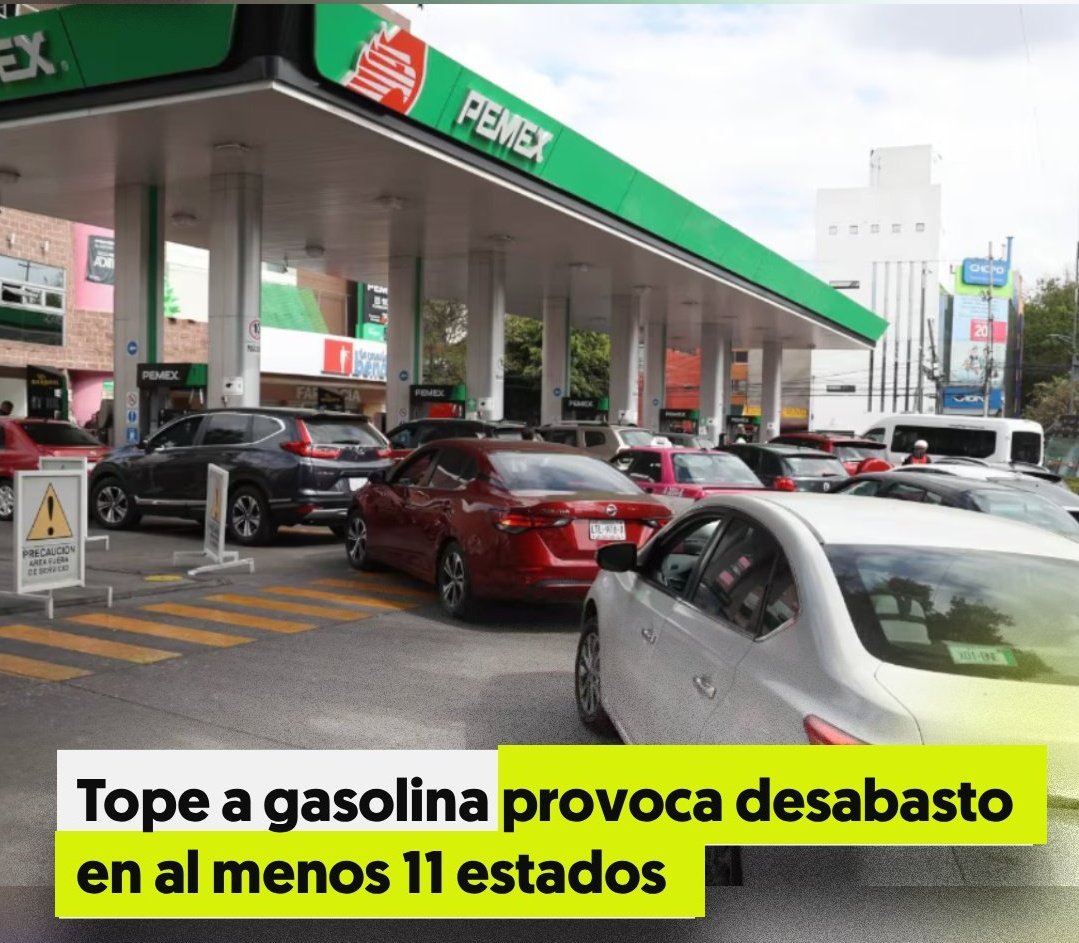
As we predicted, the structural vulnerabilities of the North American energy ecosystem are starting to fracture the Mexican energy market. According to a core report by El Financiero, government-mandated price caps have triggered fuel shortages across 11 Mexican states. Columnist Atzayaelh Torres highlights that the voluntary pricing pact has shattered because Pemex imports a considerable amount of the nation's fuel and cannot absorb a 50% spike in maritime freight costs alongside soaring global spot prices while pump prices remain frozen. Consequently, Mexico's domestic buffer has evaporated: Reynosa's storage has hit absolute zero, and the Valley of Mexico has just three days of inventory (violating the country's five-day legal safety minimum). This hand-to-mouth existence means redirecting supply to patch an emergency in Monclova instantly causes shortages in Saltillo. To survive, 4 out of 10 service stations have abandoned the pact, selling diesel above the mandated limit to avoid bankruptcy. This domestic paralysis is colliding with a looming wall of U.S. protectionism, invalidating Pemex’s long-term supply contracts with American refineries. If the Trump administration shifts to export restrictions to safeguard domestic inventory, triggered once SPR drawdowns end, U.S. tank bottoms occur, and Asian markets exhaust reserves to aggressively resume crude buying, these contracts will become legally and logistically impossible to fulfill. Facing its own inventory crisis, Washington will prioritize domestic price stability and cut its southern neighbor loose, leaving Pemex completely stranded from its primary refining lifeline. Globally, HFI Research warns we have crossed a "point of no return," exposing a massive disconnect between Wall Street consensus and physical reality. While JPMorgan, Goldman Sachs, and Morgan Stanley wishfully assume the Strait of Hormuz will reopen in June to keep oil around $100/bbl through year-end (with JPM admitting the Strait must open to avoid hitting a global tank bottom) geopolitical anchoring prevents a diplomatic resolution. The physical market cannot be resolved with optimism: May’s implied global oil flow averaged a staggering deficit of -7.5 million b/d (driven by a 12 million b/d production shut-in, offset by a 2 million b/d demand loss and a 2.5 million b/d SPR release). Even a June 1 resolution guarantees delays, as ballast tankers are currently in the U.S. draining excess storage, pushing any meaningful production restart to August at the earliest. IEA Executive Director Fatih Birol recently confirmed that their last emergency oil release burned through a massive 20% of total collective stocks. While the IEA claims readiness for further action, the remaining 80% of reserves are thinly fragmented across 32 nations, and most of Europe has already fallen dangerously below its mandatory 90-day inventory floor. For Mexico, these compounding global and regional pressures converge into an imminent economic reckoning. Stranded without a domestic inventory cushion and structurally cut off from its American refining lifeline, the country faces a systemic supply cliff that no amount of political rhetoric can bridge. As the U.S. pivots inward to hoard its remaining stocks and the global market fights over the IEA's fragmented reserves, Pemex will be forced to compete for prohibitively expensive international spot cargoes: a high-stakes game it fundamentally lacks the liquidity to play. Mexico is now looking at a systemic transportation paralysis, cascading industrial supply chain disruptions, and severe inflationary shocks on basic goods. The country is rapidly accelerating toward a hard floor where the illusion of subsidized energy sovereignty completely shatters against the unyielding physical reality of an empty tank.
León Barrena Rodríguez & Partners LLP tweet media
León Barrena Rodríguez & Partners LLP@lbrglobal

Mexico is effectively running on a countdown, fueled by a U.S. energy subsidy that is fast approaching its breaking point. The energy landscape is currently trapped in a high-stakes paradox: North American gasoline inventories have plunged to their lowest levels since 2014, yet the U.S. continues to push for record-breaking export volumes of crude and refined products. The U.S. is effectively subsidizing the Mexican supply at the expense of its own domestic buffer. This "artificial suppression" of prices (driven by strategic releases and political pressure to curb inflation before the summer) has prevented the necessary demand destruction that usually accompanies a supply shock. The structural fragility of this policy is now being exposed by the latest data. For the week ending May 8, the system saw a massive total crude draw of 10.31 million barrels, fueled by a record Strategic Petroleum Reserve (SPR) release of 8.6 million barrels and a commercial draw of 1.71 million. Furthermore, after an EIA miscalculation of imports and exports by approximately 6.6 million barrels last week, current estimates suggest a total crude draw of 11.6 to 12.6 million barrels for the upcoming report. This pressure is being intensified by a shift in Asian markets: as Asian refineries temporarily refuse to buy high-priced crude, global product storage will continue to draw down, forcing refining margins higher. Inevitably, as product levels run critically low, refineries will be forced to increase runs and crude buying simultaneously. This outcome is set to unfold within the next two weeks, accelerating the collision course with "tank bottom" by early July. For Mexico, this trajectory is nothing short of an existential threat. The Mexican energy model remains tethered to U.S. refining capacity, then any "tank bottom" event north of the border will trigger an immediate and non-negotiable halt in exports to its southern neighbor as Washington pivots to prioritize domestic stability. This looming shortfall is colliding with a Mexican fiscal reality where Pemex lacks the liquidity to compete for increasingly expensive spot-market cargoes. If the U.S. is forced to curb demand through drastic price hikes or export restrictions in July, Mexico faces a terminal supply gap that its current "sovereignty" rhetoric cannot fill. The math for Sheinbaum is cruel: a neighbor that cannot provide for its own citizens will not, under any circumstances, continue to fuel a non-cooperative neighbor’s economy.

English
9
162
326
33.6K
leon lizarraga retweetledi
México, ¿cómo vamos?
México, ¿cómo vamos?@MexicoComoVamos·
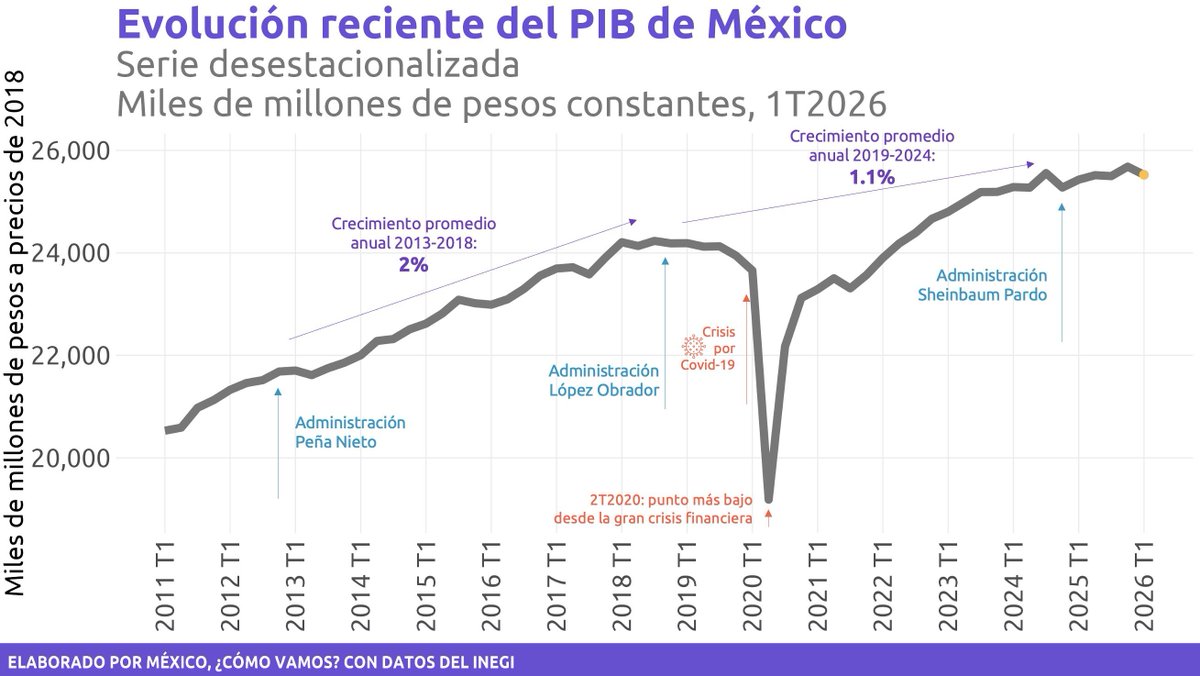
🔎 Sucesos históricos y decisiones de política pública tomadas por diferentes administraciones tienen efectos visibles en el ciclo económico 〰️. Consulta el #SemáforoEconómico de crecimiento🚦 en bit.ly/CrecEco y los #SemáforosSectoriales en bit.ly/SemSectorial 🤓
México, ¿cómo vamos? tweet media
Español
0
10
18
864
leon lizarraga retweetledi
El Economista
El Economista@eleconomista·
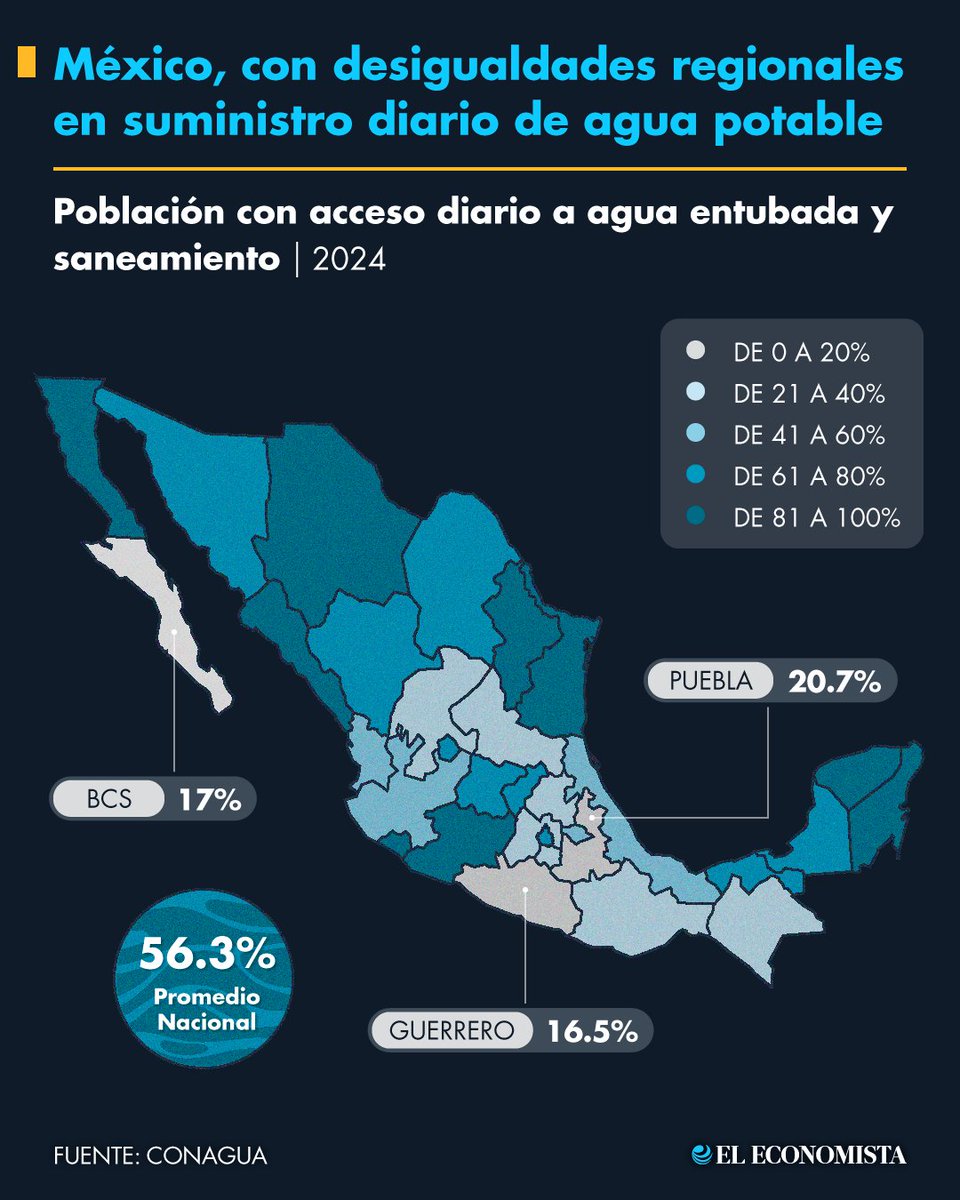
🇲🇽 Política | México, con desigualdades regionales en suministro diario de agua potable 🚰 bit.ly/3PhEmu0
El Economista tweet media
Español
0
36
60
1.9K
leon lizarraga retweetledi
José Mario
José Mario@JoseMarioMX·
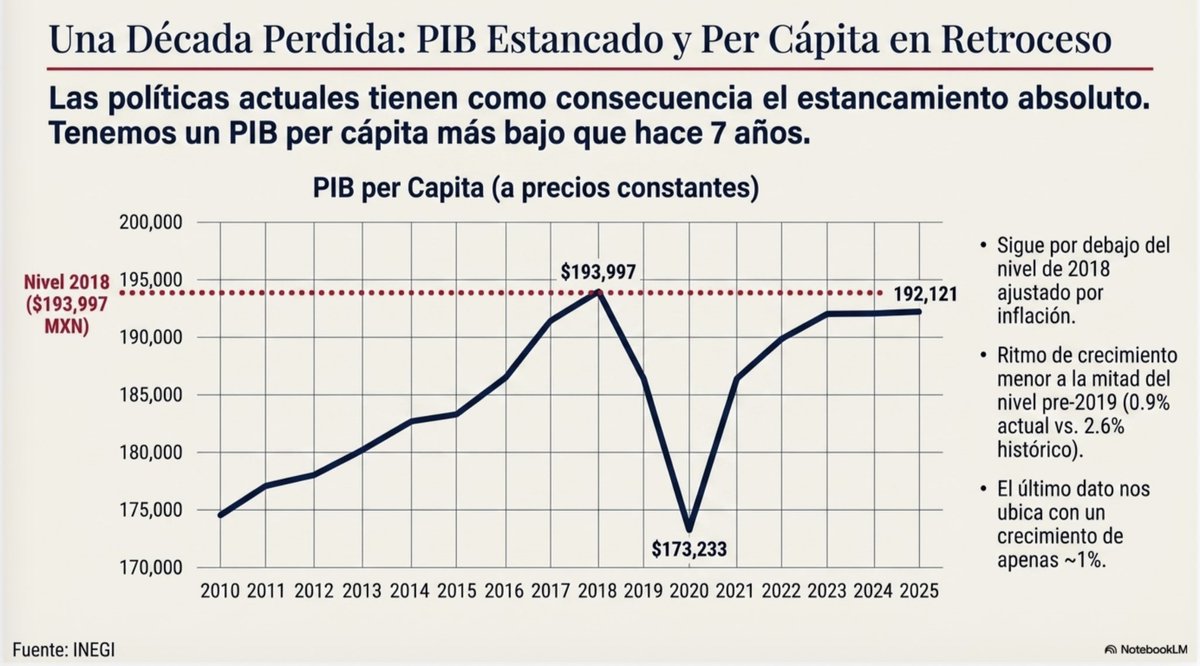
México no está entrando en una crisis espectacular. Y ese es precisamente el problema. Lo que estamos viendo es algo mucho más peligroso: un país que empieza a acostumbrarse al estancamiento. Más gasto corriente, más deuda, más subsidios… pero menos inversión, menos productividad y menos crecimiento real. Estamos financiando el presente mientras hipotecamos el futuro. El dato verdaderamente brutal no es la deuda. Ni Pemex. Ni siquiera el déficit. Es que el PIB per cápita sigue por debajo del nivel de 2018 y que la inversión lleva meses cayendo mientras el Estado pierde espacio para educación, salud, infraestructura y seguridad. Un país puede repartir dinero un tiempo. Lo que no puede hacer eternamente es repartir lo que no produce. Y aquí entra lo más delicado: la incertidumbre institucional. Cuando se debilita la confianza en las reglas, en los jueces y en el rumbo económico, el capital deja de apostar por el país. La inversión se frena, la productividad se desploma y el crecimiento desaparece lentamente. El riesgo para México no es una explosión. Es algo peor: normalizar el deterioro.
José Mario tweet media
Español
74
1K
1.8K
40.9K
leon lizarraga retweetledi
Tulsi Gabbard 🌺
Tulsi Gabbard 🌺@TulsiGabbard·
I am deeply grateful for the trust President Trump placed in me and for the opportunity to lead @ODNIgov for the last year and a half. Unfortunately, I must submit my resignation, effective June 30, 2026. My husband, Abraham, has recently been diagnosed with an extremely rare form of bone cancer. He faces major challenges in the coming weeks and months. At this time, I must step away from public service to be by his side and fully support him through this battle.
Tulsi Gabbard 🌺 tweet media
English
43.2K
38.1K
285.4K
11.5M