ligand

2.2K posts

ligand banner
ligand

ligand

@ligandew

Katılım Eylül 2021
19 Takip Edilen179 Takipçiler
ligand retweetledi
ligand retweetledi
calle
calle@callebtc·
non-custodial cashu ecash mints inside an enclave. ecash mint + bitcoin private keys are generated inside the enclave and never leave it. the mint operator can't rug the bitcoin. neither can it rug the ecash. I REPEAT: NON-CUSTODIAL ECASH MINTS FOR BITCOIN ARE COMING
English
38
47
290
21.1K
ligand retweetledi
Milk Road AI
Milk Road AI@MilkRoadAI·
Leopold Aschenbrenner, the 24 year old who wrote a 165 page AGI manifesto, got it right on the money, and turned it into a $5.5 billion hedge fund. And he's identifying the single most important milestone to watch for in all of AI. The question is can AI automate AI research itself? Here's why that question matters so much. Right now, a few thousand human researchers at the frontier labs are driving all the progress. They design experiments, write papers, propose architectural improvements, build the next generation of models and it's an incredibly small workforce doing incredibly high-leverage work. If an AI system can do that job even partially, the feedback loop changes completely. The AI makes algorithmic improvements, which produces more powerful AI, which makes better improvements, faster. You go from linear progress to compounding returns and a decade of research could compress into a year. Aschenbrenner says there's a "pretty reasonable chance" this happens within five years. He's not alone, Anthropic says they're on track to fully automate AI R&D as soon as early 2027. OpenAI has publicly targeted a fully autonomous AI researcher by March 2028 and Sam Altman has said a research intern level AI will exist before the end of this year. If he's right, the next few years won't look like the last few years but they'll look like nothing we've seen before. The future is bright!
Milk Road AI@MilkRoadAI

Leopold Aschenbrenner, former OpenAI safety researcher, fired at 22, now running one of the best performing hedge funds on the planet. He grew Situational Awareness LP from $225 million to $5.5 billion in roughly one year beating the S&P 500 by 47% in just his first six months. And the core bet wasn't Nvidia or OpenAI, it was electricity. Here's his actual mat and it's worth reading carefully (Save this). GPT-4 trained on roughly 10 megawatts of compute, a100-megawatt cluster followed in 2024. By 2026, the leading training cluster is approximately 1 gigawatt, the power of the Hoover Dam. By 2028, 10 gigawatts more power than most U.S. states. And by 2030, a single training run could hit 100 gigawatts and consume over 20% of all US electricity production. That's just the training cluster, Inference GPUs on top of that. US power production has barely grown in a decade. He turned that observation into his biggest position, Bloom Energy, a fuel cell company that generates power directly at data centers without touching the grid. He accumulated the $875 million position through 2025 while shares were in the mid teens and that position is now worth nearly more than $2.2 billion. The logic is that everyone is racing to build the most powerful models in history but those models require power that doesn't exist yet on the grid. The companies that control where the electricity comes from, that's where the leverage is. His fund now holds Bloom Energy, CoreWeave, Core Scientific, Lumentum, and a short on Infosys, the last one a bet that AI will gut traditional IT outsourcing. We at Milk Road have been saying it for months, the picks and shovels play in this AI cycle isn't the chip companies, it's the infrastructure keeping them running. Come join us so you can see our entire thesis. Link in bio!

English
30
116
1.5K
576.2K
ligand retweetledi
Flood
Flood@ThinkingUSD·
Crypto is paying a high price for years of altcoin scams and grifts. It can feel like a toxic industry where very little value is created. It's easy to feel disillusioned and wish you were focusing on AI-related trading, businesses, or working at a startup in that sector. Many companies and investment firms have already begun the rotation out of Crypto. Don't let your apathy make you unproductive; it's your personal responsibility to continue learning about the world. If you feel the call of the wild, then go. For the ones brave enough to stick around, not only will the risk-reward be as asymmetric as it's been in recent history, the concentration of upside in a handful of assets will make it EASIER to generate massive returns. There is less capital looking at Crypto exposure than ever before. This all changes with a rapid repricing in Bitcoin this year, which I believe is inevitable. For a long time in Crypto, nothing felt buyable due to an excess of capital being forced to deploy in a sector with limited opportunity. We're in a new regime now. We're reaching a similar level of apathy that I felt during 2019 and 2022. I almost quit Crypto to go back to TradFi. It's no surprise those were the years where I generated the bulk of my returns (sans Hyperliquid). Outside of trading, if you're passionate about the space, companies that are still building during this period will be positioned to take advantage of the inevitable reacceleration of this industry. Working at top-tier companies in the space is more accessible than ever due to a shortage of people entering the field. Don't undervalue your time.
English
185
385
2.8K
236.2K
ligand retweetledi
IncomeSharks
IncomeSharks@IncomeSharks·
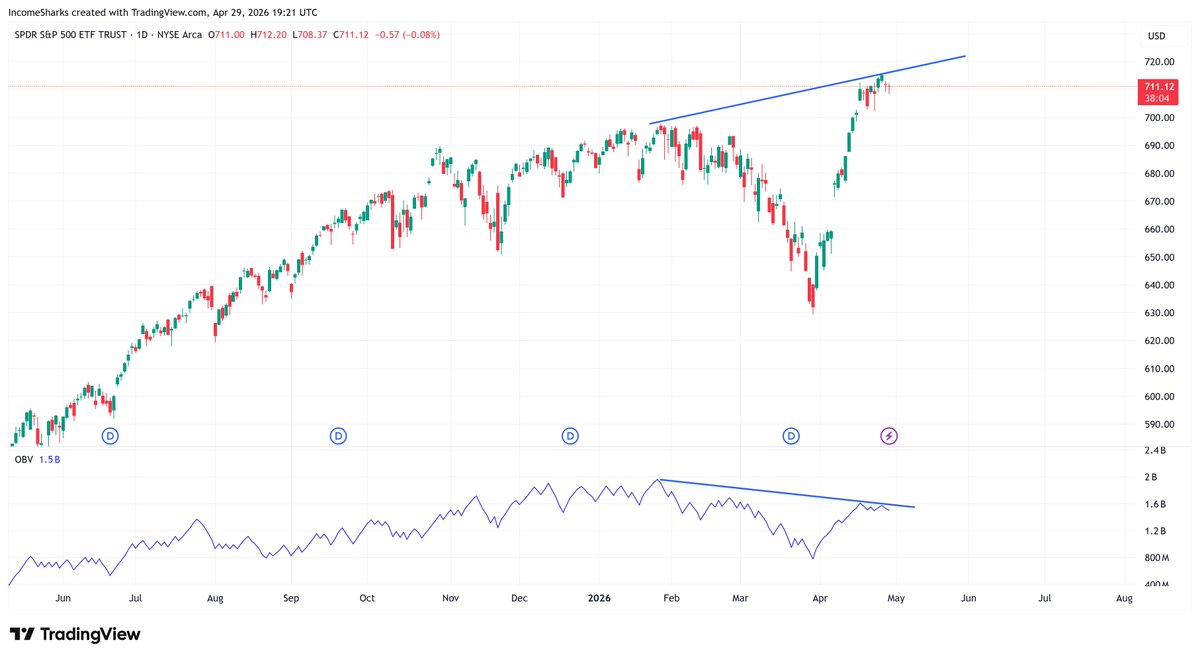
In hindsight this massive OBV bear div on the daily and weekly for the S&P 500 will make sense. Doesn't mean we still can't go higher first though.
IncomeSharks tweet media
English
68
63
875
78.1K
ligand retweetledi
Patrick OShaughnessy
Patrick OShaughnessy@patrick_oshag·
My guest today is Paul Tudor Jones (@ptj_official), one of the greatest macro traders of all time. He correctly predicted the 1987 stock market crash and shorted the Japanese bubble in 1990. For over 40 years, his flagship fund has had a negative correlation to the S&P 500. 100% of his returns are alpha. He says today's market has so many similarities to 2000, "the easiest bear market I've ever seen in my whole life." He makes the case for going long dollar-yen, why Bitcoin beats gold as an inflation hedge, and why he was wrong about Warren Buffett. But what I'll remember most from this conversation is Paul's zest for life. He's 71 and still wakes at 2:30 every morning to trade the London open. He works out for two hours a day. He walks with his wife every evening. He travels the country chasing peak spring and peak fall. He's so excited about the songs picked for his funeral that he wishes he could be there to hear them. Paul has lived five lifetimes in one. He's one of the most entertaining and interesting people I've met, and the conversation will leave you searching to be as passionate about what you do as he is about what he does. Enjoy! Timestamps: 0:00 Intro 1:00 The Kindest Thing 13:19 Trading vs. Investing 17:33 Lessons from Warren Buffet 22:24 The Existential Risks of AI 29:54 The Nature of Trading 31:46 Bitcoin 35:55 Bubbles 42:08 A Day in the Life of PTJ 46:00 Information Overload 47:07 Passion for Markets 50:49 The Robin Hood Foundation 54:18 The Workless World 56:03 Journalism 1:00:00 Principal Components of a Great Life 1:05:06 Kill Them With Kindness
English
283
1.5K
9.8K
5.1M
ligand retweetledi
ligand retweetledi
Bas Westerbaan
Bas Westerbaan@bwesterb·
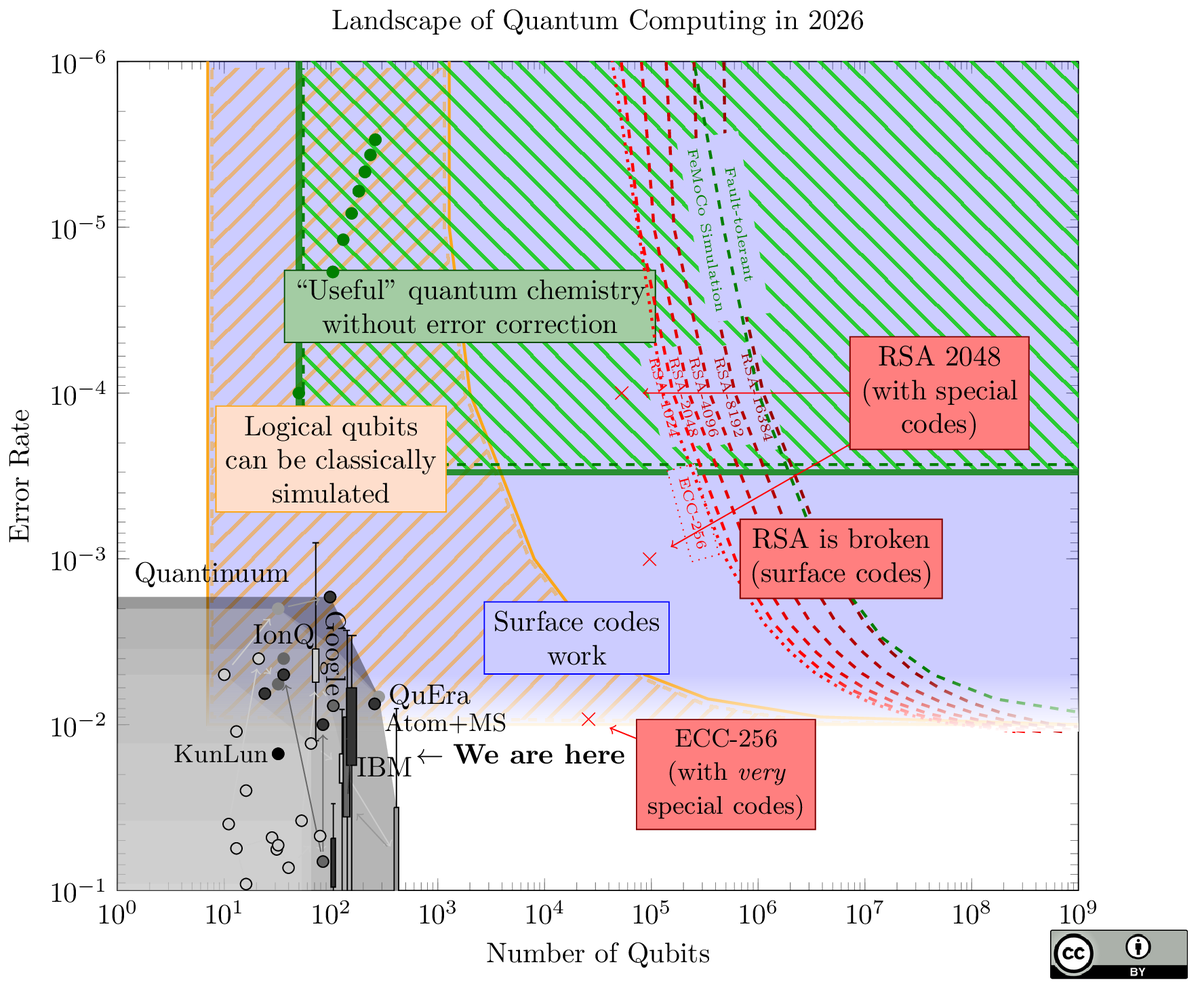
"See, some of the most reputable people in quantum hardware and Q error-correction—people whose judgment I trust more than my own on those topics—are now telling me that a fault-tolerant quantum computer able to break deployed cryptosystems ought to be possible by around 2029."
English
2
4
59
7K
ligand retweetledi
Bob Loukas 🗽
Bob Loukas 🗽@BobLoukas·
I've been heavily speculating in the markets (not full time) since 1992. My first trades were before online brokerage, you had to call in for quotes and to place orders. 4% commission in AND out. I had a great run during the DOT COM era. By 1999, I had a really chunky (for my age) portfolio and thought it was easy. By late 2000, the account was $0. That part was fun, at least. For the next 10 years I was super active, some good runs, some big drawdowns. Overall, nothing exceptional. Just decent. Then something shifted. The need to speculate faded and that’s when things actually got better. Once I stopped chasing it, opportunities started coming to me. Not just in trading. As I’ve gotten older and less interested in money itself, seeing opportunity has become clearer. And more than anything, removing that constant need elevated how I experience life. This isn’t meant to be spiritual (for some it is). But for a lot of people who are active and still underperforming, it’s worth asking what purpose this is really serving. Most of the time, it’s just a dopamine loop. And for many, it’s closer to an addiction than they would like to admit. And that could be what’s holding you back.
English
88
145
2.3K
107.4K
ligand retweetledi
Andy Masley
Andy Masley@AndyMasley·
I don't believe at all that people need to "use AI because otherwise they'll fall behind on it." Capabilities are moving so fast that we'll all be novices in 3 years regardless of what we're doing now. My poking around GPT-3 papers gave me basically no leg up on actually using AI compared to people who just dove straight into coding agents.
English
22
9
183
9.3K
ligand retweetledi
IncomeSharks
IncomeSharks@IncomeSharks·
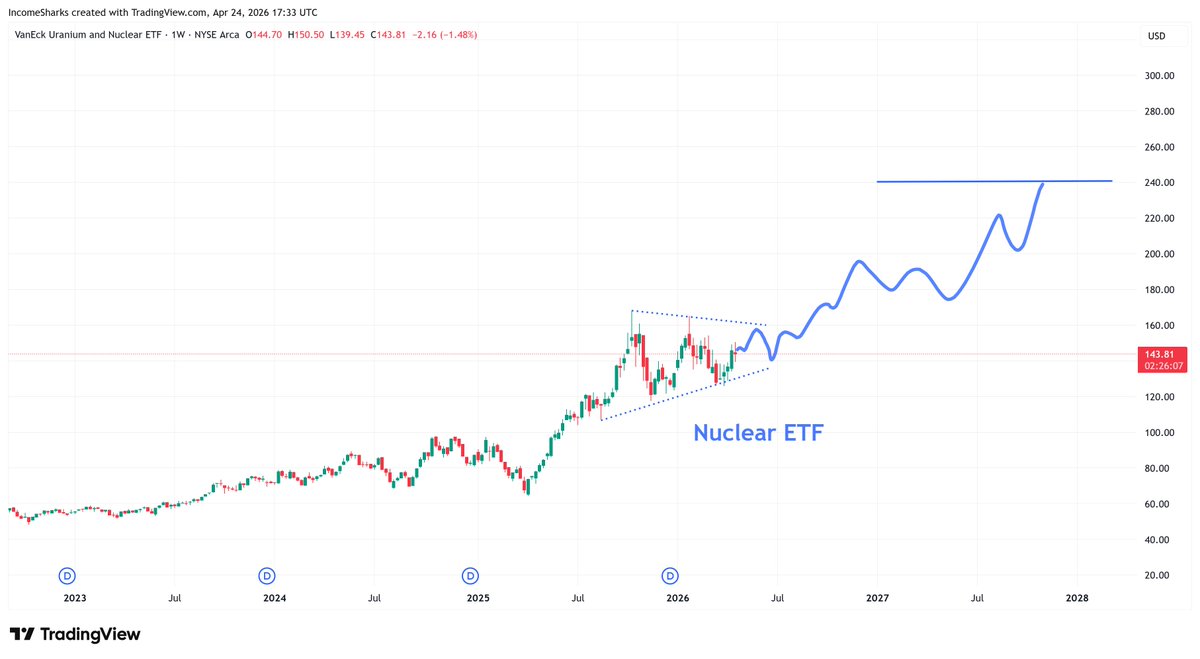
A lot don't have patience for Nuclear but it's something I'd make sure I'd have exposure in before 2030.
IncomeSharks tweet media
English
73
89
1.2K
104.7K
ligand retweetledi
Bob Loukas 🗽
Bob Loukas 🗽@BobLoukas·
The idea of Universal High Income to counter AI dominance replacing need for people to work for their existence is frightening. A society existing mostly off the governments tit is a society enslaved and one that will never be content in life. And we know the dangers of a dependent and idle mind. Thats going to be their angle though, “you won’t have to work”.
English
161
73
968
57.6K
ligand retweetledi
Lucy L.
Lucy L.@LucyBuilding·
如果你也想在 X 上补一些「英推投资信息源」,下面这些账号值得长期跟踪。 一、看宏观和市场大局的 @morganhousel 更偏投资心理学和长期思维。 他不太讲具体个股,也不太追热点,但很适合在市场情绪很满的时候,帮你把视角拉回长期。 @LizAnnSonders 偏宏观、流动性、市场结构。 图表质量很高,框架也清晰,适合拿来观察美股大环境,而不是只盯着某几个 ticker。 @BittelJulien 偏全球宏观和资产配置。 如果你关注流动性、风险资产之间的联动,这个账号是比较有参考价值的。 @charliebilello 很适合看历史数据和周期对比。 他的优势不在下结论,而在于把当前市场放回更长的历史坐标里。 @awealthofcs 内容偏长期投资框架,实用性比较强。 不是那种很炸裂的账号,但适合普通投资者长期看,慢慢建立组合思维。 @Ritholtz 偏市场评论和宏观观察。 优点是角度比较平衡,缺点是有时评论性会强一点,适合参考,不适合照单全收。 @LynAldenContact 这是我个人会单独拎出来推荐的。 她特别适合看货币、财政、能源、信用这些大框架,能帮助你理解很多资产背后的底层逻辑。 @biancoresearch 如果你想多看一些利率、债市、政策预期相关的框架,这个账号很值得跟。 属于偏老派宏观那一类,适合拿来做市场叙事的校准。 @josephwang 如果你对美联储、准备金、美元流动性这些金融 plumbing 感兴趣,可以重点看他。 这类内容门槛稍高,但一旦看懂,对理解市场会很有帮助。 二、看半导体、AI 基建和产业链的 @dylan522p 看 AI infra、GPU、云厂 capex、HBM/存储这些,基本绕不开他。 信息密度很高,适合你本身就长期关注半导体和 AI 基建的人。 @aleabitoreddit 从 Reddit 的 WallStreetBets(WSB)转战到 X,专注 AI、半导体供应链,喜欢挖掘未知瓶颈的个股和衍生品交易,常分享个股深度分析和交易想法。内容比较激进、交易导向。 @Beth_Kindig 偏科技成长股和 AI 主线。 相对来说没有那么产业研究范,更适合公开市场投资者去看。 @BenBajarin 偏产业分析和供应链视角。 如果你不想只看财报数字,而想理解终端需求、产品周期、行业结构,这个账号很有帮助。 @HedgeMind 偏机构持仓、AI 基础设施、美股科技。 适合看 smart money 在往哪里集中,但要注意,持仓披露本身有滞后性。 @TheValueist 偏半导体行业和价值分析框架。 优点是专注,适合对半导体链条有持续跟踪需求的人。 @MikeLongTerm 偏半导体供应链和 AI 需求数据。 比较适合拿来补微观视角,比如先进制程、TSMC、AI 需求链条这些。 三、看科技商业模式和研究框架的 @stratechery Ben Thompson 这个基本不用多说。 如果你投科技股,尤其是平台型公司、AI 商业模式、产业结构变化,这个账号非常值得长期看。 @ByrneHobart 这个账号我也很推荐。 他很擅长把金融、科技、商业模式放在一起讲,特别适合做内容的人吸收“框架感”。 @BrianFeroldi 偏基本面、财报、商业模式拆解。 如果你想提升自己分析公司的能力,这个账号对普通投资者很友好。 @10kdiver 长线程很多,但内容质量很不错。 偏概率思维、估值框架、长期回报逻辑,适合愿意花时间深读的人。 四、看交易框架和市场结构的 @PeterLBrandt 老牌交易员。 他的内容更适合作为市场结构参考,而不是拿来机械照抄。 @alphatrends 偏技术分析和趋势框架。 如果你本身会结合趋势做仓位管理,这类账号会比较有帮助。 @bespokeinvest 强项是数据统计和图表。 适合做市场观察和交叉验证,不一定给你 thesis,但很适合补充事实层。 以上账户不一定适合所有人,但基本都属于信息密度高、风格相对理性、适合拿来搭框架的类型。 最后说一句,关注博主这件事,本质上是为了补自己的信息源。有人适合补宏观,有人适合补产业链,有人适合补框架,有人适合补数据。我们要学会把别人的观点,逐渐消化成自己的判断。
中文
9
110
347
58.2K
ligand retweetledi
Philip Martin
Philip Martin@SecurityGuyPhil·
Today we've published the first position paper from the Coinbase Independent Advisory Board on Quantum Computing and Blockchain, a group of leading researchers from Stanford, UT Austin, the Ethereum Foundation, and beyond. The short version: your crypto is safe today. But a quantum computer capable of threatening blockchain cryptography will eventually be built, and the industry needs to start preparing now, not when it's urgent. The paper covers what's actually at risk, what isn't, where major blockchains stand on migration plans, and concrete recommendations for chains, custodians, and institutions. We stood up this board because we believe security decisions of this magnitude should be driven by the best available science. This is our first report, but will have more updates to share as we go. Full summary and link to the paper: coinbase.com/blog/coinbase-…
English
96
102
492
559.3K