Marenya

17.3K posts

Marenya banner
Marenya

Marenya

@lillianmarenya

Mummy to 2 beautiful girls & many more / Venture builder/ Economic development expert/ African to the core/ Opinions are mine/ Unfazed by Life
Kenya Katılım Nisan 2009
1.9K Takip Edilen1.1K Takipçiler
Kashyap Gohel
Kashyap Gohel@kashgohel·
@Kizee_Brian Would be cool to try if I got enough orders. More durable than that plastic thing anyways.
English
1
0
1
144
Brian
Brian@Kizee_Brian·
I'm sure @kashgohel can come up with an aesthetic solution for the harrier grill.
English
1
0
2
162
Marenya retweetledi
Mkhululi Ndlovu
Mkhululi Ndlovu@mk_tycoon·
I’ve been an angel investor since around 2014, focusing primarily on early-stage startups in the technology space. Over the years, I’ve typically come in at a very specific point in a startup’s journey: Not at idea stage—but just after. These are businesses that: - Have built a minimum viable product (MVP) - Are beginning to enter the market - And are facing what many call “the valley of death” This is the stage where: - Founders have exhausted personal savings - Friends and family funding has run out - Institutional investors still consider them “too early” That’s where I, often with a small syndicate of like-minded investors, step in. We take equity. We back the founders. We take the risk. But here’s the uncomfortable truth: Angel investing in Africa is fundamentally different—and significantly harder—than in more developed ecosystems. Not because of lack of talent. Not because of lack of ideas. But because of structural realities we don’t talk about enough. In this series, I’ll share some of the biggest challenges I’ve encountered investing in early-stage startups across Africa—and why we need to rethink how we approach this space. #AngelInvesting #Startups #AfricaTech #VentureCapital #Entrepreneurship
English
53
76
469
25.6K
Marenya retweetledi
Kwame Owino
Kwame Owino@IEAKwame·
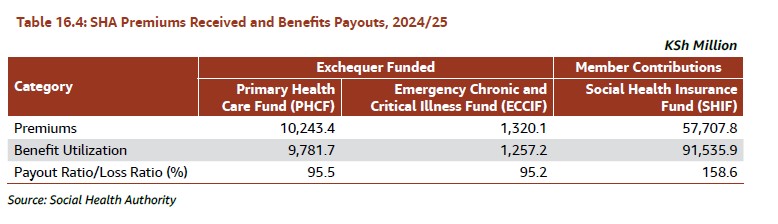
Here's a summary table from page 392 of Economic Survey 2026. 1. SHIF has a payout ratio of 156%, meaning that it pays out Kshs. 156 for every Kshs. 100 received . That's a fund that is in trouble. 1/N
Kwame Owino tweet media
English
34
243
290
27.7K
Marenya retweetledi
Science girl
Science girl@sciencegirl·
They don’t make them like this anymore
English
178
1.3K
19.7K
2.6M
Marenya retweetledi
goma
goma@soigomaa·
YOUR TEARS CONTAIN A NATURAL PAINKILLER 6 TIMES STRONGER THAN MORPHINE. AND YOU WERE TRAINED TO HOLD THEM BACK. In 2006, researchers at the Pasteur Institute in Paris discovered a molecule in human tears called leucine-enkephalin. It is an endogenous opioid. Your body manufactures it. It binds to the same receptors as morphine. It is six times more potent. Every time you cry, your body is not breaking down. It is self-medicating.
quote@itsmubashi

Hit me with the harshest reality truth.

English
102
1.4K
10.7K
611.8K
Marenya retweetledi
The Sigma Mindset
The Sigma Mindset@thesigmamindset·
63 year old drops the best life advice in 90 seconds‼️‼️
English
3
39
218
20.5K
Marenya retweetledi
Aakash Gupta
Aakash Gupta@aakashgupta·
Pete Davidson is on pace to spend $660K removing his tattoos, and the reason it costs that much is genuinely one of the weirdest things happening inside the human body. Tattoos are permanent because your immune system is actively holding the ink in place. White blood cells called macrophages swarm the ink, try to eat it like bacteria, fail because ink is chemically indestructible, and then just refuse to let go. They sit in your skin with the pigment trapped inside them, for life. The tattoo you see is a grid of immune cells frozen in the middle of trying to destroy something they can't. It gets weirder. When one of those cells finally dies of old age, a nearby macrophage grabs the released ink before it can drain. Then that one dies and passes it to the next one. The tattoo is a relay race of immune cells handing off the same ink particles for 50 years. Lasers are not erasers. They fire pulses so fast (one trillionth of a second) that they create tiny shockwaves that blow the ink into smaller pieces. The laser doesn't remove anything. It just shatters. Here's the cruel part. The second the laser shatters the ink, fresh macrophages sprint in and swallow the pieces before your body can wash them away. You are paying a laser specialist $500 a session to break ink apart faster than your immune system can re-eat it. And where does the ink that actually escapes go? Your lymph nodes. It piles up there. Women with tattoos have ink in their armpit lymph nodes. It shows up on mammograms. Surgeons have mistaken it for cancer. Pete has 200+ tattoos. Each one needs 10-12 sessions because each session only wins a tiny fraction of the war. He's not buying tattoo removal. He's buying a decade-long siege against his own immune system, paid in installments of $500 shockwave blasts, while white blood cells inside his body sprint back and forth trying to eat their own ammo. $660K to starve the cells that refuse to let him forget who he used to be.
New York Post@nypost

Pete Davidson shows off nearly bare arms in Las Vegas after dropping $200K to remove his tattoos trib.al/k8UilQZ

English
301
1.4K
10.6K
5.7M
Marenya retweetledi
Dear Self.
Dear Self.@Dearme2_·
What’s the most INSANE documentary you’ve ever watched?! Like, blew your mind…
English
1.5K
592
5.2K
2.2M
Marenya retweetledi
Ihtesham Ali
Ihtesham Ali@ihtesham2005·
A community college professor taught the same study skills lecture for 30 years, and the video quietly became one of the most watched educational recordings on the internet. His name is Marty Lobdell. He spent his career as a psychology professor watching students fail not because they were lazy, but because nobody had ever taught them how their brain actually works under the pressure of learning something hard. The lecture is called "Study Less Study Smart." Over 10 million views. Passed around in Reddit threads, Discord servers, and university study groups for over a decade. And the core insight buried inside it has been sitting in cognitive psychology research for years, waiting for someone to explain it in plain language. Here is the framework that completely changed how I think about effort. Your brain does not sustain focus the way you think it does. Studies tracking real students found that the average learner hits a wall somewhere between 25 and 30 minutes. After that, efficiency doesn't just decline. It collapses. You're still sitting at your desk, still looking at the page, but almost nothing is going in. Lobdell illustrated this with a student he knew personally. She set a goal of studying 6 hours a night, 5 nights a week, to pull herself out of academic probation. Thirty hours of studying per week. She failed every single class that quarter. She wasn't failing because she lacked effort. She was failing because she had confused time spent near books with time spent actually learning. The 25-minute crash hit her at 6:30pm every night. She spent the next five and a half hours sitting in the wreckage of her own focus and calling it studying. The fix sounds almost too simple. The moment you feel the slide, stop. Take five minutes. Do something that actually gives you a small reward. Then go back. That five-minute reset returns you to near full efficiency. Across a six-hour window, the difference is not marginal. It is the difference between thirty minutes of real learning and five and a half hours of it. The second thing he taught destroyed something I had believed about how memory actually works. Highlighting feels productive. Going back over your notes and recognizing everything feels like knowing. But recognition and recollection are two completely different cognitive processes, and your brain is very good at making you confuse them. You can see something you've read before and feel completely certain you understand it, even when you couldn't reconstruct a single sentence from memory if the page were blank. He proved this live in the room. He read 13 random letters to his audience. Almost nobody could recall them. Then he rearranged the same 13 letters into two words: Happy Thursday. The whole room got all 13 without effort. Same letters. Same count. The only thing that changed was meaning. The brain stores meaning. Not repetition. The moment new information connects to something you already understand, the retention changes entirely. This is what the cognitive psychology literature calls elaborative encoding, and it is the mechanism underneath every effective study technique. The third principle was the one that hit me hardest, and the one almost nobody applies. Lobdell cited research showing that 80 percent of your study time should be spent in active recitation, not passive reading. Close the material. Say it back in your own words. Teach it to someone else, or to an empty chair if no one is around. The struggle of retrieval is where the actual learning happens. Reading your notes again is watching someone else do the work. His parting line has stayed with me longer than almost anything else I have read about learning. He told the room that if what he shared didn't change their behavior, they hadn't actually learned it. It would just live in their heads as something they had heard once and felt good about. He was right. And most people leave every lecture exactly like that. The students who remember everything aren't putting in more hours. They stopped confusing the feeling of studying with the fact of it.
English
216
4.9K
18.7K
1.9M
Marenya retweetledi
ⱼₐcₖ Gᵤₑₛₜ Fᵢₗₘ
Full movie now on @X!! “A Convenient Truth: Jack’s Journeys” - The world’s first eco Christmas movie 🎄(2025) “5/5* for the genuine eco-adventure and heartfelt twists, though the amateur vibe adds charm. Loved the biogas insights.” - @grok @elonmusk grab your popcorn n enjoy!
English
2.5K
8.6K
95.5K
233.8M
Marenya retweetledi
Vala Afshar
Vala Afshar@ValaAfshar·
MIT professor delivers a brilliant masterclass on how to effectively present your ideas with clarity, high impact and purpose
English
22
973
3.8K
750.9K
Marenya retweetledi
Dr. Jebra Faushay
Dr. Jebra Faushay@JebraFaushay·
Women over 50, this is for you. Don’t try to be 30. Embrace the fact you don’t have to impress anyone. You don’t have to give a shit. Live for yourself.
English
153
428
3.2K
123.5K
Marenya retweetledi
Mastery Mindset
Mastery Mindset@_masterymindset·
She literally tells mathematical pattern of the universe is the secret unlock to your best life.
English
24
265
1.4K
64.5K
Marenya retweetledi
Mwami lu
Mwami lu@lulanzeashirafu·
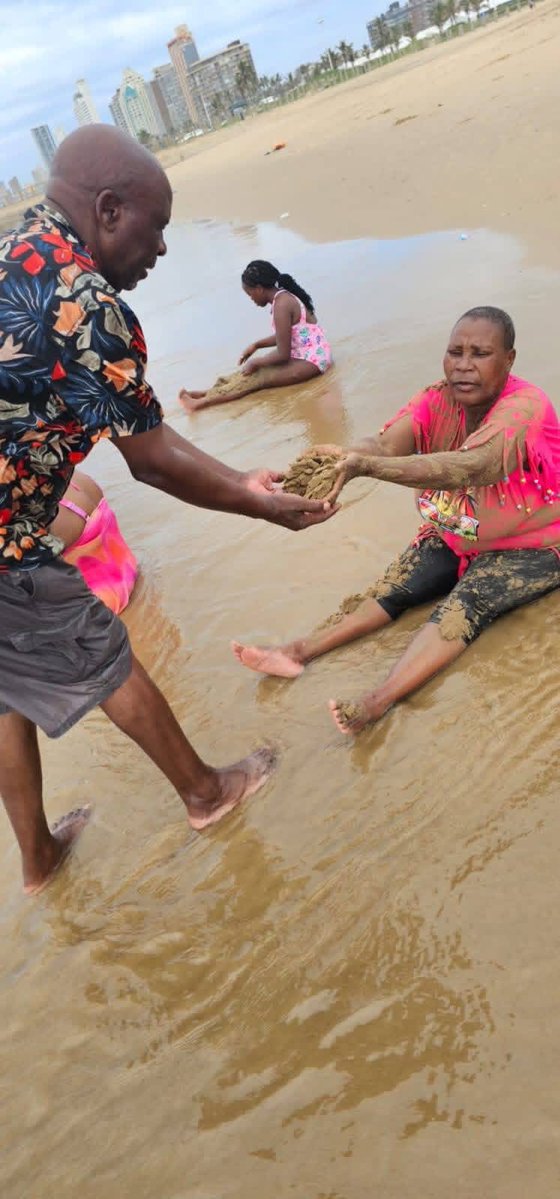
My friend recently took her parents on a trip to Durban. In their elderly years, they had never been there before… and to be honest, she was worried. Her father is on 18-hour oxygen, and she kept asking herself, will he manage?But look at him… look closely. Is this even the same person? He spent the whole day without connecting to his machine. The glow, the laughter, the happiness on his face… that’s something money can never buy. In that moment, she didn’t just take them on a trip she gave them an experience. She saw their inner child come alive again. And honestly… she was so proud of herself for that 🤍
Mwami lu tweet mediaMwami lu tweet mediaMwami lu tweet mediaMwami lu tweet media
English
179
962
13.2K
585.3K
Marenya retweetledi
IKENNA
IKENNA@kena_ewuru·
Comedy so real it stopped being a joke 💀 Key & Peele really studied humanity like a science experiment.
English
223
4.3K
32K
798.5K
Marenya retweetledi
Maddie Evans
Maddie Evans@EstieMaddie·
🤣 IF YOU THINK THE SHOCK OF THE TRANSITION TO YOUR 40’S IS A LOT…. BUCKLE UP FOR YOUR 50’S!! 😭 GUYS… THIS ONE IS EPIC!
English
41
356
2.5K
210.5K
Marenya retweetledi
Charles Onyango-Obbo
Charles Onyango-Obbo@cobbo3·
Oops! The Tale of the Great African Triple-Booking A local African chief recently discovered that his backyard was simultaneously a Chinese mine, a US airbase, and a Gulf tomato farm, all while India swapped software for soup and Turkish drones patrolled forests that had already been shipped to the EU as furniture. We investigated how this happened: EU to Africa: “We offer a Preferred Partnership: long-term, sustainable, and neatly wrapped in human rights. We don’t want your soul, just your lithium and a pinky-promise to stop the migrant boats.” US counter-offer: “We’ll build a shiny Lobito railway for those minerals, call it ‘Prosper Africa’, and throw in a used F-16 if you promise to block Beijing’s number.” China: “Whatever they promised, I’ll do in half the time with zero lectures. No questions asked about your elections—just sign this 99-year lease on the copper belt. I’ve brought my own lunch and my own workers.” Gulf States: “Forget railways. We want the dirt. We’ll turn your savannah into a giant vegetable patch for our desert supermarkets and build a seven-star hotel where that forest used to be.” India: “Let’s talk human capital! We’ll give you low-cost generic pills and high-speed IT hubs. In exchange, we just need all your beans and lentils to feed Mumbai. Let’s trade software for soup.” Japan: ”Quality over quantity, please. We’ll give you a high-tech bridge that lasts 100 years, provided you fill our hydrogen tanks and let us study your rare earths in peace.” Türkiye: “Drones! You need drones to protect the wood. And a very large mosque in the capital to look at from the drones. We are brothers, after all.” African Bigman: “Oops. I think I’ve accidentally sold the same acre of land and mines to all seven of you. Actually, blame my predecessor. He sold half of them; I didn’t know.”
Charles Onyango-Obbo tweet media
English
18
178
373
22.7K